Happy birthday to illustrious and distinguished Nigerians.
A highlight of my weekend was attending the special birthday celebrations of two distinguished Nigerians whose lives continue to reflect service, leadership, and nation-building.
The first was His Royal Majesty, Igwe Nnaemeka Alfred Ugochukwu Achebe (Agbogidi), CFR, the Obi of Onitsha and Chancellor of Ahmadu Bello University. He is a respected symbol of cultural heritage, enterprise, and traditional leadership, who marked his 85th birthday. I worked closely with him in my eight years as Governor, where he showed a passion for good governance. His life and reign continue to represent dignity, continuity, and the preservation of our rich cultural identity.
Also celebrated was Chief Yomi Edu, former Minister of the Federal Republic, who turned 80. His years of public service and contributions to the corporate world and national development were duly honoured by family, friends, and well-wishers.
The occasion was further graced by eminent personalities, including former President Olusegun Obasanjo, the former President of Ghana, the Governor of Lagos State, captains of industry, former governors, and other distinguished guests from across Nigeria and Africa at large. It was a gathering that reflected deep respect across political, cultural, and generational lines.
Moments like this remind us of the value of longevity, service, and the importance of celebrating those who have contributed in various ways to the growth of our nation and continent.
We continue to pray that God grants them good health, strength, and many more fruitful years ahead. -PO
In Support of Healthcare Delivery and Human Dignity
Today, I visited the Mother of Christ Specialist Hospital, Enugu State, which was recently affected by a devastating fire incident. During the visit, I inspected the damaged sections of the hospital, including the children’s ward, and made a donation of ₦10 million to support the ongoing renovation efforts.
I commend the Reverend Sisters of the Immaculate Heart of Mary and the hospital management for their commitment to healthcare delivery and service to humanity. Their sacrifice and dedication, often carried out with little recognition, remain invaluable to our society.
Healthcare and education are among the most critical needs of any nation. No meaningful development can occur where these sectors are neglected. It is, therefore, imperative that we continue to support institutions and individuals working tirelessly to provide quality healthcare and educational services to our people.
I encourage the management not to relent in their noble mission despite the challenges they face. As a society, we must collectively invest in and strengthen facilities for healthcare, education, and poverty alleviation.
A new Nigeria is POssible. -PO
What June 12 Should Mean to Us Nigerians
Today, we observe a day that should mean a great deal to us as a people who cherish democratic principles. Every year on June 12, the conversation inevitably turns to a critical assessment of the state of our nation. It serves as an annual benchmark for asking important questions: Are our elections today as transparent as they were in 1993? Is the social contract being honoured? Are the institutions of governance truly serving the people?
Ultimately, June 12 is a powerful blend of reflection and aspiration. It honours a fractured past while serving as a constant and foundational reminder of the immense power inherent in the collective democratic will of the Nigerian people.
For us in Nigeria, June 12 is not merely a date on the calendar; it is the emotional and structural bedrock of our modern democratic identity. Officially recognised as Democracy Day, June 12 carries deep historical, political, and social significance, representing both a monumental tragedy and the ultimate triumph of the collective will of the people.
To understand what June 12 means to Nigeria, one must examine its history, its evolution, and its enduring symbolism.
A new era of true democracy is POssible. -PO
In continuation of my quest to deepen knowledge and impact positively on our society, yesterday June 10th, in London, I held a series of important engagements, including a fruitful meeting with Alex Vines, Director of the Africa Programme at the European Council on Foreign Relations (ECFR).
Our discussions focused on strengthening strategic relationships and fostering a deeper understanding of Africa’s evolving role in global affairs. It was emphasized that Africa must no longer be viewed merely through the prism of statistics or humanitarian concern, but as a serious and equal partner in shaping the future global order, much like India, Indonesia, and other emerging centres of influence.
During our engagement, it became increasingly clear that Africa, and Nigeria in particular, must be placed at the centre of international conversations on partnership, trade, governance, innovation, and sustainable development.
Constructive dialogue and mutual respect remain essential to building meaningful cooperation between Africa and the international community.
A New Nigeria is POssible. -PO
Media Framing of Crime Along Ethnic Lines: Divisive.
As an Igbo man, I have endured stereotypes, judgment, and labelling solely based on my ethnic origins. This is not an isolated Igbo experience. Most Nigerians have, at some point, been reduced to their ethnicity rather than recognised for their true character.
I understand the pain of the ordinary Fulani man today, often unfairly judged by the actions of criminals he does not support, has never met, and who are not representative of his people.
Even in America, such unjust labelling fueled the civil rights movement and prompted Martin Luther King Jr. to declare that people should be judged by the content of their character, not the colour of their skin.
Every Nigerian ethnic group is known for its unique traditions, occupations, skills, and strengths. Crime, however, has no ethnicity. A thief is a thief. A terrorist is a terrorist. A kidnapper is a kidnapper. They are bad actors, not representatives of any people. They must be identified, arrested, and punished according to the law.
We must decisively abandon the dangerous practice of blaming entire ethnic groups for the actions of a few criminals. It is unjust, it breeds hatred, and it damages our national unity.
Let us proudly celebrate our diverse cultures, talents, and contributions, rather than falling prey to stereotypes and prejudices that politicians and divisive interests exploit for their gain.
A new Nigeria must emerge—one where no citizen is condemned because of tribe, religion, or birthplace. We can cherish our cultural roots while standing united by justice, mutual respect, and hope for a better future. We are capable of this.
A new Nigeria is within our reach. -PO
The abduction of the Chibok girls in 2014 triggered a global movement. One school abduction was enough to unite Nigerians, attract international attention, and place enormous pressure on the government through the #BringBackOurGirls campaign.
Yet, what has happened since then should trouble every Nigerian.
Under President Buhari's eight years in office, Nigeria witnessed about ten school abductions. Under President Tinubu's administration, in just three years, we have already recorded over ten school abductions.
Despite these repeated tragedies, there has been neither sustained national outrage nor significant international attention comparable to what followed Chibok.
This raises an important question: have we become so accustomed to insecurity that what once shocked our national conscience is now treated as normal?
At a time when millions of Nigerians are grappling with insecurity, poverty, and hardship, it is deeply troubling that those in power appear more focused on political calculations and preparations for the next election than on addressing the urgent challenges confronting our people.
It is, therefore, no surprise that some observers have labelled us a "Now Disgraced Nation". While we do not agree with any attempt to define our great country by its present difficulties, we must acknowledge that persistent insecurity, economic hardship, and leadership failure have damaged our reputation and standing among nations.
The answer is not denial, propaganda, or political distraction. The answer is leadership that is competent, compassionate, accountable, and genuinely committed to the welfare and security of the Nigerian people.
The Nigerian youth must not become indifferent. We must all refuse to normalise failure.
Young Nigerians - Take back your country!
A New Nigeria is Possible. -PO
Farmers must be able to return to their fields securely; students must be able to learn without fear; communities must be able to rest peacefully; and investors must regain their confidence in Nigeria.
Our strategy will be intelligence-driven, technology-enhanced, proactive, and community-focused. We will fortify our security institutions, enhance operational coordination, support our courageous personnel, and tackle the underlying causes of insecurity—name, ly poverty, unemployment, and marginalisation.
HEALTHCARE
Regarding health, Nigeria is currently ranked 157th globally, placing it in the lower echelon of healthcare worldwide. Primary healthcare, the cornerstone of our medical system, remains severely underfunctioning, al with only 10% to 20% of approximately 30,000 primary healthcare centres operational.
As a result, Nigeria suffers from one of the highest infant mortality rates in the world. Furthermore, health insurance coverage in Nigeria hovers around a mere 10%, in stark contrast to countries like Indonesia, which boast over 90% coverage. This situation is regrettable.
I pledge that within four years, our health insurance coverage will more than double to over 20%.
Within these four years, we will increase our healthcare budget to a minimum of 10% of our GDP, up from the current level of below 5%. We will invest heavily in and support our healthcare institutions to ensure the massive training of our healthcare workers, including nurses and other professionals. We shall also adequately staff our medical facilities.
In four years, there will be a fully functional and properly managed primary healthcare centre in all 8,809 wards across the nation. By the conclusion of our term, Nigeria will ensure that at least 50% of its 30,000 primary healthcare centres are fully functional, properly manned, and dedicated to serving the populace.
EDUCATION
Education will remain at the forefront of our national revival, as no country can grow beyond its educational system. Nations that have transformed successfully have done so through sustained investment in human capital. Our children are not burdens; they represent our most valuable assets. We will invest heavily in schools, teachers, technology, and vocational training, ensuring that education equips our youth not only to seek employment but also to generate it. We must pivot Nigeria from a cycle of shared poverty to one of collective prosperity through knowledge, innovation, and productivity.
HUNGER AND AGRICULTURE
In 2023, when the present government took office, Nigeria ranked 109 out of 150 nations on the Global Hunger Index.
And by 2025, our ranking further plunged to 115th, placing us among the hungriest nations globally. Currently, the World Food Programme estimates that over 35 million Nigerians will face acute hunger and food insecurity this year. This is unconscionable, given our vast expanses of uncultivated land.
Rice remains the most consumed food in Nigeria. To illustrate our level of unproductivity, let us compare our capabilities with those of leading rice-producing nations. India is the largest producer of rice, yielding approximately 200 million tonnes of unmilled rice.
Bangladesh is the third largest producer, producing around 60 million tonnes of unskilled Rice, while Vietnam is the 5thproducinges about 42 million tonnes. Let us consider the land-to-population ratios:
India has a landmass of 3,287,263 square kilometres. Distributed across its population of 1.4 billion people, this equals roughly 2. 34 Square meter per person.
Bangladesh, with a landmass of around 148,460 square kilometres and a population of 170 million, has less than 1 square metres per person.
Vietnam’s landmass covers 331,000 square kilometres. Divided by a population of 102 million, it yields about 3.25 square metres per person.
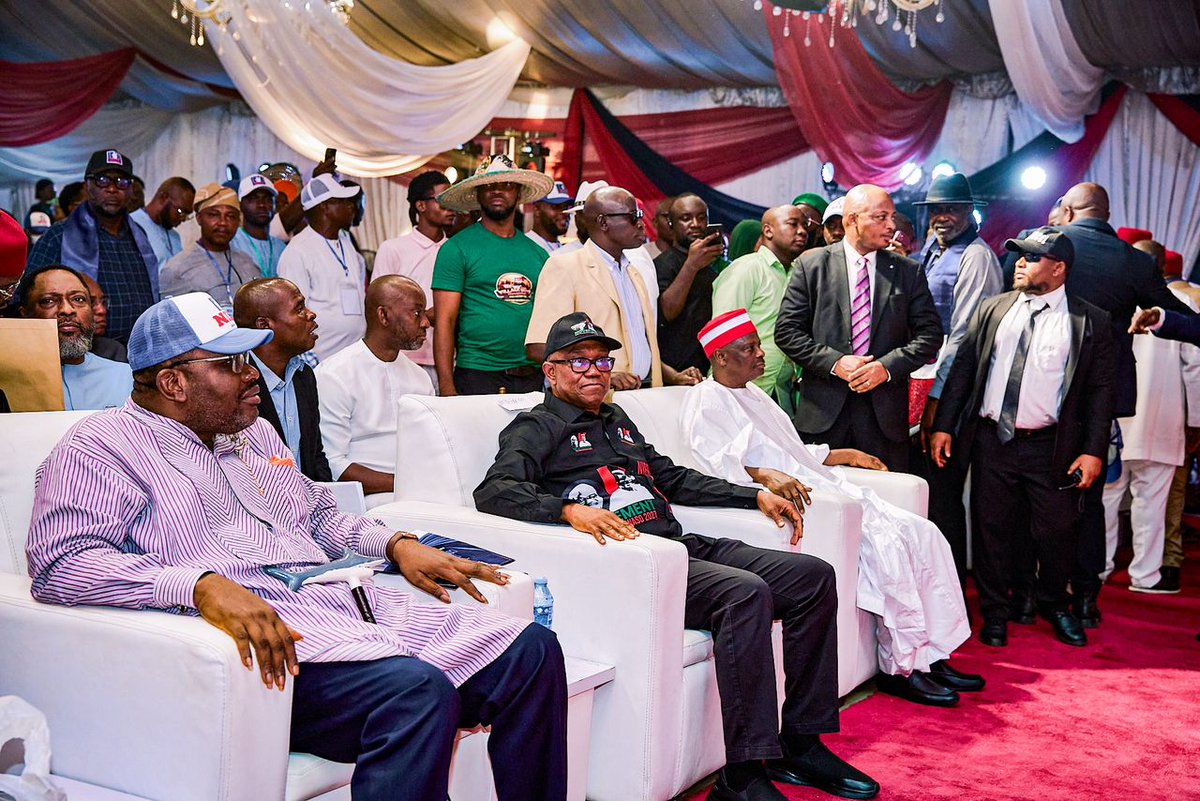
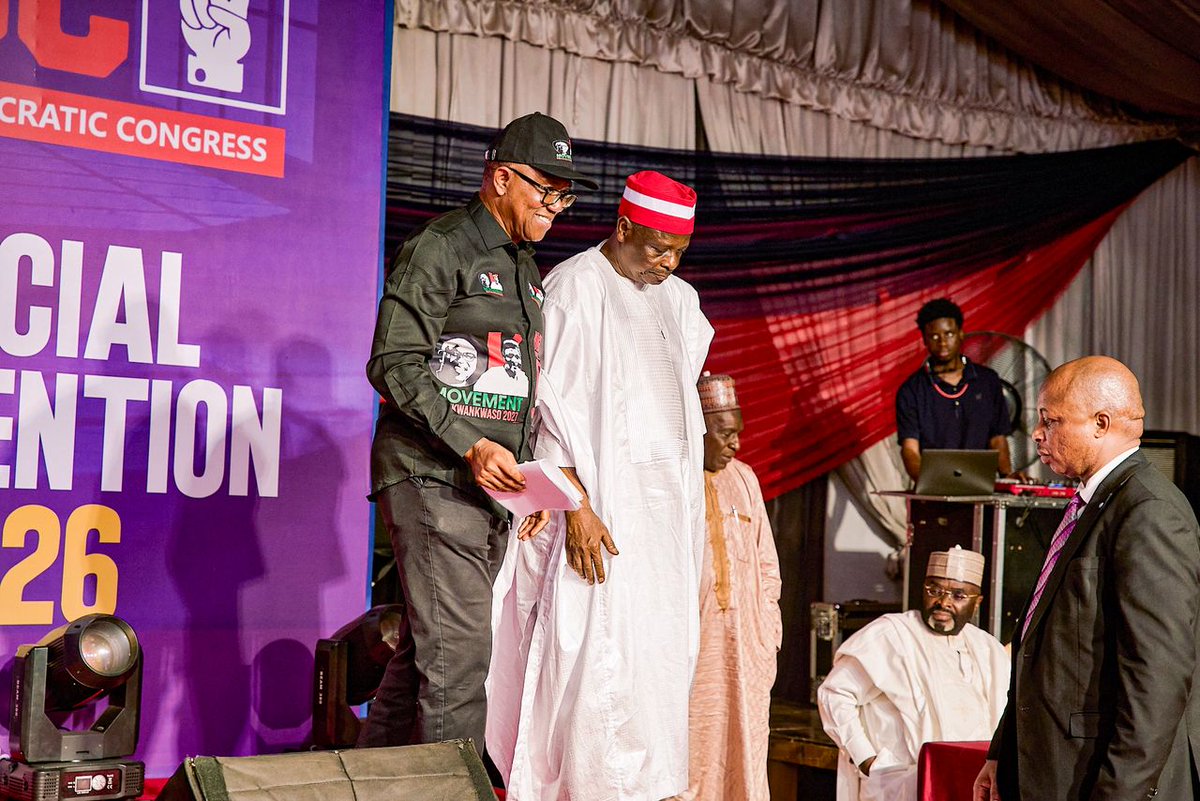
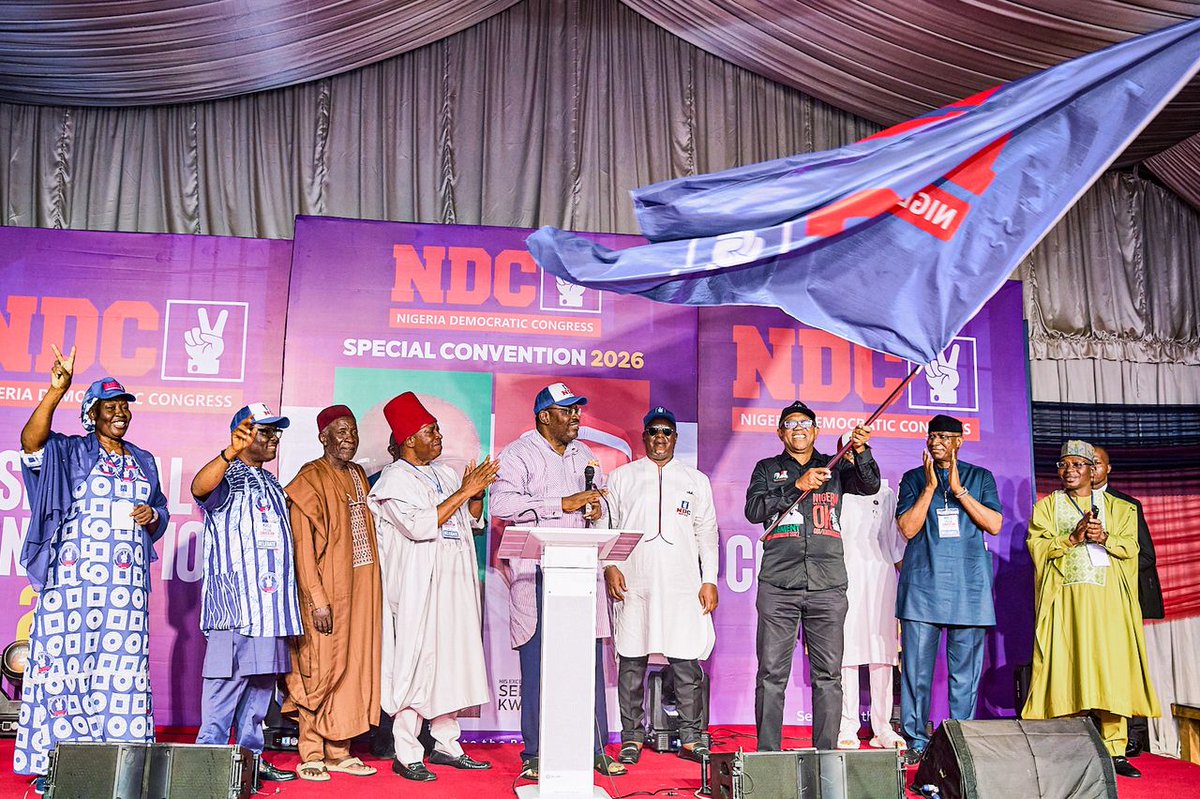
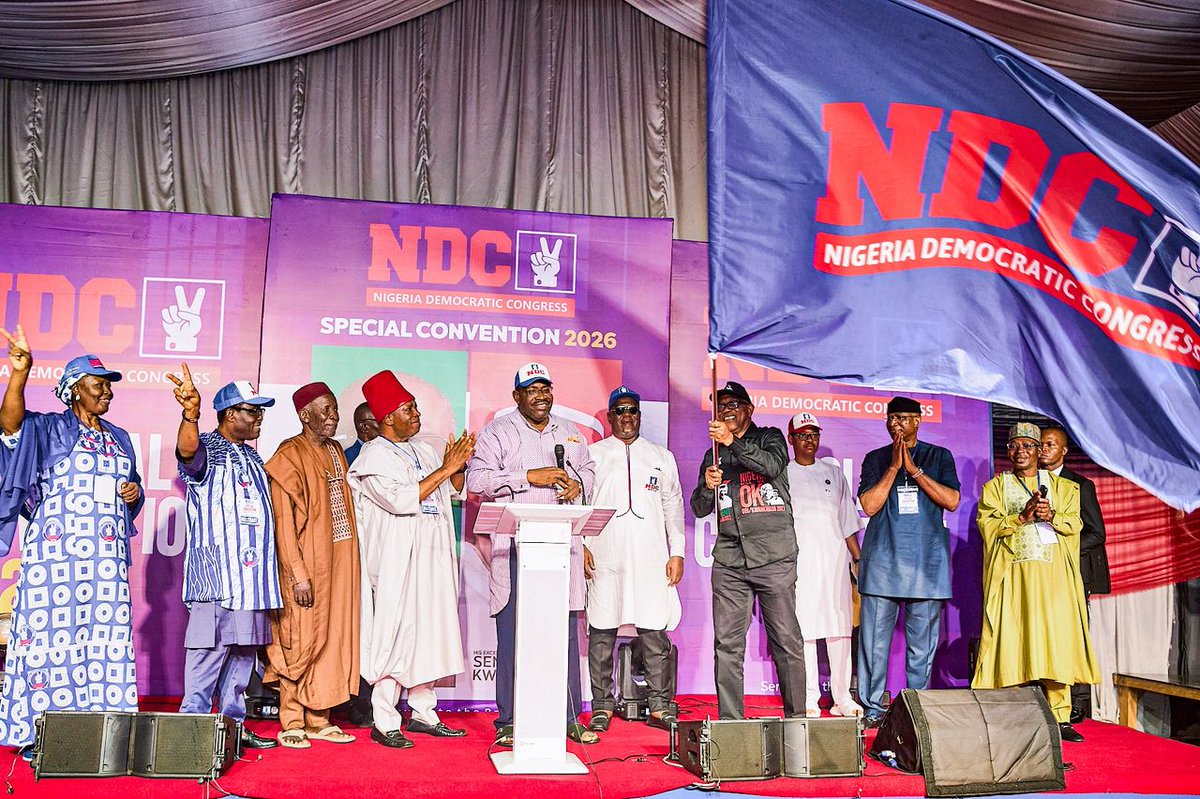
ACCEPTANCE SPEECH BY MR. PETER OBI FOLLOWING HIS NOMINATION AS THE PRESIDENTIAL CANDIDATE OF THE NIGERIAN DEMOCRATIC CONGRESS(NDC) – MAY 30, 2026
Protocols,
Esteemed citizens of Nigeria,
It is with deep humility that I accept the role of presidential candidate for our party.
I express my profound gratitude to the leaders of our party. His Excellency Seriake Dickson, the National Chairman, National Secretary and the National Working Committee, NWC members and members of our relentless supporters, and the Nigerian populace who have steadfastly kept the spirit of hope alive. I commend those who have made the journey from every region of our nation to convene here in Abuja.
I wish to assert unequivocally: a New Nigeria is Possible. This conviction has united us; it must serve as our compass on the challenging road ahead and sustain us through all trials we may face. This pivotal moment transcends the individual ambitions of Peter Obi; it concerns the essence of our nation and the future of our children. It is about rekindling hope for millions who have faced adversity yet remain committed to Nigeria.
Today, our nation finds itself at a crucial juncture, enveloped in uncertainty. Families are anxious about their safety; parents are concerned for their children's futures; and talented youth increasingly question their prospects in their homeland.
Businesses are struggling, communities are suffering, and an alarming number of citizens have lost faith in the very concept of governance. Yet, I stand before you filled with optimism and strong faith in the resilience of our people, for I firmly believe that a New Nigeria is possible.
UNITY
To realise this New Nigeria, we must first mend the foundational elements essential for the success of any nation.
Nigeria cannot advance while fragmented by ethnic, religious, regional, or narrow political divides. We may communicate in different languages and practise diverse faiths, but we share a singular destiny under one flag. Our diversity should not be a source of division; rather, it is among our greatest strengths.
We should build bridges where others erect barriers, replace mistrust with confidence, division with understanding, and resentment with a collective purpose. A united Nigeria is indispensable. As Will Durant wisely pointed out, "A great civilisation is not conquered from without until it has destroyed itself from within." We must never self-destruct. We must heal, unify, and progress together.
INSECURITY
In terms of security, the situation in Nigeria has considerably worsened. The global terrorism impact assessments ranked Nigeria as the 8th most affected nation in 2022, 6th in 2024, and 4th in 2026.
Yet, for many years, Nigeria garnered global recognition as a reliable contributor to peacekeeping, regional stabilisation, and conflict resolution. Our troops have not only displayed bravery but have also shown professionalism, discipline, resilience, and empathy in the most challenging operational contexts. Our officers and personnel have successfully commanded multiple international forthe ces, safeguarded vulnerable civilian populations, monitored ceasefires, reinstated constitutional order, and contributed to rebuilding efforts.
Nigeria became one of the leading contributors of troops from Africa to UN peacekeeping missions and earned widespread admiration for operational effectiveness and leadership in various countries, including Rwanda, Sudan, Liberia, Sierra Leone, Mali, Western Sahara, Congo, Lebanon, Cambodia, Haiti, and Kuwait. At one pointin a Nigeria, Lt. General Isaac Obiakor (rtd) even led global peacekeeping initiatives.
We must address insecurity with resolve and urgency, for no nation can thrive while its citizens live in trepidation. The primary responsibility of the government is to ensure the safeguarding of lives and property.
Dear Young Nigerians,
One lesson from the 2023 elections, particularly in Lagos, should never be forgotten.
In the period following the presidential election and leading up to the governorship election, we witnessed a troubling shift in public discourse. Conversations that should have focused on competence, governance, development, and the future of our nation were gradually diverted towards tribal sentiments, ethnic divisions, and unnecessary suspicion among citizens.
Many sincere and well-meaning Nigerians participated in these conversations without realising that they were being drawn into narratives carefully designed by others.
Throughout history, whenever politicians find it difficult to compete on ideas, performance, character, or vision, some resort to exploiting the fault lines of ethnicity, religion, and identity. Their calculation is simple: a divided people are easier to manipulate than a united people.
Today, I see similar efforts emerging again, sometimes in more subtle and sophisticated ways. Narratives are planted, amplified, and circulated, often by individuals who genuinely believe they are defending a worthy cause, without recognizing the broader agenda behind such campaigns.
Let me state clearly that Pastor Enoch Adeboye remains one of the foremost fathers of faith in our nation. For decades, he has consistently preached the virtues of peace, prayer, love, reconciliation, and national unity. Even when faced with provocation, his response has always reflected humility, restraint, wisdom, and grace.
At 84 years of age, it would be unfair for young and able-bodied Nigerians to transfer to him responsibilities that properly belong to them. The task of building a better Nigeria rests primarily on the shoulders of the younger generation. It is their duty to lead the conversations, champion the reforms, and drive the positive change our nation urgently requires.
We must be careful not to become instruments in the hands of those who secretly nurture division while publicly preaching unity. In most cases, their target is not the individual being attacked; instead, it is the person who is attacking. Their real objective is to weaken the bonds that hold us together as one people and one nation.
I therefore urge all young Nigerians: do not allow anyone to recruit you into hatred. Do not allow anyone to weaponise your ethnicity, your faith, or your admiration for respected leaders.
Question every narrative. Verify every claim. Follow the facts. Resist manipulation.
The Nigeria of our dreams can only be built by citizens who refuse to be divided, who choose unity over hatred, and who place our collective future above narrow interests.
A New Nigeria is POssible. -PO
Please release these children for the sake of our shared humanity
I am deeply shocked and heartbroken by the condition in which these abducted school children are, as seen from their flagellated bodies. It is a painful reminder of the depth of insecurity in our land.
I have always made it clear that the society we abuse today will take its revenge on our children tomorrow. When I first began making that statement, some of these children were not even born. This is a classic example of how the abuse of governance and society today can produce devastating consequences long after the abusers are gone.
It is on the same line that I argue that the loans our leaders take today will hurt our children in the future, as many of them will mature for repayment and consequences long after we are gone.
To those holding these children, I make a direct appeal to your conscience. Remember that these are innocent children - sons and daughters of people who have placed their hopes, dreams, and entire future in them. In every one of them, you will find reflections of your own children, your own family, and your own humanity.
No grievance, no hardship, no justification can ever outweigh the sanctity of a child’s life and innocence. Whatever path has led to this moment, there is still room for remorse, for humanity, and for a change of heart.
I therefore appeal to your sense of mercy: release these children immediately. Let them go. Return them safely to society to reunite with their families. -PO
CONTINUOUS ABDUCTION OF NIGERIAN SCHOOLCHILDREN AND THE COLLAPSE OF SCHOOL SAFETY
After congratulating Nigerian children as they celebrate their day today, my heart remains heavy and troubled, knowing that some Nigerian children have remained in captivity for years. It is a shame that days, weeks, months, and even years have passed while our children continue to languish in kidnappers’ dens, with their heartbreaking images still circulating on social media.
A nation that cannot protect its children from criminals has little but shame to present to the global community. No parent can bear the shame of being unable to protect his or her children, yet here we are as a nation, moving on while our children continue to suffer in forests and captivity for years. -PO
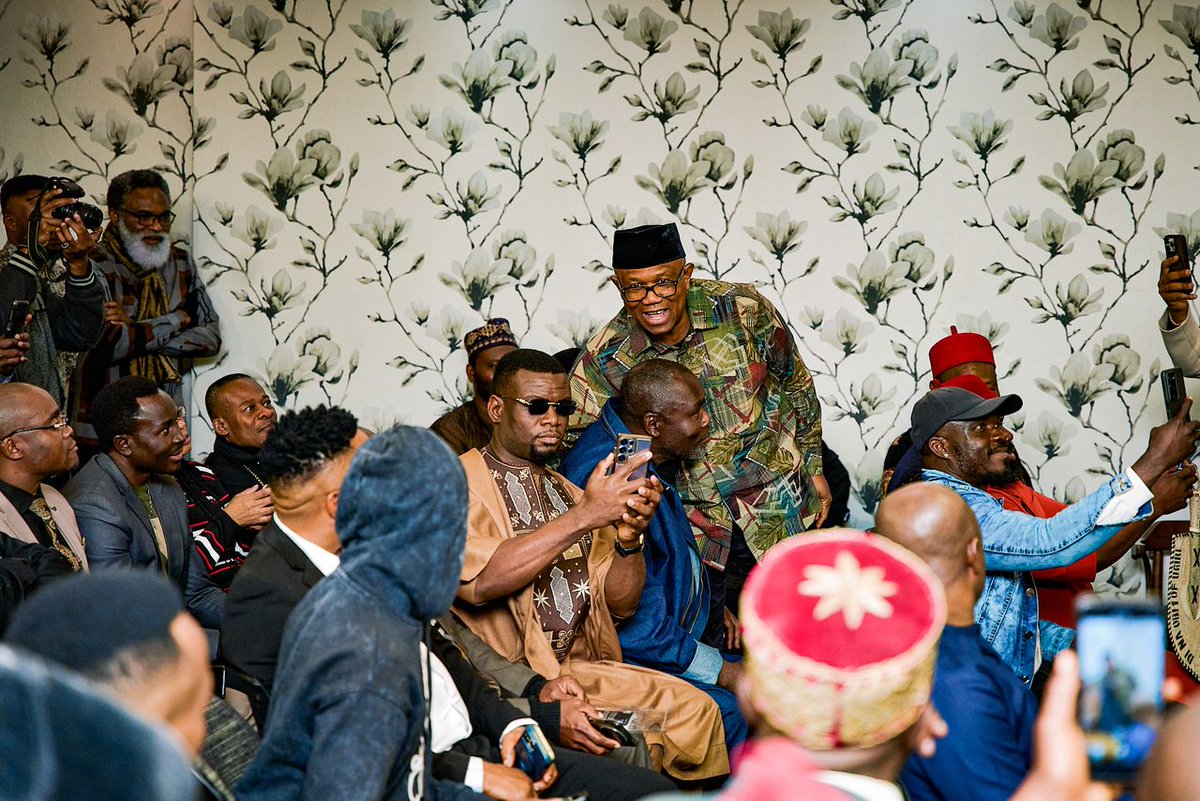
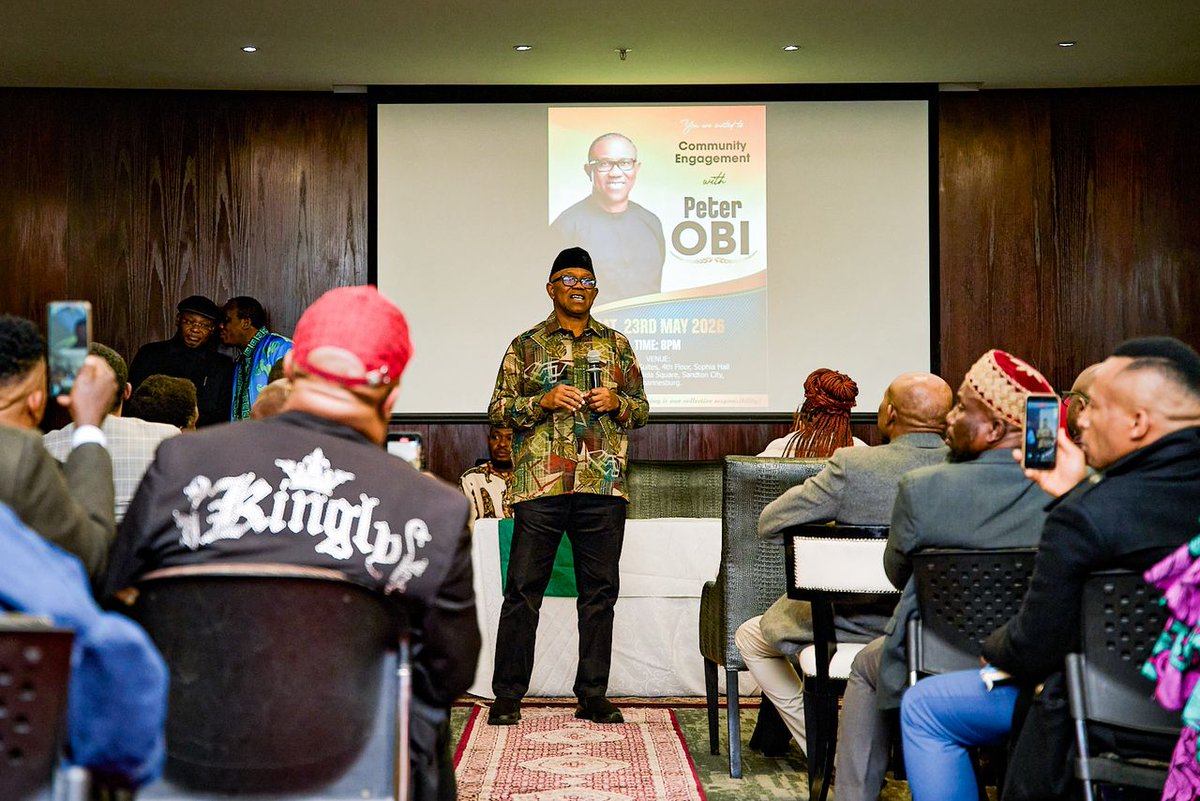
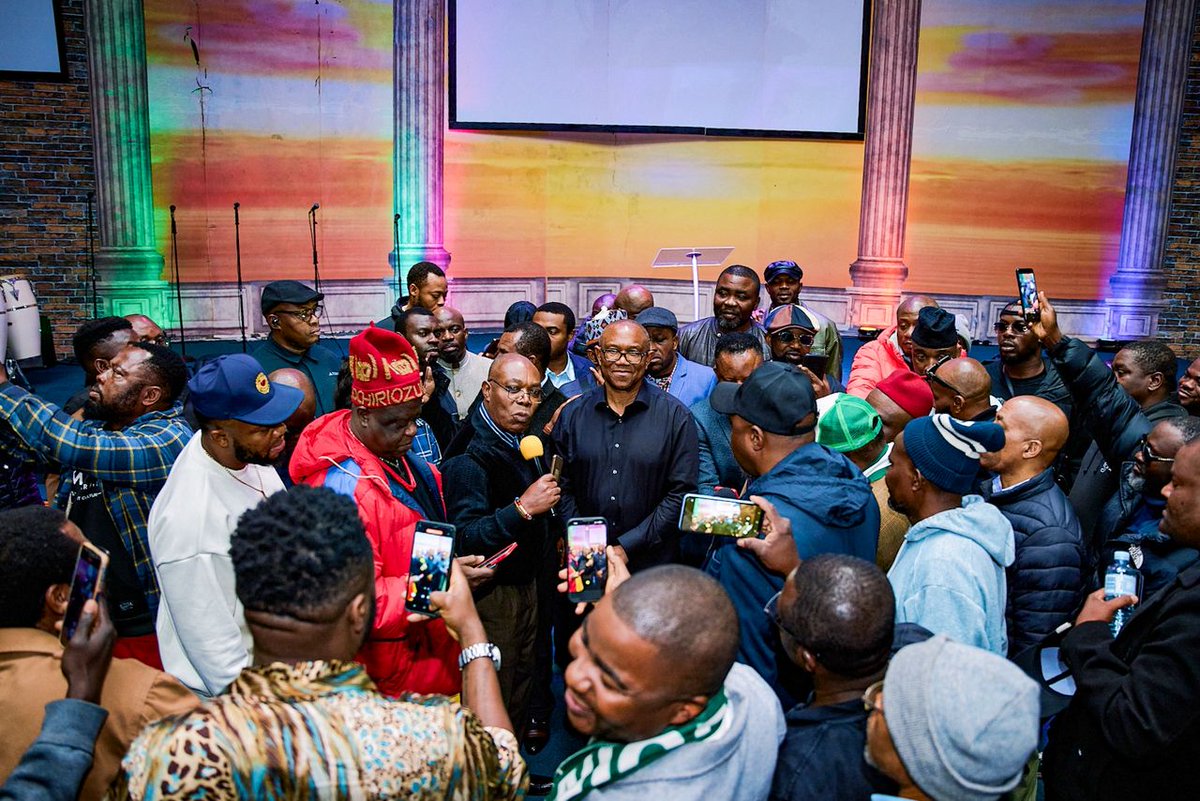
My final engagement in South Africa was yesterday in Johannesburg with my interaction with Nigerians in the diaspora. The discussions were frank, emotional, and deeply reflective of the realities confronting our people both at home and abroad.
The conversation was interrupted several times by passionate questions bordering on diplomacy, the treatment of Nigerians in foreign countries, the political situation back home, and the growing desire of many young Nigerians abroad to return home and contribute meaningfully to nation-building, if only the environment becomes conducive.
I also reminded our people that the respect any citizen receives abroad is often tied to how respected their nation is at home. A country that works, protects its institutions, upholds justice, and cares for its people naturally commands global respect. This is why leadership and governance must remain people-oriented, accountable, and rooted in competence and integrity.
While acknowledging the frustrations and pains many expressed, I emphasized the need for all of us to continue to conduct ourselves within the ambit of the law, irrespective of the provocation or difficulties we face. Nation-building demands discipline, civic responsibility, and the willingness to pursue change through constructive engagement.
The interaction further reinforced my belief that Nigerians across the world remain hopeful about the future of our nation despite the present challenges. Our task as leaders is to inspire that hope with sincerity, measurable action, and a commitment to building a secure, productive, and inclusive Nigeria.
A new Nigeria is POssible. -PO
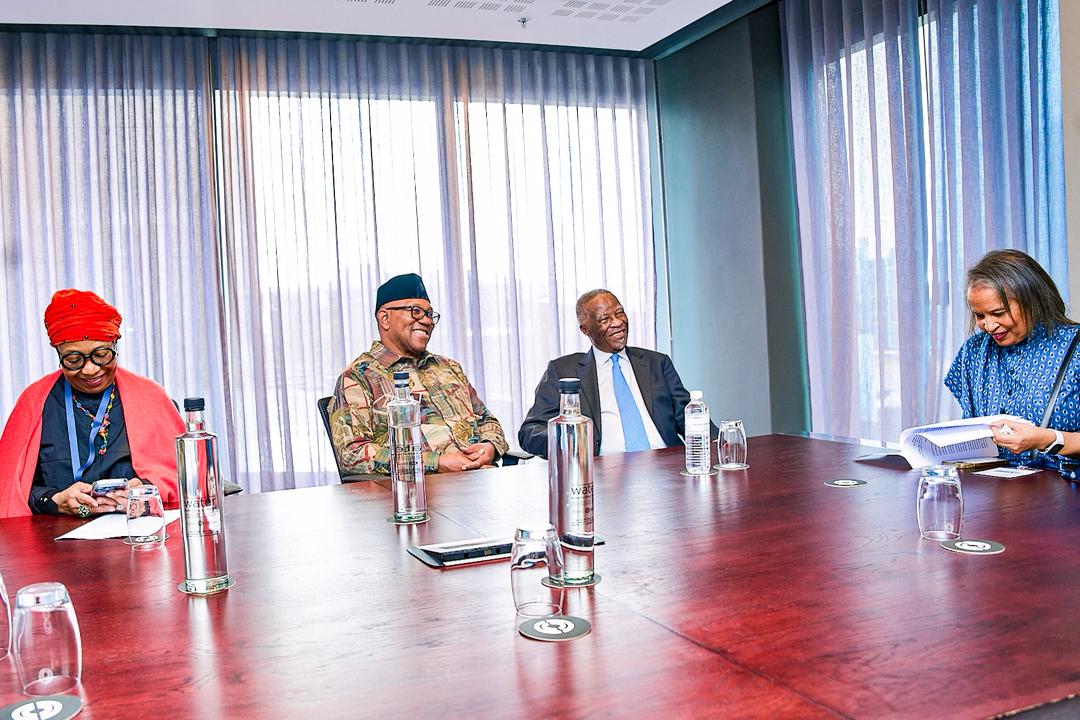
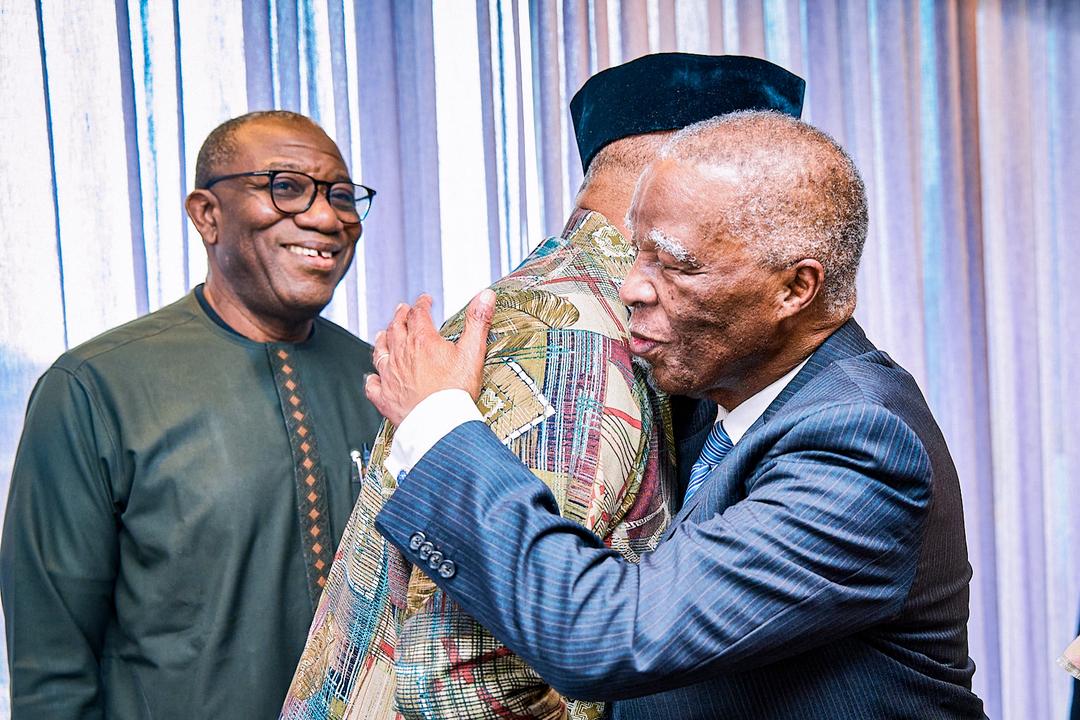
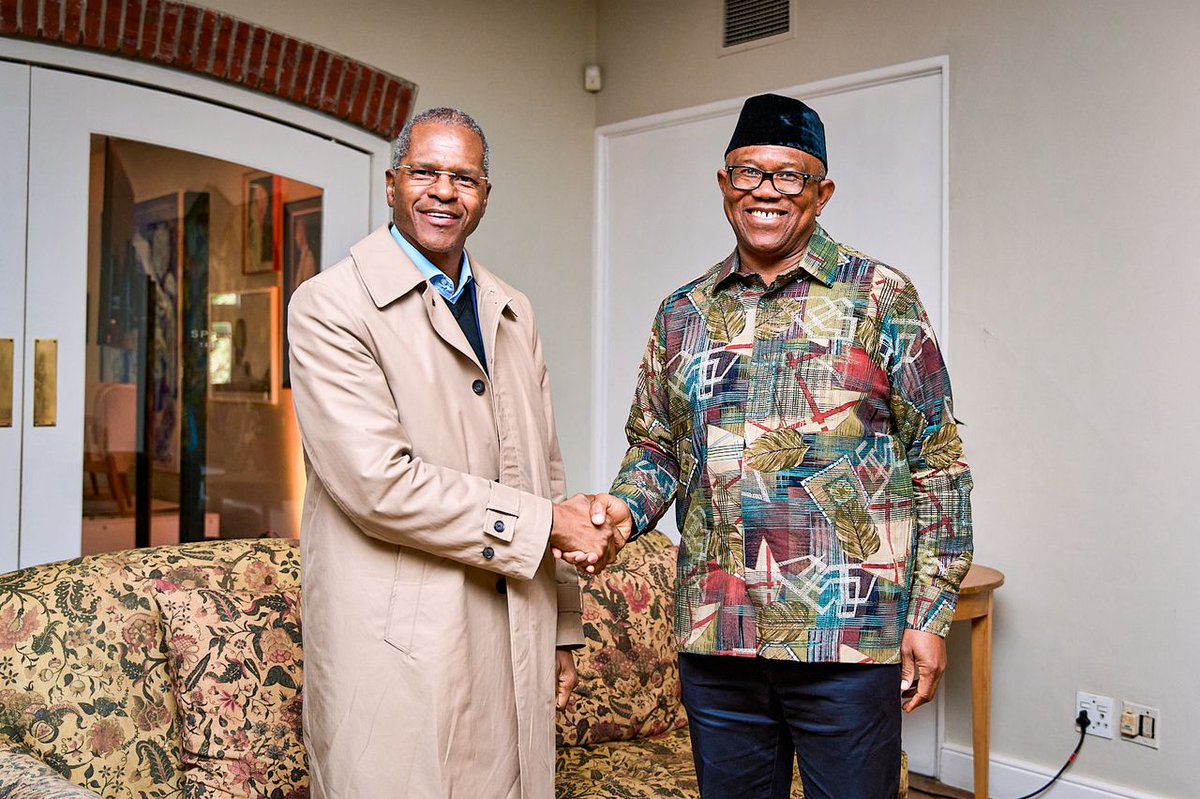
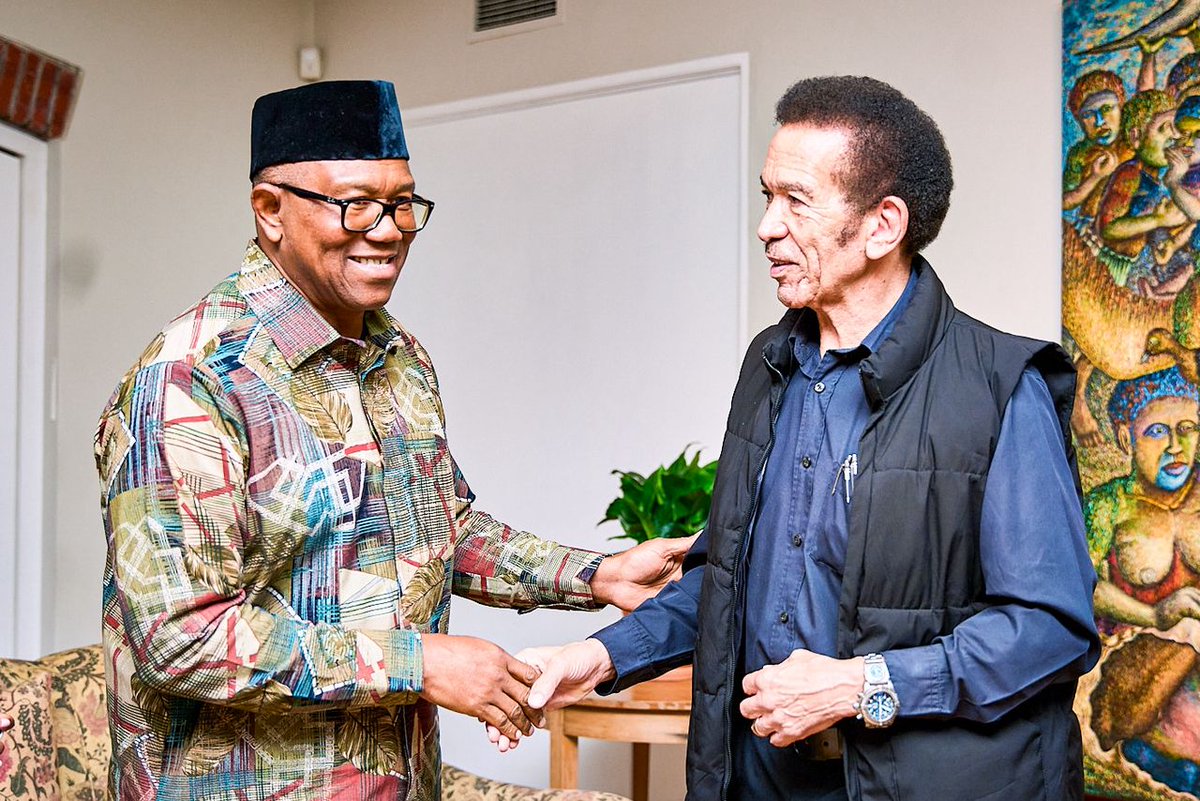
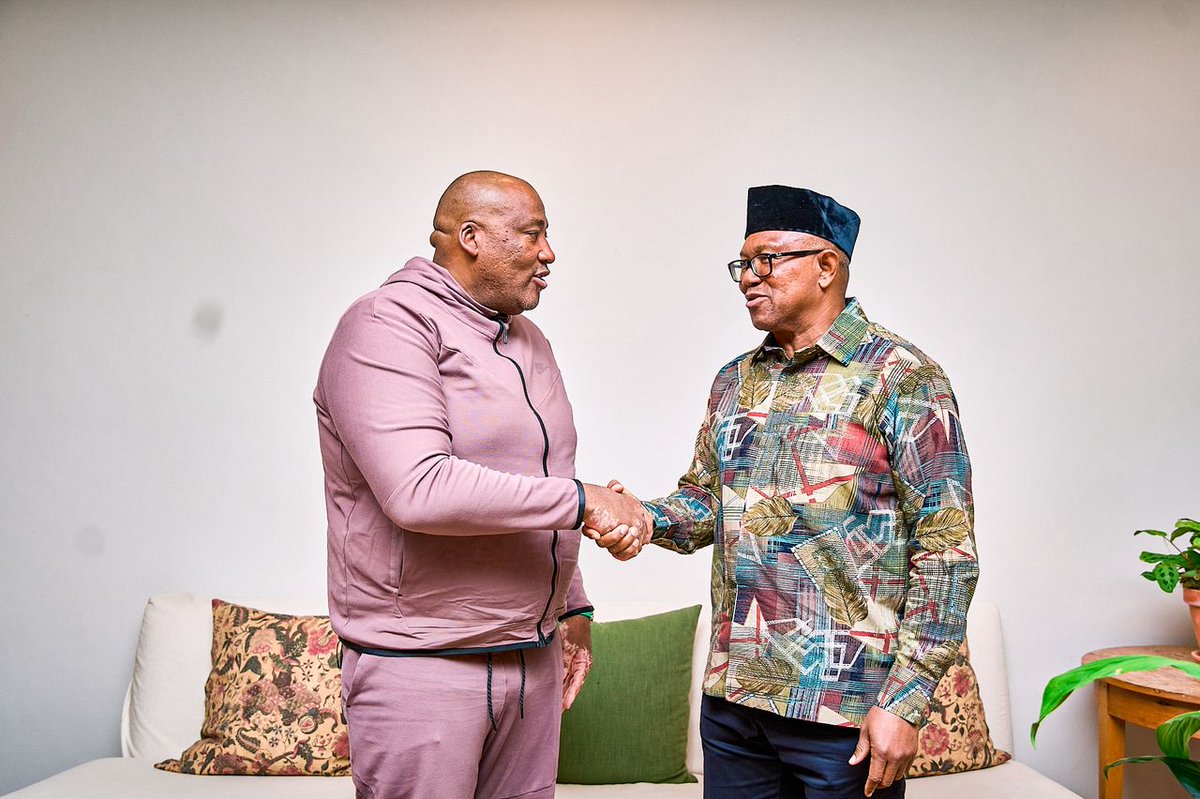
My final engagement before leaving Capetown for Johannesburg yesterday, I had the privilege of meeting two distinguished former leaders, President Ian Khama of Botswana and President Thabo Mbeki of South Africa, before departing Cape Town for Johannesburg yesterday.
This meeting was an opportunity for me to express my heartfelt appreciation for their positive comments on the recent immigration issues in the region and their continued advocacy for peace and unity among African nations.
Both Mr Khama and Mr Mbeki continue to hold significant respect across the continent due to their remarkable contributions, both during and after their presidencies.
During my audience with Mr Mbeki, I also reconnected with my good friend, former Ekiti State Governor Dr Kayode Fayemi, who delivered a keynote address at the Thabo Mbeki Africa Day lecture, focusing on the themes of rebuilding unity and revitalising institutions throughout the continent.
This event was organised by the Thabo Mbeki Foundation. -PO
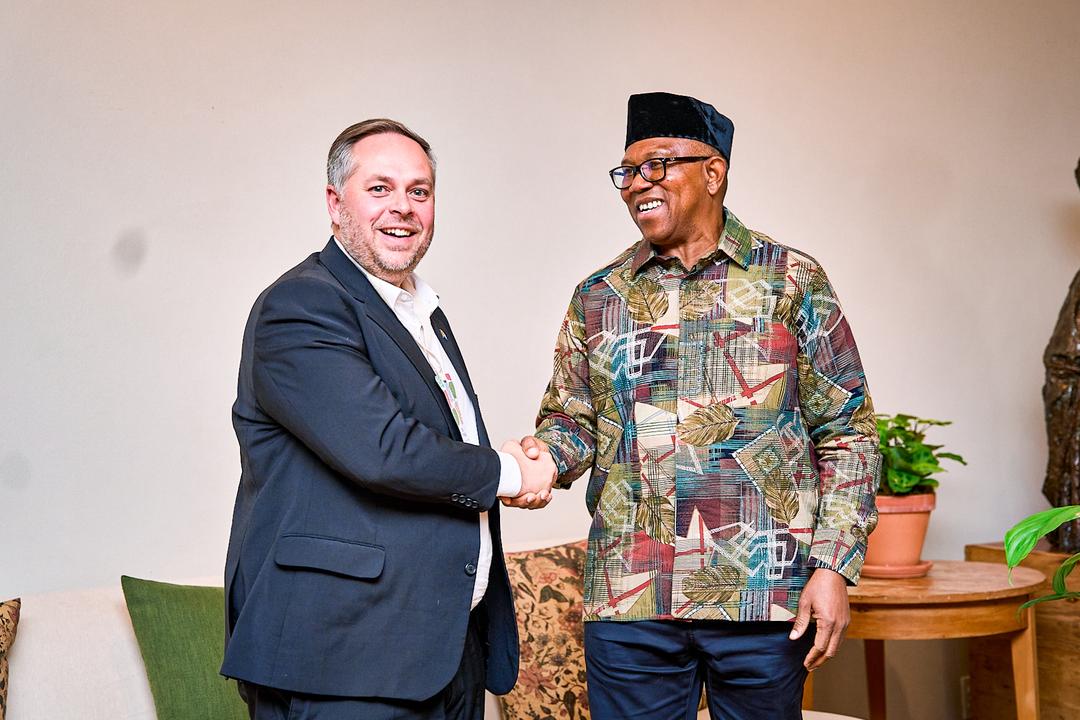
After speaking with Nigerians in Cape Town yesterday, I was able to have meaningful discussions this morning with three South African ministers and political party leaders regarding the ongoing challenges related to immigration, regional collaboration, and fostering peaceful coexistence between our nations.
I had the pleasure of meeting with Mr Leon Schreiber, the South African Minister of Home Affairs and a prominent figure in the Democratic Alliance; Mr Velenkosini Hlabisa, the Minister of Cooperative Governance and Traditional Affairs and leader of the Inkatha Freedom Party (IFP); and Mr Gayton McKenzie, the Minister of Sports, Arts and Culture and leader of the Patriotic Alliance (PA).
Our conversations were productive and candid, focusing on the current challenges that affect both countries—particularly those related to migration, economic strains, youth unemployment, security issues, and the rising tensions faced by African foreigners in South Africa.
I firmly believe that Nigeria and South Africa, both prominent African nations, must enhance dialogue, bolster cooperation, and seek solutions based on justice, mutual respect, and adherence to the rule of law. In challenging times, leaders and citizens alike need to demonstrate responsible leadership, compassion, and restraint.
We collectively stressed the importance of law-abiding behaviour, avoiding violence, resisting hate or provocation, and allowing lawful institutions to address grievances through democratic and constitutional processes, regardless of the challenges we face.
The progress of Africa hinges on our ability to create unity, foster economic inclusivity, invest in our communities, and uphold the dignity of every African, no matter where they live. -PO
Earlier today, I arrived in Cape Town, South Africa, to take part in the Spier Dialogue 2026, an important event centred on the future of Africa and the urgent challenges facing our continent and the globe.
The Spier Dialogue occurs at a crucial time as Africa grapples with significant issues in governance, democracy, economic inclusion, urbanisation, migration, and leadership. However, it also highlights the vast opportunities presented by the energy and creativity of our young population.
As leaders and stakeholders gather from various regions, I look forward to partaking in insightful discussions, especially as I have the privilege of addressing attendees tomorrow on policies geared toward growth.
Africa’s future should not be characterised by poverty amid abundance or by division instead of development. It is time for us to transition from consumption to production, from divisive politics to politics built on competence and compassion, and from mere promises to tangible progress that serves everyday citizens.
Upon my arrival, I had the opportunity to meet with the Nigerian community in Cape Town for a heartfelt discussion about the recent challenges affecting African expatriates in South Africa, resulting in over two hours of fruitful dialogue.
I remain dedicated to advocating for a New Nigeria and a New Africa—one where governance genuinely serves the people, where the youth are equipped with education and opportunities, and where leadership is founded on integrity, service, and sacrifice.
A New Nigeria POssible. -PO
Our Children Deserve Enhanced Learning Environments.
Today, May 21st, I had the opportunity to visit Practising Primary School in Agulu, my hometown, which has been a cornerstone of education since its establishment in 1922. Unfortunately, the school suffered significant damage from a fire last year, resulting in the loss of a historical building that had educated generations.
During a previous visit, I committed to supporting the school's reconstruction and to helping create a modern, supportive environment for the students.
This morning, I was pleased to return and deliver an initial amount of 10 million Naira to help initiate the rebuilding process. Education is a crucial investment for any community, and restoring schools is essential for renewing hope and ensuring a brighter future.
I also took the time to engage with the students, encouraging them to take their education seriously. Their future will be shaped by the discipline, effort, and dedication they demonstrate today.
A New Nigeria is POssible. -PO
“Kenneth Okonkwo Was Busy Raining Curses On Peter Obi. I Had Private Discussions With Him And Warned Him Not To Do What He Is Currently Doing, Because He Would Regret It, But He Said He Would Never Work With Peter Obi Again Over His Dead Body. Well, Peter Obi Is a Different Kind Of Politician. I Have Worked With Him For Years, And He Will Never Give You Money To Vote For Him. Peter Obi Has Said He Will Never Engage In Transactional Politics Or Use Money To Buy Positions To Serve The People That’s Why They’re Against Him.” ~ Senator Victor Umeh On Kenneth Okonkwo
Education Challenge: Not Funding but failure of leadership and Accountability.
The recent comments made by the Minister of Education are quite alarming. Despite receiving nearly 80% of educational donor funding over the last ten years, the North-West and North-East regions still show the lowest literacy and numeracy rates in Nigeria.
This issue goes beyond just a lack of funding; it highlights failures in leadership, accountability, and governance. Financial resources alone do not guarantee proper education. What truly makes a difference in education is the responsible and transparent management of these funds, aimed at achieving tangible results and a genuine commitment to developing human capital.
We cannot continue to commend government budgets, donor contributions, and various intervention programs while millions of children in Nigeria still lack basic reading and writing skills, which are essential for thriving in today's world. The real tragedy lies not just in the numbers, but in the lost potential of countless children whose futures are being compromised by systemic inefficiency and corruption.
Nigeria’s most valuable asset is not its oil, politics, or propaganda. It resides in the human capital of our youth. A country that overlooks education is essentially setting itself up for cycles of poverty, insecurity, unemployment, and instability in the future.
The Minister’s statement should prompt a national dialogue on how public funds and donor contributions are utilised. Every kobo spent on education must lead to clear improvements in literacy rates, school enrollment, teacher performance, and overall learning outcomes. Anything less is unacceptable.
Countries that have developed successfully, or are on the fast track to development, have made substantial investments in education. Nations like China, India, Indonesia, Vietnam, and Bangladesh have recognised the invaluable impact of education on progress and growth.
Now, Nigeria must transition from mere discussions about education to achieving real outcomes. We need to construct schools, train teachers, modernise educational systems, enhance monitoring processes, and ensure every intervention directly benefits the children it is meant to serve, rather than being siphoned off by political intermediaries and bureaucratic systems.
A nation’s progress is closely linked to the quality of its education system.
A brighter future for Nigeria is achievable! -PO
Yesterday, May 19th, in Abuja, I attended the Presidential screening organised by our party, which took over two and a half hours. They carefully reviewed all my documents, including my degree certificates, NYSC credentials, and age declarations.
During the process, I also addressed questions regarding my vision for a new Nigeria and the type of leadership our nation urgently needs right now. Following this, I was cleared and received the presidential nomination form I had previously paid for.
I would like to commend the screening committee, led by former governor Sam Egwu, for their thorough and professional approach. Additionally, I appreciate our party's leadership for upholding the democratic process.
A New Nigeria is POssible. - PO