1/7
ERC-7730 gives wallets, dapps, hardware wallets, and tools a shared format for clear-signing metadata.
That matters.
But the format alone does not solve the full problem.
Clear-signing metadata can be verifiable, but the verification path still has points of failure.
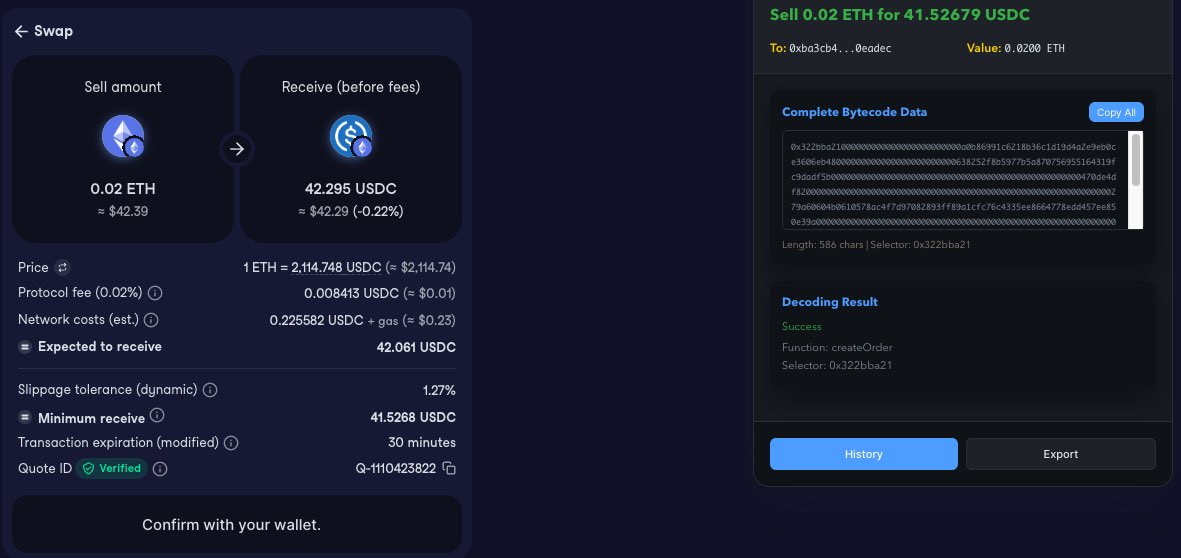
2/2 Before an agent signs or asks a wallet to sign, KaiSign MCP checks the final transaction payload against local ERC-7730 clear-signing metadata, proves the selector, and returns human-readable intent.
If metadata is missing, we also prepared an Etherscan API metadata generator. Bring your own Etherscan API key, generate verified metadata from the contract ABI, review it, and submit useful metadata for on-chain registry verification.
Registry submission tool address:
0xf70D41afe5Ff76Ac3Bee86BCBda07450f3b590F0
You can run the flow yourself, or let agents handle the metadata generation, clear-signing check, and registry submission workflow end-to-end.
Repo: https://t.co/tdiIrsGvdg
1/2 KaiSign MCP: reduce blind signing risk for agent-made on-chain transactions.
We tested agent transaction payload generation with frontier models, including Opus 4.8 and Sonnet 4.6.
Even at that level, agents can still produce generic function selectors that do not exist.
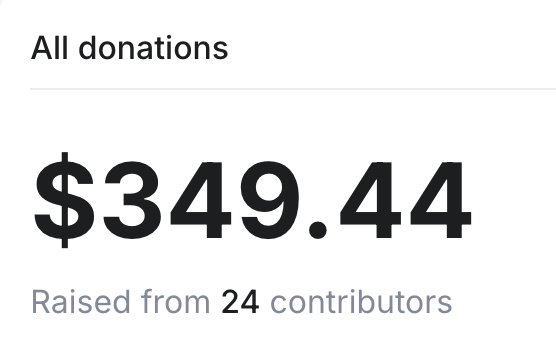
Huge thank you to the 24 contributors who donated to KaiSign in the Ethereum Security QF round!
Together, you helped raise $349.44 for open clear-signing infrastructure.
Every contribution helps us keep building decentralized metadata, review, and distribution for safer Ethereum transactions. Really grateful for the support.
For donors, stay tuned.
1. Sourcify: Verifies smart contract source code against deployed bytecode, helping users, wallets, explorers, and reviewers know what a contract actually is before trusting transactions.
2. Blobscan: Makes Ethereum blob data visible and inspectable, improving transparency for rollups and blob-based data publishing.
3. Blockscout: Provides open-source block explorer infrastructure so users and developers can independently inspect contracts, transactions, addresses, events, and verification data.
4. Firefly: Builds an open-source hardware wallet focused on human-readable transaction verification and calldata decoding, helping users understand what they sign.
5. CrossBar: Builds open-source secure hardware wallet technology, expanding inspectable hardware-backed signing beyond opaque vendor systems.
6. Canon Guard: Makes Safe transaction proposal data verifiable, reducing the risk that multisig signers review one transaction but approve a different or modified payload.
7. Colibri: Provides trustless blockchain data verification for wallets and dapps, reducing dependence on trusted RPC providers.
Less than 20 hours for the Ethereum Security QF round on @Giveth.
KaiSign is building decentralized open infrastructure for clear signing, so wallets and users do not have to rely on centralized metadata servers or blind trust.
Even a small donation helps.
https://t.co/HwVm069WWd
We’ll be joining the Ethereum Security QF Project Showcase X Space by @Giveth in about 12 hours.
We’ll be talking about KaiSign and why clear-signing metadata should be verifiable without centralized points of failure, especially for wallets, hardware devices, and AI agents interpreting transactions.
Join here:
https://t.co/QOs4kKd4HF
7/7
Repo:
https://t.co/MNrXhaBy8Y
Use the repo to run the minimum CLI:
test ERC-7730 metadata locally, clear-sign calldata, and inspect readable transaction intent before submitting.
Docs:
https://t.co/gcckzjKCik
Use the docs to submit metadata on Sepolia:
commit → approve bond token → reveal → oracle submission → finalize.
5/7
The registry flow is accountability-based:
prepare ERC-7730 metadata
→ commit the submission
→ approve the bond token
→ reveal the metadata hash
→ Oracle resolution
→ finalize approved metadata on-chain
Only finalized metadata becomes discoverable as an attested KaiSign entry.
6/7
The goal is not just readable transactions.
The goal is fewer centralized failure points in how clear-signing metadata is submitted, verified, challenged, and trusted.
We are selecting early attesters now. DM us or drop a comment.
4/7
For now, KaiSign is selecting early attesters before opening attestation more broadly.
This is intentional.
Bad metadata can be as dangerous as blind signing.
A fake clear-signing explanation can make a malicious transaction look safe.
Attesters help review, submit, challenge, and improve metadata quality.
3/7
KaiSign is built to reduce those points of failure.
It is an on-chain registry for ERC-7730 metadata.
Metadata is tied to contract bytecode, attested on-chain, bonded, challengeable, and finalized.
The goal is not “verification from nothing.”
The goal is removing centralized chokepoints from metadata verification.
2/7
Today, clear-signing metadata verification can still depend on centralized actors:
wallet vendors
hardware wallet vendors
curated metadata sources
closed review processes
controlled distribution paths
That means users may still depend on one party to decide what metadata is accepted, rejected, updated, or removed.
1/7
ERC-7730 gives wallets, dapps, hardware wallets, and tools a shared format for clear-signing metadata.
That matters.
But the format alone does not solve the full problem.
Clear-signing metadata can be verifiable, but the verification path still has points of failure.
KaiSign Extension update:
We optimized the decoder for real protocol flows across @Aave, @lifiprotocol@jumperapp, @1inch, @VeloraDEX (Paraswap) and more, making complex transactions easier to clear sign before they reach your wallet. Private by design, open source by default.
Repo: https://t.co/pdBnvOej41
KaiSign Extension runs decoding locally in the browser and avoids sending wallet addresses, unsigned payloads, signatures, telemetry, or browsing data to providers. The code is public, so the safety model is verifiable.
This work was made possible with support from @ENS_DAO Public Goods grants. The extension is a practical stepping stone toward the KaiSign registry contract: decentralized, verifiable clear-signing metadata that wallets and users can inspect instead of blindly trusting providers.
This is the path to clear signing that does not require trusting a centralized metadata black box.
Next up: how to use them, how builders can add protocol coverage and potentially more secure toolings.
2/ In quadratic funding, broad community support matters, so even a small donation can make a real difference. If you cannot donate, reposting helps a lot.
End of thread.
1/ Blind signing is still a major security failure in Ethereum. Let's support safer, more decentralized Ethereum UX with KaiSign @Giveth :
Donation window: April 23 to May 14. We will share build updates throughout the round.
https://t.co/nNCVRGGpzI
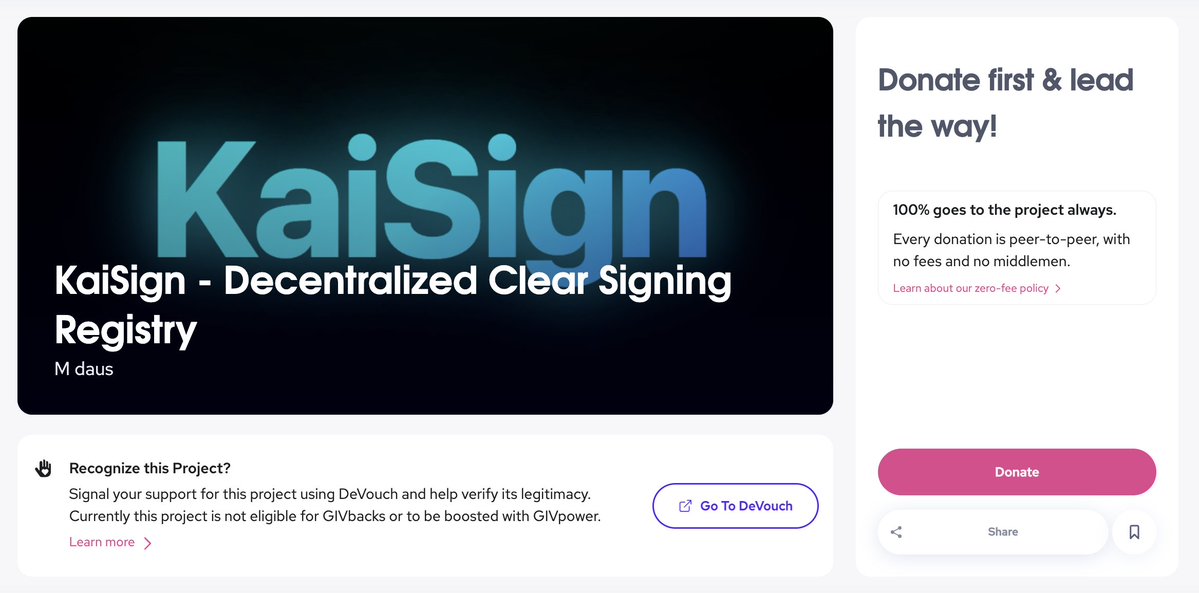
We’re now on @Giveth and opening community support for KaiSign.
KaiSign is building decentralized clear-signing metadata infrastructure to help users understand what they are signing before approving blockchain transactions.
Support our project here:
https://t.co/nurZTemo5b