One cup = 70 beans. But the hidden supply chain is far more complex—discover the 10 steps
Coffee is one of the world’s most consumed drinks and also one of the most traded commodities.
Globally, consumption exceeds 2.25 billion cups every single day.
But before it reaches your cup, coffee travels through a long and structured 10-step global supply chain:
From Plant to Factory
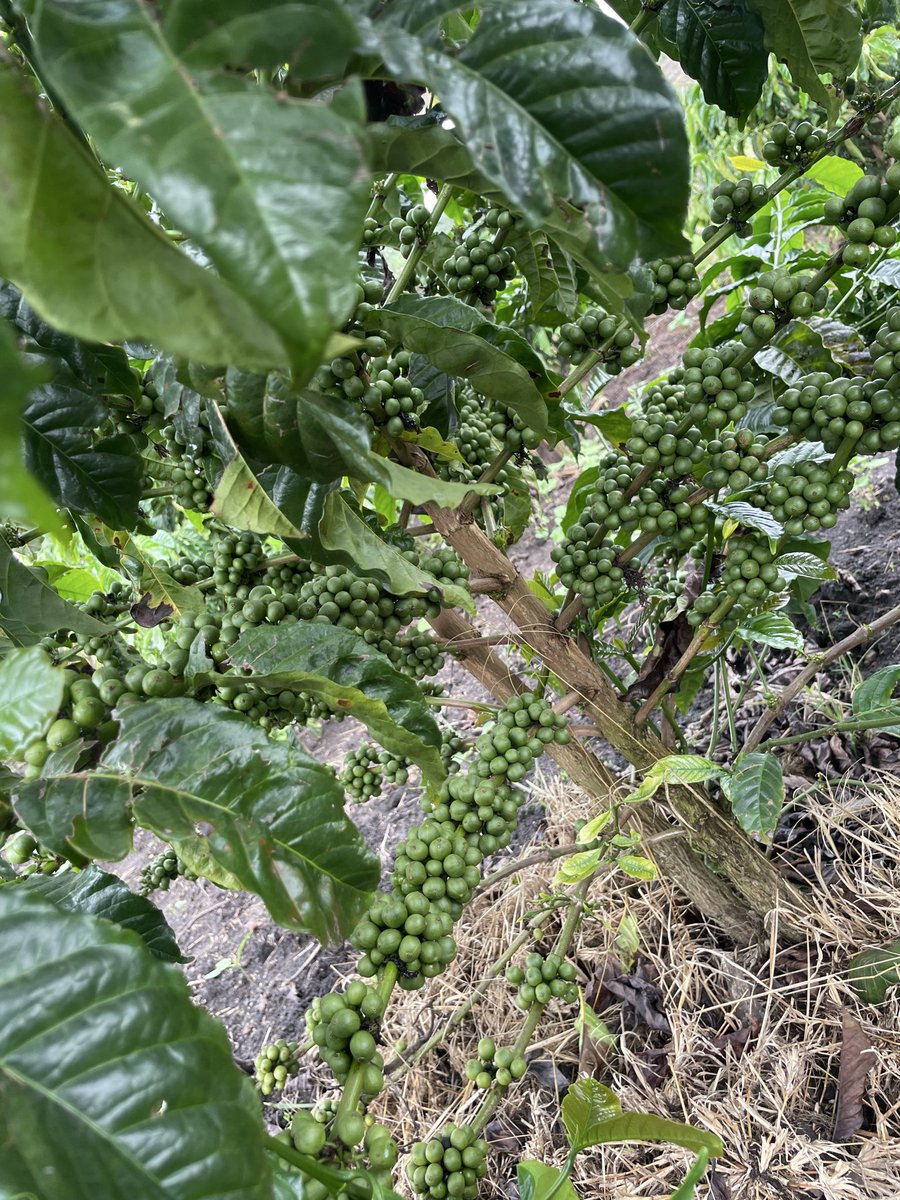
1. Growing – Coffee plants takes 2-3 years from some origins and 4 to 7 years in other origins to produce their first harvest and bear fruit for around 25 years.
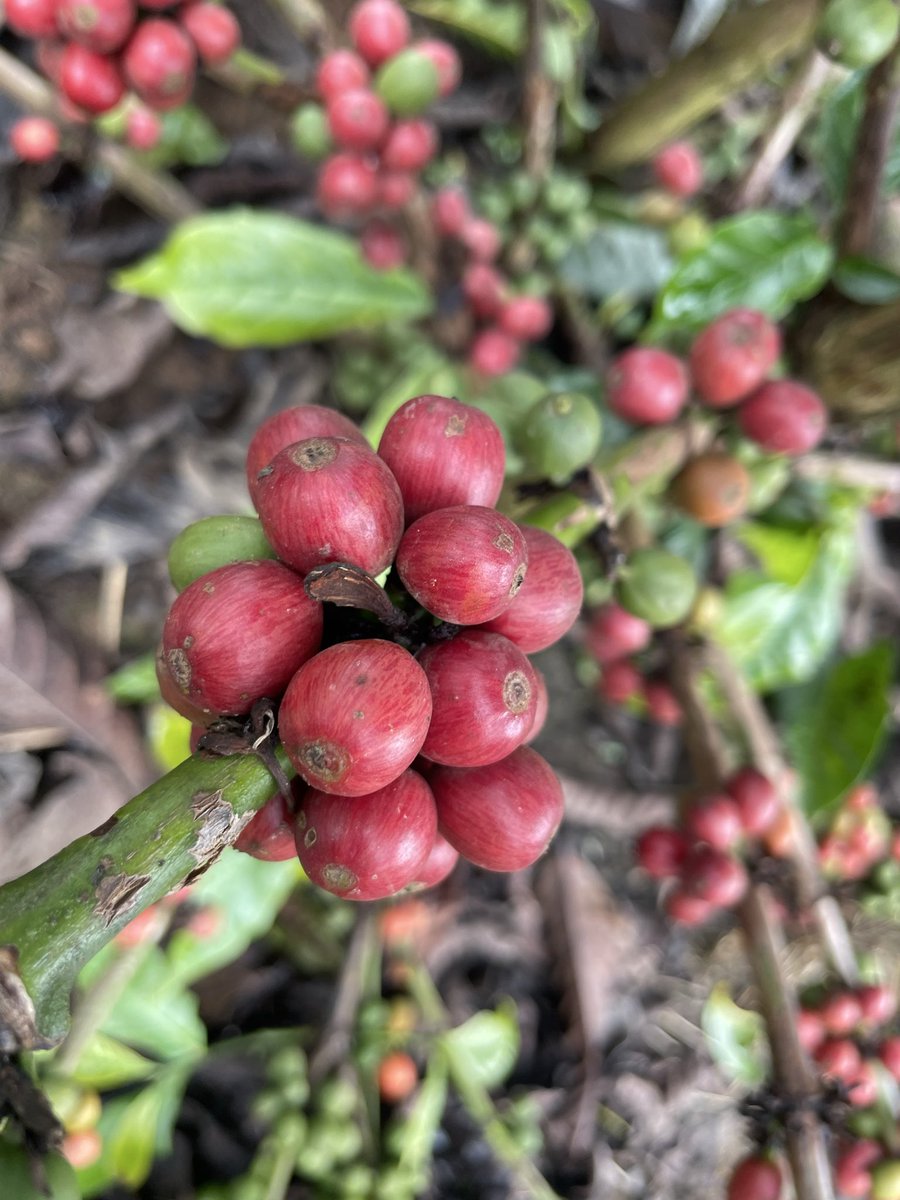
2. Picking – Ripe coffee berries are harvested by hand or machine.
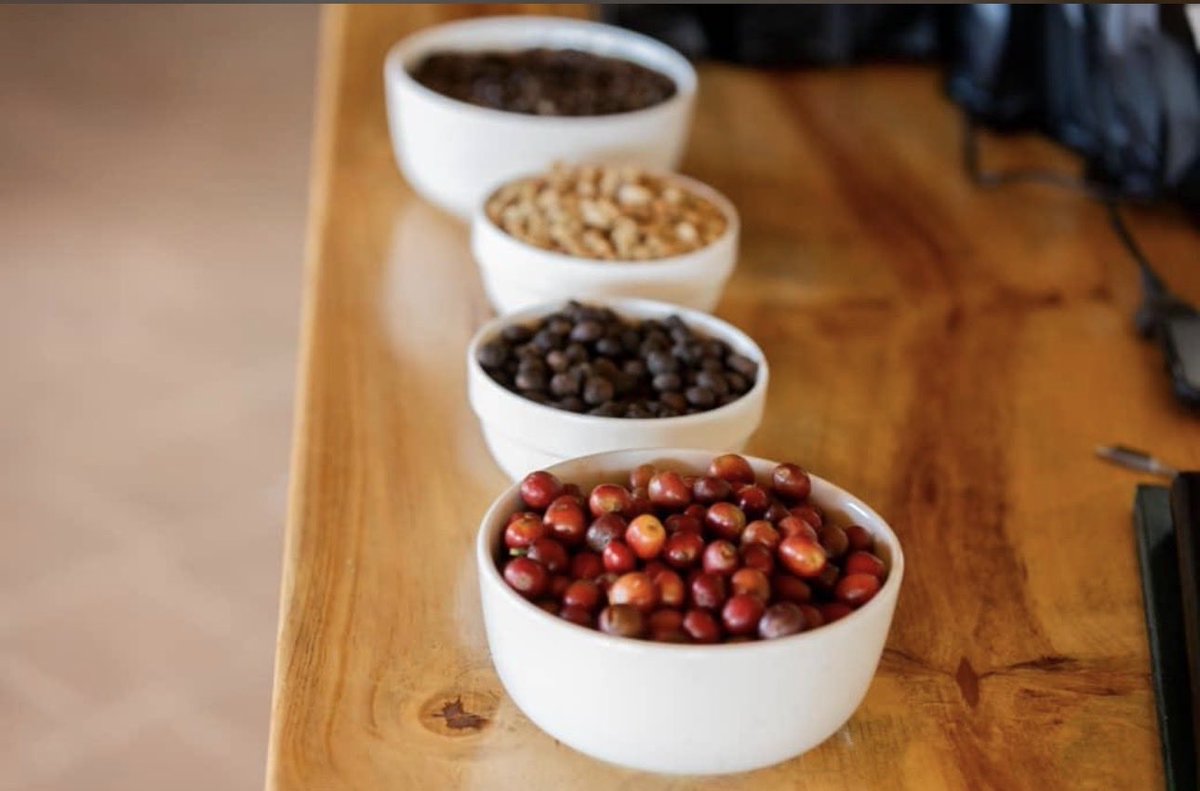
3. Processing – Berries are processed using either the “dry” (sun) or “wet” (water and machinery) method to extract green beans.
4. Milling – Beans are hulled, cleaned, sorted, and graded.
From Factory to Transport
5. Exporting – Green beans are shipped worldwide. In 2018 alone, 7.2 million tonnes were exported, valued at $19.2 billion.
6. Roasting – Beans are roasted to develop flavour, from light to dark.
7. Packaging – Imperfect beans are discarded; the rest are packed for sale.
8. Shipping – Roasted beans are distributed to retailers, cafés, or directly to consumers.
Straight to the Cup
9. Grinding – Roasted beans are ground to suit the brewing method.
10. Brewing and Drinking – Coffee is prepared through espresso, drip, French press, or other methods. One average cup requires about 70 roasted beans.
Coffee Knowledge:
Arabica beans contain about 60% more lipids and nearly twice the sugar of Robusta.
This is why Arabica is smoother and more aromatic, while Robusta is stronger, more bitter, and richer in caffeine.
Coffee is not just a beverage—it is a global business powered by farmers, exporters, roasters, and consumers, all connected through a complex supply chain.
@MauriceMugisha@AaronKaviiri@DickensOkello99@AAgather@bgumisiriza 😊🤝
If Robusta is a bad coffee then does that mean Uganda is the birthplace of bad coffee?
It is a question worth asking because Uganda is one of the original homes of Robusta coffee. This is not simply a crop we adopted; it is part of our history, our environment, our culture and the livelihood of millions of farmers. Yet for decades, we have allowed a narrative to grow that suggests Robusta is automatically inferior, cheaper and incapable of producing exceptional quality. But maybe the problem has never been the coffee itself. Maybe the problem has been the way we have treated it and the story we have told about it.
For years, we have judged Robusta based on poor harvesting, poor processing and limited investment, then used those results as evidence that the species is the problem. But coffee does not become great because of its name. It becomes great because of the choices made throughout the value chain. From how we nurture the trees, harvest only ripe cherries, process with precision, dry carefully, store properly, and roast skillfully every step determines the final experience in the cup.
I have tasted washed Robustas that completely challenged the perception I once had about this coffee. Coffees that were clean, sweet, balanced and complex. Coffees that showed me that quality is not reserved for one species. Quality is created through knowledge, commitment, and attention to detail. A poorly handled Arabica can disappoint just as a carefully produced Robusta can amaze.
The question we should be asking is not, “Why is Robusta inferior?” The bigger question is, “Why have we not invested enough in showing the world what great Robusta can become?” Uganda should not be apologizing for being the home of Robusta. We should be leading the conversation on what the future of this coffee can look like.
That is why I have committed myself to rebranding the Robusta coffee story. Not through slogans or asking the world to lower its standards but through better agronomy, better processing, stronger traceability, farmer empowerment and telling the story of a coffee that has always had potential.
The future of coffee will not be determined by whether a coffee is called Arabica or Robusta. It will be determined by the passion, knowledge and discipline behind every cup.
And I believe Uganda has an opportunity to prove that Robusta is not the coffee of yesterday. It is a coffee of the future.
For God and my country
#YouthInCoffee
We continue to receive such kind of feedback from Farmers acrossthecountry. The video was recorded today from Kaibalya village- Kihomboza Sub-county Hoima District. If there is an Agronomist from that side, we can work together to HELP the farmer.
0770902310
@Muganzisecure Personally have been getting around 65kg-80kg of kibooko from 14 trees around home planted way back like 40years by my late mum, so I decided I'll be planting atleast 250Kr trees every year and I see where it leads. Therefore if we can take baby steps we can be there at the end
IS THE COMMON USER FACILITY THE MAGIC BULLET?
Why Uganda's next leap from producing raw commodities to processing them depends on democratizing access to the means of production.
By Aita Joel
In the year ending October 2025, Uganda did something historic: it overtook Ethiopia to become Africa's largest coffee exporter, earning more than USD 2.4 billion in a single year. It is a genuine national triumph. But read the fine print and a sobering truth appears almost all of that coffee left the country as raw, green beans. The roasting, grinding, branding and packaging that capture most of coffee's value happened somewhere else, on someone else's payroll, in someone else's economy.
Nowhere is this clearer than in West Nile, where women who grow some of the finest Arabica in East Africa load their coffee onto vehicles and send it on a 500-kilometre journey to Kampala simply to have it roasted and packaged. The skill to grow the coffee is theirs. The value created by processing it belongs to someone else, half a country away.
Hold that image, because it explains both why two decades of skilling programmes have produced so little lasting transformation, and what it would finally take to change that.
The problem is measurable and it is bleeding money
Women and youth make up 77 percent of Uganda's agricultural workforce. They dominate production and informal trade in nearly every value chain and they capture the least value from all of it. Women-owned microenterprises earn, on average, 30 percent less than their male-owned counterparts. In regions like West Nile, as much as 70 percent of fruits and vegetables are lost after harvest for want of cold storage. Uganda still imports 60 to 70 percent of its edible oil, despite a third of our land being suitable for oilseed crops. Every one of those percentages is a number with a shilling sign in front of it and it leaves the country, or never enters it, every single year.
Why skilling alone never closed the gap
Governments, foundations and development partners have spent enormous sums teaching young people and women to do things to weld, to bake, to process honey, to make soap, to roast coffee. The training has often been excellent. The certificates are real. And yet, year after year, the graduates walk out of the classroom and straight into a wall.
The conventional explanation is that they lack capital. That is true, but it is not the whole truth and getting the diagnosis exactly right is the difference between another failed intervention and one that finally works. The real problem is that the thing a trained honey processor needs to turn her skill into a business is indivisible and expensive. A food-grade processing line, a UNBS-compliant facility, a cold room, a quality-assurance laboratory, certification, professional packaging — these are not costs you can shrink to fit one micro-entrepreneur. You cannot buy five percent of a pasteurizer. You cannot rent a corner of a Q-mark.
This is why the microfinance era, for all its good intentions, did not graduate a generation of women out of subsistence. You cannot lend someone across a threshold that only makes economic sense at scale. So the skilled, financed entrepreneur returns to the same informal trade she started in, selling raw, unprocessed, uncertified produce at the bottom of the value chain. The skill atrophies. The certificate gathers dust. We have, in effect, mass-produced capability and then released it into an environment with no means of production waiting to receive it, like training a generation of drivers and giving them no roads and no cars.
The Common User Facility: shared access to the means of production
Once you see the problem as one of access to the means of production rather than access to cash, the solution changes shape. You stop asking how to get every trained woman across the fixed-cost threshold a question with no affordable answer and you start asking how to let a thousand trained women share it.
That is precisely what a Common User Facility does. A CUF is publicly catalyzed, institutionally anchored, professionally managed industrial infrastructure that women and youth enterprises access on an affordable, pay-per-use basis. The processing line is built once, to UNBS standards, and rented by the hour. Around it sits the things that actually convert a skilled person into a viable business: training in local languages, a quality-assurance laboratory so products earn the Q-mark, branding and URSB registration, market linkages and access to finance plus childcare and sliding-scale fees so women with young children and early-stage entrepreneurs are not priced out. It is the contract manufacturer, the shared kitchen and the testing lab that no individual can afford alone, built as public infrastructure for those who need it most.
"The Parish Development Model creates producers. The CUF creates processors."
This is where the model speaks directly to Uganda's own flagship programme. The Parish Development Model puts money into the hands of parish enterprise groups so that they can produce. It is working but it produces raw commodities into the same trap: maize that is sold as maize, milk that is sold as milk, coffee that is sold as cherries. Without a processing and off-take layer, PDM beneficiaries graduate from subsistence only as far as the farm gate.
The Common User Facility is exactly that missing layer. It gives PDM enterprise groups somewhere to take what they produce and turn it into a certified, branded, higher-value product with a buyer at the other end.
The Parish Development Model creates producers. The Common User Facility creates processors. Together, they complete the value chain.
This is not a theory it is a proven model ready to scale
The most common objection to ambitious proposals is that they have never been tested. This one has. Every element has already been piloted at the Muni University Business Incubation Centre in Arua, in partnership with the Mastercard Foundation, the IKEA Foundation, NSSF Hi-Innovator, the US Embassy and the Government of Uganda. The Centre has trained more than 400 farmers in apiary management and post-harvest handling, equipped 60 honey processors, supported more than 20 women's shea groups across Yumbe, Moyo and Koboko, and reached into refugee-hosting districts under a programme targeting 100,000 young people, 60 percent of them women. It pioneered Chumba Baridi an off-grid, solar-powered cold room engineered in Uganda to attack the very post-harvest losses that destroy our horticulture.
So — is it the magic bullet?
No. And anyone who claims to have found a magic bullet for African development is either selling something or has not read the history. A CUF can become a white elephant if poorly utilized. It can be captured by the well-connected. Its equipment can break and sit idle. What makes this model serious is that it treats each of those risks as a design problem: utilisation driven by district outreach and demand already proven on the ground; capture guarded against by enforced women-and-youth quotas and boards with entrepreneurs seated at the table; maintenance funded from a ring-fenced share of user fees; and ownership vested in permanent public institutions rather than a time-bound project. It is not magic. It is well-engineered plumbing which is far more durable.
From political liberation to economic liberation
For four decades, one idea has run consistently through Uganda's transformation agenda: that our people must move out of subsistence and into the money economy, adding value to what we grow rather than exporting it raw. The Parish Development Model put money into producers' hands. The Common User Facility puts the means of production within their reach. Together, they finish the journey from peasant to processor, the journey from a country that grows wealth for others to one that keeps it.
"The first-generation liberated Uganda politically. The next generation must liberate it economically by democratizing access to the means of production."
That is the historic transformation a national network of Common User Facilities makes possible. Not a handout. Not another certificate. Durable industrial infrastructure, owned by permanent institutions, that turns a nation of producers into a nation of processors and does it with women and youth, the 77 percent who grow Uganda, finally at the centre rather than the margins of the value they create.
The point
The Common User Facility is not a magic bullet, because there is no such thing. It is something more valuable: the missing piece of plumbing that finally lets skilling, finance and the Parish Development Model pay off.
The woman in West Nile already knows how to grow extraordinary coffee. The only question left is whether she must keep sending it 500 kilometres away to become a product — or whether, this time, we build the roaster next door.
Joel Aita is an engineer and entrepreneur. He writes on engineering, enterprise and African development at @aitajoel, @KagutaMuseveni@rggoobi@sidneymiria
There is a generation of young coffee farmers who are growing their coffee on large scale in silence and no one is giving attention to them but the country will be shocked by this new movement and am glad am part of it
The young people have taken farming so personal
Money Vs Life!
How come SOME Ugandans think money is in conflict with life? You think money is more important than life, some guys ask?
To me, it’s same as saying food is in conflict with life!
Money is simply used to exchange value for value. Money is actually very innocent, okay it most times reviles people’s character.
I exchange money for bricks, sand, Labour, windows, beds etc and I create Elephant plains, some people exchange their Labour as jobs, you come and enjoy the environment I have created at cost, simple!
A guy has always wanted to walk with a bounce, but because he is broke, he walks normally, when money appears chap bounces while walking!
Some people use this app to say that nonsense, you have paid for internet to be on an app where we are used as a bargaining tool for money.
Even me here, people often ask me, you have a lot of engagements on your wall, can we sign you up to promote this and that. Just too busy for that but yap!
What shocks me is many of chaps who say life is more important than money are school educated, how?
The countries that lend us money or pay for our health sectors, education, infrastructure etc don’t have that nonsensical mindset.
Entrepreneurship is what helps a country to improve on the monetary value, they risk their everything to bring monitory value to a country.
Anyways enjoy your Saturday