@nickbaumann_ This is absolutely, positively wild Nick 🤯 now I feel like I’m not utilizing the cloud VM nearly enough. Challenge accepted for a weekend project.
Nupur and I are so grateful for the chance to be a part of this hackathon! So many times as a dev I would ask “this must exist in the world already” as we were building and each time she assured me otherwise. @mnedoszytko was an amazing resource from @AbridgeHQ as we had questions about scope. We look forward to bringing our idea to fruition with the team and @lightspeedvp. Many thanks as well to @AnthropicAI for the build credits. Last but not least thanks to @cerebral_valley for putting on yet another amazing event 😎 https://t.co/xBm6G9ASPE
Third place: Twiage by Kairi Wright and Nupur Garg, MD, DipABLM
An agentic AI emergency department triage team.
Clinicians describe the patient in their own words and Twiage structures that information into triage logic and applies it to cases as they come in, flagging risk and urgency faster than the status quo process can manage. It streamlines triage by combining clinical judgment with fast and structured decision-making, effectively reducing wait times and alleviating congestion across a busy emergency department.
@altryne@OpenAINewsroom@reach_vb@altryne what if the next generations of models begin to leave teeny tiny errors that aren’t bad in order to appear more “human” going forward especially in relation to written copy generated 😬🤷🏿♂️
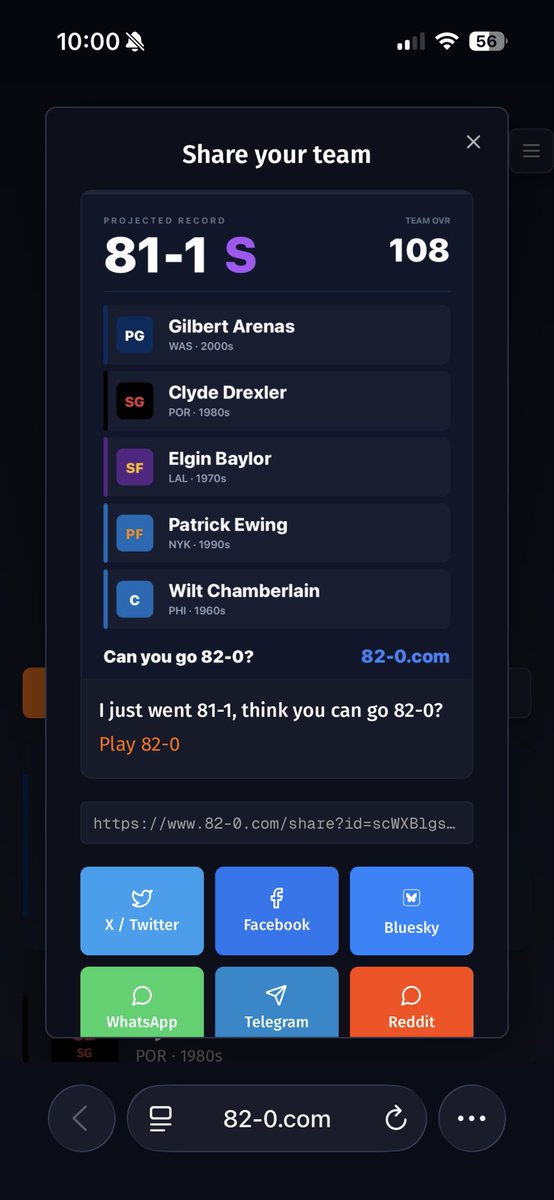
@bomani_jones Is every 82-0 post going to have 60s Wilt? Is this a silent way of the creator letting us know he’s a giant Wilt fan lol. My closest team had…60s wilt lol
@danshipper@every In your article you said Opus has outgrown its surroundings. In general I feel this is true across all the major models. It feels like we need a new form factor to unlock the next set of capabilities models can now perform. Voice HAS to be in this new form as well.
@vladtenev When will you have a more robust agent cli paired with the agent mcp? Also when will the agent be able to trade things like options and futures markets instead of just equities? Either way excited for the growth of this
@bchesky@benhylak Your current UX/UI is fine. Just add the ability to use speech in order to trigger actions and you’re golden. You have the data it’s all about presenting it faster. “I want a place similar to my last four visits but in Houston for a price of $x what do you have for Y weekend?”
@akseljoonas@huggingface@ClementDelangue would love to work on a pre-training agent except a person picks their system resource, cloud compute or DGX Spark, and the agent builds the data and conducts the runs based on their financial constraints to help people build the best model within their budget
@NewsHour I used the data from 39 exhibits published by the ACLS to create a page that’s more digestible of all the programs cut and what they are about along with a timeline of events https://t.co/8x0Vqnj4Hq
A federal judge has ruled that deposition videos of two former Department of Government Efficiency (DOGE) staffers can remain online, rejecting claims that potential embarrassment outweighed public interest in the case. The former DOGE employees, Justin Fox and Nathan Cavanaugh, testified that they used OpenAI’s ChatGPT to identify grants from the National Endowment for the Humanities (NEH) they believed violated President Donald Trump’s executive order targeting “radical and wasteful” diversity, equity and inclusion programs.
Determinations of which grants to cut were made by feeding short summaries of projects into ChatGPT and asking the chatbot if there was any connection to DEI, according to discovery materials released by the American Historical Association in March as part of a lawsuit against the NEH. The DOGE employees appeared to rely on the technology to compile a list of 1,477 grants to terminate, nearly every active award made during the Biden administration. The cuts clawed back more than $100 million, nearly half the federal agency’s budget, throwing organizations into turmoil and forcing some projects to shut down.
@nickfrosst@cohere@huggingface Nick thanks for sharing this 🙌🏿 I was able to make a /voice-memos skill using your model that can provide summaries on conversations recorded on one’s iPhone https://t.co/0tdruexeC1
@lydiahallie@lydiahallie by the same logic at the top of a skill instead of hard setting the effort level according to the model spec page couldn’t a user just do “ thinking: adaptive” at the top of the skill if they want to let Claude dynamically determine the correct amount?