@vbspurs Because this admin was running on large spending = bad. DOGE and all that. Then is spending money left and right on things that make a lot of people go 🤨 It’s been a lot of hypocrisy in that way, and that’s frustrating.
@vbspurs I think it’s a reasonable project overall. It makes sense for there to be a large event space on property for security reasons. I’m absolutely not OK with the budget bulging to the point where taxpayers are on the hook for it when that’s not what was communicated up front
#Hurricane#LALA was the first hurricane to directly impact the Hawaiian Islands since INIKI in 1992, & it's left behind a trail of devastation.
The most hurricane-prone US states are all very flat. #Hawaii—especially the Big Island—is *extremely* mountainous. And those mountains create special issues—and special weirdness!
* EXTREME RAINFALL & ROCKSLIDES. The mountains amplified the rainfall on the E side & S end of the Big Island, with some places getting almost 3 ft of rain. And in some places, these rains unleashed catastrophic flooding & rockslides.
* ELEVATION-ENHANCED WINDS. Higher elevations tend to get stronger winds in a hurricane, and this is an issue for Hawai'i, which has lots of residential neighborhoods thousands of feet above sea-level. These communities were hammered by damaging winds—even in locations far, far outside the hurricane's core. I've chased hurricanes in mountainous places before (Mexico, Taiwan, Jamaica, etc.), & this is some of the most stark elevation enhancement I've seen. For example, in beachside neighborhoods of Kona (where I'm staying), barely a twig or leaf was out of place after the storm, whereas neighborhoods in the nearby hills had wind damage. Hurricane-force gusts were measured in many places across the islands, with Mauna Kea summit (at over 13K ft) measuring a gust to a whopping 122 knots.
* SNOW. Yep. On Mauna Kea Summit, it snowed. A total meteorological freak show.
One last thing: There's a prevailing belief that the mountain peaks on the Big Island will always weaken approaching storms. LALA violated that belief. It did the exact opposite—strengthening into a hurricane as it neared the island.
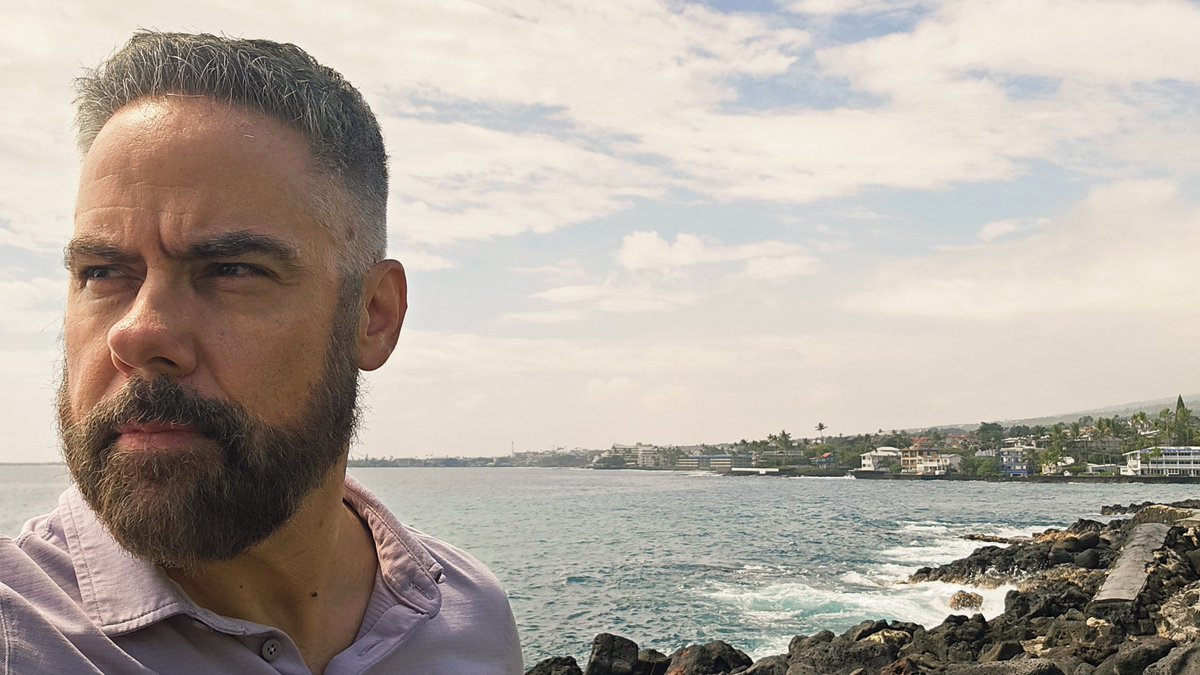
Aloha from the Big Island of #Hawaii. Against my better judgment (and hardwired reverance for climatology), I've come here to hunt a unicorn—oops, I meant a landfalling #hurricane. Let's see that happens. Either way, the island is magnificent—with or without #LALA.
Beginning to wonder if these forecast YouTubers are secretly trying to alienate the public from the NWS. You know, government = bad type thing. Perhaps trying to spark a “dump NOAA, privatize it all” initiative. Perhaps then with the millions a year in superchats that they stuff their pockets with they could get exclusive rights to weather data from private entities. I have to pay the European met agency $6500 in 2027 just to access their stupid satellite for my app. Imagine if everything was that way. We’d all be screwed.
Probably just a dumb a conspiracy, but it’s interesting how there’s more energy put into trashing NWS/NOAA than actually reaching out and saying “I can do this better, here’s how you can too” and solving the issue.
Warning fatigue is real and it’s ridiculous, but the solution to it is not to quarterback every tornado warning on the east coast. Perhaps use your audience and collect data on how false-positives affects the public and present your findings. That’s how science works. Form a hypothesis, collect some data, present some findings. Oh wait…. That’s too much to ask.
@BradArnoldWX@wx_Jpeg@EvanFor2020 Brad, this isn’t it. I live in the mid Atlantic and I’ve seen Wakefield issue tor warnings, had family under them with some of them confirmed tornadoes. This is disrespectful.
The monarch migration is about to begin.
Along the way, they depend on native flowering plants to rest and refuel. Planting native wildflowers and milkweed in your yard or in your community is one simple way to help these remarkable travelers complete their journey.