When I started with Kubernetes, I literally kept a cheat sheet next to me (like GTA San Andreas codes 😅).
Now kubectl is one of my core tools — pods, logs, rollouts, scaling, debugging.
Dropping the cheat sheet that helped me a lot 👇
#kubernetes#backend#springboot#kubectl
Spring looks easy… until you realize how much magic these annotations hide. 😅
- Configuration
- ComponentScan
- Autowired
- Lazy
- Profile
Understanding how Spring creates and manages beans was a huge level-up for me as a backend dev.
Which annotation is the most underrated?
Curious to hear from others:
What’s the HARDEST part of microservices in real life?
For me:
Understanding failures between services
retries, timeouts, circuit breakers, tracing…
The code is the easy part.
The reliability is the fight.
What’s yours?
How would you architect a *centralized Kafka publisher* that accepts messages from many services (different payloads) and forwards to multiple topics?
Looking for real-world setups & trade-offs. What worked, what hurt?
#kafka#architecture#microservices#devops
The real skill in software isn’t just writing code.
It’s staying curious.
Learning continuously.
And staying calm when things break.
Code is technical.
Growth is personal.
#devlife#backend
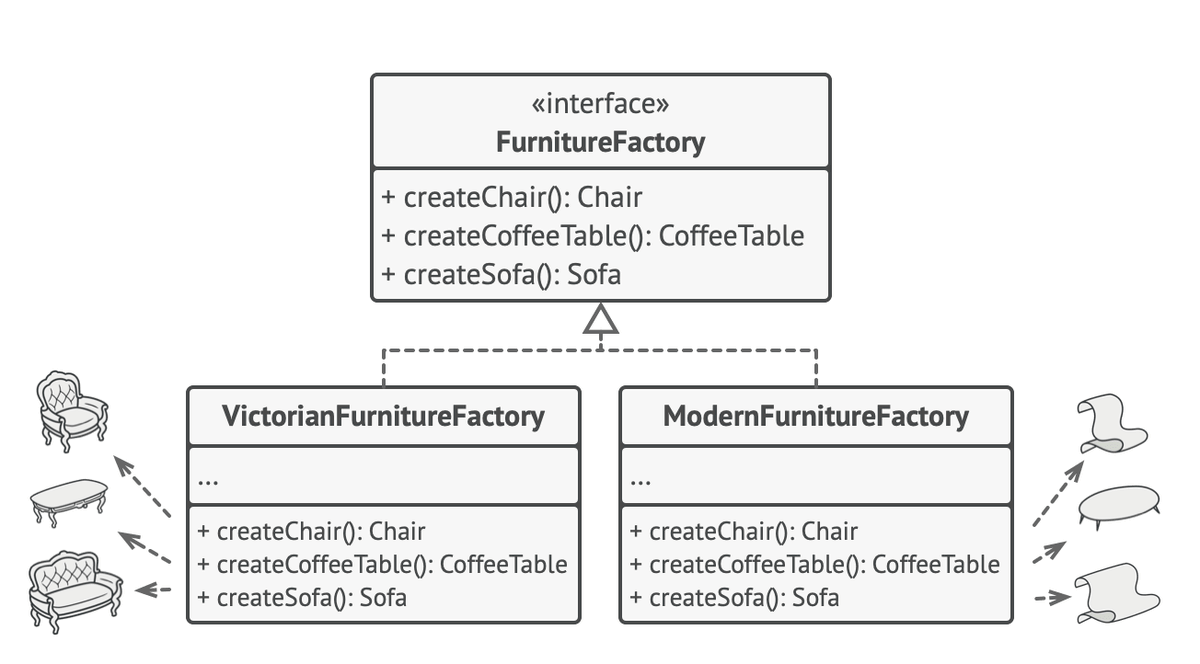
Abstract Factory = create related objects as a family, without tying your code to concrete classes.
Good for:
• Consistent variants
• Swappable implementations
• Cleaner architecture
Use it when you need interchangeable “themes”.
@EOEboh I use both of this. Debugging skills are essential in our work.
But still nothing makes a day better when you see the random log you have put like "I am here" in order to check if block of code is called🥲
Everything passed in QA, yet production went down for 1 hour.
Why? No alerts. No exception spike monitoring. No visibility.
The code was fine — our observability wasn’t.
Shipping code is easy.
Keeping systems alive is engineering.
#devops#backend#softwareengineering
@brankopetric00 So true. The hardest part isn’t writing the services — it’s debugging the spaces between them.
Without tracing + retries + circuit breakers + clear ownership, you’re basically chasing invisible failures.
@_trish_xD Totally agree — performance is architecture first.
But inside that flow, memory allocation, data structures and Big O decisions add up fast.
Flow + internals = real performance.
Last week a downstream dependency slowed down and our service couldn’t start.
Solution: Circuit Breaker.
Fail → open → pause → recover → retry.
This prevented a cascading failure.
Microservices need resilience, not just more services.
#microservices#backend#java
@vibingmonk Fair point. But today’s systems move fast.
We don’t need to be experts in every layer, just aware enough to work effectively and ship reliable products.
@systemdesignone In Java services I treat idempotency as “the same request = the same result, no side effects.”
Often ends up being a combination of request IDs + database checks + safe retry logic.
💥 Top 50 LLM Interview Questions & Answers 🤖📘
Preparing for an AI / ML / LLM interview?
This guide covers everything you need — from basics to advanced concepts ⚡
✅ Prompt Engineering
✅ Fine-tuning & RAG
✅ Transformer Architecture
✅ Tokenization & Attention
✅ Real-world LLM Scenarios
Get the full “Top 50 LLM Interview Questions” PDF 👇
1️⃣ Follow me (@daievolutionhub)
2️⃣ Repost this post 🔁
3️⃣ Comment “LLM” 💬
Follow @daievolutionhub for more AI, ML & Interview Prep content ✨
#AI #LLM #MachineLearning #PromptEngineering #InterviewPrep #DeepLearning #AIcommunity