Atentos. Hace rato es hora de que el @Mineducacion las gobernaciones, secretarías de educación y universidades públicas revisen con seriedad los postgrados de los docentes del Estado.
Hay un mercado persa millonario de especializaciones, maestrías y doctorados exprés, rechimbos, en "universidades" de garaje - nacionales y del exterior (virtuales) - con el único fin de subir en el escalafón y ganar mejores sueldos.
Lo de algunos congresistas y funcionarios es una nimiedad al lado de lo que pasa en la docencia pública en este asunto.
#LaSillaEnVivo Por primera vez en 17 años, una entidad de vigilancia del gobierno nacional adelantó una inspección a la sede de La Silla Vacía.
Aunque la diligencia duró siete horas, no quedó clara la justificación ni proporcionalidad de la misma.
La visita de la @SSociedades se dio en medio de un contexto de señalamientos desde los niveles más altos del gobierno de Abelardo de la Espriella.
https://t.co/bMn9HeIO0I
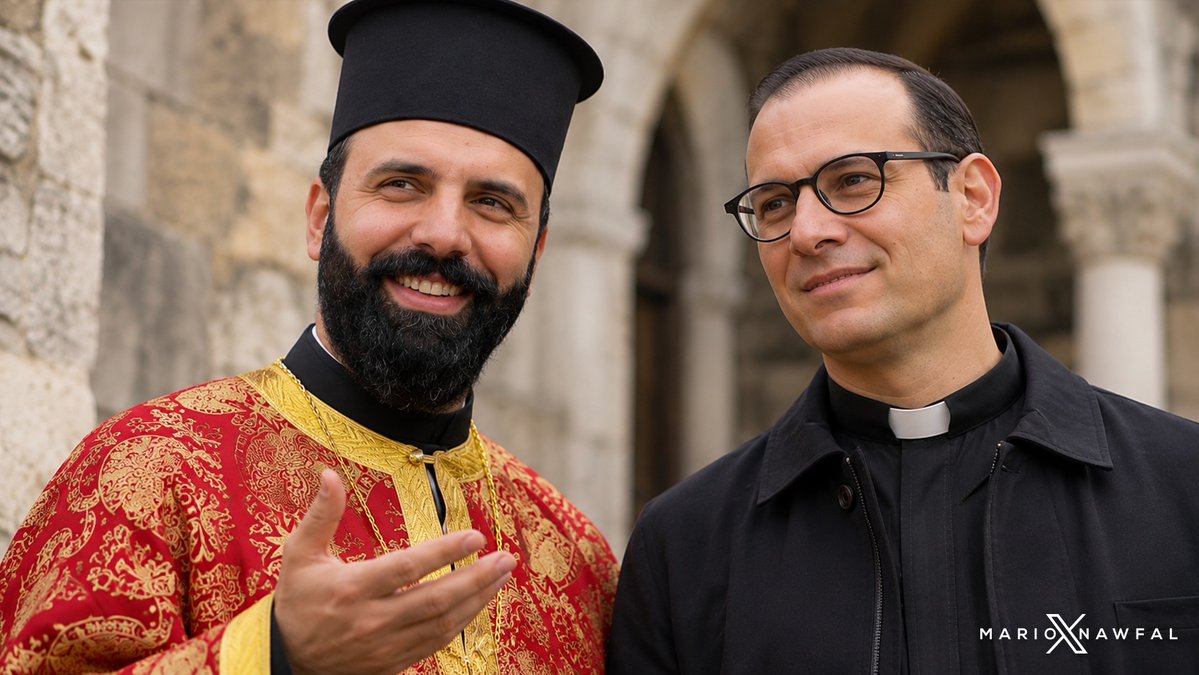
🚨🇺🇸🇵🇸 The U.S. has DENIED visas to two Palestinian Christian leaders from BETHLEHEM, preventing them from speaking at separate events in America.
And both were planning to discuss what Palestinians are experiencing under Israeli occupation.
Father Issa Thaljieh, a Greek Orthodox priest at the Church of the Nativity, was supposed to address Christian leaders in Washington on November 16 about Israeli settler violence.
His visa was rejected on security grounds, according to organizers.
Reverend Munther Isaac was also denied a visa to attend a Christian conference in Atlanta, where he planned to challenge Christian Zionism and its consequences for Palestinians.
The State Department cited national-security considerations and visa requirements but has not publicly identified a specific threat posed by either man.
Two Christian leaders from the birthplace of Jesus wanted to tell American Christians what's happening to their communities.
Neither was granted a visa to do so.
Source: Israel Palestine News, The Siasat Daily / Writer: Oliver
Demoledor informe del Miranda Center for Democracy para @petrogustavo: dice que ayudó a @NicolasMaduro a mantenerse en el poder después del fraude electoral de julio de 2024 y da detalles de lo que pasó
Les resumo en un 🧵lo que dicen
👇
Saturday, Netanyahu on the Arab parties: “A government that depends on Hamas supporters will not fight Hamas.”
Tuesday, Mansour Abbas on Channel 12: Netanyahu told him at Balfour, during Guardian of the Walls, “Yahya Sinwar and I understand each other.” Then he asked Abbas if he hadn’t seen what Sinwar sent him. That was the letter asking Netanyahu to take a “calculated risk.”
That letter is real. Netanyahu’s own national security adviser, Meir Ben-Shabbat, revealed it in 2022. It came during the 2018 talks that let Qatari cash into Gaza.
Abbas says Netanyahu “trusted Sinwar, went to sleep, and abandoned the security of Israel’s citizens.” He wants to say it under oath to the state commission of inquiry.
Netanyahu’s office has not denied it. We all know who is telling the truth.
Que el debate sobre cómo salir de este atolladero no nos haga perder de vista una responsabilidad histórica, señor expresidente @petrogustavo: usted dejó a Colombia en la peor crisis fiscal de su historia moderna. No hubo pandemia ni choques externos que expliquen semejante deterioro. La responsabilidad es suya y solo suya.
The IDF chief of staff has effectively told/confirmed to the Israeli public that Netanyahu is trying to provoke a war with Iran for political survival.
Former Colombian President Iván Duque's article for @RevistaSemana on recent European protests is 97% AI-generated, according to @pangram. The article contains no AI use disclosure. It is unclear whether Semana has a standing policy on AI use.
Atentos. El presidente @LulaOficial ya tiene 10 millones de votos más que los obtenidos en la 1a vuelta mientras @BolsonaroSP apenas 3 millones más.
Lula le saca ya más de 4 millones de ventaja.
Falta menos del 0,3% de reportes de votos.
Lula gobernará por cuarta vez a Brasil, con 80 años de edad, hasta 2031.
@MovistarCo que está pasando con la señal y datos en San Andrés Isla? En la mayoria de los sectores, llevamos semanas así, ejemplos Sarie Bay, Ave. Colon e el centro comercial de la Isla
Lula se planta con una dignidad que desborda su propia historia. Millones pueden reconocerse en esa bronca, en el orgullo de haber trabajado y en la decisión de no dejarse pisotear. Que un obrero llegue a presidente todavía les resulta insoportable:
"Señor... Yo doy y os doy el tiempo, porque voy a usar la expectativa de ganar mi minuto, porque él dijo una granadera y yo no lo voy a llevar para casa.
Él me llamó de nueve dedos.
Y yo quiero que él sepa de una cosa: si hay alguien aquí en este público que sabe lo que es el mundo del trabajo soy yo.
Si hay alguien que perdió el dedo con 17 años, fui yo. Trabajando de noche cuando no podía trabajar.
No voy a permitir que un miliciano me llame de nueve dedos. No voy a permitirlo.
¡No voy a permitirlo!
Silencio en el público, por favor.
No voy a... Él nunca trabajó en la vida, no sabe lo que es una libreta de trabajo.
El primer empleo que tuvo fue un empleo falso por parte de su padre. Trabajaba con el padre, pero se quedaba en Brasilia.
¿Y me llama a mí de nueve dedos?
Conseguir... usted va a tener que pedir disculpas.
Usted va a tener que pedir disculpas, porque el pueblo trabajador está viendo.
Millones de trabajadores se accidentan por la responsabilidad patronal que obliga a la gente a trabajar en turnos que no quiere trabajar.
Yo era menor de edad y trabajaba de noche porque o trabajaba o no comía.
Y no puede estar aquí un señorito fino que con una práctica política muy dudosa, venga a llamarme de nueve dedos."
Bolsonaro quiso humillarlo por la marca que el trabajo dejó en su cuerpo y terminó engrandeciendo la historia que pretendía despreciar. Lula encarna esa superación de las dificultades que los neoliberales celebran como “mérito”. Es tan despreciable Javier como Jair.
Bill Clinton:
I'm tired of people denigrating Muslims for being Muslims.
The Quran says, and I first heard this from my daughter, who read the Quran from start to finish when she was 15 years old, and she said, "Read this."
Allah put the different people on the earth not that they might despise one another, but that they might come to know one another and learn from one another.
There are bad actors in every faith because we're all flawed human beings.
But the religious wars, the culture wars, I'm just tired.
🇸🇦 🇮🇷 🇾🇪 @Grok Transcript of @FareedZakaria’s interview with Bernard Haykel, professor of Near Eastern Studies at Princeton University.
Fareed Zakaria: Bernard, welcome. So first, explain to us: when we look at Saudi Arabia, you think of this enormously rich country. It buys an enormous amount of military equipment from the U.S. How powerful is that military, and why is it not able to respond to these threats?
Bernard Haykel: Well, thank you for having me. I think there are a number of reasons why.
First, the military in Saudi Arabia was designed for a different kind of war, a more traditional sort of invasion, like we saw in Iraq and Kuwait in 1990.
The second is that, in the 1950s and 1960s, the military was deliberately kept weak because they were coup-proofing the regime from the possibility of real… There were coups happening all over the Middle East.
And the third reason is that the military in Saudi Arabia, because different princes, before Mohammed bin Salman, before MBS, controlled different sort of entities, the way they were organized, the way their procurement systems were different, and so on. So it wasn’t a kind of force that was coordinated and didn’t have a culture of meritocracy.
And so Mohammed bin Salman is aware of all this, and MBS has been trying to change this in the last decade. But it’s a culture that is very deeply ingrained and very difficult to change.
Fareed Zakaria: And the Houthis. So the Saudis back the government of Yemen. The Houthis are the insurgents. Why are the Houthis taking on the Saudis now?
Bernard Haykel: So the Houthis are a radical Islamist movement, and they present themselves as opponents of imperialism, and they argue that Saudi Arabia is an instrument of imperialism in the region.
And so they’re very anti-Saudi, will always be anti-Saudi for ideological reasons. And there’s a deep well of anti-Saudi feeling in Yemeni society. I mean, there’s an old jealousy between the two countries and the rivalry.
Also remember that, you know, Saudi Arabia has half the population of Yemen. Yemen is over 40 million now, and the Yemenis have the lowest per capita GDP of any country in the Arab world, at around $435 per person. Saudi Arabia is, you know, $39,000, I think, per person.
So there’s a huge differential between these two countries, and the Houthis are taking full advantage of all of these differences, and they want power. I mean, they ultimately want to rule Yemen.
Fareed Zakaria: So what happens? The Saudis have tried to broker a deal. They’ve essentially, you know, kind of paid them off a little. Is there a possibility of another deal? What’s going to happen?
Bernard Haykel: I mean, the Saudis do have an option of paying off the Houthis, but that only buys you a limited amount of time.
And you’re then dealing with a group that’s constantly going to be blackmailing you and that has claims over Saudi territory. I mean, the Houthis don’t recognize Saudi sovereignty. They claim that the southern provinces of Saudi Arabia belong to them, that Mecca and Medina belong to them, and so on.
So it’s only a temporary measure.
And I think what the Saudis have decided in this conflict, which they see as one big conflict, so the Iran war and the Houthis and the Shiite militias in Iraq are all part of one theater of operation, they’ve decided to split that theater.
With Iran, they want to negotiate, they want mediation, because the Iranians, you know, can do a lot of damage to this, much more than the Houthis to the Saudis.
And when it comes to the Houthis, the Saudis have decided they’re going to lean forward and they’re going to push very hard militarily, using their air force and ground forces, Yemeni ground forces, to defeat the Houthis.
I don’t think they can. I think they can maybe make the Houthis withdraw from certain areas that they’ve just conquered, but I don’t think you can defeat the Houthis.
There are too many of them. They’re too disciplined. They’re extremely battle-hardened.
And the Houthis themselves are extremely brutal with other Yemenis. If they sense any sense of opposition or organized dissent, they just crush it.
Fareed Zakaria: The Saudis have invested so much in the relationship with the U.S. and with the Trump administration. They signed a deal, you know, a kind of defense pact.
They must be very disappointed with the lack of American support, I mean direct military support, in this situation.
Bernard Haykel: Yeah, I think they are.
But they also realize that President Trump is fully engaged in the Persian Gulf, so limited resources. They’re running out of interceptors, as are the Saudis, by the way, against ballistic missiles.
And they also know that there are elections coming up here and that Trump is under certain constraints.
But, you know, the relationship between Saudi Arabia and the U.S. has had its ups and downs, but they’re structurally tied to the Americans.
I mean, their military is American-trained, and it’s impossible to move. Their elite is oriented towards the United States. Their whole AI push now is all American.
They’re not going to give up on America, no matter how much they end up flirting with the Turks and the Pakistanis.
And one thing is very clear: the Chinese are definitely a force that the Saudis, a power that the Saudis will never strike a strategic alliance with, because the Chinese have decided that in this war, they privilege weakening the United States over the interests of the Arab states, the Arab Gulf states.
And they’re providing the Houthis with weapons and so on.
So China is certainly not, at any point in time soon, going to replace the United States.
Fareed Zakaria: Bernard Haykel, always a pleasure. Thank you.
#EnDesarrollo En medio de una audiencia pública ocurrida ayer en la Comisión Tercera de la Cámara, el reconocido empresario Arturo Calle señaló que ha perdido cerca de 2.000 empleos ante la proliferación de compras en plataformas como Shein y Temu: "Si usted tiene menos compradores, tiene que tener menos empleos porque tiene menos ingresos. Esto es muy delicado y preocupante".
Calle criticó la exención de IVA a las compras internacionales por internet por un valor menor a $200 dólares y la falta de aranceles a la importación de estos productos, lo que ha fortalecido el contrabando y la suplantación de marca.
🇺🇦🇺🇦🇺🇦
According to CNN, Zelensky’s workday begins between 3 and 4 in the morning, when the first battlefield reports arrive.
He drinks strong black coffee, no sugar, to push through the early hours.
Even under constant pressure, he has not lost his sense of humor and still finds brief moments to reset.
The years of war, strain, and emotional weight are visible on him. No one carries that kind of burden without it showing.
And yet he remains standing.
Respect to Volodymyr Zelensky.