Japan’s roads are built to last because quality comes first, not shortcuts. In India, a huge chunk of public money often disappears into commissions, corruption, and inflated contracts before the work even begins. The result? Roads that crack after one monsoon, potholes that return every year, and taxpayers forced to pay again and again for the same repairs.
We can do two things to start with:
Personally not create income or wealth through corrupt or illegal means
Stop glorifying people who became rich through corrupt or illegal means
I've pointed out many times, as a society, we adore rich people even if they acquired wealth through corrupt means. Being rich in itself is not an appreciable trait.
As Warren Buffett said that he celebrates wealth only if it is fairly won and wisely used.
This is something all of us should follow.
A high tech US factory turns banana leaves into organic fertilizer pellets using automated systems, and studies show this natural solution can boost rice yields by 20 to 30 percent while reducing chemical fertilizer use 🌱
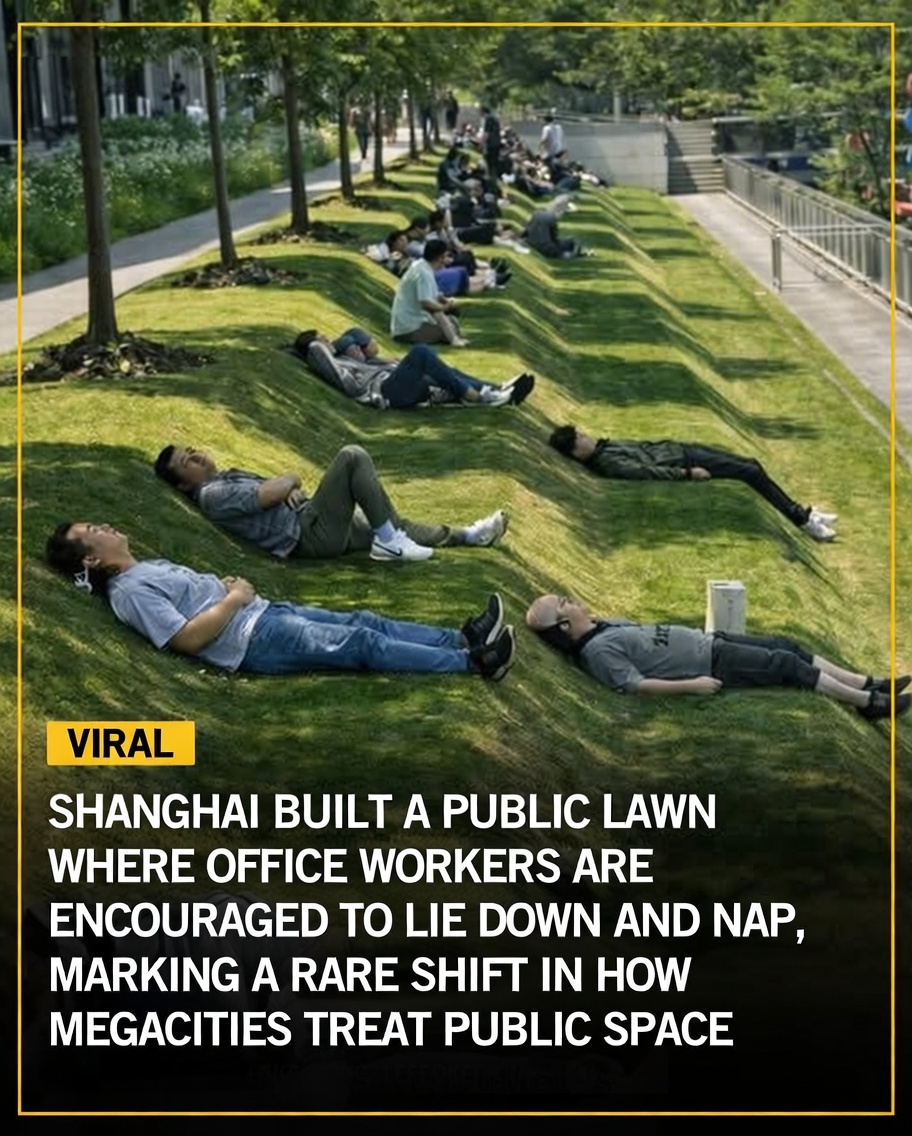
Any office worker who's ever craved a quick break from the desk during lunch will instantly get why this grassy slope exploded in popularity across China.
In Shanghai's Xuhui District, a 30-meter tiered lawn in Runway Park has turned into one of the city's most buzzed-about spots. Part of the 36-acre linear park—built on the old Longhua Airport grounds near the Yunjin Road metro station—this feature was crafted by the American firm Sasaki specifically to encourage lying down and relaxing.
The incline is precisely 135 degrees, with each tier measuring 1.05 meters wide and 0.55 meters high—proportions fine-tuned through testing to echo the comfort of a lounge chair. Come lunchtime, hundreds of workers from nearby office buildings flock here to nap, snack, or simply gaze upward. On Chinese social platforms, it's been lovingly dubbed the "Workers' Sanctuary" and inspired the trending hashtag "20-Minute Park Effect."
For years, lawns in Chinese cities were strictly decorative, with "Keep Off the Grass" signs enforcing a hands-off approach. This spot flips the script entirely, welcoming people to use and enjoy it fully.
₹50 Crore Per Person should be the MINIMUM COMPENSATION for families of those who die due to collapsing bridges, falling metro slabs, train accidents, stampedes, open manholes, contaminated water, adulterated food and medicines, potholes, or any disaster caused by government negligence.
You’ll see how quickly such accidents stop occurring.
It is the low cost assigned to human life that enables repeated failures and corruption within the system. When accountability becomes expensive, negligence becomes rare.
Mechanical engineer Gurunandan Rao refused to watch Bengaluru’s Lalbagh lake die.
Instead of costly tech, he turned to nature — planting native aquatic plants like colocasia (yes, patra leaves!) to absorb pollutants and restore clarity.
With aerators boosting oxygen levels by 86% and 30+ ponds revived, he’s proving one thing: cities don’t need miracles, just methods.
Would your city benefit from this? Tell us in the comments below, save this video & share.
@gurunandanraom
#LakeRestoration #BengaluruLakes #UrbanEcology #NatureBasedSolutions #SustainableCities
[Bengaluru Lake Revival, Lalbagh Lake Restoration, Native Aquatic Plants, Wetland Filtration Method, Urban Water Conservation, Sustainable Lake Management]
On #LabourDay, we honour the hard work of people across the nation and the world, and celebrate their achievements in shaping the modern world. #MayDay#HonourWork