@rndenison@carrasco_lab@djheeger In anticipation of predictable target times, visual cortical activity slowly ramped up. The ramping had low frequency (~2 Hz) modulation, which flexibly shifted in phase depending on the attended time point! Temporal attention also transiently impacted target-evoked responses.
New paper on the neural dynamics of temporal attention—a long time in the making! w @rndenison@carrasco_lab@djheeger. How does the brain prepare to see well precisely when we need to?
https://t.co/nTbPPzv1E8
@rndenison@carrasco_lab@djheeger We used a steady-state visual evoked response protocol in MEG to continuously track visual cortical activity while people directed attention to different moments in time. We found a few things (in fact, one discovered during the review process).
Thank you @CIFAR_News & @TempletonWorld for the special week in the sun with scientists from around the world (which felt extra sweet after having started graduate school during covid times) to discuss the neuroscience of consciousness
Happening this week in Mexico: #CIFARWinterSchool hosted by our Brains, Minds & Consciousness program members in collaboration with @TempletonWorld.
Check out pictures from the event below!
Made from MIT PhD enrollment data from 2010-2020. Orange dot=1 Black student & blue dot=1 non-Black student. Just a visual of the past decade with virtually no increase in URMs.
Consider 5-6 years being one of these orange dots #AcademicChatter#BlackinSTEM
This month marks 150 years since Nature’s first ever issue. In our anniversary edition you will find several specially commissioned pieces to mark this occasion, including videos and an interactive infographic. #Nature150 https://t.co/b0u3zDLFXf
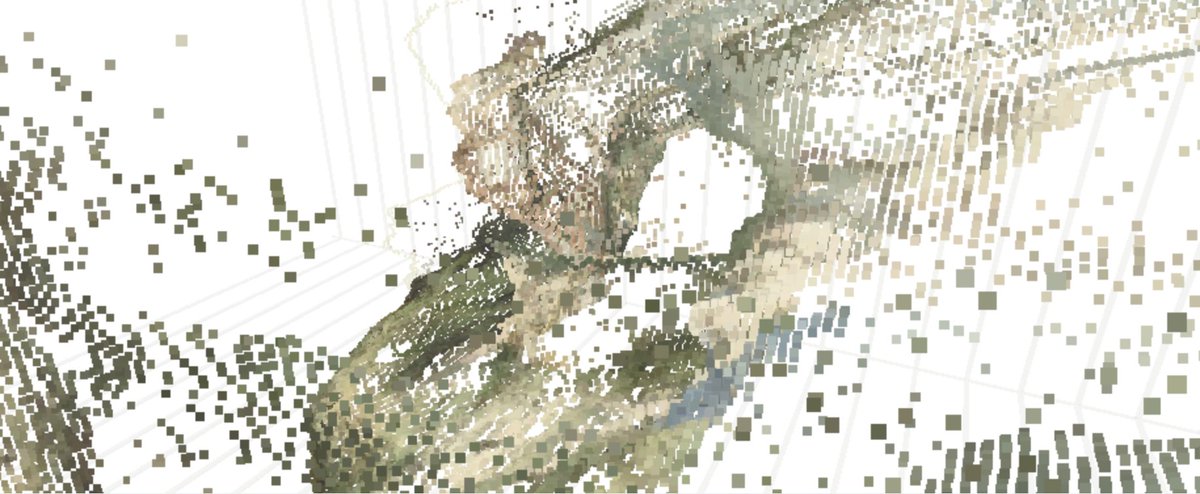
How does a neural net see depth in paintings? Does it "resolve" the depth depicted in these images in the same way we do?
Read about depth predictions: https://t.co/VyVz9ARX5m
PAIR project by @EllenJiang2, @emilyrreif, @_beenkim
A new Munker illusion, which I call confetti. All the dots in the background are the same color (RGB 250, 219, 172) but are perceived as four different colors. The differences are subtle, though, and depend on the size of the image when it's viewed. cc @AkiyoshiKitaoka