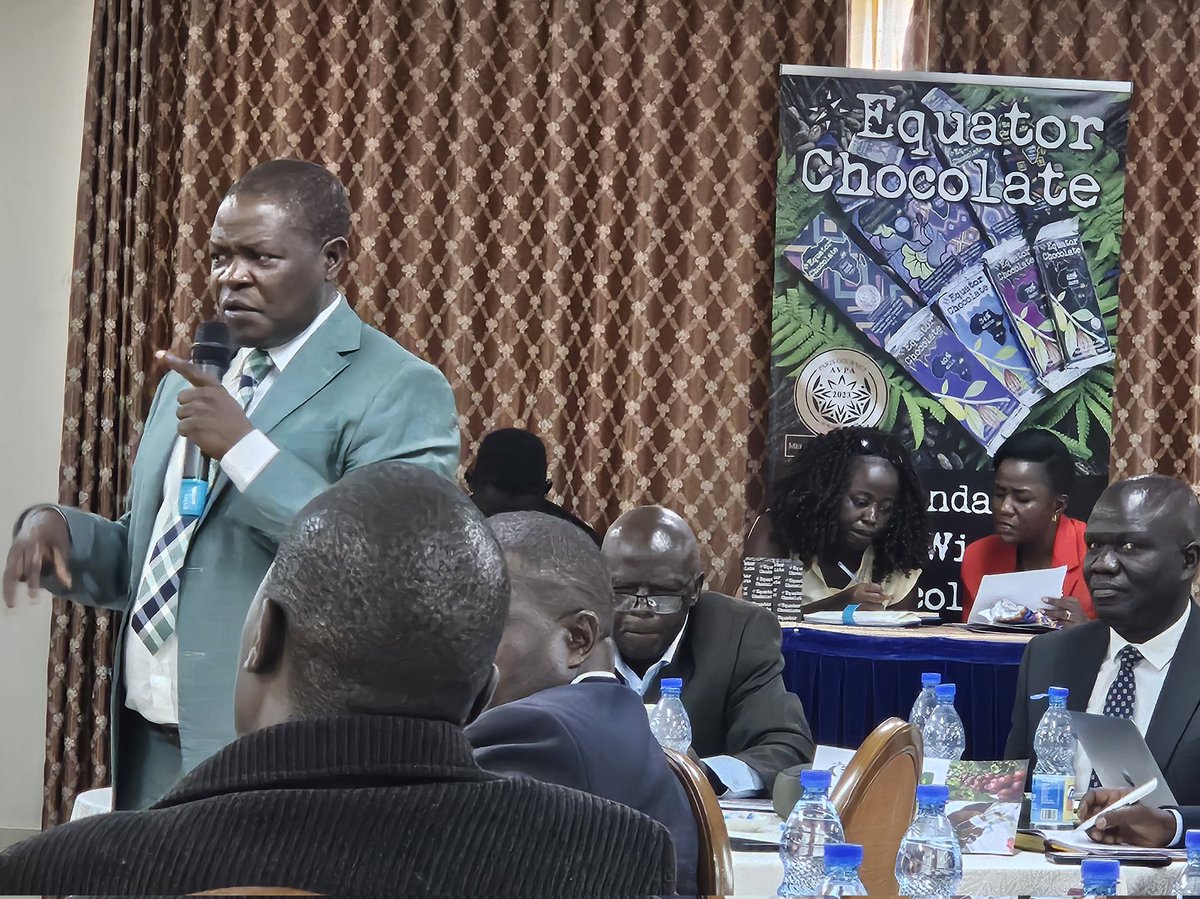
This PhD defense🫡🫡🫡. Nice presentation,nice opponent interaction & above all, nice vibes with his publications. A PhD directly impating the farmer, policy & researchers. Congs Michael Kanaabi! Proudly associated! NIRS, GIs, authenticity, traceability! @MakCAES@narouganda
DID YOU KNOW?
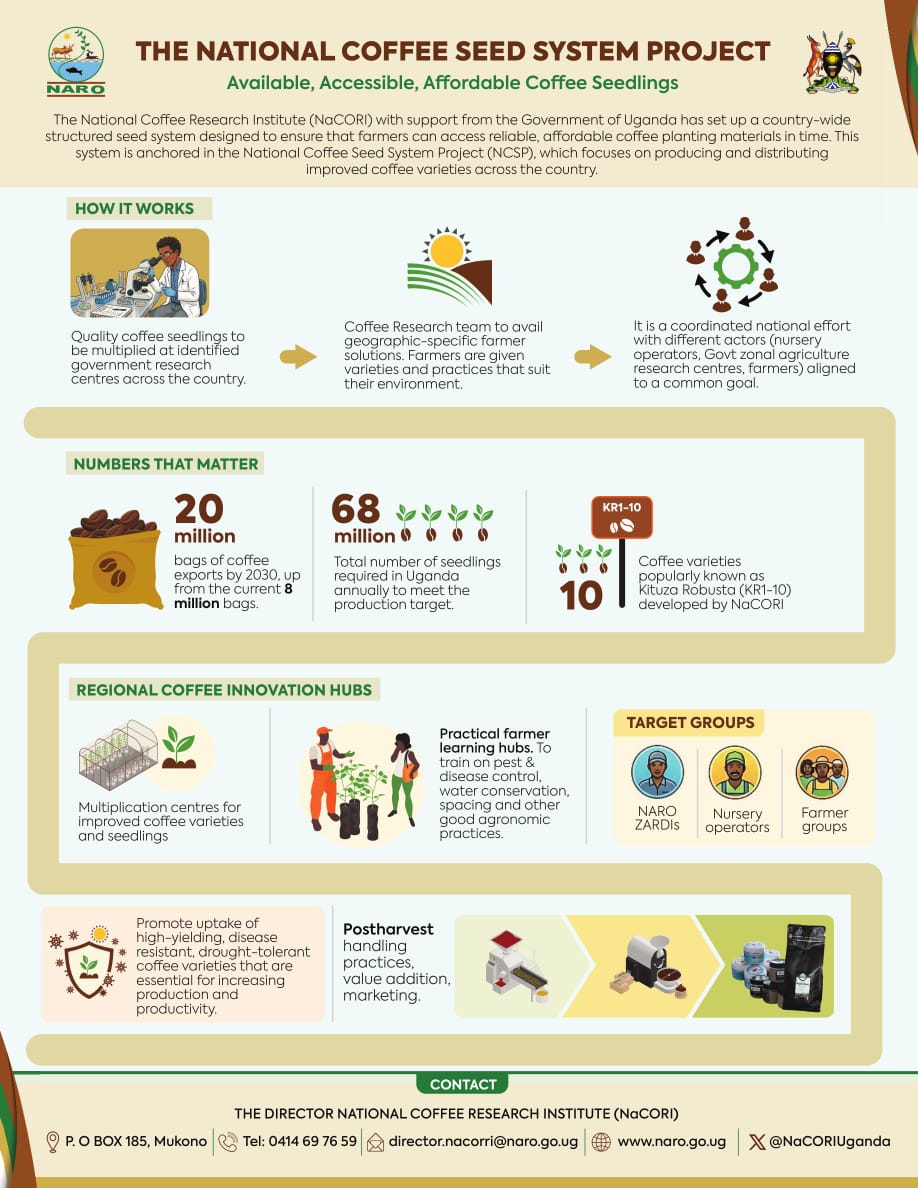
*Coffee farmers struggle to find genuine seedlings.
*When they find the seedlings, they are expensive.
*Farmers trek or drive long distances to get seedlings.
*Many coffee farmers are falling victim to counterfeit suppliers, resulting in huge losses. @narouganda coffee research team & partners have set up a structured seed system designed to ensure that farmers get quality seedlings in time.
*Through #UgandaCoffeeSeedSystemProject, @NaCORIUganda will avail farmers with disease-free, high-yielding & drought tolerant coffee varieties.
*Access to these seedlings will be through designated centres across the country. #EmwanyiTelimba
@wamanya2 The National Coffee Research Institute @NaCORIUganda has climate smart packages to help farmers cope with the coffee twig borer infestation in thei coffee fields
@wamanya2 Likely to be the coffee berry borer beetle. Larvae can be seen popping out of sun dried coffee. A more devastating pest is the coffee twig borer beetle, which bores, nests, feeds and reproduces in berry-bearing twigs, causing them to dry. Farmer may incur up to 50% yield loss!
@MuteesaIRoyal This advert is awesome, thanks. However, for the next one, kindly include a link to the application portal and/or the university website. Regards!
@Amelia_Mycelia@USDA Congratulations on your new assignment @Amelia_Mycelia. I am working with coffee coffee-breeding, agronomy & protection (Arabica and Robusta) in Uganda. Would like to know more of what you are planning to do and if there are any opportunities for collaboration.
The National Coffee Research Institute @NaCORIUganda@narouganda plays a key role in the booming Coffee sector. Yield is 60% genetics, 40% agronomy. Our wilt resistant KR varieties + professional agronomic packages have you covered. Do you smell the coffee?
Dr Geofrey Arinaitwe Director of Research: "Conducting Market research and intelligence to inform research to better understand the market is essential in production of coffee bi-products."@kanaabim@narouganda @ NaCORI @FeedtheFuture
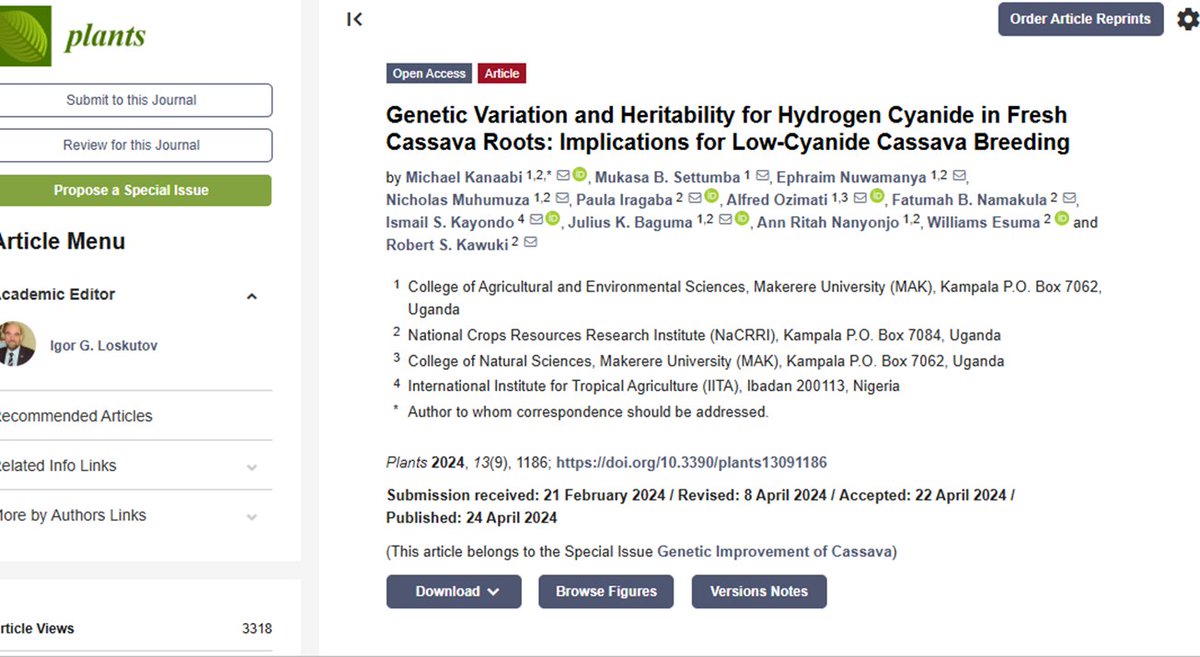
It is high time we paid attention to food safety! Our people should have access to adequate amounts of nutritious & safe food. Cassava high in cyanide (bitter) is harmful to your health. Only advised for industrial applications.
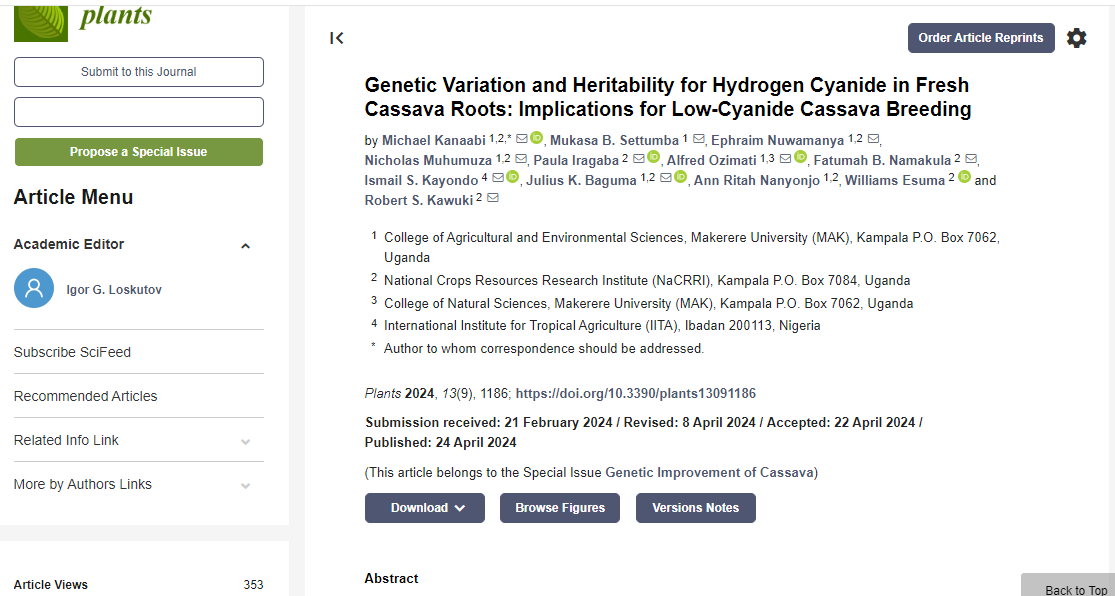
This new paper from our lab explains possibilities of breeding for low cyanide cassava making it safe for consumption.
Yes, cassava has cyanide but importantly too is the fact that through breeding, this can be reduced making it safer for consumption thru minimal processing
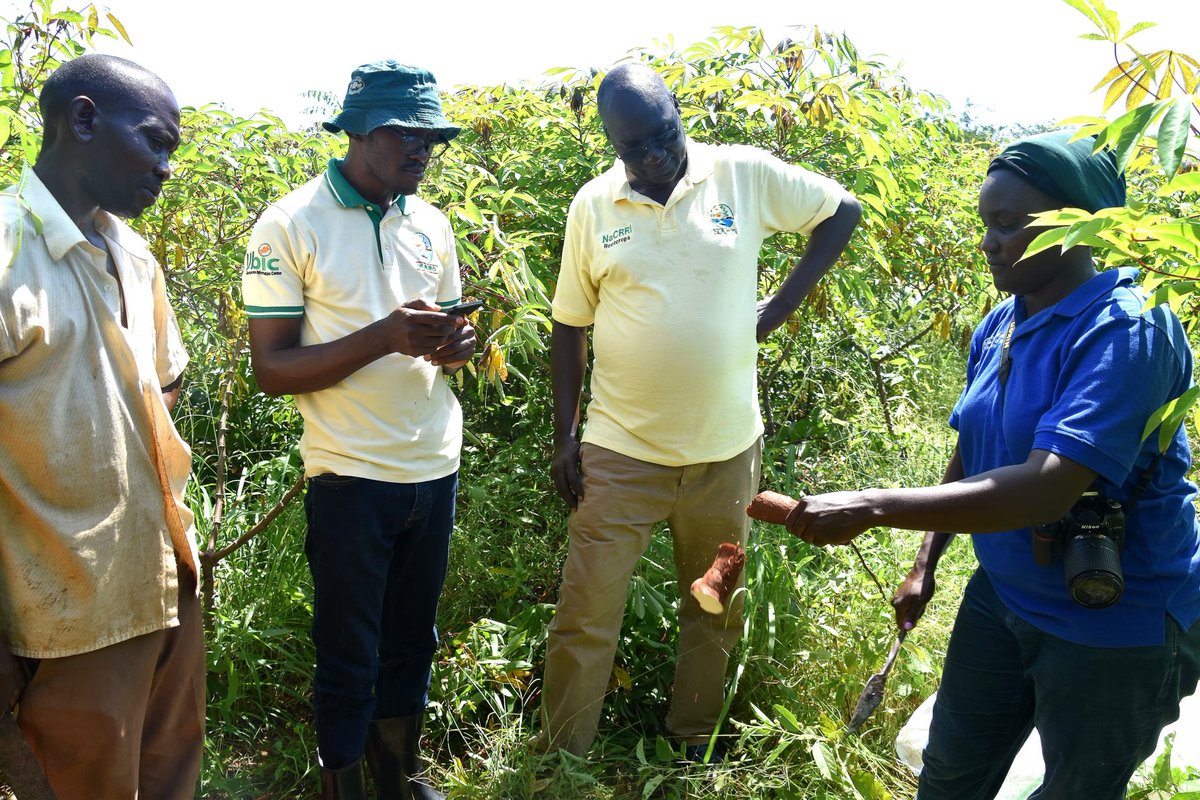
@narouganda aims at developing crop varieties that meet the needs and prefrences of farmers and end-users. Citizen science approaches such as these ensure shared learnings with our most esteemed clients, the farmers @wamanya2
@narouganda team's on the ground for final monitoring of cassava seed multiplication fields in Nakasongola, Luweero, and Nakaseke Districts. Checking genetic purity & tackling Cassava Brown Streak Disease (CBSD) and Cassava Mosaic Disease (CMD).
#Cassava#Agriculture#Fieldwork"
@AineShaKa@rkabushenga@cobbo3@narouganda Thanks for these observations. Our scientists grow the same Crops and buy the same food from market stalls. Surely, they would not wish the worst for themselves! Changes in environmental conditions and consumer preferences validate the need for new crop varieties.
@AllanNinsiima1@AineShaKa@rkabushenga@cobbo3@narouganda It's possible that the farmers' varieties had some level of resistance to the wilt (coexisted with the pathogen) and probably the improved ones were susceptible, hence the high incidence of the disease. This is not to say that the improved varieties introduced the disease!
@BMudarshiru@AineShaKa@rkabushenga@cobbo3 Some facts: 1. Not all improved varieties are GMOs. 2. There are no GMOs on farmers' fields in Uganda. 3. Besides disease resistance, plants have been genetically modified to deal with several other stresses. Finally, encourage our people to grow improved crop varieties.