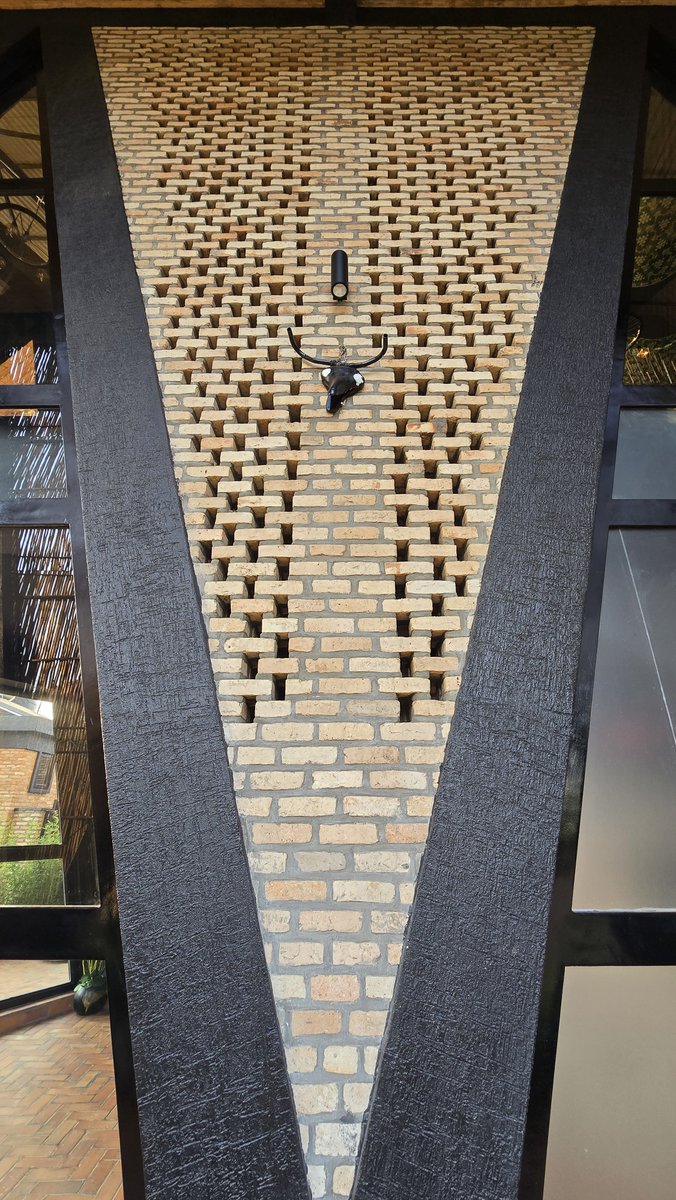
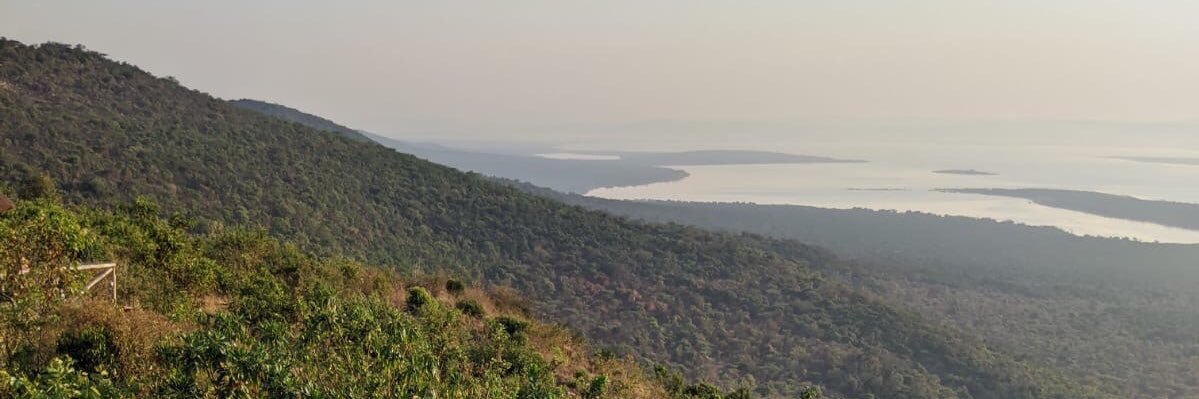
Rwanda is really good at this thing we’ve been trying to explain.
The Ellen DeGeneres Campus sits at the base of the Virunga volcanoes in Musanze and the first thing MASS Design Group did was look down, not outward. Volcanic stone excavated during construction was reused for grout, gravel, and wall cladding. The mountain gave the building its material. Nothing was hauled away as waste.
2,400 Rwandans built this campus making 99% of total project labor. Over 1,600 pieces of custom furniture produced by local artisans. Amphitheater seats formed from volcanic stone excavated directly from the site. Green roofs planted with native species to extend the habitat of the adjacent national park.
The use of volcanic stone has since inspired people in the surrounding area to consider it as a building material for their own homes — shifting the perception of it from a low-value material to an opportunity.
That’s the real impact. Not just a beautiful building. A changed relationship between a community and the material beneath their feet.
This is exactly what we need more of across Africa.
📍Ellen DeGeneres Campus, Dian Fossey Gorilla Fund, Kinigi, Rwanda.
Architects: MASS Design Group.
📷 Iwan Baan
Michael Jackson’s drummer, Jonathan Moffett, performs “Smooth Criminal,”
MJ once said: “My bass player makes a mistake, my guitar player makes a mistake, I make mistakes sometimes, but Sugarfoot never makes a mistake.”
Long before it turned genocide denier, the @BBC produced a documentary that exposed three truths:
One: The genocide against the Tutsi was planned.
Two: The plan was known to the US State Department months before hell was unleashed on Rwanda’s Tutsi.
Three: The attack on the plane was nothing but a pretext to unleash genocidal violence.
"Rwanda, That Local Thing" is just one episode among eight in a series called Corridors of Power: Should the US Police the World?
Here is what British investigative journalist @lindamelvern writes in her recent article, "A preventable genocide, a denied responsibility: What 'Corridors of Power' reveals about Rwanda":
"Anyone who had bothered to examine the cables from Kigali, carefully filed in the State Department’s Africa Bureau, would have found the outline of a planned, political campaign to exterminate the Tutsi."
Read more: https://t.co/FelmK9PfN3
Let that sink in. They knew.
The documentary goes further, revealing that the extermination plan was personally disclosed to General Roméo Dallaire, commander of UNAMIR, back in January 1994… by a regime insider.
Here was the plan, in cold blood:
-Kill Belgian peacekeepers to drive the UN mission out.
- Then kill all Tutsi.
Lists of Tutsi were drawn up. Weapons stockpiled. Tens of thousands of Interahamwe militias trained and mobilized.
The media, the RTLM, would do the rest, whipping the masses into a killing frenzy.
Three months before the genocide, three months before the plane was struck, the plan was already laid out, ready to be executed.
The attack on the plane, launched from the Kanombe military barracks, controlled by the genocidal army, was never the cause. It was the excuse.The signal to begin the slaughter.
Anyone who tells you otherwise is a genocide denier.
Plain and simple.
Cc: @ali_naka@Ali_Rukaliza@albcontact@wmnjoya@RobCyubahiro@byukavuba@dr_dash250@onduhungirehe@DavidHundeyin@Nath_Yamb@cobbo3@AndrewMwenda@DavidNdii@EFFSouthAfrica@MbuyiseniNdlozi
“If you knew me, and you really knew yourself, you would not have killed me” – Quote on a stone wall at the Genocide Memorial in Kigali. It is located in the Children’s Room, a space dedicated to the youngest victims of the 1994 Genocide against the Tutsi and one of the most haunting parts of the memorial. The Genocide is officially recognised as beginning on April 7, 1994. From tomorrow Rwanda will begin the 32nd commemoration (Kwibuka) of the Genocide.