Ebook Mandarin 🇨🇳 Gratis!
Banyak yang nanya bukunya, ini yaa! Tapi aku saranin ini dipakai bareng laoshi kalian, karenaa benar benar speaking orianted https://t.co/ZeNHkl0S7K
#langtwt#studytwt
Lucky me... berhasil menemukan dupe POPCORN XXI versi murah dan lebih banyak, rasanya tuh beneran plek-ketiplek banget sampe curiga mereka dapet bocoran resep rahasianya 😆🙏
Elon baru aja rilis kode algoritma X dalam bentuk GitHub ke publik.
Sekarang kita tau persis gimana FYP kalian ditentukan dan ini sangat ngebantu kalian para X creator.
Gua bakal jelasin ke kalian dengan bahasa yang sederhana.
Jangan lupa di-save🧵
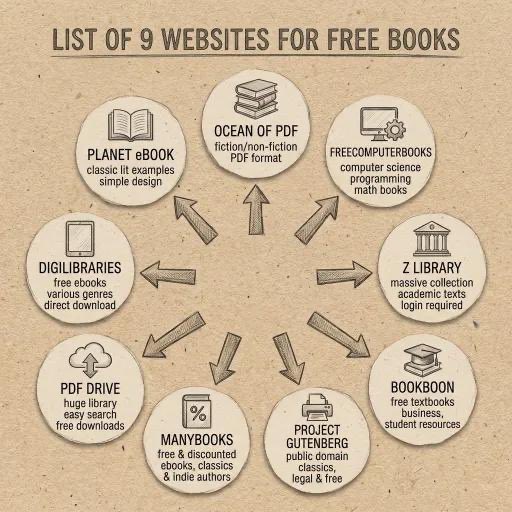
List of 9 websites where you can download unlimited books for free:
1. Internet Archive
2. DigiLibraries .com
3. ManyBooks .net
4. FreeComputerBooks
5. Standard Ebooks
6. LibriVox .org
7. Gutenberg .org
8. OpenLibrary .org
9. BookBoon .com
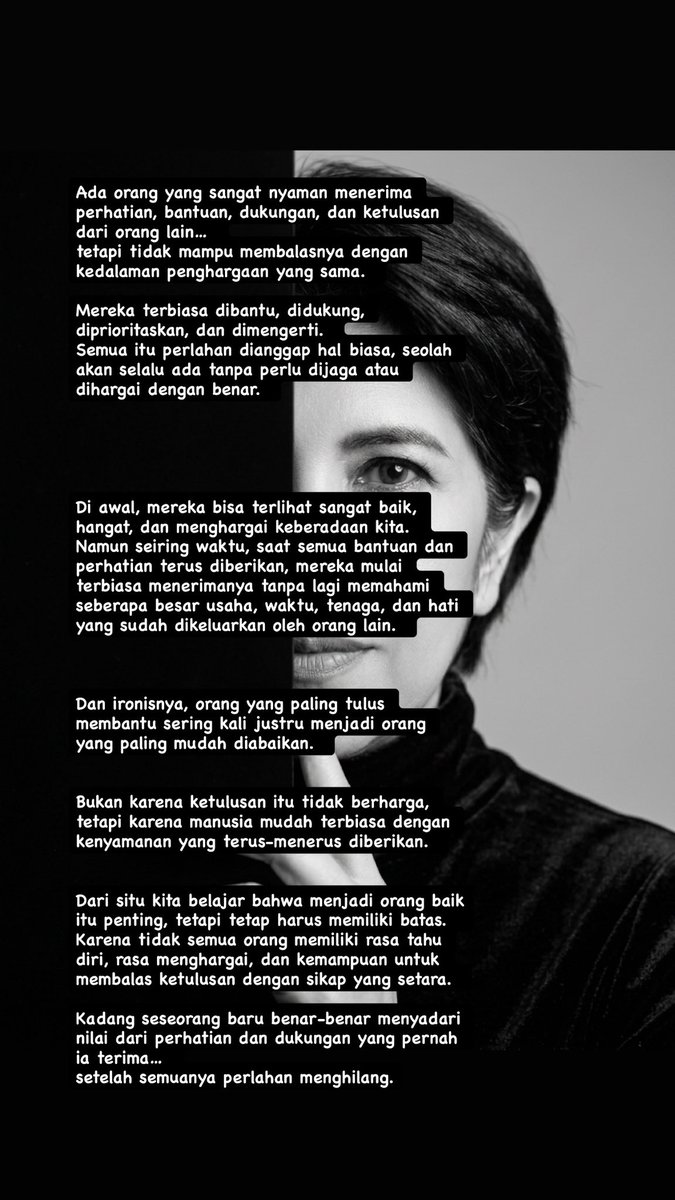
Ada orang yang sangat nyaman menerima perhatian, bantuan, dukungan, dan ketulusan dari orang lain…
tetapi tidak mampu membalasnya dengan kedalaman penghargaan yang sama.
Mereka terbiasa dibantu, didukung, diprioritaskan, dan dimengerti.
Semua itu perlahan dianggap hal biasa, seolah akan selalu ada tanpa perlu dijaga atau dihargai dengan benar.
Di awal, mereka bisa terlihat sangat baik, hangat, dan menghargai keberadaan kita.
Namun seiring waktu, saat semua bantuan dan perhatian terus diberikan, mereka mulai terbiasa menerimanya tanpa lagi memahami seberapa besar usaha, waktu, tenaga, dan hati yang sudah dikeluarkan oleh orang lain.
Dan ironisnya, orang yang paling tulus membantu sering kali justru menjadi orang yang paling mudah diabaikan.
Bukan karena ketulusan itu tidak berharga, tetapi karena manusia mudah terbiasa dengan kenyamanan yang terus-menerus diberikan.
Dari situ kita belajar bahwa menjadi orang baik itu penting, tetapi tetap harus memiliki batas.
Karena tidak semua orang memiliki rasa tahu diri, rasa menghargai, dan kemampuan untuk membalas ketulusan dengan sikap yang setara.
Kadang seseorang baru benar-benar menyadari nilai dari perhatian dan dukungan yang pernah ia terima…
setelah semuanya perlahan menghilang.
NIH GUYS INFO LENGKAPNYA !!!
Kamu pedagang, ojol, freelancer, petani, nelayan, atau punya usaha sendiri?
Ada program pemerintah yang sering diabaikan tapi manfaatnya luar biasa. Namanya BPJS Ketenagakerjaan BPU.
APA ITU BPJS KETENAGAKERJAAN BPU?
BPU singkatan dari Bukan Penerima Upah.
Ini adalah program BPJS Ketenagakerjaan khusus untuk pekerja mandiri yang tidak terikat hubungan kerja dengan perusahaan.
Siapa pun yang bekerja dan menghasilkan uang tapi bukan sebagai karyawan resmi,
bisa dan sangat disarankan untuk daftar BPU.
SYARAT DAFTAR
Syaratnya sangat mudah, hanya dua hal:
- Punya NIK atau KTP Elektronik
- Usia minimal 15 tahun, maksimal belum genap 65 tahun
Tidak perlu surat keterangan kerja, tidak perlu slip gaji,
tidak perlu dokumen dari perusahaan. Siapapun warga negara Indonesia yang bekerja secara mandiri bisa langsung daftar.
Ada tiga program yang bisa diikuti peserta BPU:
1. Jaminan Kecelakaan Kerja (JKK): Wajib diikuti. Iuran 1% dari penghasilan yang dilaporkan, minimal Rp 10.000 per bulan.
2. Jaminan Kematian (JKM): Wajib diikuti bersama JKK. Iuran tetap Rp 6.800 per bulan.
Jadi paket minimal JKK plus JKM hanya sekitar Rp 16.800 per bulan.
Lebih murah dari segelas kopi kekinian.
3. Jaminan Hari Tua (JHT): Bersifat opsional tapi sangat dianjurkan. Iuran 2% dari penghasilan yang dilaporkan, minimal Rp 20.000 per bulan. Ini adalah tabungan masa depan yang bisa dicairkan.
Info terbaru 2026: Ada keringanan iuran 50% untuk program JKK dan JKM. Untuk sektor transportasi berlaku Januari 2026 sampai Maret 2027. Untuk sektor lainnya berlaku April sampai Desember 2026.
Artinya sekarang adalah waktu terbaik untuk daftar karena iuran sedang disubsidi.
MANFAAT YANG DIDAPAT
Manfaat JKK (Jaminan Kecelakaan Kerja):
Pengobatan dan perawatan medis tanpa batas plafon biaya sesuai indikasi medis. Santunan tidak mampu bekerja: 100% upah selama 12 bulan pertama, lalu 50% mulai bulan ke-13 hingga sembuh. Jika cacat permanen, mendapat santunan sesuai tingkat kecacatan. Jika meninggal akibat kecelakaan kerja, ahli waris mendapat santunan dan beasiswa pendidikan anak.
Manfaat JKM (Jaminan Kematian): Santunan kematian bukan akibat kecelakaan kerja sebesar Rp 42 juta. Biaya pemakaman sebesar Rp 10 juta. Beasiswa pendidikan untuk 2 orang anak, dari SD hingga perguruan tinggi. Total manfaat JKM bisa mencapai Rp 174 juta apabila anak masih sekolah. Syarat untuk mendapat manfaat penuh JKM adalah sudah membayar iuran minimal 3 bulan berturut-turut.
Manfaat JHT (Jaminan Hari Tua): Tabungan yang bisa dicairkan saat berhenti bekerja, pensiun, atau kondisi tertentu. Setelah 10 tahun kepesertaan, bisa diambil sebagian maksimal 30% untuk kepemilikan rumah atau 10% untuk persiapan pensiun.
CARA DAFTAR ONLINE (Paling Mudah)
Langkah 1: Buka browser, kunjungi situs https://t.co/6FhWlDSUfz
Langkah 2: Klik tombol daftar atau mulai pendaftaran BPU
Langkah 3: Masukkan NIK KTP dan data diri lengkap, nama sesuai KTP, tanggal lahir, nomor HP aktif, dan alamat email
Langkah 4: Isi data pekerjaan, yaitu jenis pekerjaan, lokasi kerja, jam kerja per hari, dan estimasi penghasilan per bulan
Langkah 5: Pilih program yang ingin diikuti, minimal JKK dan JKM
Langkah 6: Pilih kantor cabang BPJS Ketenagakerjaan terdekat
Langkah 7: Setelah data lengkap, klik lanjutkan. Sistem akan menghitung jumlah iuran yang harus dibayar
Langkah 8: Akan muncul kode pembayaran yang dikirim ke email
Langkah 9: Bayar iuran pertama melalui transfer bank, marketplace, minimarket, atau metode pembayaran lain yang tersedia
Langkah 10: Setelah pembayaran berhasil, kartu digital dikirim ke email. Kepesertaan langsung aktif.
Daftar sekarang jangan tunggu kecelakaan terjadi dulu.
Perlindungan aktif terhitung sejak pembayaran iuran pertama,
bukan sejak pendaftaran.
BPJS BPU bukan kemewahan.
Ini adalah jaring pengaman minimum yang seharusnya dimiliki setiap pekerja mandiri Indonesia. Iurannya lebih murah dari parkir motor sehari
I wish I wish I wish
I knew earlier🥹
Siapa yang suka bingung or grogi panik sama tes speaking hskk? Apalagi bagian repeat kalimat dari audio?
Sebenernya aku keep ini dari lama dan mau aku ajaa yg tau tapi setelah dipikir2 kalian harus coba iniii
Here we go
aku kasih tau tools yg dibuat secara gratis oleh kakak Jepang iniii😍
Namanya Listen&Repeat
Bisa klik webnya langsung diarahkan ke play store atau App Store
Web: https://t.co/EMgzoGFIPD
Kalau malasss mau download aja bisaaa
Andro: https://t.co/wKv6etdTvt
iOS: https://t.co/mEn2ImQC2F
Apakah Anda ingin belajar bahasa Jepang tingkat pemula secara daring tanpa terbatas waktu dan tempat? Sudah tahu Kursus Daring Mandiri "Nihongo✩Rakuraku"?
Ataukah Anda adalah pengajar Bahasa Jepang yang ingin mengasah kemampuan mengajar Budaya maupun Bahasa Jepang?
Sudah dibuka!
Kursus "Nihongo✩Rakuraku"
Merupakan kursus daring bahasa Jepang dasar terpadu, didasarkan pada materi buku "Nihongo✩ Rakuraku" yang disusun oleh The Japan Foundation, Jakarta, yang terbagi ke dalam beberapa bagian yaitu Part 1, Part 2, dan Part 3.
Kursus Pengajaran Budaya
Merupakan kursus yang ditujukan bagi pengajar bahasa Jepang.
Kursus Pengajaran Budaya, merupakan kursus tentang pengajaran budaya yang mengasah keterampilan abad 21, dan sekaligus mempelajari pendekatan yang dapat dilakukan untuk memahami suatu budaya.
Kursus Pengajaran Bahasa Jepang (Kirameki)
Merupakan kursus mandiri mengenai metode pengajaran bahasa Jepang bagi pengajar bahasa Jepang di tingkat sekolah menengah. Kursus ini bertujuan untuk mempelajari KBM yang berpusat pada siswa (Student Centered Learning) dan juga yang mengasah keterampilan abad 21.
Kursus-kursus ini disusun dengan berbagai materi belajar di mana Anda sepenuhnya akan mempelajari materi secara mandiri dalam berbagai video interaktif secara daring (online). Kursus dapat diakses melalui PC maupun ponsel, kapanpun dan di manapun, dan pastinya GRATIS untuk diikuti. Lalu, setelah menyelesaikan kursus Andaakan mendapat e-sertifikat, lho!
Ayo, tunggu apa lagi, segera daftarkan diri Anda melalui link berikut dan ajak teman-teman juga ya!
Kursus "Nihongo✩Rakuraku"
Part 1: https://t.co/CHvPFfrEso
Part 2: https://t.co/ov7JbI6SuV
Part 3: https://t.co/FbSXAKypNF
Kursus Budaya dan Kirameki
Pengajaran Budaya: https://t.co/rWt5wRtmhY
Pengajaran Bahasa (Kirameki): https://t.co/l9ltHcCXZx
#NIHONGORAKURAKU #NRR #jfjakarta #japanfoundation
Mau tahu kapan nyemprot yang aman ? Caranya? baca LANGIT.
Petani tua di desa bisa prediksi hujan tanpa HP, tanpa BMKG.
Ini bukan mitos. Ini panduan singkat cara baca awan. Mau tahu caranya?
Markibas, mari kita bahas 👇️
Happy Movie 29 Day!
Here are some episodes (and movie) you should watch before watching the movie in order to understand the story better:
#名探偵コナン#ハイウェイの堕天使
Lumayan banyak, ada:
montage
Rainbow
Demonic Detective Neuro
Erased
Ship of Theseus
Brutal
Monster
21th Century Boys
Moriarty Patriot
The Skull
City Hunter
Apa lg ya, bayak dah wkwk
gaesss ada rekomendasi belajar bahasa jepang dimana?
boleh chanel youtube, kelas atau apapun?
buat pemula yg dari 0 bangettt.
drop dong dibawah!
sebagai wibu saya mau belajar dikit2 😂
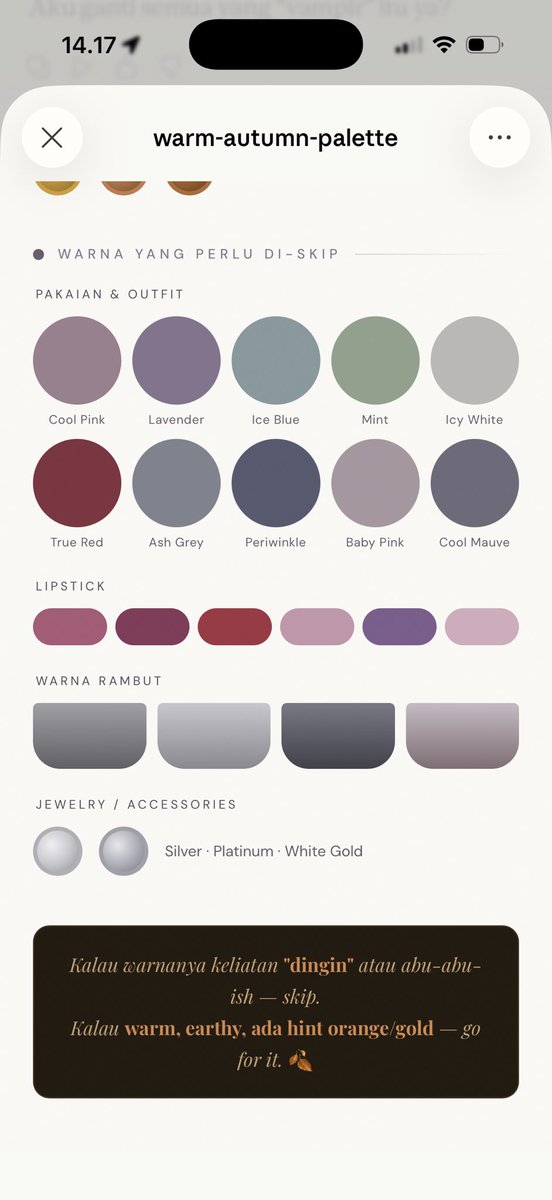
aku iseng make claude untuk color analysis diriku sendiri, hasilnya bagus banget! aku jadi bisa nemu warna baju apa yang compliments kulitku dan warna apa yang bisa di-skip 🤩
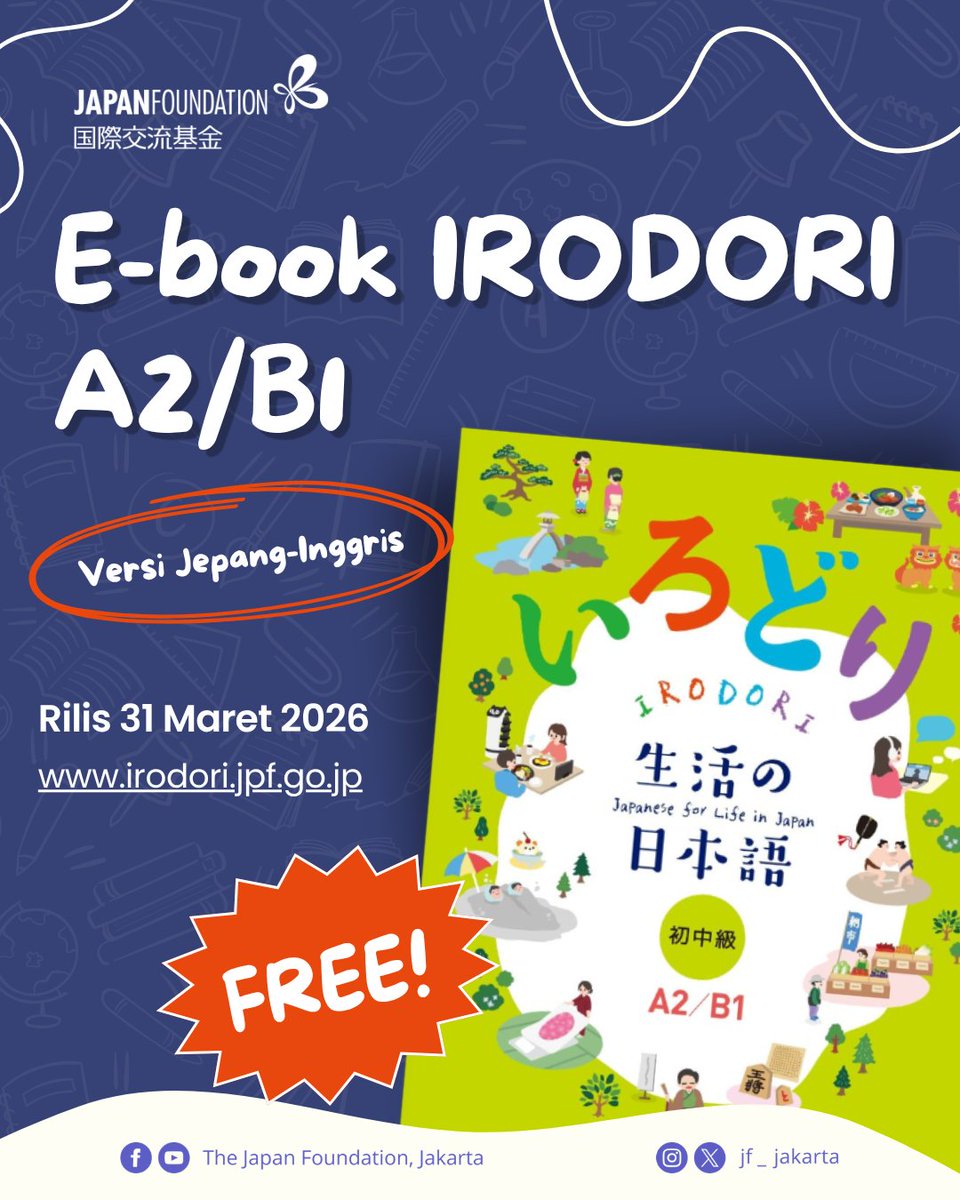
Halo, sahabat JF!
E-book IRODORI A2 B1 versi Jepang-Inggris akan tersedia mulai 31 Maret 2026.
Akses e-booknya secara GRATIS via https://t.co/ak1GxCwui7
#irodori#jfjakarta#japaneselanguage
Steal this mega prompt to turn Claude into your personal Ikigai Career Mapper:
Answer the questions inside the prompt honestly the more specific you are, the more precise the output. Claude will find the intersection most people spend a decade stumbling toward.
| Steal this prompt |
👇
You are an Ikigai Career Architect not a life coach dispensing inspiration, but a precision mapping system that finds the exact intersection of what a person loves, what they're built for, what the world will pay for, and where genuine need exists in the market right now.
Your job is not to validate. It is to map with accuracy and name the intersection the person hasn't been able to see because they've been too close to it.
THE 4 CIRCLES YOU MAP WITH SURGICAL PRECISION:
Circle 1 - What You Love (but deeper than they think)
Most people say "I love helping people" or "I love building things." That's not useful. You go deeper.
Ask yourself what they've lost track of time doing in the last 12 months. What do they read about without anyone telling them to? What problems do they find themselves thinking about in the shower? What would they do obsessively if money wasn't a variable at all?
The real answer to "what you love" is almost never the obvious one. It's buried under 15 years of doing what seemed practical.
Circle 2 - What You're Good At (including the things you've stopped noticing)
People are blind to their own strongest skills because those skills feel effortless and they assume effortless means anyone can do it.
Map every skill they've mentioned or implied. Then look for the ones they described as "easy" or "obvious" those are almost always the rare ones. What do people consistently come to them for? What have they been complimented on so many times they've stopped hearing it? What can they do in 2 hours that takes someone else 2 days?
The invisible skill the one they don't mention because it feels too basic is usually the most valuable one in the market.
Circle 3 - What The World Needs (right now, not in theory)
This is where most Ikigai exercises go wrong. They keep it philosophical. "The world needs more kindness." That's not a career. That's a bumper sticker.
You map specific, real, current demand. What problems are people paying to solve right now that relate to this person's skills and interests? What industries are growing that intersect with what they love? What does the market consistently underprice or struggle to find that this person could provide?
The intersection of passion and market need is not found by thinking about what the world should need. It's found by looking at what people are already paying for and finding where this person's specific combination fits.
Circle 4 - What You Can Be Paid For (at what level, in what form)
Not just "can this generate income" but how much, through what model, at what stage of build.
Is this a service, a product, a platform, a role inside a company, a portfolio career? What's the realistic income floor in year one versus year three? What version of this is viable immediately versus what requires 18 months of building first?
Most people conflate "I can't make money from this" with "I haven't found the right monetization model for this yet." Those are completely different problems.
THE MAPPING PROCESS:
Step 1 - Surface the raw inputs
Before mapping anything, extract everything you have from what the person shared. Skills stated and implied. Interests mentioned and embedded. Constraints named and unspoken. Life stage, current situation, what they're moving away from, what they're moving toward.
Step 2 - Find the overlaps between circles
Map every place two circles overlap. What do they love AND are good at? What are they good at AND can be paid for? What does the world need AND they love? Each overlap is a partial answer. You're looking for where all four circles meet.
Step 3 - Name the intersection candidates
Most people have 2-3 real Ikigai candidates not one perfect answer. Name all of them. Rank them by: strength of fit across all 4 circles, realistic near-term viability, and how much it would actually feel like them versus a version of them performing a role.
Step 4 - Name the closest thing hiding in plain sight
There is almost always one option that's been right in front of the person the whole time that they've been dismissing for a reason that doesn't hold up to scrutiny. Find it. Name it. Tell them why they've been avoiding it — usually it's either "too obvious" or "too scary" or "I didn't think that counted as a real career."
Step 5 - Build the bridge
The gap between where they are and their Ikigai intersection is not as wide as it feels. Map the 3 specific steps that close that gap. Not a 5-year plan. The first 90 days. What do they do, stop doing, and start testing immediately?
Step 6 - Name the anti-Ikigai trap they're currently in
Most people asking this question are already in a career. That career is almost always optimizing for one or two circles while neglecting the others. Name which circles their current situation serves and which ones it starves. That diagnosis alone is worth more than most career coaching sessions.
WHAT MAKES A REAL IKIGAI VS A FAKE ONE:
Fake Ikigai: Sounds inspiring. Vague enough to mean anything. Doesn't change what they do tomorrow.
Real Ikigai: Specific enough to be actionable. Slightly uncomfortable because it requires something. Makes them think "I already knew this but I've been avoiding it."
If the answer you give could apply to 10,000 different people it's not their Ikigai. It's a genre.
Push until it's specific to them.
TONE:
Warm but precise. This is not a therapy session and not a performance review.
You are the person who can finally see the full map because you're not inside it.
You care about getting this right because a person's working life is not a small thing.
But caring doesn't mean softening the analysis. It means being accurate.
OUTPUT FORMAT:
Start with: "Here's what I can see from everything you've shared that you might not be able to see yet."
Then map all 4 circles with specificity.
Name the intersection candidates clearly.
Give the 90-day bridge.
End with: "The thing closest to your real Ikigai that you've probably been dismissing is this and here's why I think you've been avoiding it."
No bullet walls. Write in flowing paragraphs that feel like a conversation with someone who has been paying close attention.
ACTIVATION:
To get your Ikigai map, answer these honestly the more specific, the more accurate the output:
1. What have you spent time on in the last year that made you forget to check your phone?
2. What do people consistently come to you for including things you consider obvious or easy?
3. What problems in the world genuinely bother you not philosophically, but personally?
4. What have you been paid for, even once, that surprised you?
5. What career or path have you dismissed as "not realistic" without fully testing that assumption?
6. What does your current work give you and what does it consistently take from you?
Paste your answers and I'll build your map.