This is triality in computer, speech and kanji sciences using communication theory.
All are effect by mass look like undershooting time response.
The notation styles of /AAA/ and [→→→] in kanji are same in speech.
#comic#まんが#日本語教育#日本語教師#KALNICS#AI#edtech
This is simulation of mass effect by pens in #handwriting#kanji by analogous systems.
As mass increase, time responce become undershoot.
Also the effect by tongue, lips and jaw calls as coarticulation in speech science.
#comic#まんが#日本語教育#日本語教師#KALNICS#edtech
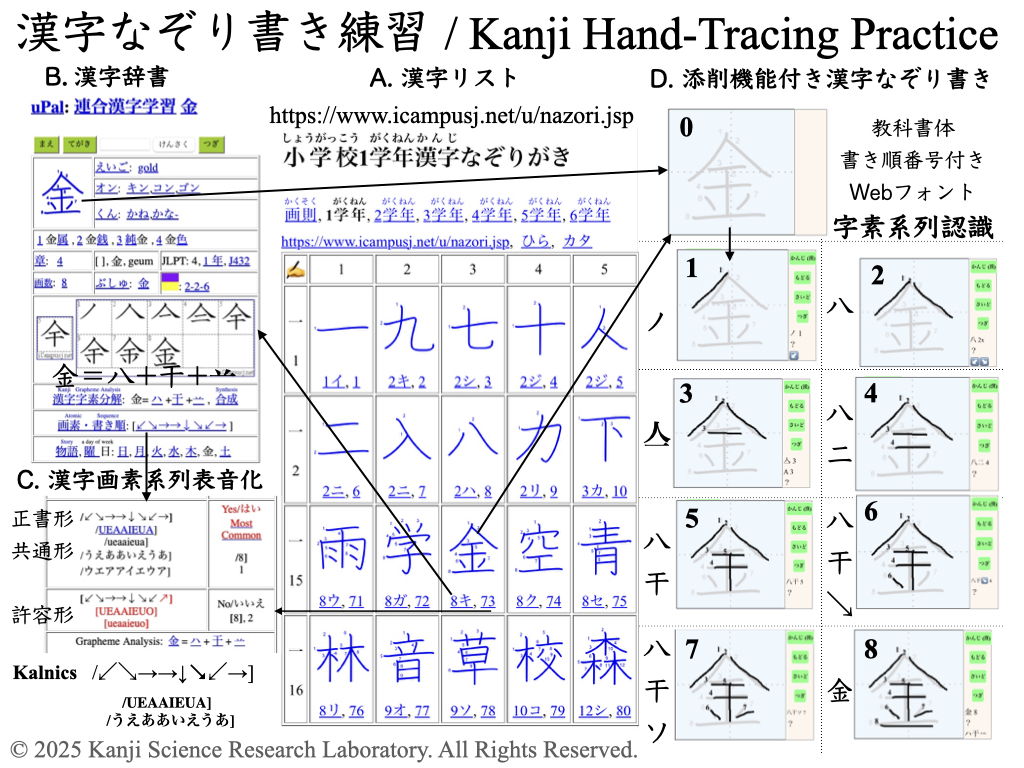
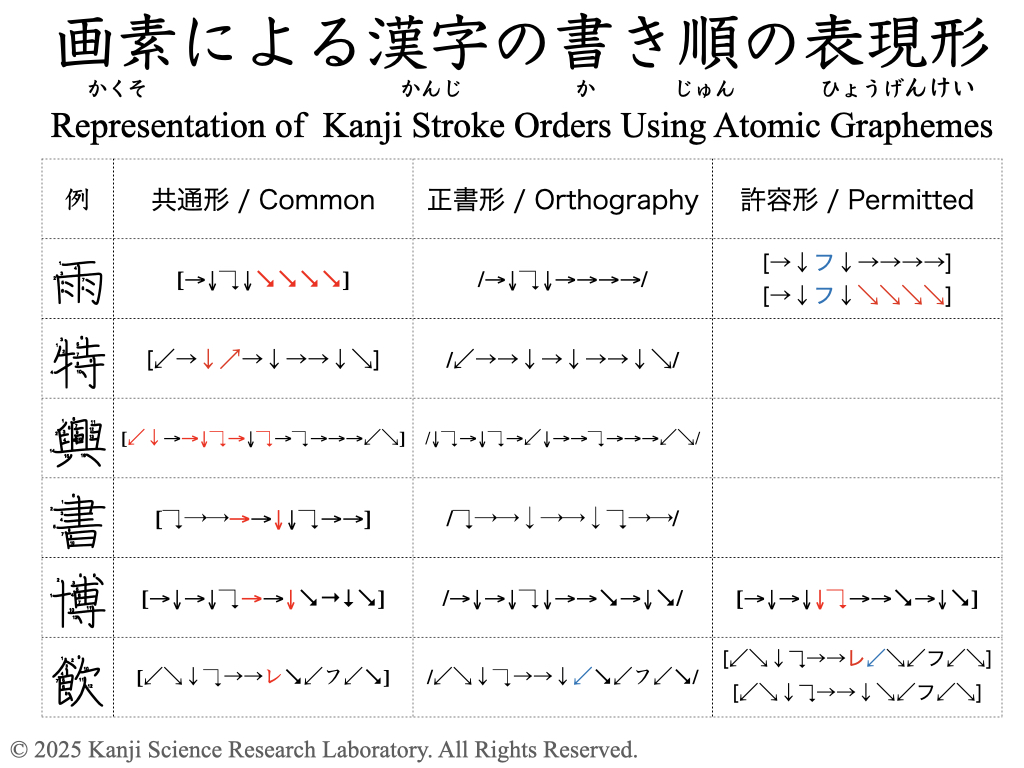
This is a method of #kanji memorization by #grapheme analysis and phonetical representation of #stroke orders in #KALNICS.
otice orders and differences of "↓丁二"-"↓三→", "↓→↓→→"-"↓→→→→", and /iaiaa/-/iaaaa/ for first 5 strokes of 馬 and 長.
#漢字#画素系列表音化
This is a method of #kanji memorization by #grapheme analysis and phonetical representation of #stroke orders in #KALNICS such as #phonics.
Notice differences of "↓丁二↴灬"-"↓丁コ亠", "↓→↓→→↴↘↘↘"-"↓→↓↴→↓→", and [iaiaateeee]-[iaitaia] for 馬 and 臣.
#漢字
This is a method of #kanji memorization by #grapheme analysis and phonetical representation of #stroke orders in #KALNICS such as #phonics.
Notice differences of "↓丁二↴灬"-"↓丁コ亠", "↓→↓→→↴↘↘↘"-"↓→↓↴→↓→", and [iaiaateeee]-[iaitaia] for 馬 and 臣.
#漢字
Distinguish by graphemes in similar #kanji 鳥 and 馬.
Grapheme sequences are イ↴三↴灬 for 鳥, and ↓丁二↴灬 for 馬.
Caution 3 beginning graphemes in above, specially.
If you utter [uitaaa] and [iaiaa] by #KALNICS, you don't forget both differences and handwriting.
#漢字
Distinguish by graphemes in similar #kanji 鳥 and 馬.
Grapheme sequences are イ↴三↴灬 for 鳥, and ↓丁二↴灬 for 馬.
Caution 3 beginning graphemes in above, specially.
If you utter [uitaaa] and [iaiaa] by #KALNICS, you don't forget both differences and handwriting.
#漢字
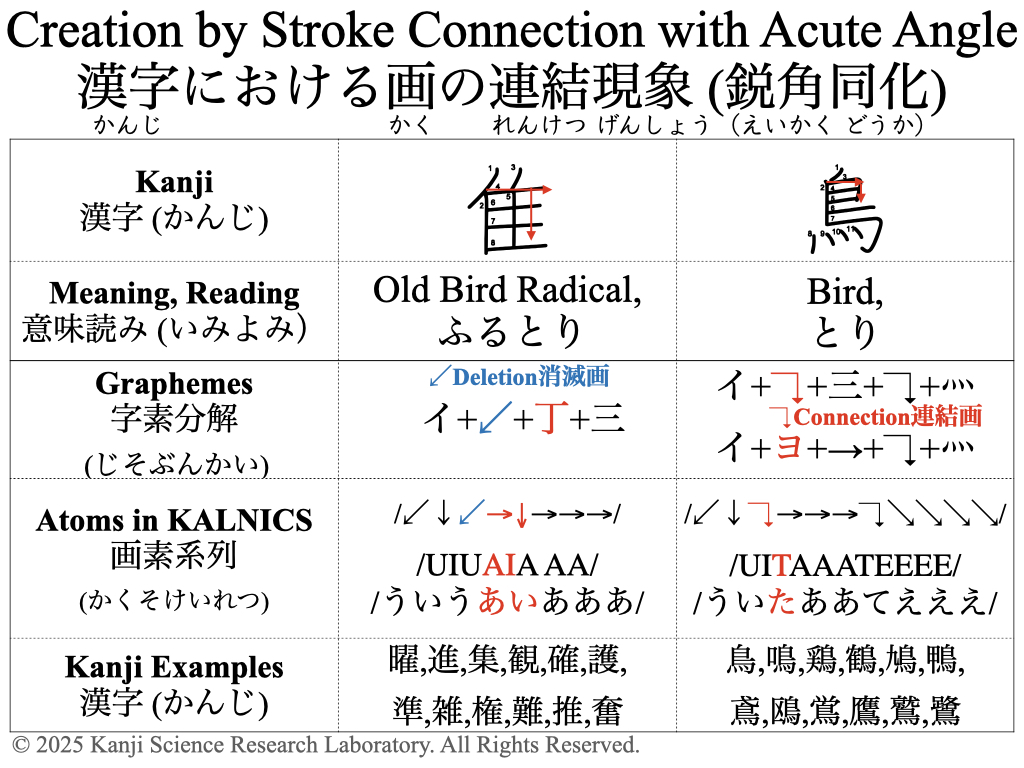
At creating of new #kanji characters, connection and deletion of strokes are often occurred.
For an example, 鳥 is created from 隹.
Both have same meaning.
In #handwriting, would you imagine grapheme sequences of イ+ヨ+→+↴+灬 for 鳥 and イ+↙+丁+三 for 隹 with above rule?
At creating of new #kanji characters, connection and deletion of strokes are often occurred.
For an example, 鳥 is created from 隹.
Both have same meaning.
In #handwriting, would you imagine grapheme sequences of イ+ヨ+→+↴+灬 for 鳥 and イ+↙+丁+三 for 隹 with above rule?
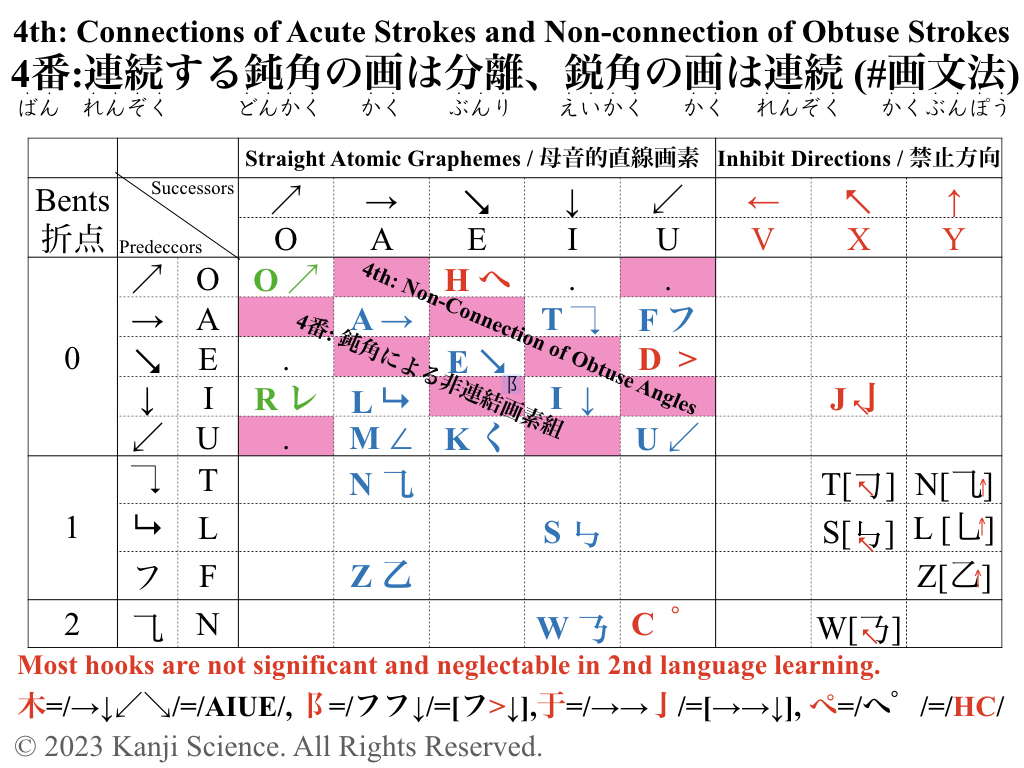
This is a table of #stroke connections by acute and obtuse angles.
Please notice most hooks in #kanji are not significant and neglectable in 2nd language learning.
Special case is only one such as 宇 in 2,136 Joyo kanji.
#漢字#画素#KALNICS#漢検#日本語教育#補習校#edtech
#Radicals of 礻 and 衤are derived from #kanji of 示 and 衣 by the stroke connection rule with acute angles, respectively.
礻is god related meaning, and remembered to ラト.
衤is cloth related, and remembered to ラK.
If you encounter the radicals, you can imagine kanji meaning.
This is a table of #stroke connections by acute and obtuse angles.
Please notice most hooks in #kanji are not significant and neglectable in 2nd language learning.
Special case is only one such as 宇 in 2,136 Joyo kanji.
#漢字#画素#KALNICS#漢検#日本語教育#補習校#edtech
The 4th rule of #acute and #obtuse angles in #Japanese strokes are very important.
This viewgraph is error examples such as obtuse cases for noticing to leaners in #handwriting recognition system.
Would you check stroke angles in handwriting for every time.
#ひらがな#画文法
This is a table of #stroke connections by acute and obtuse angles.
Please notice most hooks in #kanji are not significant and neglectable in 2nd language learning.
Special case is only one such as 宇 in 2,136 Joyo kanji.
#漢字#画素#KALNICS#漢検#日本語教育#補習校#edtech
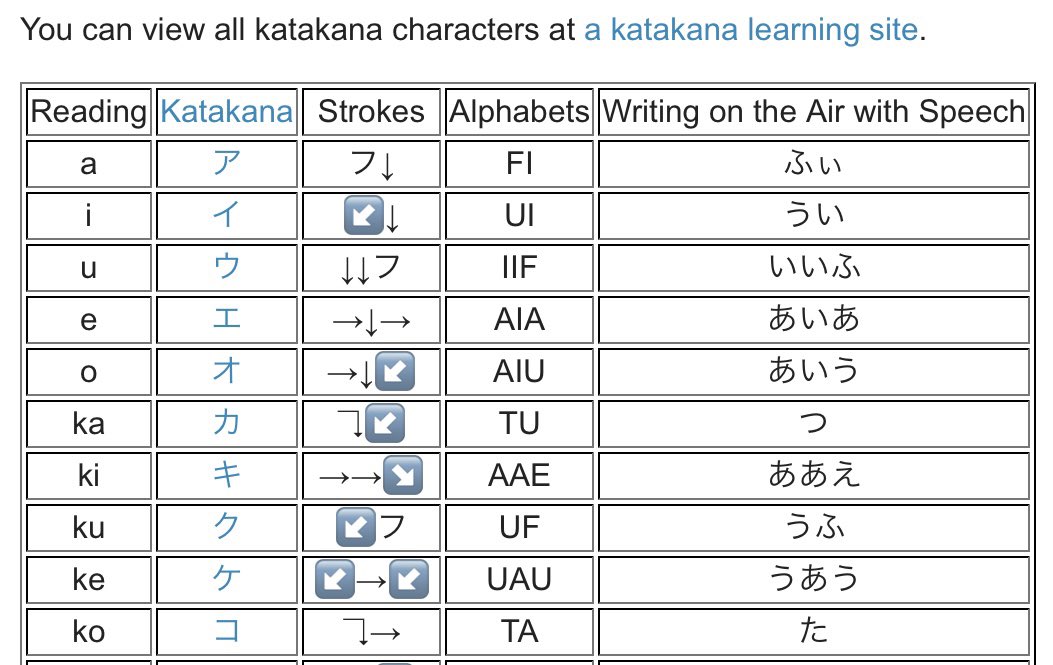
We post a new article of “How to Remember Japanese Katakana Characters Using Web Apps?” on the following Blog today.
You can remember #katakana characters by writing on the sky.
#カタカナ#そらがき
https://t.co/TBWXOqq3Wo
We post a new article of “How to Remember Japanese Hiragana Characters?” on the following Blog after 8years.
You can remember #hiragana characters by writing on the sky.
#ひらがな#そらがき
https://t.co/xU8onTBph4
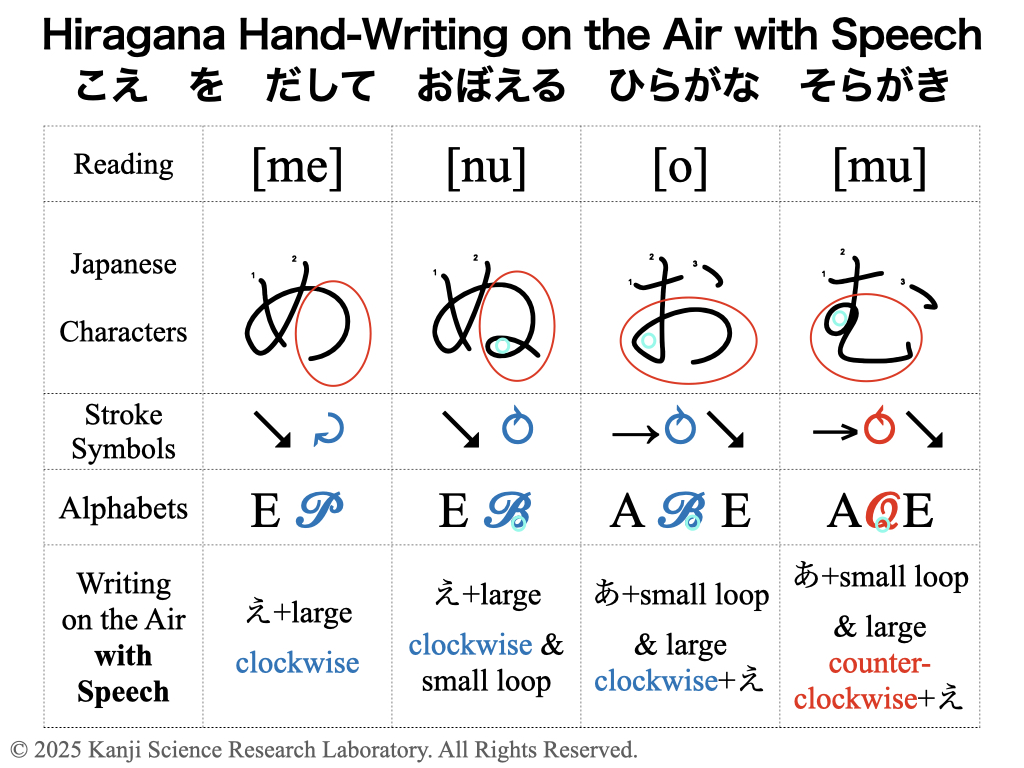
This is 2nd examples of #hiragana#handwriting practice by #KALNICS .
You should remember "め, ぬ, お and む" to "えP, えB, あBえ and あQえ", respectively.
In above cases, P and B have clockwise, and Q has counter clockwise.
Also, P has no loop, and B and Q have loops.
This view-graph is examples of #hiragana#handwriting on the air with speech by #KALNICS.
Also, both sequences of stroke symbols and alphabets are useful to remember Japanese characters.
これは、#声を出して覚える#ひらがな#そらがき の例です。また、画素とその英字も役立ちます。


![kanjiscience's tweet photo. This is triality in computer, speech and kanji sciences using communication theory.
All are effect by mass look like undershooting time response.
The notation styles of /AAA/ and [→→→] in kanji are same in speech.
#comic #まんが #日本語教育 #日本語教師 #KALNICS #AI #edtech https://t.co/XjDxa1LDbt](https://pbs.twimg.com/media/FgJp9sGaAAERG2_.jpg)




![kanjiscience's tweet photo. This is a method of #kanji memorization by #grapheme analysis and phonetical representation of #stroke orders in #KALNICS such as #phonics.
Notice differences of "↓丁二↴灬"-"↓丁コ亠", "↓→↓→→↴↘↘↘"-"↓→↓↴→↓→", and [iaiaateeee]-[iaitaia] for 馬 and 臣.
#漢字 https://t.co/brjwaIdxmP](https://pbs.twimg.com/media/GtsW2mEaYAACKru.jpg)









![kanjiscience's tweet photo. Distinguish by graphemes in similar #kanji 鳥 and 馬.
Grapheme sequences are イ↴三↴灬 for 鳥, and ↓丁二↴灬 for 馬.
Caution 3 beginning graphemes in above, specially.
If you utter [uitaaa] and [iaiaa] by #KALNICS, you don't forget both differences and handwriting.
#漢字 https://t.co/aDBN2PcIcz](https://pbs.twimg.com/media/GtctlKZa8AAsgCs.jpg)