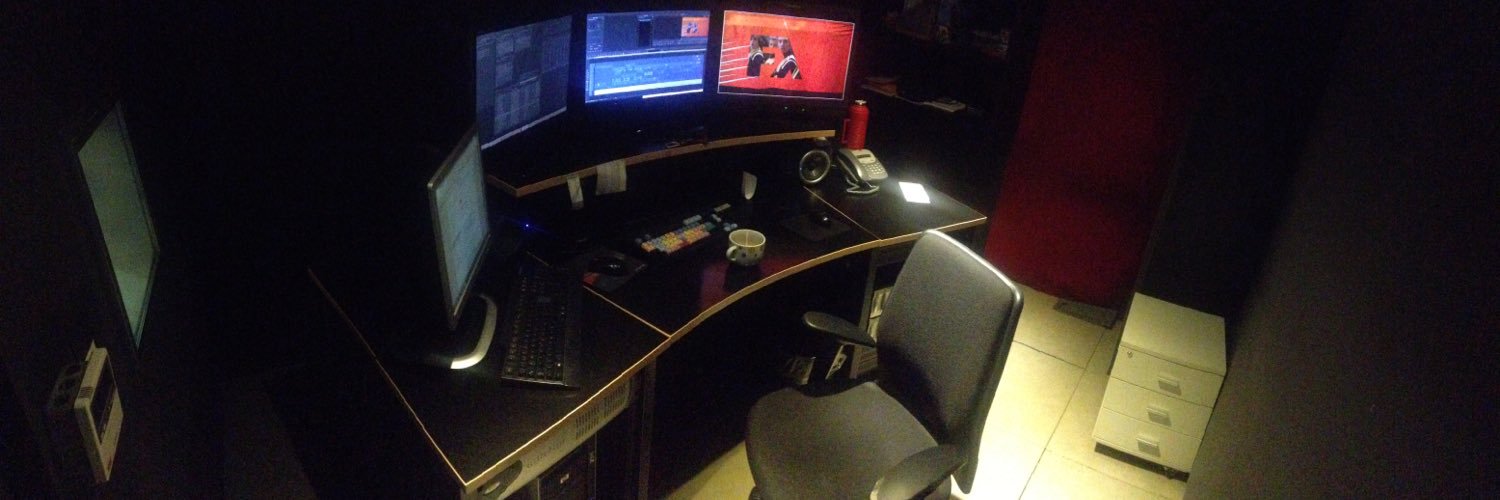
Hice, hago y haré Tele, Cine y Fotografía.
Te musicalizo la vida.
Abro la puerta pa salir a jugar,
y x mismo precio, te arreglo el calefón y el cuerito.
Si uno es lo que hace, yo ¿qué seré? 🙃
@MarinaGlezer Yo por mi parte, elijo ser un iluso para no convertirme en un nihilista. Y me pregunto siempre, ¿a quién le conviene estas acciones arriba de la mesa. Esa es mi única verdad contrastable. Nadie sabe lo que llevan y traen las manos por debajo. Nadie que no esté en la mesa.
@MercadoLibre@ML_Argentina Cómo hay que hacer para ser atendido como usuario de la plataforma frente a un inconveniente generado por la iA de reclamos?? si cuando comprador y vendedor estan deacuerdo en la devolucion (a los 3 dias de recibido).
#mercadolibre@MercadoLibre@ML_Argentina ATENCION AL USUARIO AUTO-INEFICIENTE Sistema redundante: bot, Ai, chat, WhatsApp 😤 Compré $$$ product perecedero. Ok con vendedor p la devolución, LA Ai DICE QUE NO. Impide la gestión.
Cualquier ser humano empleado RESOLVÍA en 1 seg😡
🔴Si fuiste a la marcha del 06 de agosto necesitamos tu material.
Estamos buscando registros de:
1️⃣ Disparos a la cara
2️⃣ Efectivos de civil disparando
3️⃣ Disparos a colectivos
4️⃣ Detenciones
5️⃣ Otros hechos irregulares
📷Envíalo a [email protected]
Paris, Texas (1984) is one of those films where every frame genuinely looks painted.
The compositions are so precise in this film. Empty highways, harsh reds, wide desert shots, neon-lit interiors. None of it feels forced or overly stylized.
Wim Wenders and Robby Müller make ordinary spaces look iconic just through framing and light. It’s quiet, restrained filmmaking that lets the images carry the emotion. #filmtwt
AKIRA still looks cool as hell in 2026. The scale, lighting, bike slides, neon-soaked destruction… can’t even imagine what it felt like seeing that animation in 1988.
Noctámbulos es la obra más emblemática de Edward Hopper, pintada en 1942. Representa un café nocturno en Nueva York, donde cuatro figuras permanecen sumidas en un silencio cargado de soledad y alienación urbana.
Aunque a menudo se interpreta como una metáfora del aislamiento en la vida moderna, Hopper también la veía como un "faro de esperanza" tras el ataque a Pearl Harbor, representando la resistencia de la luz frente a la oscuridad de la guerra.
Dato curioso:
Las figuras fueron modeladas por el propio Hopper y su esposa, Jo. A pesar de su proximidad física, parecen desconectados y absortos en sus propios pensamientos.
Arte en movimiento apoyado por Grok
Remembering the legendary film title designer Saul Bass, born on this day in 1920 ❣️With his mesmerizing graphic compositions, Bass transformed opening credits into an art form, collaborating with directors such as Otto Preminger, Hitchcock, Kubrick, and Scorsese.
John Cassavetes on why he is against movies like Stanley Kubrick's "A Clockwork Orange" (1971):
"There’s a difference between being violent and having violent emotions. There’s a difference between anger and the act of shooting somebody in the face. I’ve never known anyone in my life that ever shot anyone in the face. And I’ve seen it on the screen too many times. There’s no morality there, no feeling of anything for anyone. It’s a lie to say that people are violent. There are more good people than there are bad people. To see constant terror builds a nation, builds moviegoers that can only love constant terror. We become used to it, inured to it like doctors knowing they have to be tough. They can’t think of that person with tenderness, but must be dispassionate.
There’s a lot of violence in 'Minnie and Moskowitz' (1971) but violence that I can understand. Violent feelings, but nobody ki!!s anybody or shoots anyone or knifes anybody. Without having seen 'A Clockwork Orange' (1971), I know, because I know the story. I really couldn’t go to see it, because I don’t want to see people ki!! each other. I don’t want to see any more hostility toward one another. I just don’t want to see that reflected any more. I’m tired of violence and dehumanization. I think the artist has a tremendous obligation to bring trust to people. Because the only thing we don’t have time for is ourselves. We can’t live with ourselves if we have no respect for our life and the human condition and the foibles that exist in all of us – then we have no tolerance, we’re all Nazis. We can’t survive with people being that inhuman. It’s impossible.
I look at 'A Clockwork Orange' and ask, why did Stanley make it? Did he make it for anyone in particular? Why did he choose a story like that, in this day and age? For what: to incite a revolution, to stop everything? Maybe that would be OK, if he really believed that, but I don’t believe it. I don’t know why he made it.
The more films are made about insanity, the more fashionable it will become. And, eventually, as we become more and more dehumanized, there will be no answers for anyone. You can’t get any pleasure out of being an animal. There should be a Kubrick who can make that film and show that life can be violent and harsh. But, on the other hand, where are the equalizing forces of happiness? Art films, in stressing the weakness of society, have lost their balance. The majority of people would rather be filled with illusion than disillusion. And we just have to find some way to reflect that. Not just to constantly say, ‘Oh, God, things are wrong and all, and I don’t know what to do about it.’"
('Cassavetes on Cassavetes', edited by Ray Carney, 2001)