What if our factories could anticipate problems before they occur, continuously optimise production and adapt to changing conditions?
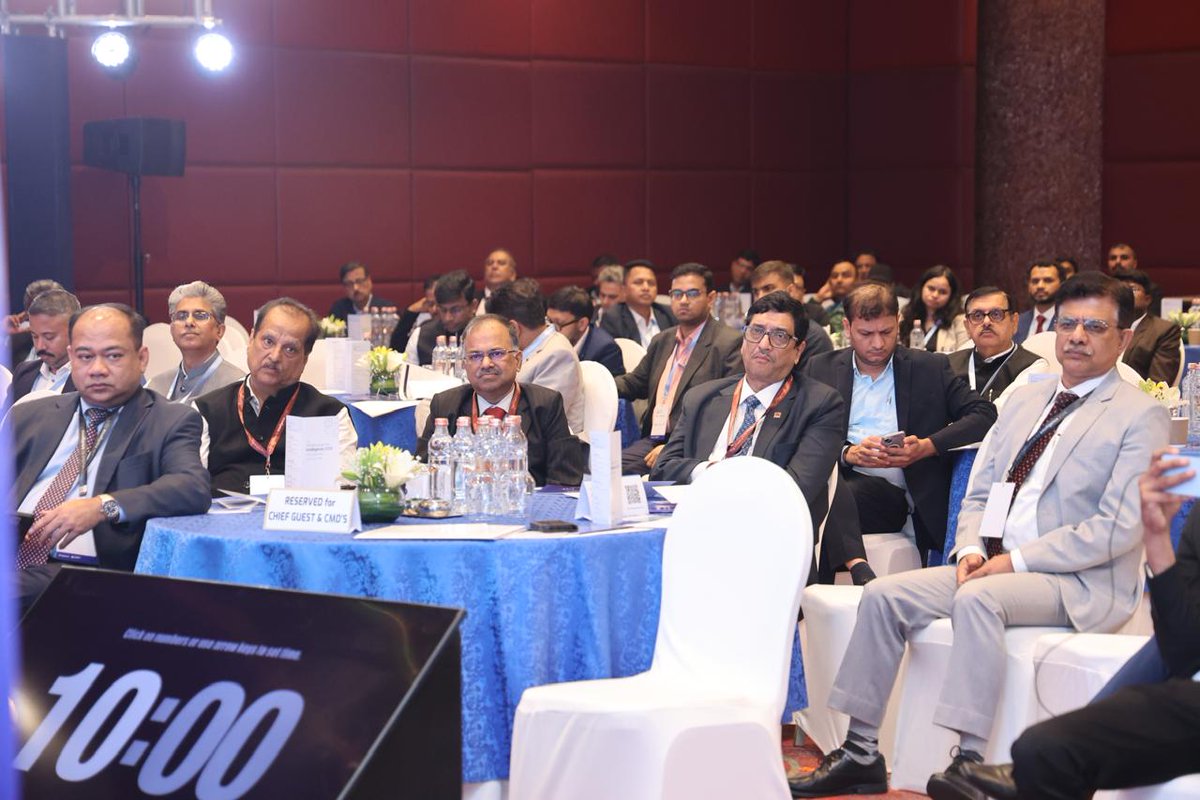
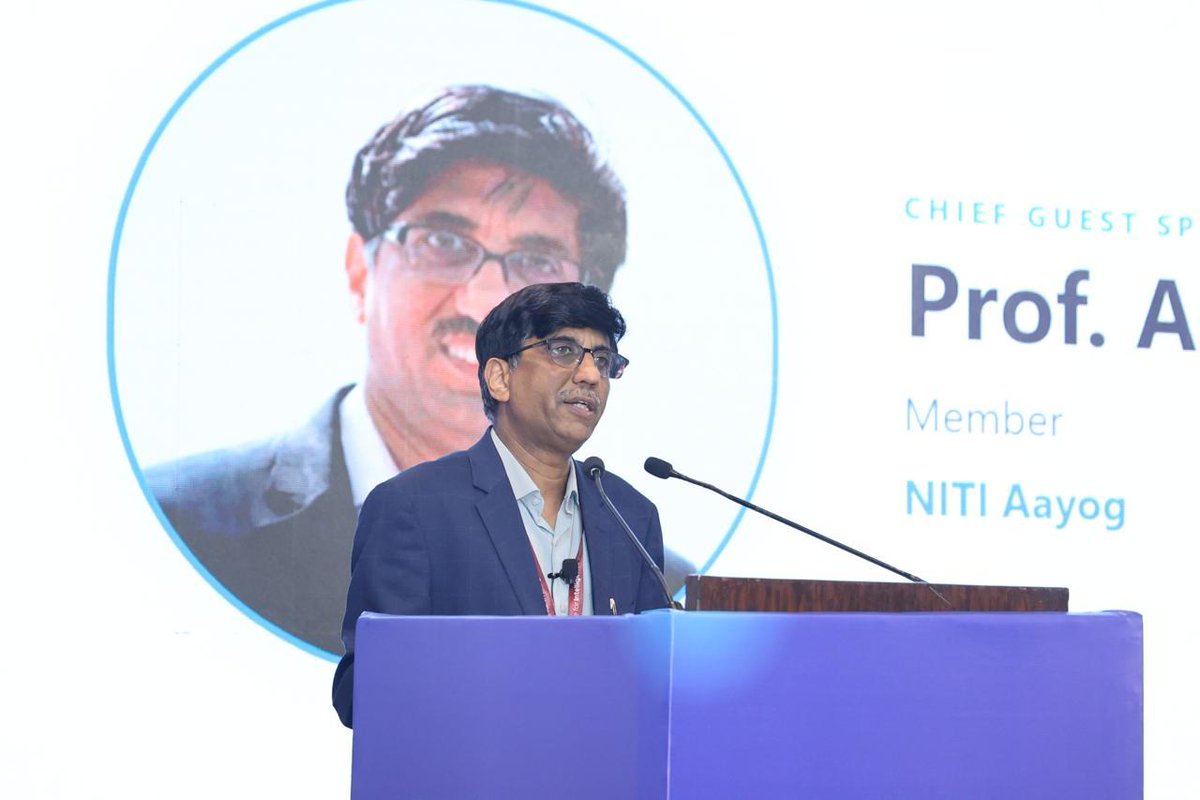
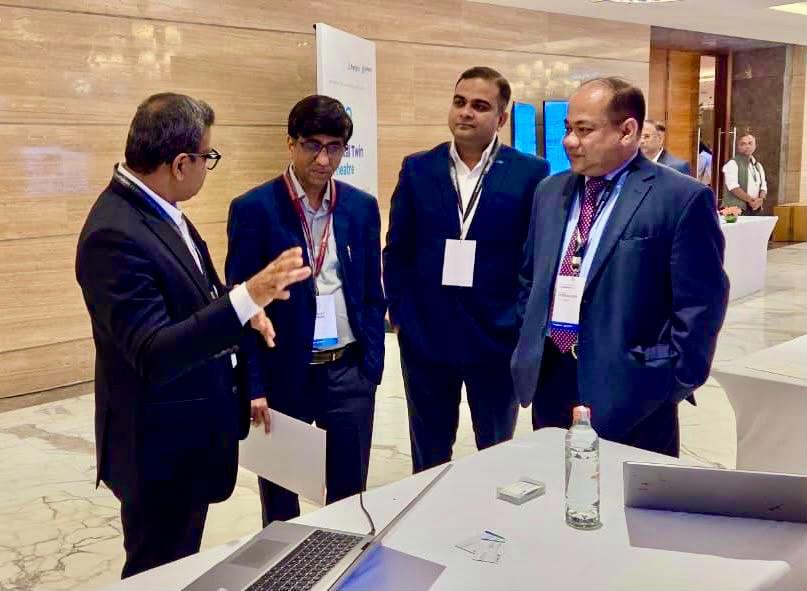
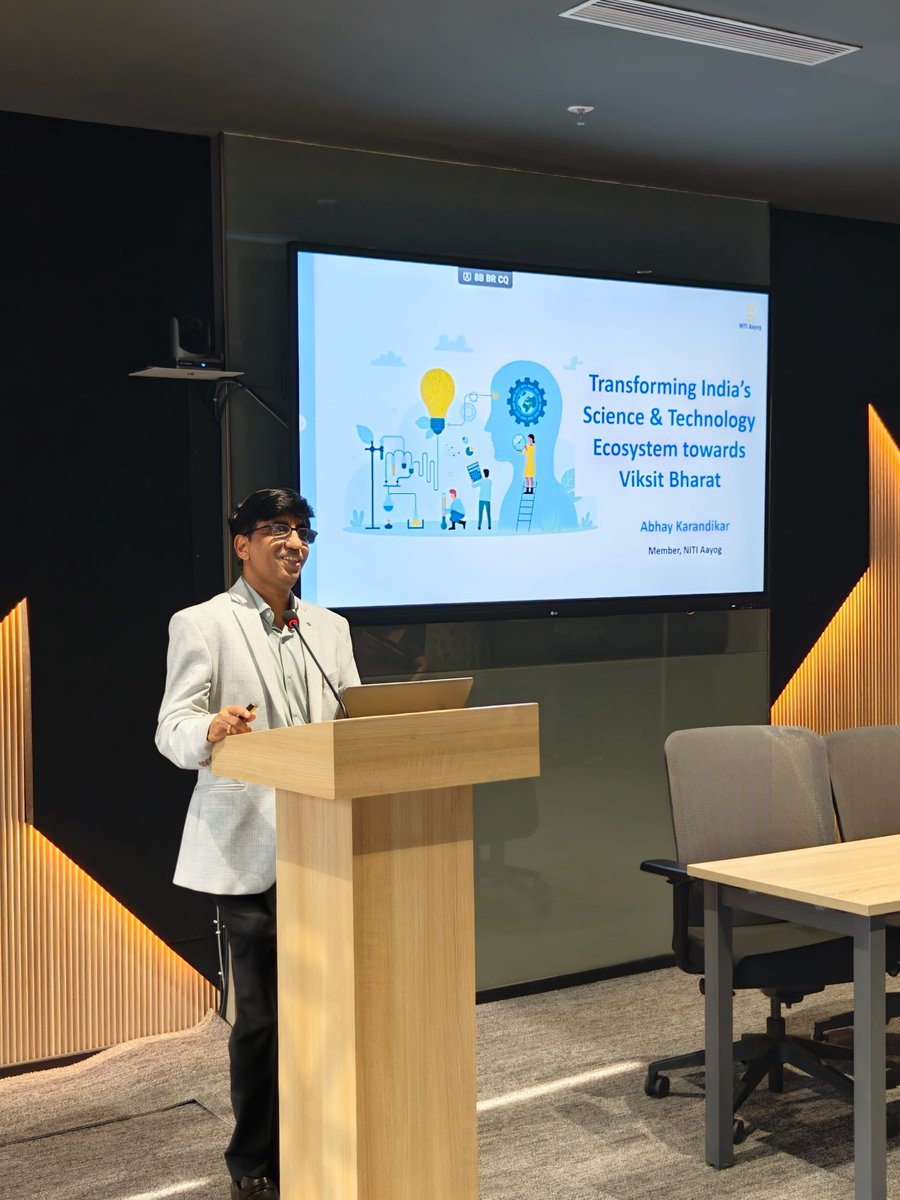
At Infrastructure for Intelligence 2026: From Volatility to Value, hosted by @TCG_digital , I discussed how AI can transform India’s infrastructure and manufacturing sectors, creating new opportunities for productivity, efficiency and resilience.
The opportunity goes beyond adopting AI. It lies in building indigenous capabilities in industrial AI, robotics and automation, while bringing industry, researchers and start-ups together to translate innovation into solutions for real-world industrial challenges.
The deliberations, MoUs and partnerships forged at the event can help accelerate this journey and strengthen India’s industrial capabilities.
Congratulations Viraj Karambelkar @virius_black and team. And congratulations Prof. Varun Bhalerao @starlabiitb at IIT Bombay. This is big!
(Viraj is an alumnus of @iitbombay and @Caltech, and a former student of Prof. Bhalerao)
https://t.co/GQIqqV7CdR
""Catching a star engulfing its companion in the act is very difficult," study lead author Viraj Karambelkar, an astrophysicist at Columbia University in New York, told Space .com. "When a star engulfs its companion, its effect is very subtle — like throwing a bucket of water in a large ocean. We need sensitive telescopes monitoring the sky for a long time in order to catch this effect.""
@DeanACRIITB@IITBAA_Official
#WATCH | I am determined to change the mindset that makes families feel ashamed of their children pursuing ITI courses. ITI students deserve the same respect as IIT graduates. Industries rely on their skills and hard work to function. I take immense pride in honouring these young achievers and recognising the dignity of skilled work: PM @narendramodi at the 5th Kaushal Deekshant Samaroh in Lucknow, Uttar Pradesh.
#KaushalDeekshantSamaroh #SkillIndia #SkillDevelopment #ViksitBharat
Most people start their careers with some privilege, and many start from zero. I started from minus ₹1 crore, and I did not even know it until my second year at IIT Delhi.
Over the years, that debt took me from a failed placement day to Google, to a ₹2 crore side business, and finally to the startup I had always wanted to build. This is that story.
My father ran a real estate business, and he had invested in under-construction flats from builders like Jaypee and Wave, paying most of the price up front through home loans.
Years went by without the flats being delivered, but the banks still wanted their EMIs on time. So my parents borrowed from friends and relatives, and when that was not enough, from credit cards.
My parents carried all of this debt quietly and tried to shield me from it. I knew we owed money, but never how much.
Then in my second year, collection agents started coming to our house and sitting there, asking for payments we could not make. It stressed my mother a lot, and I could see it on her face every day.
𝗧𝗵𝗲 𝗹𝗶𝘀𝘁
One day, I sat my parents down and asked them a simple question: who exactly do we owe, and how much?
Then I took a sheet of paper and started writing down how much we owed, to every bank, every friend, every relative and every credit card.
The list kept getting longer, and by the time I finished, the principal alone was more than ₹1 crore.
I still remember how heavy it felt while writing each line. That day, I knew I had to grow up quickly and get my parents out of this situation.
I had joined IIT knowing exactly what I wanted to do after college, which was to build a startup. But that sheet of paper changed everything, and the dream would have to wait.
The new plan was to get a high-paying job, pay off everything on that list within two years so that my parents could finally breathe again, and only then pursue my dream of starting up.
𝗠𝘂𝗿𝗽𝗵𝘆'𝘀 𝗹𝗮𝘄
From my third year, everything I did was aimed at that one goal: getting a job at an HFT, which paid ₹50 lakh+ a year.
I was ranked 2nd in my department and had a CGPA of 9.7/10, so I genuinely believed I could get in.
Then day one of campus placements came. I prioritized Tower Research over the other companies, cleared three rounds, and was rejected in the final one.
I was so crushed that I could not perform at the others that had shortlisted me, and by evening, they were all gone.
That evening was really hard. Every rupee I was not going to earn meant my parents would have to carry that weight for longer.
On day two, I took an offer from Cohesity at ₹18 lakh a year. It was a good job, but nowhere near the number we needed.
In July 2019, I moved to Bangalore, stayed in a PG, kept my monthly expenses to under ₹20,000, ate meals at the office, and rarely went out with friends. Everything else, I sent back home.
My friends would talk about investing and going on trips, but I did none of that.
I soon realized that this salary would never be enough. So I set a new target: Google US. Whatever time I could find outside work went into competitive programming, and I soon became a Master on Codeforces.
In January 2020, I started applying to Google and other companies in the US and UK. A few weeks later, COVID hit, and overnight, companies stopped hiring overseas candidates.
The way out I had been working towards for months disappeared.
𝗪𝗵𝗲𝗿𝗲 𝗱𝗶𝗱 𝗮𝗹𝗹 𝘁𝗵𝗲 𝗺𝗼𝗻𝗲𝘆 𝗴𝗼?
Around the same time, I got an offer and joined Spotnana as a founding engineer. I really liked their vision, and I believed that growing with a young startup and holding equity in it could be the big break I needed.
About a year after I had started sending money home, I sat down to see where it had gone.
Almost my entire salary had been spent on interest for our credit card loans. We had not reduced the principal and had not saved anything either. After a full year of hard work and sacrifice, the list was exactly as long as the day I had written it.
That was one of the lowest points of my life. It felt like I was running as hard as I could, just to stay in the exact same place.
Meanwhile, I was giving Spotnana everything, working on weekdays and weekends, and was one of the top performers there.
But when appraisal season came, the raise was still not as high as I was hoping for. I was really disappointed. My equity, though promising, could not help us pay off the debt anytime soon.
I told my manager I would need something on the side to make up the difference. I created a programming YouTube channel and later learned Android development, but neither brought in any money.
𝗜 𝗰𝗼𝘂𝗹𝗱𝗻'𝘁 𝘀𝗹𝗲𝗲𝗽 𝘁𝗵𝗮𝘁 𝗻𝗶𝗴𝗵𝘁
During that time, I was talking to one of my college seniors who had joined Google. I told him everything, about the list, my plan and my belief that I could clear it all in two years.
He listened patiently and then told me the truth. If I stayed at Spotnana, it would not take two years, it would take more than four.
He said that instead of being emotional about the company, I needed to be tactical if I really wanted to solve my family's problem. He then referred me to Google.
The next four months were the most focused of my life, and every spare hour went into preparing for Google. When I got rejected from Uber and Coinbase, I was terrified about what would happen next.
But then, Google said yes.
The day the recruiter told me I had been selected for the Google Search team is still one of the best days of my life. That night, I couldn't sleep at all. I lay awake, too happy to close my eyes, thinking about how this would finally change things for my family.
For the first time since I wrote that list, I could actually see a way to clear it.
𝗧𝗵𝗲 ₹𝟮.𝟭 𝗹𝗮𝗸𝗵 𝗯𝗲𝘁
When I joined Google, the list still had ₹80 lakh left on it, and salary alone would take years to clear it.
But Google also gave me something I had not had before: time. So with Google's permission, I started a mobile apps business with my father, working nights and weekends.
In the first three months, we built a bunch of Android apps and games, but could not make any revenue. Then I analyzed iOS versus Android and decided we should build for iOS instead.
So we took the bet. I bought a MacBook Pro for a hefty ₹2.1 lakh, picked our most downloaded game on Android, built its Swift version in six days, and launched it on iOS.
Installs were high from day one, and within a couple of days we turned on monetization. I kept refreshing the dashboard as paying users came in, and within just a few days the game had paid back the cost of the laptop.
And that was just the beginning. Our revenue grew from ₹6 lakh in the first month to ₹24 lakh in the fourth, as we added more games.
I was working close to 100 hours a week between Google and our apps. Over a year and a half, our games crossed 200K downloads, with players mostly from the US, and brought in more than ₹2 crore in revenue.
𝗖𝗿𝗼𝘀𝘀𝗶𝗻𝗴 𝗼𝗳𝗳 𝘁𝗵𝗲 𝗹𝗶𝘀𝘁
With that revenue and my Google salary, we finally started crossing lines off the list. This time we were not just paying interest, we were paying back the principal, one line after another.
With every line we crossed off, the stress at home got a little lighter.
In June 2023, we paid off the last one.
The list I had written in my second year of college was finally empty. My parents were free, and after years of waiting, so was I.
As soon as the last loan was cleared, I put in my papers at Google. The apps had left me with enough savings to finally start my own company.
My last day at Google was the day before my 25th birthday, and on 21 July 2023, I woke up with no debt, no job, and for the first time in years, nothing standing between me and the thing I had always wanted to do.
𝗦𝗵𝗼𝘂𝗹𝗱 𝗜 𝗴𝗼 𝗯𝗮𝗰𝗸 𝘁𝗼 𝗮 𝗷𝗼𝗯?
Over the next four months, I built 12 new games, but month after month, none of them worked. And it was not just me. Apple's iOS privacy changes had broken the economics of hyper-casual games.
That November, I remember walking on my terrace, thinking about whether leaving my job had even been the right choice. My parents had started telling me to get a job again. But I had waited far too long for this chance to give it up.
I decided to shut the games business down and hard pivot into SaaS. I started with Shopify apps, only to realize a month later that I had no unique idea and the competition was intense.
I then analyzed around 70 B2B SaaS marketplaces to find the next Shopify app store, found monday, the project management platform, and started Super Workday, building apps for teams using it.
My first app there failed too, because it was too niche. For the next one, I went through the platform's feature requests and picked the biggest unsolved problem.
That one worked. In April 2024, after eight months without any revenue since leaving Google, I got my first paying customer.
I was so happy that day that I emailed him just to tell him he was my first customer. I still remember his name.
After that, I kept launching one new app every month, and the revenue grew sharply. Today, the business runs on autopilot, has 300+ paying customers, mostly in the US, and is close to $100K in ARR.
It also paid for my sister's wedding, and being able to do that for my family made me very happy and proud.
𝗧𝗵𝗲 𝘀𝘁𝗮𝗿𝘁𝘂𝗽
With that income stable, I finally felt ready to go after a venture-scale idea and started building an AI executive assistant.
In January 2025, South Park Commons, a Silicon Valley VC, invested $400K at a $5.7M valuation. I cannot explain what I felt the day their offer came. All those years of waiting finally made sense.
My startup journey is still early. Since then, there have been many more ups and downs, and there are still many things to figure out.
But for the first time, I am building the startup I always wanted to build, and I am ready for whatever comes next.
"18 Parvans of Mahbharata" is the online course based on our Critical Edition of the great Epic.
Parvan-by-parvan, each lecture of this course delves into major themes, events and characters of Mahabharata.
The course is in English and is self-paced.
I chaired a consultative meeting today at @NITIAayog on Regulatory Sandbox and Deep-tech innovation commons for Drone Technology, bringing together stakeholders from government, industry, start-ups and research institutions.
The discussion focused on the need for dedicated Beyond Visual Line of Sight (BVLOS) testing corridors, greater industry access to shared testing facilities, and closer coordination on regulatory requirements and airspace management, including the integration of UTM systems. These efforts will be important for strengthening drone ecosystem in the country.
I look forward to continued engagement with stakeholders to address industry needs and accelerate the development and deployment of indigenous drone technologies.
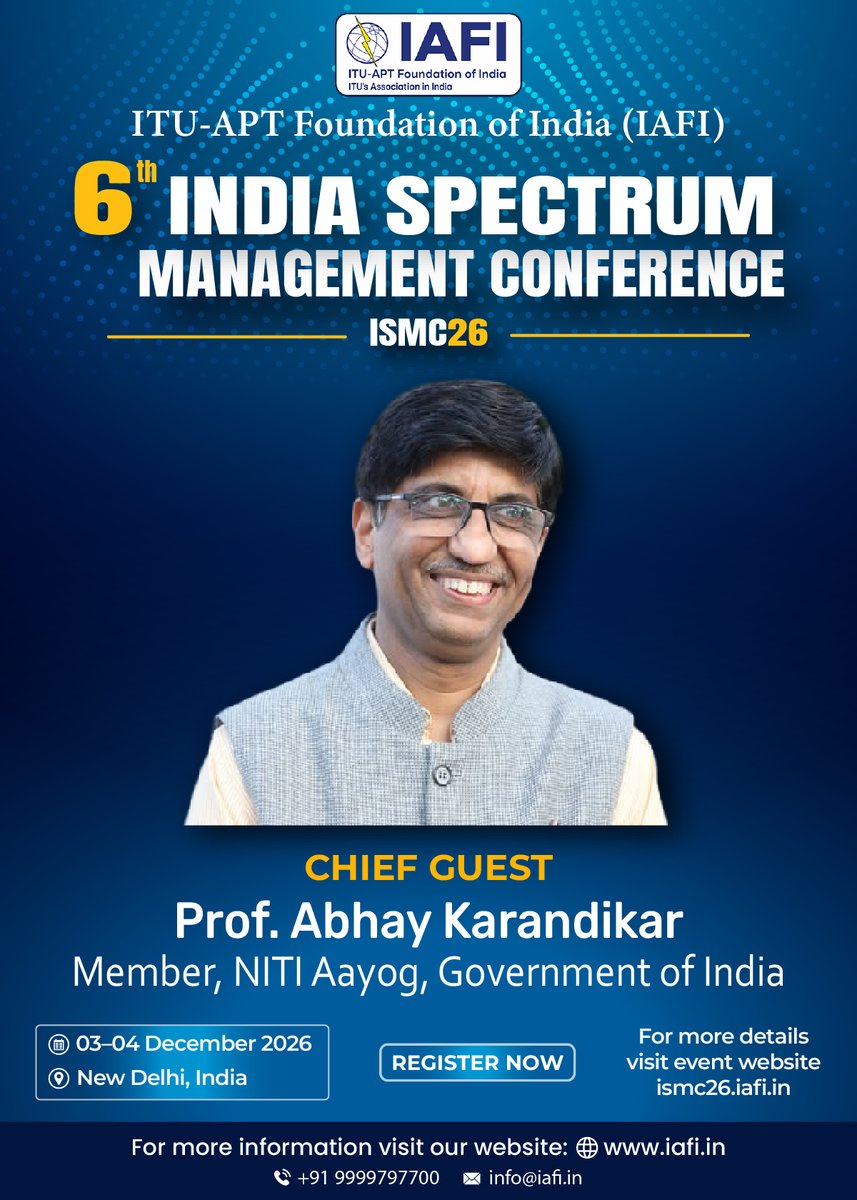
📢 IAFI is honoured to welcome Prof. @karandi65 , Member, NITI Aayog, as the Chief Guest at the 6th India Spectrum Managememaknt Conference (ISMC-26).
📅 03–04 December 2026 | 📍 New Delhi
🔗 Register Now: https://t.co/UJBq41G46J
#ISMC26#IAFI#NITIAayog#SpectrumManagement
Honoured to be featured on the cover of @TIME’s inaugural TIME100 Next India 2026.
This recognition belongs as much to the incredible team at @SkyrootA, whose passion and relentless efforts make everything we do possible.
Grateful for this honour and excited about what lies ahead for India’s private space sector. 🇮🇳🚀
📸 Photograph by Sarang Gupta for TIME
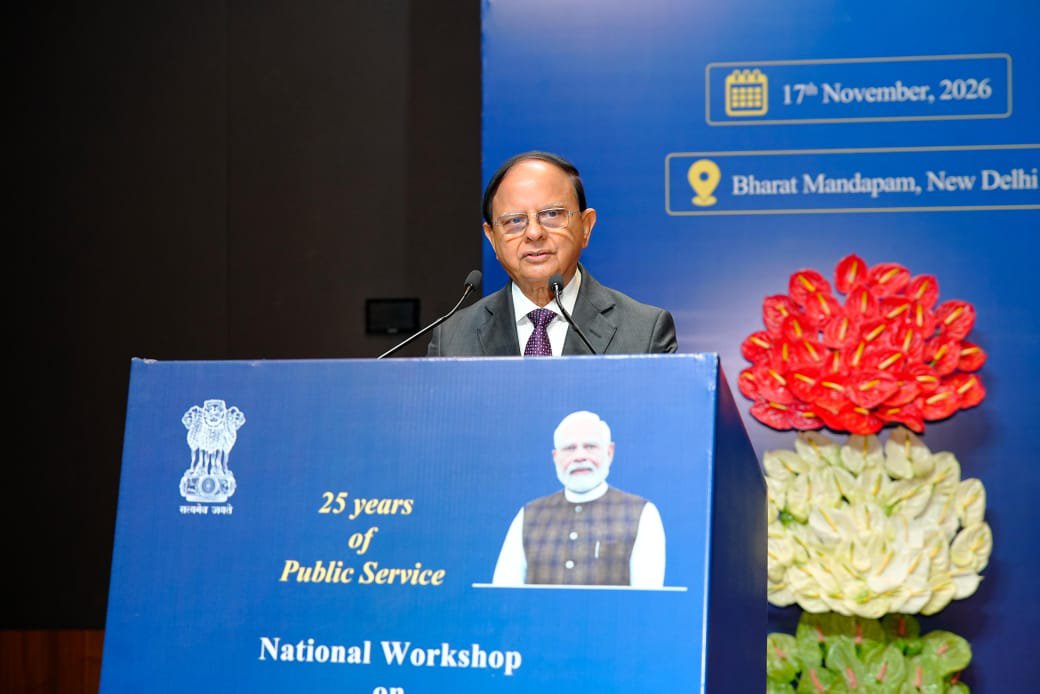
Dr. P.K. Mishra, Principal Secretary to the Prime Minister, in his inaugural keynote address, reflected on defining milestones in India’s governance journey–from the swift response to the 2001 Kutch earthquake and the COVID-19 pandemic to India’s expanding footprint in the space economy and the transformative impact of initiatives such as Lakhpati Didi.
He underscored how decisive, responsive and mission-driven leadership is central to translating national vision into meaningful outcomes for citizens.
#LeadershipAsAMission #MissionDrivenLeadership #LeadershipLearnings #PublicService #25YearsofSeva
@PMOIndia | @narendramodi
| @Rao_InderjitS | @MIB_India | @PIB_India | @DDNewslive | @ashoklahiribjp
From next-generation batteries and green hydrogen to quantum technologies and neuroscience, @tcgcrestuniv, Kolkata, brings together research across diverse frontier areas.
I enjoyed visiting its laboratories and interacting with faculty and researchers to understand their work and the possibilities emerging from it.
In my address, I emphasised that the real opportunity lies in translating promising discoveries into technologies, products and deep-tech enterprises.
As Noida and Greater Noida grow, why should daily commutes become longer?
Here is some good news for the people of Noida and Greater Noida!
The Cabinet has approved an extension of the Aqua Line Metro.
Key advantages:
Easier access to offices, schools, hospitals and commercial hubs.
Less congestion.
Shorter commutes.
A major boost to connectivity and Ease of Living indeed.
https://t.co/GEarCYPUce
The release of IRSA Security APIs, is an another significant milestone in completing the Indian Radio Software Architecture (IRSA) ecosystem. Building upon a common open and interoperable software architecture for Software Defined Radios, these APIs provide standardized interfaces for integrating security capabilities into military communication systems. This is a step forward towards secure, interoperable and indigenous military communication capabilities, strengthening India’s defence technology ecosystem.
#DEAL #WiCOMM2026 #IRSA #MilitaryCommunications #AtmanirbharBharat #DefenceTechnology
We talk about India’s deep-tech future in space, semiconductors, AI, Quantum and advanced manufacturing
Add one more: the human brain.
In Chennai, the Sudha Gopalakrishnan Brain Centre at @iitmadras is mapping 100+ human brains at cellular resolution, across an entire lifetime.
In Bengaluru, @CBR_IISc is decoding how Indian brains age.
Both of the large scale research projects are funded by by Kris Gopalakrishnan (@kris_sg).
We need a hundred more Krises.
Take a look at the clip below for more details and full story and many more like this in the Lift_Off Nation
.@iitbombay Is Cooking for 1,200 Students Using Plant Waste!
https://t.co/7GuvWmdFob ...an excellent bio-fuels initiative.
"With support from IIT Bombay-funded startup Infixen, nearly 2 tonnes of garden waste generated daily are being transformed into cooking fuel pellets"
IIT Bombay is proud to announce that Prof. Neela Nataraj of the Department of Mathematics has been elected a Fellow of The World Academy of Sciences (TWAS) for the advancement of science in developing countries. This recognition is for her outstanding contributions to science and its promotion in the developing world.
Prof. Nataraj is a leading researcher in numerical analysis, known for her work on finite element methods for partial differential equations and her contributions to applied mathematics and scientific computing.
Election as a TWAS Fellow is a highly prestigious international recognition, honouring a sustained record of world-class research and exceptional contributions to the scientific community. Please join us in congratulating Prof. Nataraj on this remarkable achievement!