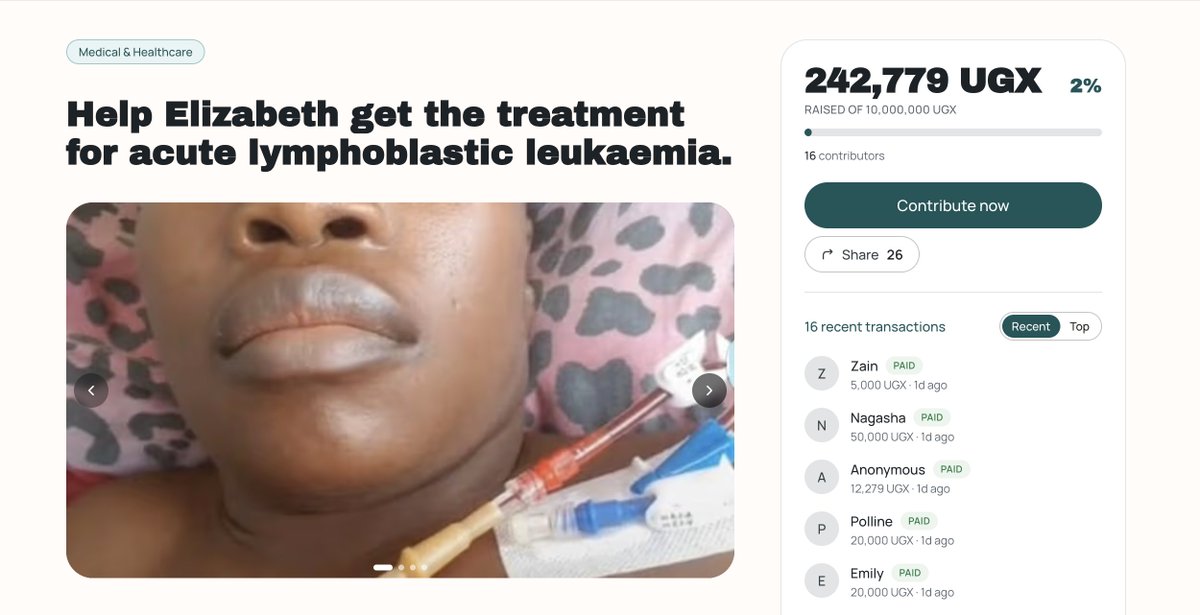
Elizabeth Katate, 26, has spent nearly two years fighting the wrong diagnosis. She was recently confirmed with acute lymphoblastic leukaemia and is now battling a serious infection. Treatment at the Uganda Cancer Institute can save her life.
Donate today to help her start it.
🖲️EPS| ICYMI: Last month, we concluded stakeholder validation of proposed reforms to the Fines Issuance System and Speed Regulations, also mostly known as the Electronic Penalty System [EPS].
The recommendations will guide the refinement of the system before the next phase of implementation, subject to Government approval.
#DriveSafeUg #RoadSafetyUg
It's long overdue that we confronted the daylight extortion disguised as parking enforcement by Multiplex Ltd.
Their attendants casually slap a UGX 1,000 or UGX 2,000 parking ticket onto your vehicle and disappear. Those tickets are often blown away by wind, soaked by rain, or missed by motorists rushing to their next destination. Once the ticket goes unpaid, mysterious penalties begin piling up, yet nobody clearly explains the legal basis, formula, or justification for those escalating charges.
But even that is not the worst part.
The real outrage is the abusive manner in which these penalties are enforced, and the experience of @c_mwanguhya perfectly exposes the problem.
His outstanding penalties stood at UGX 18,000. Earlier today, while he was still seated inside his parked vehicle, Multiplex attendants rushed to clamp his car. When he stepped out demanding an explanation, they casually informed him that he had arrears and that their only responsibility was to clamp the vehicle.
The absurdity is that the very act of clamping instantly attracted another UGX 40,000 charge. By the end of the ordeal, Charles was forced to pay UGX 58,000.
The question then is, if the driver is right there, ready and willing to pay, why rush to clamp the vehicle before even speaking to them? Why deny them the opportunity to clear the outstanding amount and instead deliberately trigger an extra UGX 40,000 clamping fee?
The same abuse happened to me opposite Watoto Central. Their attendants clamped my car while I was standing there. I repeatedly told them I was prepared to pay immediately, but they ignored me. Even after paying both the parking charges and the clamping fee, they still kept me waiting for almost an hour before removing the clamp.
This is not enforcement. This is exploitation.
We demand accountability. We demand fairness. We demand justice.
The biggest lie therapists and relationship coaches have sold this generation is that most couples suffer from "communication issues." In the vast majority of toxic relationships, the communication is perfectly clear. You have explained why you are hurt, you have cried, you have sent the long paragraphs, and you have calmly articulated your boundaries in a hundred different ways.
The problem is not a lack of communication; the problem is a lack of comprehension and respect. Your partner is not failing to understand the words coming out of your mouth. They are actively choosing to misunderstand you because truly comprehending your pain would require them to change their behavior, take accountability, and put in actual effort. We need to stop telling people to "communicate better" with partners who are fundamentally committed to misunderstanding them. You cannot out-communicate someone’s refusal to care.
Attached is a statement made by the Uganda Police about the May 3rd break-in and theft of laptops from the Bank of Uganda. Read it carefully before reading this.
Do we still have any investigative journalists brave enough to find a way of talking to these four suspects and asking them the right questions? Because Uganda Police, the same institution that has in the past been caught working hand in hand with criminal networks, wants us to accept their version of this story wholesale, and for an ordinary mind like mine, several things about it simply do not add up.
Let us start with the basics. On the night of May 3rd into the early hours of May 4th, 2026, unknown individuals broke into the BOU headquarters at Plot 45, Kampala Road, one of the most heavily secured buildings in the country. It has armed guards, advanced CCTV systems, and biometric access; let’s just say it has multiple security layers. It is the kind of building where even legitimate visitors spend twenty minutes at the gate filling in forms.
These thieves walked in, spent nearly 3 hours inside without triggering a single alarm, disabled the surveillance systems, stole seven laptops and a CCTV server, attempted to locate the keys to the strong room, and walked out fine. For an ordinary mind like mine, I can’t stop wondering how this happened.
They did not force the main doors. It was reported that they used duplicate keys, which suggests inside help, and this should be a key line of inquiry. Duplicate keys for the BOU building, friends! Somebody made those keys, and somebody gave them to whoever walked through that gate.
The four people in police custody are two teenagers from Wabigalo and Nsambya, a man from an undisclosed address, and a fourth suspect. I am not saying they were not there. I am just saying that nineteen-year-olds from Nsambya do not typically wake up and decide to break into the central bank of Uganda with duplicate keys and a CCTV server on their shopping list. Such a job requires information, planning, and connections that somebody else provided. That somebody is almost certainly not in police custody.
Now here is where it gets interesting for an ordinary mind like mine. Six days before the break-in, on April 28th, 2026, Bank of Uganda Governor Dr Michael Atingi-Ego sat before a joint parliamentary committee and methodically dismantled the Protection of Sovereignty Bill in ways that earned him many fans on the internet. He warned that it would destabilise the balance of payments, drain the country’s six billion dollars in foreign reserves, disrupt the 1.5 billion dollars in annual remittances, trigger imported inflation, and undermine the very economic sovereignty the bill claimed to protect. He looked those useless MPs in the eye and said, in plain language, that a country without reserves is not sovereign. The bill passed anyway, days later.
Then BOU gets broken into. Of course, I am sure this is pure coincidence and I should probably not read into it at all.
But some legislators are not as disciplined as I am. Paulson Luttamaguzi had this to say about the BOU break-in:
“We don’t think any small or big group can attack Bank of Uganda with all its security. This is a scheme to relieve the Governor of his duties. The State expected the Bank to support the bill, which it never did. If they want to punish him indirectly by claiming his facility was attacked, then we should pray for this country.”
Gentle readers, that is a whole Member of Parliament, on the record, saying the break-in was a political operation targeting the Governor for opposing the regime's bill. Nobody in the mainstream press has followed that thread with the urgency it deserves. They probably looked at it, thought about it for a moment, and just like me, concluded that Luttamaguzi was simply being Luttamaguzi, a conspiracy theorist doing what conspiracy theorists do. Nothing to follow there. Move along. Which is, of course, exactly what you would think if you had also decided the story was over.
Also, this was not the first time. In November 2024, yes, just two years ago, hackers breached BOU’s financial systems and siphoned over UGX 62 billion from the treasury. The good people at the Daily Monitor reported at the time that security agencies were treating it as an inside job involving collusion between BOU, the Finance Ministry’s Treasury Department, and the Accountant General’s Office. President Museveni instructed the Auditor General to investigate. Investigations led to multiple arrests across government departments and heightened scrutiny of insider involvement in cyber-enabled theft cases.
So, within 18 months, BOU has been broken into twice, once with keyboards and this time with duplicate keys, and both times, the inside job theory surfaced almost immediately, and both times, there was no need for our mainstream media to follow the story further.
Now, let’s look at what was taken in the May 2026 break-in. The official statement says laptops. The more detailed picture is more interesting. The thieves took seven laptops belonging to commercial liaison officers, a CCTV server worth tens of millions of shillings, and a high-value internet router. They disabled internet connectivity to delay detection. They vandalised surveillance cameras. They tried to find the keys to the strong room but failed to reach the vault.
For an ordinary mind like mine, people who are after laptops to sell at Mutaasa Kafeero Arcade do not typically also grab the CCTV server and disable the internet connection on their way out. Sounds more like a sweep than a robbery. Sounds like someone wanted the footage on that server gone and the network blind before morning. The laptops may have been the cover story.
Here's why it doesn’t make sense for ‘innocent’ thieves to take the CCTV server. A smart thief who just wants the footage of himself gone unplugs the server and leaves it wiped on the floor, or pulls the hard drives out and destroys them right there in the office, and walks away clean. You only go through the burden of unplugging a heavy server, carrying it out of thr building, and across Kampala in the middle of the night if you want what is on it. Specifically, footage of something or someone that was inside that building before the night of the break-in. Taking the server not only erases May 3rd but also everything on it before that night, too.
What was on those laptops? A quick search on the web shows that the commercial liaison officers at BOU handle the institution’s relationships with commercial banks, market intelligence, consumer data, and economic forecasting information.
Now, whether those devices contained anything more sensitive correspondence, policy drafts, surveillance data, information relevant to the Governor’s opposition to the Sovereignty Bill, nobody has said. Nobody has been asked publicly. And in Uganda, when nobody asks, the answer has a way of remaining comfortably buried.
The four suspects will appear in court, the laptops have been recovered, and the police are satisfied. For an ordinary mind like mine, the only thing more suspicious than the break-in itself is how quickly everyone official, even the new guy who is here to fix things, has decided the story is over.
But like I asked at the start, do we still have any investigative journalists in this country willing to decide that this story does not end with four suspects and six recovered laptops? Because it has all the ingredients of something much bigger, and there are people following it closely enough to notice if someone finally decides to dig.
NEWS:
On the 4th September 2025, HE Kaguta Museveni met officials (Mr Mugabi Charles and Ms Alexandria Judith) from a company named Base Seven. According to the president, they claimed that they were investors intending to build an international airport with a 5.5 km runway that would ease the cost of doing business between Africa and Asia, and also divert half of the world’s air traffic to Uganda. The president, in his wisdom, as a guerrilla man, accepted but activated his intelligence and the Prime Minister Hon Robinah Nabanjja to do due diligence on this company. At the time of publishing this article, this is what has been discovered so far;
Transaction details.
According to the Financial Intelligence Authority of Uganda, the company got some SAR (suspicious activity reports) after a colossal deposit of €40 million from Union Bank of Switzerland into its Ecobank account in February 2025, and the sender “Black Rock Uwakeza Limited” of London was unverifiable. After failing to explain the relationship with the sender and the purpose of the money,
the Financial Intelligence Authority flagged this company. The recipients, Black Soil Capital Ltd, after consulting a few mafias from town on how they could withdraw this money, decided to rename themselves as “Black Rock” and “Base Seven Company”-entities which are not related to BlackRock, Inc., which was registered in 1988 in the USA. The Black Rock in Uganda was registered on 24th May 2022 with an idea to develop an “international airport”, and use this as an explanation for the €40m, as intended for feasibility studies and preparatory expenses for Nyakisharara. Armed with that story and a new name, “Base Seven”, the Mafia hired “Chinese dummy investors” allegedly belonging to Hunan Construction and Engineering Company who could easily secure them an appointment with the president. They finally secured a blue letter from him, unwittingly, for no other purpose than to legitimize the deposit and access the money.
Unbeknownst to them, the money had been returned to sender under an arrangement where it would subsequently be remitted to accounts operated by some “mafia racket” who “cleaned” it.
https://t.co/kBzFes6rzz
Justice Mugambi Rules, Phone Data & Privacy:
1. The High Court has found that your registered mobile number is now officially part of your protected digital identity under Article 31 privacy rights, just like your national ID or passport.✅️
2. It blocks easy recycling of inactive numbers. The Attorney General has 6 months to create safeguards, your informed consent required, or public notice + proof you can't be found, plus tech to stop personal data leaks to new owners.✅️
3. This protects against privacy risks from reassigned numbers (e.g. bank OTPs, accounts). ✅️
4. This a Big win for digital rights✅️
The political conman BobiWine grew his beard up to his nostrils to create the impression that he hasn’t had time to shave, as if he has been constantly on the run. But that story doesn’t quite add up. Shaving is simple. He has been seen near water, has stayed in lodges, and even claims to have slept in the homes of his supporters. With all that, how is it that he couldn’t find a moment to shave?
Yesterday I was at chisa nyama waiting for my pork. Then suddenly a lady in heels driving a Tiguan ordered her meat and left. About 30 minutes later she came back holding the plate. The white manager rushed over probably thinking she wanted to complain. She calmly said there’s no problem. She just want to speak to the guy who fries the meat cause they know each other. She pulled him aside privately and showed him that the pork wasn’t cooked properly as there was still blood inside. She told him gently to be careful because another customer might not be as understanding. Someone else could report him. Then she left. No shouting. No humiliation. No scene. No trying to prove a point. Just correction with dignity. In a world where we’re quick to cancel, quick to expose, quick to embarrass. It was beautiful seeing a black person protecting another black person's bread❤️......
Ugandans, Africans:
We have consumed a lot of western spin. But this is not a movie. Neither is it far from us. Not a religious war either. While both Iran & Israel have religious identities – & mobilize using religion – this is a war about minerals: gas, oil, land, marine resources, etc.
In @observerug this week, I offer a beginners' guide: https://t.co/8yLN0OFlnX
🚨 I just learned about a concept, I can't stop thinking about.
The Four Burner Theory.
It destroyed Elon Musk's first marriage.
It explains why Bezos is jacked but divorced.
And why Zuckerberg has no real friends.
Once you understand it, your life will never be same:🧵
Much as there is interest for market for her products in South Sudan, Uganda has been really generous to South Sudan. Uganda stopped granting refugee status to Eritreans, Ethiopians and Somalis this year when USAID was cut.
However, Uganda instead of turning her back on South Sudanese refugees, it continued giving South Sudanese refugee status and has allocated land for South Sudanese refugees to carry out farming and other activities for their survival. Uganda now hosts 2 million South Sudanese.
Kenya did the same during our years of struggle by giving South Sudanese shelter in the famous Kakuma Camp. Till today Kakuma is still home to thousands of South Sudanese.
I may at one point question some agreements between our countries but I will be the last person to cast a stone at Uganda and Kenya. Kindness should be repaid with kindness.
The SILENT WITNESS ON YOUR COMPUTER WAITING FOR YOU TO GET INTO TROUBLE.
Most people believe that deleting a folder, clearing recent files, or wiping their history is enough to hide their tracks on a computer. What they don’t realize is that Windows quietly keeps a hidden record of the folders they open, even after those folders are deleted or the drive is removed. These records are called Shellbags, and they are one of the most powerful and incriminating artifacts available to forensic investigators.
Shellbags appear inside two registry hives NTUSER.DAT and USRCLASS.DAT and they store detailed information about a user’s folder-browsing activity. This includes local folders, USB drives, external hard drives, network shares, and even directories that no longer exist. Each time a user opens a folder in Windows Explorer, the system automatically creates or updates a Shellbag entry. These entries contain timestamps, folder paths, the hierarchy of subfolders, the order in which a folder was accessed, and even the specific view settings used by the user. Because of this, Shellbags reconstruct a user’s exact navigation trail long after the person believes the evidence is gone. What makes Shellbags truly dangerous is the fact that they survive actions that users typically rely on to cover their tracks.
Deleting a folder does not delete the Shellbag. Formatting a drive does not delete it. Even privacy tools and cleaners like CCleaner or BleachBit cannot reliably erase Shellbag data, because the information is deeply embedded within registry hives that standard cleaning utilities do not touch. The only way to remove Shellbags is through advanced forensic wiping, and attempting such wiping is, in itself, a sign of suspicious behavior.
Forensic examiners rely heavily on Shellbags because they expose the truth even when a suspect tries to lie.
If a person denies ever accessing a directory, the Shellbags can show when that folder was opened, how many times it was accessed, and whether it was located on an internal drive, an external USB, or a deleted partition. This makes Shellbags extremely valuable in investigations involving insider threats, data theft, fraud, child exploitation, unauthorized data access, and corporate disputes. In many cases, Shellbags become the deciding factor that disproves a suspect’s story. In the screenshot, the highlighted red section shows three important keys inside the registry.
When all of this information is combined, Shellbags become a silent witness that never forgets. They reconstruct a hidden story of user activity that the person cannot deny, overwrite, or talk their way out of. This is why Shellbags remain one of the most feared artifacts for anyone attempting to conceal their actions on a Windows computer. You can delete the folder… but Shellbags still show it existed
Even if you format a drive or delete the directory, Windows has already logged:
1. The folder name
2. Its full path
3. When it was opened
4. How many times it was opened
5. The view settings (icon mode, window size)
6. The order in which folders were browsed
This means forensic investigators can prove someone accessed:
“Secret” directories
Hidden folder structures
USB drives or removable media
Folder paths used for storage of illicit or suspicious
Folder paths used for storage of illicit or suspicious data even if the folders are long gone.