Η ΠΤΩΣΗ ΤΗΣ ΒΕΡΟΙΑΣ
Τοτε, ο τσαρος Σαμουήλ, αφού μας έταξε πλούτη να χορτάσουνε τα μάτια μας, γυναίκες όμορφες, απείραγες από αρσενικό, που θα γινόντουσαν δικές μας, αφού κέντρισε την πολεμική ορμή μας με υποσχέσεις που πάντοτε κρατούσε, μάζεψε το στρατό του και ξεκινήσαμε. Με γρήγορες πορείες αφήσαμε πίσω μας την Τριαδίτσα, περάσαμε από τα στενά φαράγγια και νύχτα φτάσαμε μπροστά στη Βέροια, στο σκοπό μας.
Μας οδηγούσε ο ίδιος μας ο Τσάρος και, όταν στήσαμε τις κωνικές σκηνές μας έξω από τα τείχη, μάζεψε εμάς, τους αρχηγούς του, και μας εξήγησε τι μας ζητούσε. Την πόλη ήθελε, και γρήγορα, σε μία ή δύο ημέρες. Στρατό πολύ δεν είχαν οι Ρωμιοί, ούτε και μπορούσανε να περιμένουνε ταχιά βοήθεια από τη Θεσσαλονίκη. Το φουσάτο του Βασιλείου βρισκόταν μακριά, στη Μικρασία. Οι κλεισουράρχες του δεν θα ξεμύταγαν από τις κλεισούρες τους. Δικοί μας στρατιώτες είχαν κλείσει όλα τα στενά Η πόλη θα 'πεφτε. Φτάνει να το θέλαμε. Και το θέλαμε. Θέλαμε γυναίκες, σκλάβους, πλούτια.
Οι φωνές μας, οι δάδες που ανάψαμε για να δηλώσουμε την πίστη μας στον Τσάρο μας φθάσανε στον ουρανό, στα άστρα και στο φεγγάρι, και θα ακούστηκαν σαν προμήνυμα συμφοράς για κείνους που ζούσανε με την ψυχή στο στόμα μέσα στα τειχιά της Βέροιας. Τους είδαμε τους υπερασπιστές. Ανεβήκαν στα τειχιά και στείλαν φτερωτές σαγίτες όταν ζυγώσαμε κοντά στην τάφρο. Ρίξανε σαγίτες, πέτρες και κοντάρια, και χάσαμε δυο-τρεις συντρόφους μας πριν αρχίσει η μάχη, πριν σηκώσουμε τις σκάλες μας, πριν γεμίσουμε την τάφρο πέτρες, χώματα και ξύλα. Πέθαναν και χάθηκαν πριν προλάβουν να χαρούν τον πόλεμο, τη νίκη, τις ζεστές αγκαλιές των παρθένων, που όσο φωνάζουν την απελπισία τους, όσο πολεμάνε να ξεφύγουν από τα χάδια μας, τόσο μας κεντρίζουνε τον ανδρισμό μας και τα πάθη μας.
Ξημέρωσε η μέρα και οι υπερασπιστές της Βέροιας φανήκανε πάλι πάνω στις επάλξεις. Ήτανε λίγοι, τόσο λίγοι που λέγαμε πως δεν θα πολεμήσουν. Παπάδες χρυσοστολισμένοι περπατούσαν πάνω στα τειχιά κρατώντας εικονίσματα στα χέρια τους. Εικονίσματα που λαμποκοπούσαν από το μάλαμα και τις πέτρες που ήταν φορτωμένα. Εικονίσματα που θα γινόντουσαν δικά μας σε λίγες ώρες, σε λίγες μέρες το πολύ.
Σήμαναν τα βούκινα και φωνάζοντας τρέξαμε μπροστά. Ούτε οι σαγίτες, ούτε τα κοντάρια, ούτε το καυτό μολύβι και το λάδι μας σταματούσαν. Φτάσαμε στην τάφρο, ρίξαμε τα φορτώματα που κουβαλούσαμε, ξεχείλισε, το νερό άρχισε να γίνεται λάσπη παχιά, γλιστερή λάσπη. Ρίξαμε κι άλλα φορτώματα, κλαδιά, κορμούς ολόκληρους, πέτρες, καλάθια γεμάτα χώματα. Η λάσπη έγινε χώμα στερεό. Χιμήξαμε ξανά μπροστά. Πατήσαμε πάνω σε νεκρούς δικούς μας, που γέμιζαν κι αυτοί με τα κορμιά τους την τάφρο κάνοντας γερή τη γης όπου πάταγαν τα πόδια μας. Στήσαμε τις σκάλες μας. Αρχίσαμε το σκαρφάλωμα. Μας γκρέμισαν πίσω οι Ρωμιοί. Ακόμα και οι παπάδες πολεμούσαν, και οι γυναίκες, και τα παιδιά. Τρεις φορές ριχτήκαμε πάνω στα τειχιά, τρεις μάς γύρισαν πίσω. Ο Τσάρος μας άφριζε και βλαστημούσε. Σαν κάναμε πίσω για τρίτη φορά ταπεινωμένοι, άρπαξε ένα μαστίγιο κι άρχισε να χτυπάει στο σωρό. Τώρα πια κανείς μας δεν λογάριαζε το θάνατο. Ορμήσαμε για τέταρτη φορά. Χάσαμε κι άλλους συντρόφους μας, όμως πατήσαμε τα τειχιά, γκρεμίσαμε γυναίκες, παιδιά, παπάδες και πολεμιστές από τις επάλξεις, χυθήκαμε στις πύλες, τις ανοίξαμε διάπλατες, όρμησε μέσα λεφούσι ατέλειωτο ο στρατός μας.
Τέσσερις μέρες κράτησε η Βέροια. Τέσσερις μέρες ξεφαντώναμε μέσα στην πατημένη πόλη. Τότες, ούτε γέννα ούτε χρόνια ούτε πλούτη υπολογίσθηκαν από κανέναν. Ήμασταν νικητές, κάναμε με την άδεια του Τσάρου μας ό,τι ποθούσε ο καθένας. Σταυρώσαμε παπάδες, βιάσαμε παρθένες, γκρεμίσαμε από παράθυρα μωρά που τσίριζαν διακόπτοντας την καλοπέρασή μας με τις νιες που είχαν για μανάδες τους. Καρφώσαμε στην Πύλη της Βέροιας τον αρχηγό της άμυνας της πόλης, φορτωθήκαμε χρυσάφι, πέτρες γυαλιστερές, ασήμια που ξηλώσαμε από εικονίσματα, από Χριστούς και Παναγίες και Αγίους που πετάγαμε στο δρόμο, 👇
The only footballer to rival Ronaldo Nazário as the best pure striker of all times.
Three Ballon d'Ors, two European Cups, a European Championship, FIFA World Player of the Year.
He never played a single match after his 29th birthday.
This is Marco van Basten.
283 goals in 379 matches.
The most complete striker of his generation.
He played at one World Cup. Didn't score a single goal in it. And it wasn't his fault.
Born in Utrecht. Nicknamed "The Swan." 6'3", balletic, devastating in the air and on the ground. At Ajax he scored 128 goals in 133 league matches. Three Eredivisie titles. A Cup Winners' Cup. Golden Boot.
In 1987 Milan signed him alongside Ruud Gullit. Injuries wrecked his first season, 11 appearances. Then he exploded. Ballon d'Or in 1988 and 1989. Two European Cups. Three Serie A titles. A team unbeaten for 58 consecutive league matches.
His goals were impossible, pure art.
Euro 88. West Germany.
Hat-trick against England. The winner against West Germany in the semi-final. Then the final against the Soviet Union, a volley from the right side of the box, an angle so tight commentators still argue about how the ball found the net.
Top scorer, MVP. The best version of Van Basten the world ever saw on a major stage.
Then 1990. Italy. His one and only World Cup.
The Netherlands arrived as European champions. Van Basten, Gullit, Rijkaard, Koeman, all at their peak. Expectations were enormous.
It fell apart before a ball was even kicked.
The players had voted for Johan Cruyff as national coach. Rinus Michels overruled them and installed Leo Beenhakker instead. Off the record, federation officials called Cruyff a psychopath. Gullit and Van Basten publicly criticised Michels in the press. Michels wrote back. The chaos never settled.
Three group games. Three draws. Van Basten was invisible.
Round of 16. San Siro, his own home ground. Against West Germany. The match the Dutch trio were supposed to dominate on their own turf.
Instead Frank Rijkaard spat in Rudi Völler's hair. Twice. Both men sent off. The Netherlands lost 2-1 and went home.
Van Basten, the best striker on the planet, fresh off winning back-to-back Ballon d'Ors, didn't score a single goal at his only World Cup.
The criticism in the Dutch press was brutal. He had been built up as the man to finally deliver a World Cup. He left with nothing, blamed alongside everyone else for a tournament that had imploded around him before it even began.
He never got another chance. Missed the 1994 World Cup through injury. By 1998 he was retired.
An ankle injury, first sustained in 1987, operated on repeatedly throughout his career, ended everything in 1993. He was 28. Spent two years trying to come back. Multiple surgeries. None of them worked.
In 1995, after two years trying and failing to recover, he announced his retirement at a press conference at Milan's headquarters.
The next day he walked out at the San Siro one last time to say goodbye to 60,000 fans who adored him. Fabio Capello, his coach, broke down in tears on the touchline.
He never played again.
24 goals in 58 caps for the Netherlands. One World Cup. Zero World Cup goals. One European Championship won as the best player alive.
Still, with Ronaldo Nazário, the only name that belongs at the very top of the conversation for greatest striker who ever lived.
The streets will never forget San Marco. 🇳🇱
«Τὸ δὲ τὴν πόλιν σοι δοῦναι, οὔτ’ ἐμόν ἐστιν οὔτ’ ἄλλου τῶν κατοικούντων ἐν ταύτῃ· κοινῇ γὰρ γνώμῃ πάντες αὐτοπροαιρέτως ἀποθανοῦμεν καὶ οὐ φεισόμεθα τῆς ζωῆς ἡμῶν».
Η περήφανη απάντηση του αυτοκράτορα Κωνσταντίνου ΙΑ΄ Παλαιολόγου προς τον Μωάμεθ Β', που διατηρείται στο έμβλημα της 16ης Μ/Κ Μεραρχίας του Ελληνικού Στρατού, όπως και σε κάθε ελληνική ψυχή.
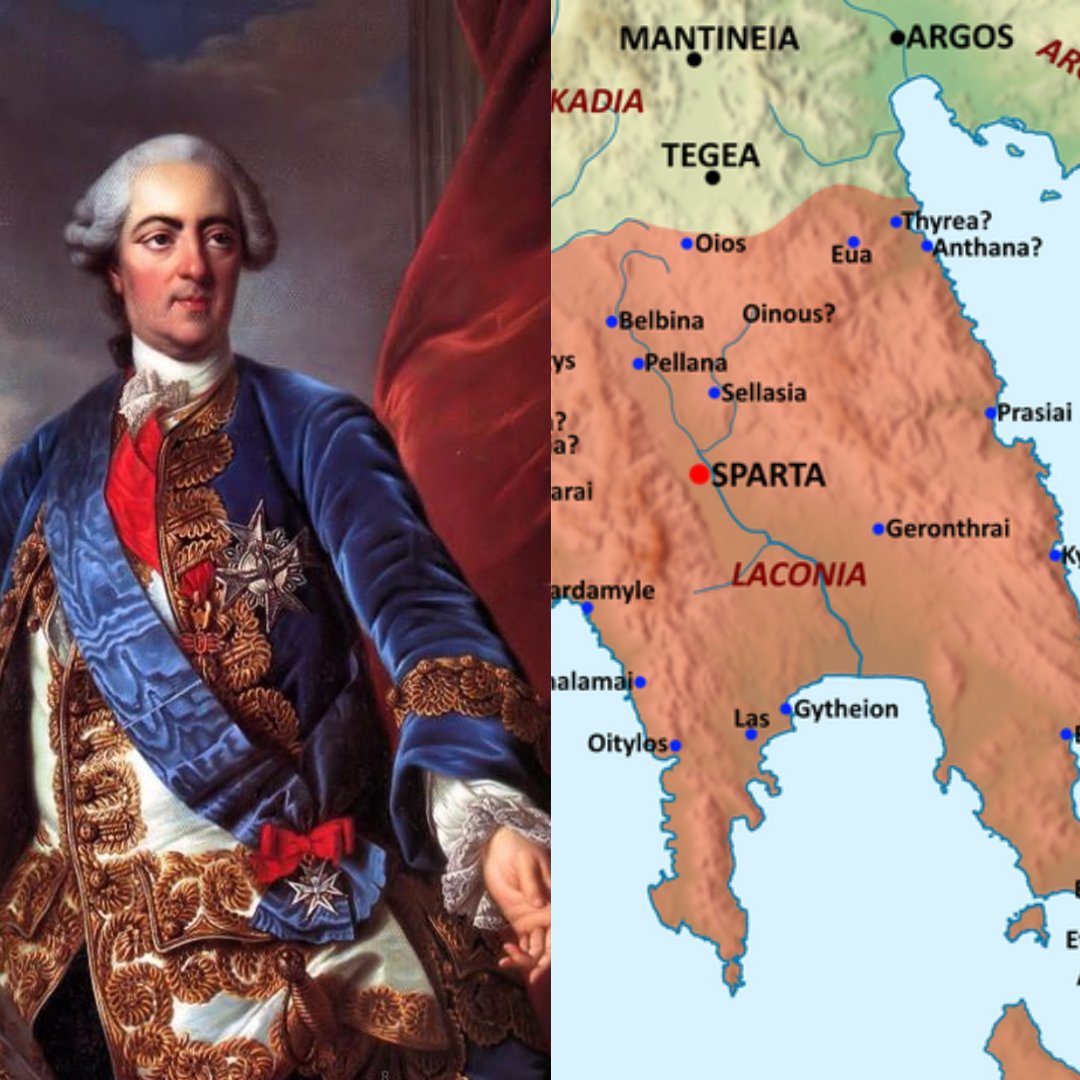
One of the greatest cultural crimes in Greek history happened in Sparta. In the 1730s, the French scholar Michel Fourmont was sent by the French crown to Greece. His mission was to copy ancient inscriptions and document classical antiquities. What he left behind in Sparta was one of the most shameful acts in the history of archaeology and a crime against the Greek culture and history.
Fourmont fabricated more than 1,200 inscriptions, many of them obvious forgeries that mixed impossible names, anachronistic formulas, and linguistic errors. To create the appearance of authenticity, he ordered the destruction of ancient Spartan structures and artifacts.
Marble blocks covered with authentic inscriptions were deliberately shattered. Priceless originals were smashed so that his fakes could take their place in scholarly collections.
Sparta, already reduced to ruins after centuries of neglect, still retained rare physical traces of its legendary past. Entire categories of authentic Spartan texts, possibly unique in the Greek world, vanished forever.
For decades, his fabricated inscriptions were cited as serious evidence. Scholars built theories on lies. It took until the 20th century, particularly through the rigorous work of epigraphists like Louis Robert, for the full scale of the fraud to be exposed. By then the damage was irreversible.
Today, Michel Fourmont is remembered as a man who came to study Sparta, my homeland, and instead silenced it. His actions represent one of the greatest cultural crimes in Greek history. The deliberate erasure of a civilization’s material memory, dressed up as scholarship.
In a letter to Count Maurepas, Fourmont boasts that he destroyed the inscriptions so that they would not be copied by a future traveler:
"For over 30 days now - 30, 40, even 60 workers - have been dismantling, destroying, erasing the city of Sparta. I have only 4 single towers left to demolish… For the moment, I am occupied with the destruction of Sparta’s last antiquities. You understand what joy I feel. But Mantinea, Stymphalia, Tegea, and especially Nemea and Olympia deserve to be thoroughly uprooted. I’ve made many expeditions in search of the ancient cities of this land, and I’ve destroyed several. Among them Troezen, Hermione, Tiryns, half the acropolis of Argos, Phliasia, Pheneos… I have entered Mani. For six weeks now, I’ve been occupied with the total destruction of Sparta. By tearing down its walls, its temples, leaving not a stone upon a stone, I will make even its location unknown in the future, so that I can be the one to make it known again. That way, I will glorify my journey. Is that not something? Sparta is the fifth city I have destroyed. I am now occupied with the destruction of the deepest foundations of the temple of Amyklaean Apollo. I would have destroyed other ancient sites just as easily, if only I had been allowed to. I completely demolished the tower. Of the travelers who came before me, I don't recall a single one daring to demolish towers and other large buildings!"
According to the information he himself provides, in Sparta alone he paid for 1.200 daily wages to demolish the monuments and buildings that still survived.
Fourmont was then planning to move on to Olympia, a visit he had actually scheduled. But fortunately, he was recalled to France and left Greece.
The barbarity and the damage caused by the Frenchman were irreparable.
As a Greek from Laconia, I wish that this inhumane barbarian, may never rest in peace.
The testimony of the German Johann W.A. Streit, a young technician, about the massacres of Greeks in Constantinople is horrifying. He writes that as soon as a wool factory finished its shift, the Turkish workers seized the prisons of Katrosan and dragged out 186 Greeks who had been arrested in the preceding days.
Many of them they killed on the spot, while they dragged the others through the cobblestone streets until they met a gruesome death:
“They tied the Greeks’ feet and hands with ropes and pulled them in all directions, dismembering them. They cut off their heads, impaled them on the tips of their swords, and paraded them triumphantly through the streets. Even though a fire had broken out that evening in one of the outlying districts, a fire that could have destroyed the entire city, no one was bothered by it. Everyone continued with the slaughter and the looting”
The next morning, Streit saw many Greeks, both men and women, hanging upside down from their windows.
“The victims were writhing and screaming. Knives and swords had been nailed into the buttocks of many. From time to time, they would cut off another piece of flesh”.
That morning, Streit counted approximately 4,000 corpses of both sexes. He recounts the incident in which a mob broke into the house of a Greek jeweler. One of his daughters jumped out of the window and was killed.
“They brought the rest of the family down to the square. There they stripped the other daughter and the maid naked, and first cut off their breasts and then their noses. The son, a robust 24-year-old young man, rushed at a Turk, punched him in the temple, seized the bloodied yataghan from his hand, and with one blow from top to bottom cut off his nose so that it remained hanging from his lips. Within a minute, a hundred swords had hacked him to pieces”.
Later, the impaling of many Greeks is described:
“Around midnight, they brought more Greeks, men and women, among them three small children. They impaled them with their swords and threw them alive into the fire”.
Streit adds: “I did not see a single Turk whose face showed any compassion. Even six-year-old children vented their hatred on the dead. They stabbed the slain Greeks with knives”.
Wherever and however they could, the Greek population resisted the barbarity:
“A Greek merchant, as soon as the Turks broke into his shop and house, took refuge with his family in the upper floor. He had with him two barrels of gunpowder. And while forty bloodthirsty Turks were climbing the stairs, he set it on fire. The house blew up into the air. A pharmacist killed 200 Turks who were besieging his house. He poisoned all the wine barrels in his cellar with arsenic and then committed suicide by cutting his throat with a razor. The Turks drank, were poisoned, and died curled up like worms in front of the house”.
All of this is described in detail in his book "Constantinople in the Year 1821", which was published in Leipzig in 1822.
We have a saying in Greece that derives directly from the Iliad:
“Always strive for excellence and to surpass the others, and do not bring shame upon the race of your fathers.”
(Homer, Iliad Z 208–209)
With these words, Hippolochus advised his son Glaucus when he sent him to fight in Troy. Earlier in the same book we read:
“Why do you ask of my lineage, fearless son of Tydeus?
The generations of mortals are like the leaves of the trees:
some the wind scatters upon the ground, and others the forest brings forth again when spring renews the trees.
Thus one generation of men springs up, and another passes away.”
(Homer, Iliad Z 145–149)
We say “Aien aristeuein,” which means “Always to excel.”
These words from Homer shaped generations of heroes and glorious men. This phrase lived in our collective memory, at least until today, and we fought to become better than our ancestors and worthy of our heroes. We had role models; we admired our grandfathers. The archetype of the heroic ancestor was born, and the lifelong purpose was always to surpass him through great deeds in one’s own life.
Until the dark days of today arrived, days baptized as “progress,” in which every day we slide from bad to worse.
Some want to create a degenerate world, sunk in atheism, anarchy, and spiritual collapse, far removed from values, virtues, and morality. They call this “progress,” yet it is nothing but total subjugation, heads bowed, without any desire to resist.
Today’s so-called progress, therefore, consists precisely in moving as far as possible away from the ancient command of fighting in your life to surpass your ancestors and having virtues.
To live without the imperative “aien aristeuein” is to accept the slow death of the human spirit. When excellence is no longer the measure, when the only sacred thing left is the right to mediocrity and the comfort of never being judged by the shadow of greater men, then man ceases to be a bridge toward something higher and becomes merely a consumer of fleeting pleasures in a rootless present.
A civilization that teaches its young to surpass their fathers in virtue, courage, wisdom, and beauty ascends.
One that teaches them to despise or ignore their fathers has already begun its long descent into oblivion.
Homer Pavlos
12/4/1204 Η λεηλασία της Κωνσταντινούπολης, όχι από παραδοσιακούς εχθρούς της Βυζαντίου όπως το Ισλάμ, οι Βούλγαροι, οι Ούγγροι ή οι Σέρβοι, αλλά ο δυτικός χριστιανικός στρατός της Δ' Σταυροφορίας. Βιασμοί, σφαγές, λεηλασίες, βεβηλώσεις εκκλησιών, ακόμα και της Αγίας Σοφίας.
For 300 years the Muslim Turks were stealing kids from their mothers and putting taxes on the Christians. Before Jizya, in Greece we had the "haraç" (charatsi). It was a form of land tax imposed by the Muslim Turks on "non-Muslim subjects", from the 15th century until the empire's reforms in the 19th century (20–50% of income). Originating from the Islamic "kharaj" (a tax on agricultural land), it evolved into a poll-like tax levied on individuals based on their ability to pay, often tied to land ownership or household wealth. In principle, it served as a counterpart to the "zakat" (charitable tax) paid by Muslims, but in practice, it functioned as a discriminatory burden on "dhimmis" (protected non-Muslims) under the Ottoman millet system, which granted limited autonomy to religious communities like the Greek Orthodox in exchange for fiscal obligations.
Collection was reformed in 1834 during the Tanzimat era, shifting to a more centralized commission-based system, and it eventually merged with the "Jizya" (head tax) by the late 19th century.
Now, combine all these practices from the muslims: Collecting children (devşirme), insane taxes (haraç), tortures like skinning alive and other practises to convert Christians, and also the slave trade.
Greek population in Anatolia & Aegean islands fell -30% via enslavement, tortures or conversion.
Harac + slave raids drained villages of labor. Greece under the Ottoman occupation was -50% below Western Europe by 1800. We Greeks, call the Ottomans as "the Grand Masters of Torture". Millions of Greeks died or became muslims. Many of them are calling themselves "Turks" today. These people are the most fanatics against the Christians and the Greeks because they were raised with lies to hate their own ancestral bloodline and history.
The devshirme was the greatest wound inflicted on Hellenism during the period of Turkish rule. The children who were seized were considered definitively lost. In Epirus, in fact, on the first Sunday after the abduction, their parents would go to church dressed in black, where a funeral service was chanted. In this service, the names of the children were read aloud as if they were dead.
For 300 years the Ottoman Turks were stealing kids from their mothers. This was the most brutal thing humanity ever witnessed. They were waiting for women to birth, raise their kids, and then at the age of 8 were collecting the them. The devşirme known as "collection of children" or "blood tax" or in Greek as "paidomazoma" was a systematic practice by the Ottoman Empire from the late 14th century until the mid-17th century, that forced the recruitment of young Christian boys, typically aged 8–18, from Balkan provinces as a form of tribute. These boys were taken from their families, converted to Islam, and rigorously trained to serve in the empire's military, administrative, and bureaucratic roles. This created a loyal class of elite soldiers and officials who were dependent on the sultan rather than on hereditary Turkish aristocracy.
Historians estimate the total number of Christian boys taken across the entire Ottoman Empire around 300.000 kids. From those kids 150.000 were Greek kids (over 300 years). It means the half of the total kids that were stolen were only Greek. It's insane. For example in 1540, a levy in territories of Thessaly & Macedonia took 1.000 Greek boys in one season and in Chios (Greek island) 200 boys taken in 1567 alone. The peak was 5.000 kids/annual from Greece. A generational trauma, with thousands of Greek families losing sons every few years for centuries.
Once taken, boys were circumcised, renamed with Muslim names, and forbidden from contact with their families. They were raised as Muslims, effectively erasing their Greek cultural and religious identity to foster loyalty to the sultan. Historical records show Greek-origin devşirme boys rising to prominence, such as Mimar Sinan (chief architect of the Ottomans, possibly Greek) and several grand viziers like Ibrahim Edhem Pasha (from Chios). The system accelerated Islamization in Greek regions, reducing Christian populations and creating a class of "Greek Muslims" (for example in Pontus or Crete). It fueled revolts and the Greek War of Independence (1821), where devşirme grievances were invoked.
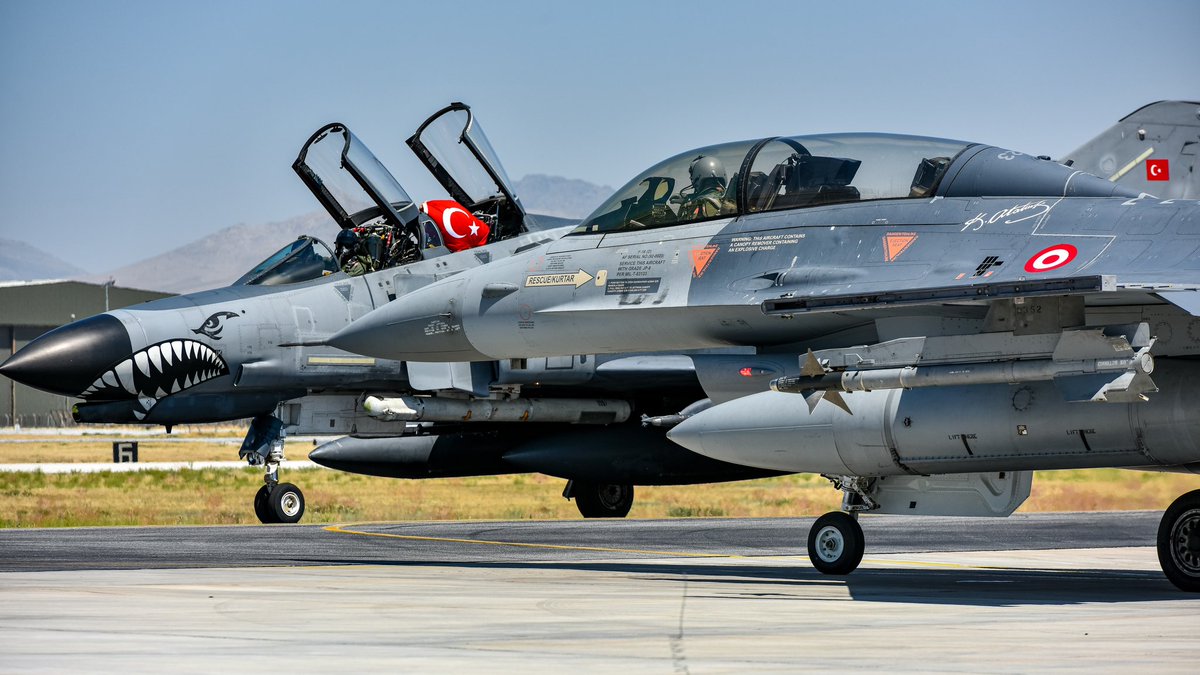
Bίντεο από την χθεσινή απογείωση 3 Α/Φ από την 10η Κύρια Αεροπορική Βάση στο Incirlik παρουσία δημοσιογράφων που συνόδευαν τον εκπρόσωπο Τύπου του Τ/ΥΠΑΜ. Το Α/Φ F-16C 90-0004 της 132 Μοίρας συνόδευσε το F-16C 93-0007 και το διθέσιο F-16D 90-0023 χωρίς backseater της 152 Μοίρας.
Ο χάρτης που αποτυπώνει τον τουρκικό επεκτατισμό έχει τοποθετηθεί σε περίοπτη θέση στην αίθουσα υποδοχής επισήμων της Διοίκησης Στενών Βοσπόρου (Anadolu Kavağı/Ιερόν Κωνσταντινούπολης), όπου εδρεύει το Επιτελείο της Αντιναρκικής Δύναμης Εύξεινου Πόντου (CTF BLACK HQ) του ΝΑΤΟ.
Κατεχόμενη Κύπρος | Διάταξη Σχηματισμών και Μονάδων της 28ης Μ/Κ Μεραρχίας Πεζικού με βάση φωτογραφία Τούρκου οπλίτη μπροστά από χάρτη καταστάσεως που αναρτήθηκε στα ΜΚΔ.
14 Μαρτίου 2026 | Σμήνος πέντε kamikaze ΜΕΑ/Φ K2 της Baykar εκτέλεσε αυτόνομη πτήση σε διάφορους σχηματισμούς με υποβοήθηση ΤΝ στον Κόλπο Ξηρού. Το Κ2 με MTOW 800 κιλά και ακτίνα πτήσης 2.000 χλμ. χρησιμοποιεί την άτρακτο και το σκέλος προσγείωσης του TB2.
Το βίντεο του Τ/ΥΠΑΜ από την Άσκηση ANADOLU KARTALI 2026/1 αποτελεί συρραφή με πλάνα αρχείου καθώς το Α/Φ F-16C Block 50+ με αριθμό 07-1011 εμφανίζεται να συμμετέχει με το παλαιότερο μοιρόσημο της 181 Μοίρας και με το νεότερο της 161 Μοίρας. (https://t.co/6Vx72S2Rj9).
Etimesgut, Άγκυρα | Το νέο κτίριο του Τ/ΥΠΑΜ που θα συστεγάζεται μαζί με τα Γενικά Επιτελεία κατασκευάζεται εκτός αστικού ιστού στο Στρατόπεδο του Κέντρου Εκπαίδευσης Τεθωρακισμένων, το οποίο μετακινήθηκε από την τουρκική πρωτεύουσα μετά την απόπειρα πραξικοπήματος του 2016.
Everyone can thank the Greeks today for the oil prices dropping under $100 and saving the stock market and your money.
Biggest winners of this Iran war so far, in many fronts have been the Greeks.
Just like they were in WW2.