Explaining Markov Chain Monte Carlo (MCMC) to a Layperson
1/ 🧐 Introduction Ever wonder how scientists make educated guesses about complex things, like predicting the weather or understanding the spread of a disease? They often use a method called MCMC. Let's break it down!
2/ 🎲 Start with a Simple Analogy Imagine you're in a room blindfolded, and you're trying to map out the furniture without seeing it. You take small steps in random directions. If you bump into something, you know there's an object there. Over time, you get a sense of the room's layout.
3/ 🔄 Markov Chain This is the idea behind the 'Markov Chain' in MCMC. You take many, many steps starting from a certain position, and your next step only depends on where you currently are. The 'chain' is the path you walk.
4/ 🎰 Monte Carlo Now, think about casinos. The Monte Carlo method, named after the famous casino town, is about using randomness (like rolling dice) to solve problems. In our context, it's like using random steps to explore and understand a complex system.
5/ 🤔 So, What's MCMC Together? MCMC combines the Markov Chain (the walking around) and Monte Carlo (the randomness) to make educated guesses about systems that are hard to figure out directly.
6/ 📊 Sampling & Distributions Here's the magic! After taking many steps, the places you've been most often give us a good idea about the 'shape' or 'distribution' of what we're trying to understand. It's like understanding the furniture layout in the blindfolded room analogy.
7/ 👥 Why is MCMC Useful? It's super useful in situations where directly calculating the answer is tough or impossible. Scientists use it to estimate things like climate patterns, stock market changes, or even the structure of galaxies!
8/ 🔍 In Summary MCMC is a clever method that combines walking around (Markov Chain) with randomness (Monte Carlo) to make educated guesses about complex systems. Think of it as mapping out a room blindfolded using small, random steps.
9/ 📚 Keep Exploring If you're curious, there's a world of math, statistics, and stories behind MCMC. But at its heart, it's about understanding the unknown through randomness and persistence.
🔚 End of Thread. If you enjoyed this explanation, feel free to share and comment! #DataScience #ScienceForEveryone 🌍
Como a ciência de dados pode ajudar a incluir as perspectivas de gênero e raça na formulação de políticas públicas?
Neste evento online organizado pela R-Ladies São Paulo e Elas no Orçamento, cinco palestrantes irão trazer suas perspectivas no tema.
https://t.co/RZEwh4UfgR
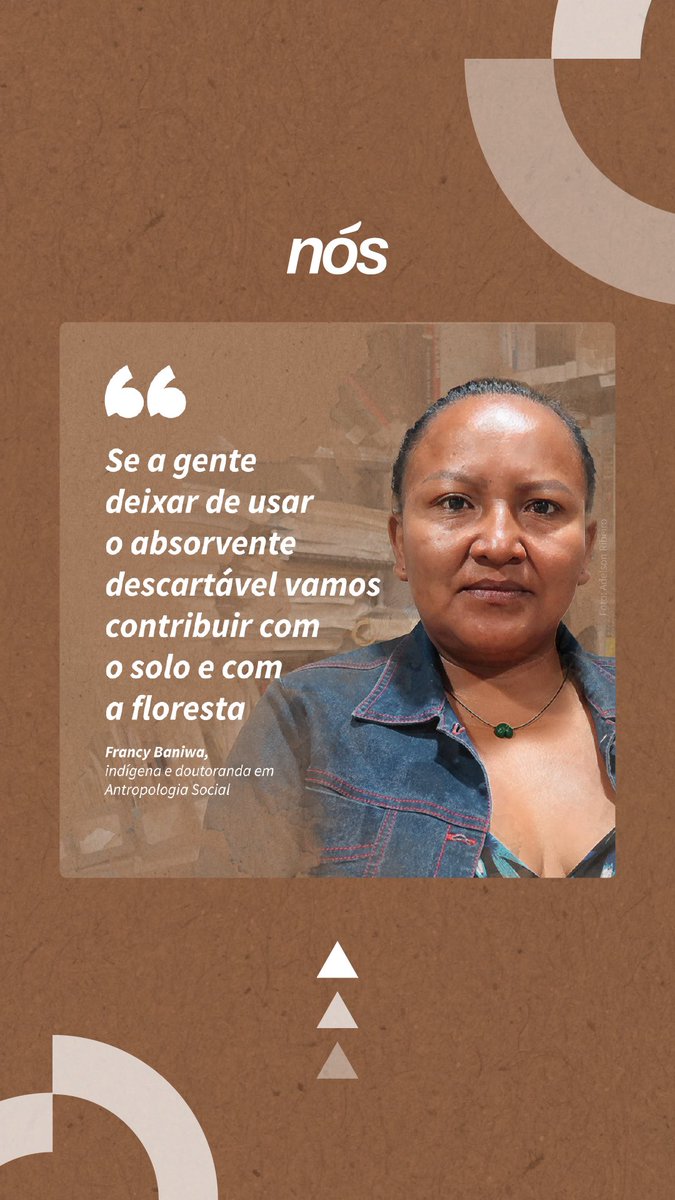
Como a luta contra o lixo une as mulheres?
Francy Baniwa participa de um projeto que desenvolve absorventes reutilizáveis e gera renda para algumas comunidades indígenas de São Miguel da Cachoeira (AM) +
I am very pleased to announce that the coauthors (@TatianaCarrijo, @estipula_filipe, @RenanHollunder, Andre Dias, @MarioGarbin ) and I published my first paper about the spatial distribution pattern of Rubiaceae species in the understory.
https://t.co/MG93EbDdIP
Cerca de 90% da pesquisa científica brasileira acontece nas universidades públicas, graças ao trabalho de estudantes da pós-graduação. Além de paralisar as universidades por falta de verbas, Bolsonaro quer dar calote nos bolsistas! Não aceitaremos! #PagueMinhaBolsa#Capes
Embora tenham dedicação exclusiva, os pós-graduandos não têm direitos trabalhistas e nem como negociar a remuneração. As bolsas são a única contrapartida por anos de dedicação e pesquisas que ajudam a desenvolver o Brasil. Exigimos tratamento digno! #PagueMinhaBolsa#CAPES
Tem uma cena no final do filme “Que Horas Ela Volta?” que mexe comigo de um jeito que eu não sei explicar. Ela fala sobre mim tanto quanto fala sobre a história recente do Brasil e sobre tudo que a vitória de hoje representa. E aqui tá a cena e o porquê. 🧵👉🏿