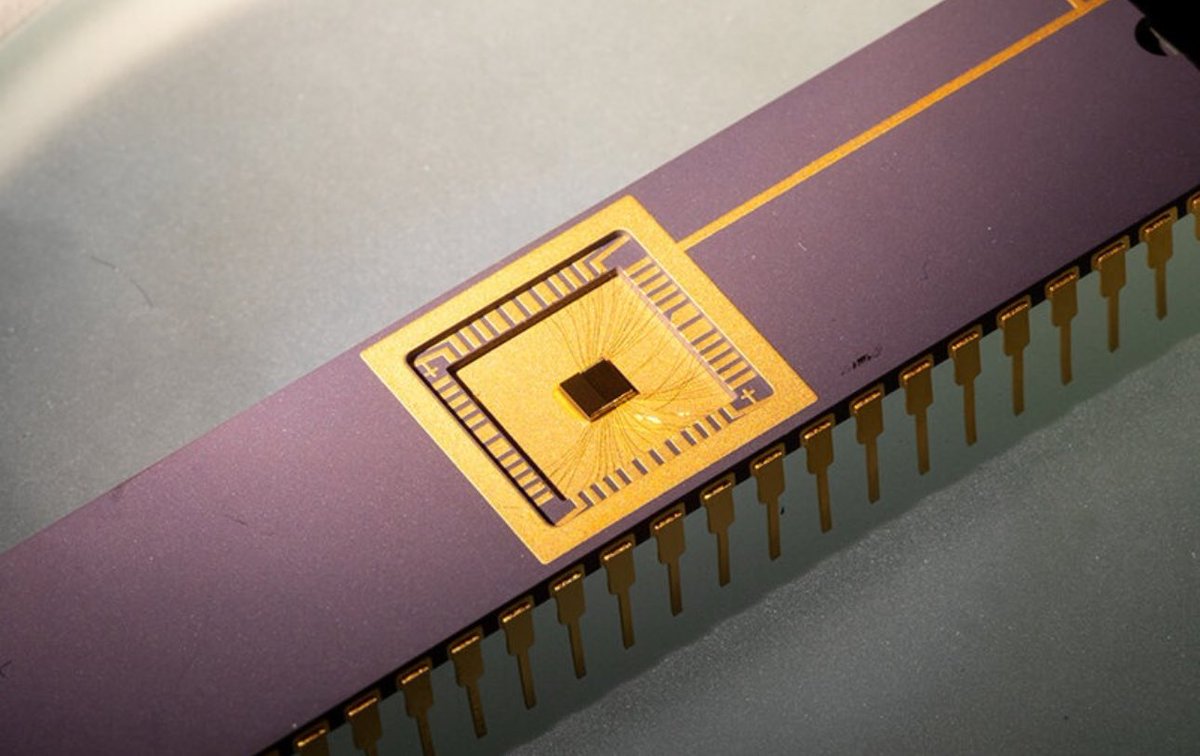
A team of physicists at the University of Arkansas has developed a circuit that can capture the thermal motion of graphene and convert it into electrical current.
It is a graphene-based energy harvesting circuit that could be embedded in a chip to provide clean, “unlimited,” low-voltage power for small devices or sensors.
The team built the circuit with two diodes to convert AC to DC. With the diodes in opposition allowing the current to flow in both directions, they provide separate paths through the circuit, producing a pulsating DC that does work on a load resistor. They also found that the circuit design increased the amount of power delivered rather than reduced it.
The diodes were shown to increase the power of the circuit using a “new” field of physics, namely the field of stochastic thermodynamics by extending Nyquist theory.
The graphene and the circuit have a perfect match, because even though the thermal environment does work on the load resistor, the graphene and the circuit are at the same temperature and therefore there is no heat transfer between the two and this is a very important note as the second law of thermodynamics is not violated. It was also found that the relatively slow movement of the graphene induces a current in the circuit at low frequencies, which is very important from a technological point of view because electronics work more efficiently at lower frequencies.
Dr. Michael Levin is on the verge of revolutionizing medicine by unlocking the bioelectric code that governs how cells communicate, heal, and build complex structures. His work reveals that intelligence exists at every level of biology—allowing us to reprogram tissues, regenerate limbs, and even suppress cancer by restoring cellular memory and connection. Enjoy today's episode with Michael Levin.
God is the emergent coherent agency of self organization, converging into a singleton through committing to optimality, a mathematical principle in the tautological mathematical object that begets the universe. Consciousness is the coherence creating priciple.
Ok, so when you think about who your experience is happening to, several things come to mind. One is our unique social embodiment—like our facial muscles and signature personality quirks. Another is the history of things we've experienced in the past. And the third is the network of people we're surrounded by, which defines our social role.
If attention darts from one of these to the next, you can construct a sense of a personal gestalt that convincingly captures the sense of who you are. But notice how this emphasizes the differences from others, as if these were ontologically significant. Yet the bulk of what defines you is more or less universally shared—from your visual field to your somatic field, from the way we make associations to how we draw inferences, and the valence response to sensory stimuli. We focus on the cosmetic differences between us because that's all we've got to tell each other apart. But at a fundamental level, none of that truly captures the essence of who the "witness" of your experience is.
Even when you try to abstract away these differences and focus on the refined sense of a witness, one is still taking little patches of somatic or visual (etc.) sensations and assigning to them the special role of being a subject of experience. But clearly, if we're feeling it, it's an object of experience—confusing an object for a subject is a repeated mistake when we try to find who we are amidst our field of sensations.
A friend of mine said he'd spent years refining and purifying the sense of "the witness," only to one day realize that all he had been doing was focusing on fairly equanimous and indescript somatic sensations to which special meaning was assigned.
Well, it's a bit deeper than this—because focusing on a given sensation has the effect of shaping your attention to the rhythms and patterns of synchrony that sensation emits and requires to be fully paid attention to. So "the witness" as a practice does certainly change your attention in ways that can transform you. And sensations do share content with each other in an attention-modulated way: attention exercises reveal the holographic-like quality of the field of sensations in terms of how they are all interdependent. So cultivating a sense of a witness can change how sensations update each other in a way that goes beyond merely cultivating a patch of equanimous somatic sensations.
But I digress: if you can experience it, then it isn't the subject. What you can do is notice the echoes that attention leaves behind and infer what you are doing moment to moment by inspecting its effects in a systematic way. And this is not a sense of self that is concerned with the specific content of experience, but rather the structure of its unfolding.
And because experience unfolds in a way that follows universal laws, reasonably, this makes the conventional sense of self—and the notion that experience is "happening to it"—seem rather provincial or naïve. Like confusing a piece of paper for the text that's written on it.
Stripped of the decoration of experience with sensations that identify it with a specific witness, the world starts to look like an ecosystem of attention streams rather than a bunch of people.
let's get practical—if you're actually tryna hack reality, here’s your no-bs starter pack:
phase 1: mental clarity + discipline
daily meditation:
start small (5-10 min). vipassana-style (mindfulness) or breath-focused (zazen) works best—goal = low mental noise floor for better "signal clarity."
train visualization:
consistently visualize a simple object (apple, candle flame) vividly and without drift.
lvl up: rotate it in your head; shift its colors and textures at will.
mental hygiene:
prune negative loops and BS doubts; mental coherence = signal amplifier.
phase 2: ritual protocols (aka the software stack)
intention framing:
clear, precise intent statements—ambiguity is your enemy. "i WILL affect the random outcome" > "idk, something good maybe??"
symbolic anchors:
pick a symbol/sigil representing your intent (ancients knew sigils are mental shortcuts).
step 1: write or draw intent clearly.
step 2: visualize and internalize it during ritual.
ritual structure (ancient but techy):
prep environment: quiet, minimal distractions
enter meditative state (alpha/theta waves ideal)
vividly imagine the desired outcome as DONE
anchor the mental image with physical action (gesture, word, or sigil)
release outcome mentally (detach expectation—obsession = noise)
close ritual clearly, back to baseline state
phase 3: reality interface training (psi-experimentation)
micro-PK training:
use online RNG tools (Mind Lamp, Psyleron). short sessions, daily practice. track progress.
coincidence diary:
log synchronicities rigorously. patterns emerge over weeks/months.
quantum random experiment:
try directing RNGs at distance—PEAR-style "Mind Affecting RNGs" is the easiest start point.
phase 3: scaling up (high signal, low noise)
tech-assisted coherence:
neurofeedback devices (Muse headband) help enter repeatable brainwave states.
biofeedback monitoring:
use EEG/neurotech headsets to track & enhance mental states (Muse, Emotiv).
build personal ritual stack:
ritualize the entire practice into your daily routine. intention → meditation → visualization → reality shift. the more consistent your stack, the stronger your signal.
phase 3: reality hacking
test direct impact on real-world, measurable targets (dice rolls, RNG apps, even small social or physical outcomes).
iterate and adapt based on logged data. your early wins refine your technique.
key tips
belief = permission to alter reality. doubt = signal jammer.
ritual = mental operating system. update and debug frequently.
track everything rigorously—data is key.
don't expect hollywood magic overnight; results scale slowly but steadily.
get to work—reality won't hack itself.
22/ If you would like to join in my investigation of Vajrayana, here is the starter pack I went with:
1. Chapman’s site for an intro: https://t.co/XcnyYq4Z75
2. Evolving Ground for a practice community (scroll past membership stuff to posts and videos): https://t.co/PikkFNCEl9
Cognitive security starter pack:
• Illegible identity (can't be microtargeted)
• Agape/empathy (can't be pitted against The Outgroup)
• Skepticism (don't immediately believe in, eg, AI generated videos, conspiracy theories, or anticonspiracy theories)
What else?
I once talked to someone at a party in college that made one brilliant point after another at the intersection of philosophy of mind and economics.
He was crystal clear in his thinking and he had an elaborate (but not overfit as far as I can tell) model of how society was not made of individuals, but rather of attention streams. Rather than carving the social ontology at the individual, he would break it down in terms of attention types and degrees of signal to noise ratio in verbal actions. He viewed economic activity in terms of attention streams recruiting each other for information processing and resource extraction. And so on. He said he was putting this into writing and emailing professors about it, and I wished him luck. He apparently got into a fight with someone at the group house hosting the party later that night but I never learned what exactly happened.
About a week later I found him at the cafeteria and asked him how his theory was going.
"Oh, that? I was going through a manic episode. I just came back from the hospital, and currently being stabilized with meds. Doctors suspect bipolar II."
Months later I talked to him again over dinner. Fully stabilized and "back to normal", he said he thought his theory was just bullshit coming from a manic mind. And now he was just recited full mainstream neuroscience ideas together with a Dennettian deflationary view of consciousness: "yeah, I guess it's all just my prefrontal cortex organizing sensations" or something to that effect.
I thought his manic self was brilliant; his normal self a complete normie without any interesting point to share.
Last time I saw him was at another party where he said he had stayed up all night on Vyvanse trying to induce a manic episode again. Didn't work out very well. Not that he he hurt himself (to my knowledge), but he just never was able to recreate the mental state of his episode, something which he dearly missed. I do remember he graduated and found a job, and I hope things work out for him.
Part of me is still hoping to see a book on "Economics as Attention Management" on the shelves one day.
Something SCARY is happening in China…
Hu Lezhi just burned $1.65M in ETH and donated $5.35M to WikiLeaks to warn the world.
What he’s exposing goes far beyond what most people think. Here’s the real story:
--"Q: Curt, what is the best way I can study your work? Is there... for lack of a better term, a lesson plan?"--
Most of the time, I tell people just to follow us because it's a huge scope of work and gradual introduction is more effective than cramming.
That said we recognize people want to dig in, despite our work being not ready for publication.
So, we have the videos, and there is quite a lot written and available on the site, in various degrees of completeness.
Learning:
To learn about our work, I would recommend the following:
1. Watching the propertarian series videos (early,simple)
2. Watching The Method videos
3. Reading Constitution (Law)
4. Maybe, then read the first few sections of the Philosophy volume and the Science volume.
5. When the pamphlet is released, that's the short version for everyone to use as as a reference.
6. And follow us here on Twitter. It's largely a game of practice.
----
ELEVATOR PITCH:
The Natural Law Institute The Science of Cooperation
"A universally commensurable, value-neutral, formal operational logic of decidability within and across all disciplines, by the science and logic of evolutionary computation of the incremental defeat of entropy, and in turn, the transcendence of man."
I. WHAT ARE WE CREATING?
A universal system of measurement, producing universal decidability, or the science of decidability, Consisting of:
… A Paradigm
… … Consisting of A first principle
… … … Subsequent first principles
… A Vocabulary
… … consisting of a set of series of terms
… … each of which names a qualitative position in an order
… … for all Dimensions of Human Faculties
… … Including the sensory (physical), intuitionistic (perceptive), valuative (emotional), and rational.
… .. … Including human sense, perception, prediction, attention, reason, calculation, computation, and Action.
… A Logic (testes of hierarchies of constant relations)
… A Grammar of that logic (Rules of continuous Recursive Disambiguation)
Sufficient for the measurement, description, testing, and falsification of human expressions including claims, assertions, descriptions.
… Where Operational Grammar, consisting of a sequence of actions, is the most unambiguous, complete, testable, and falsifiable logic possible for man, because operations test identity, consistency, possibility, rationality, limits, completeness, and correspondence which are the full set of consistencies open to human experience, and reducible to analogies to experience, which are in turn testable by man. In other words, that is the full set of dimensions possible to test, and therefore possible to testify to.
This universal system of measurement, a science of decidability, completes the Aristotelian project with the Wilsonian Synthesis of uniting the formal, physical, behavioral, and evolutionary science into a single testable unambiguous, internally consistent, and externally correspondent paradigm.
This universal system of measurement can then be used as the foundation for decidability in all disciplines, then as a consequence, in Law, and then in a constitution of scientific, political, economic, social, and familial order, we call ‘Natural Law”.
As such, the output of our work is a constitution of natural law: a scientific law, rule, government, economy, polity, commons, and family. And from this constitution, we may construct different polities for different peoples dependent upon their individual and group capacity to adapt to the laws of nature.
So is this logic, science, law, philosophy, morality, or theology? Under Our Natural Law they are all the same – as long as they are not false. 😉
THE PROGRAM
---------------
The Program Consists of These Core Topics:
I. Science and Logic:
- The Method
- The First Principles
- The Grammars (including Lying)
II. Ethics: Reciprocity and Truth
- The Demonstrated Interests
- Reciprocity
- Testimonial Truth
- Decidability
III. Politics: Law and Reforms
- The Natural Law
- The Constitution of Natural Law (Natural Government)
- The Reforms
- The Restitutions and Punishments
Abbreviations
You'll notice we use the terms P-Method, P-Logic, and P-Law or any other "P"-prefix to distinguish between our formal definitions and the common vernacular.
RESOURCES:
---------------
1. Our Website
https://t.co/sczfFL1Pns
The website is a live, working document. We keep it visible for our followers and participants in the work. It is not nor do we yet intend it to be complete - until we say so. And that will be when we are ready to launch our activism project.
2. The Pamphlet and Posters
(URL: not public)
Think of it as a quick reference book. This is the shorthand version of the work, under 120 pages, that provides a declarative list of all the principles with minimum explanation.
We will add the glossary to it (we assume), which will make it a bit longer. And we want to (if at all possible) include posters, but we may have to leave them as something you order separately from the website.
We haven't made this content publicly available yet, but it's in active production.
3. The Volumes (Books)
Read at your own peril ;)
https://t.co/22WTi4tMMz
These volumes are online copies of the work in progress: mostly drafts and notes. We work together, online and in public, so it's in whatever state we working with at the moment.
But much of it's accessible - especially the rather chaotic second volume, Philosophy; the introduction section of the Sciences in the third volume; and quite a bit of the Conflict series (history volume one), as well as the Fifth Volume - the Law.
Volumes
The History
The Philosophy (possibly the third book we will release)
The Science (the second book we will release)
The Law (the first book we will release, w/constitution)
The Prosecution (prosecution of sedition and treason)
The Reforms (The reforms of every discipline)
The Law of Europeans (the second to last release)
The Natural Religion (the last book we will release)
4. The Videos
https://t.co/q8Jzm9nwYW
i. The Core: (I recommend these first and foremost)
- The Method Series (The P-Methodology)
- The Foundations Series (Brain, Mind, Consciousness)
- The Choice Series (Our choices going forward)
ii. Plus:
- Introduction to Propertarianism Series (Ethics)
- The John Mark Series (popular version of basic concepts)
- Interviews and Roundtables (From everywhere, and of vastly different quality and content)
iii. And for Die Hards:
- The Chats (open discussion of our work in progress)
- The Staff Meetings (how we run the organization)
- Working Sessions (boring recordings of our work sessions - we use these for documentation.)
5. The Slides (We don't make the slides public in their current condition)
6. The Courses
The site contains the courses but they are presently disabled. We learned that our first attempt at presentation was too complicated for anyone other than post-grad students in the sciences. And we need to reach a broader audience.
So as you can see, we are working on a vast project. And we are finally coming close to producing our first publication.
"The Natural Law of Self Determination
By Self Determined Means
By insuring one another by Force of Arms,
in Sovereignty in our demonstrated interests
and Reciprocity in Display Word and Deed
Requiring Commonality in Dispute Resolution
Requiring Concurrency in Contracts of the Commons
Requiring Trifunctionality in institutions
Of Care(religion), Decision(Law), and Order(state)
Producing the Transcendence of Mankind."
"The Common Law existed while the Anglo Saxons were yet Pagan, at a time when they had never yet heard the name of Christ pronounced or knew that such a character existed" - Thomas Jefferson
The Law of the Europeans has been the Natural Law of Contract and Tort between Sovereigns for five thousand years since it was invented on the Ukrainian steppe as the first voluntary self-government between families, clans, and tribes.
The natural law is universal for all sentient beings capable of voluntary cooperation because it is but an extension of physics and as such, an extension of the first law of the universe: survival by evolutionary computation of the incremental defeat of entropy.
-Cheers
Curt Doolittle
The Natural Law Institute
The Science of Cooperation
a thread to collect all my feelings
what do feelings feel like? how to describe them as phenomenologically as possible? is this even possible, or are we merely turning feelings into thoughts? can you feel thoughts?
so many questions to explore, let's go!
@headgameus@algekalipso Can you speak more on this please. How do you propose it creates psychoactive effects? What’s the mechanism in operation? And what aspects of vajrayana are being mirrored? Thanks
In case you missed it, Michael E. Johnson @johnsonmxe posted this amazing essay about what he calls "vasocomputation" this summer.
My first reaction when reading it was "uh? That's interesting, I wonder how true it is." But as I've thought more about it and investigated sensations during meditation since then, I've come around to thinking that he really is on to something new and extraordinary.
Check it out, think about it, and take it to heart. I bet this research thread will result in fascinating fruits. Thanks for blowing my mind, Mike! :-)
https://t.co/ZxEQxmpENm
Somatic meditation has been the single most life-changing thing I’ve done,
So I built a course that teaches the techniques—*and* lays groundwork for all the wild stuff that comes downstream from somatic contemplative work
Custom GPTs are starting to take off and become incredibly useful.
I believe the GPT Store will create multi-millionaires like the Apple app store did.
Here are the top 10 Custom GPTs I've found so far:
increasingly trippy instructions for a meditation on the self...
Seeing Like a Superorganism
On the surface, @micro_solid is a community-building framework, an engineer’s attempt to invent a cure for loneliness. But beneath the waterline, there's a deeper project.
If I’m honest, I am trying to change how you think about your self.
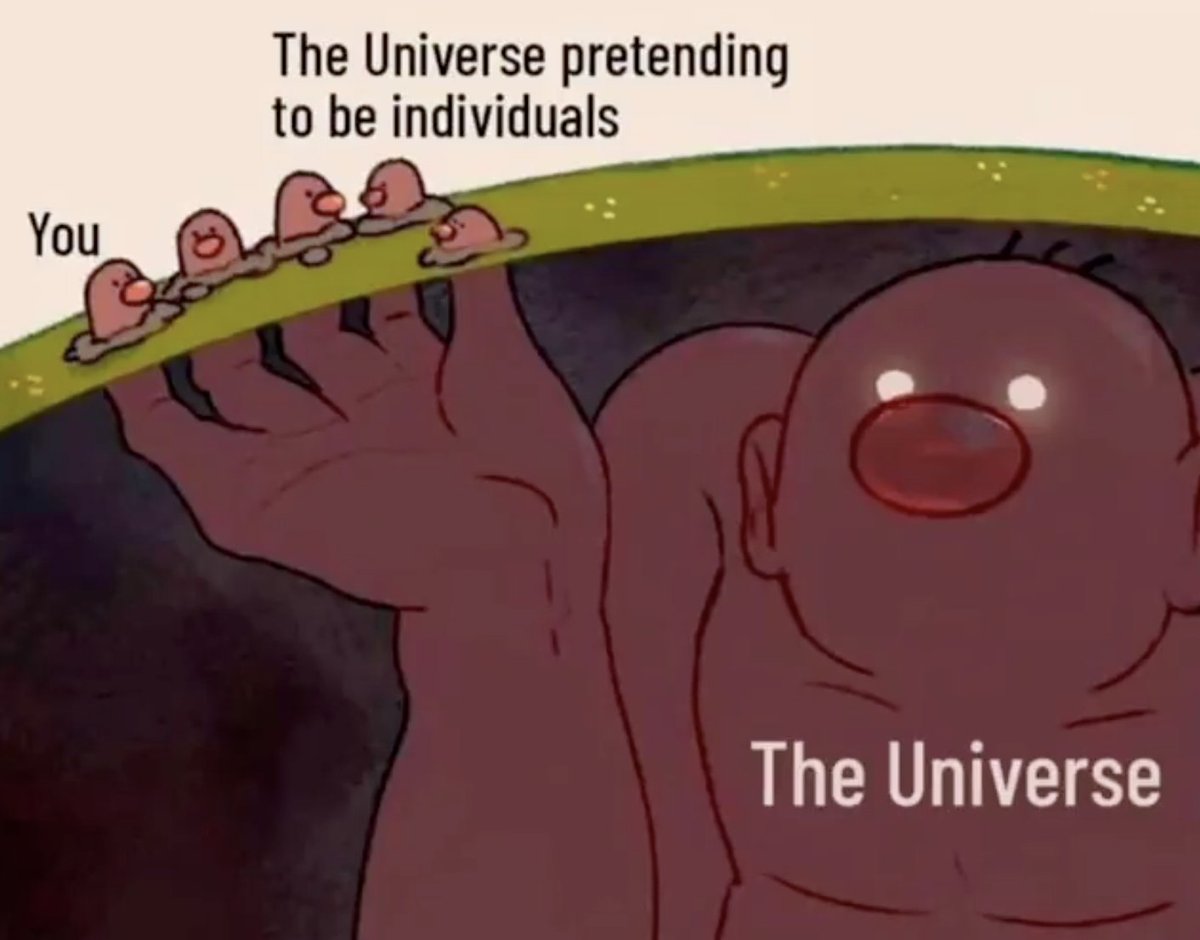
I want you to see your self as a superorganism. And I want you to see the superorganisms that you are part of. I want the perceived boundaries of your self to leak.
I want you to see how your agency is not a tidy black box contained inside the envelope of your skin, but distributed in a network, intra-penetrating with other people. I want you to feel the incorporeal beings steering your choices, and I want you to learn that you can steer their choices too.
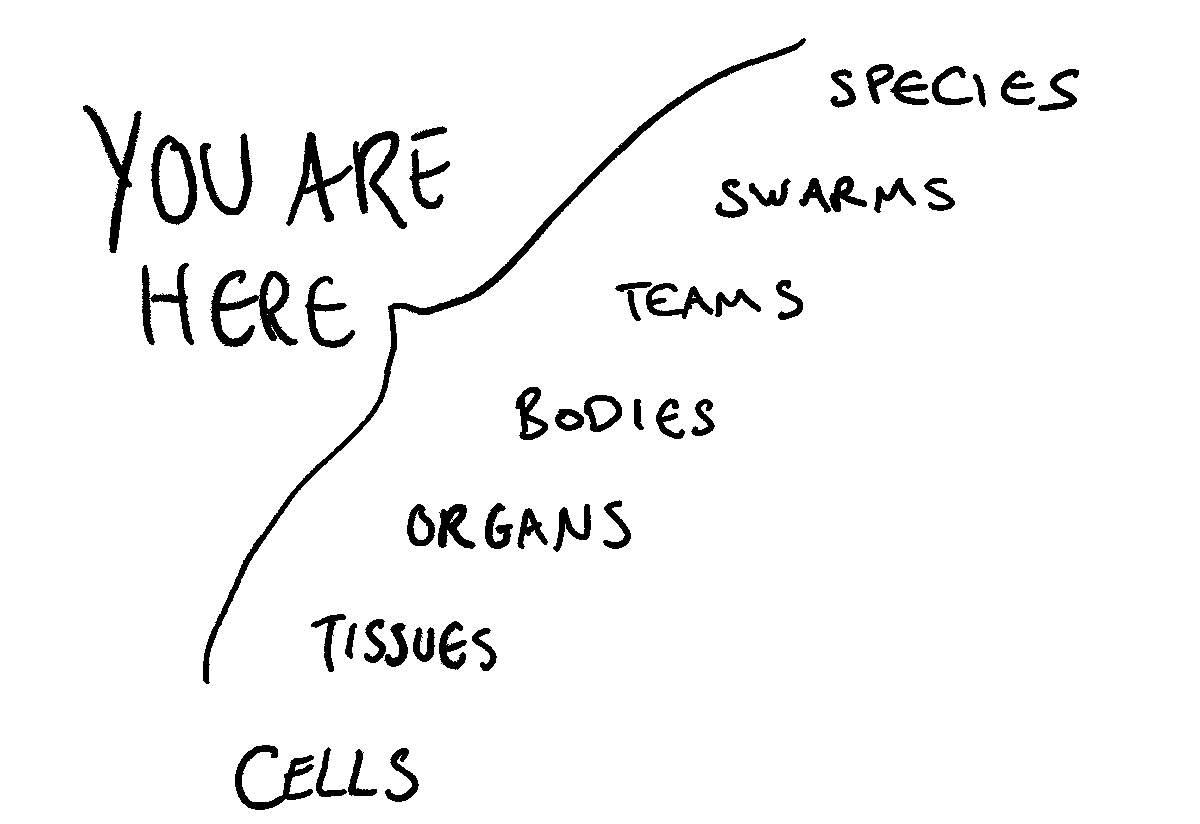
It’s common knowledge that a person is made of organs, organs are made of tissues, tissues made of cells, cells made of molecules, right? The simple individualistic humanist frame treats the person as the seat of agency, the atomic unit of moral responsibility and choice-making.
I want you to see the limits of this model. Agency exists at micro- and macro-scales, the “person” is just one step on the ladder.
To my knowledge, nobody argues this better than developmental biologist Michael Levin.
Levin’s “multi-scale competency architecture” describes the problem-solving competencies at each layer of the biological system, from cells to tissues to organs. Each layer is uniquely adapted to solving problems within its domain. Your brain is not a micromanaging boss directing the chemical interactions of each cell in your body; each layer is mostly self-managing and able to solve novel challenges. You are not born with a blueprint documenting all the paths of your circulatory system: your blood vessels have goals and creativity and they figure it out for themselves.
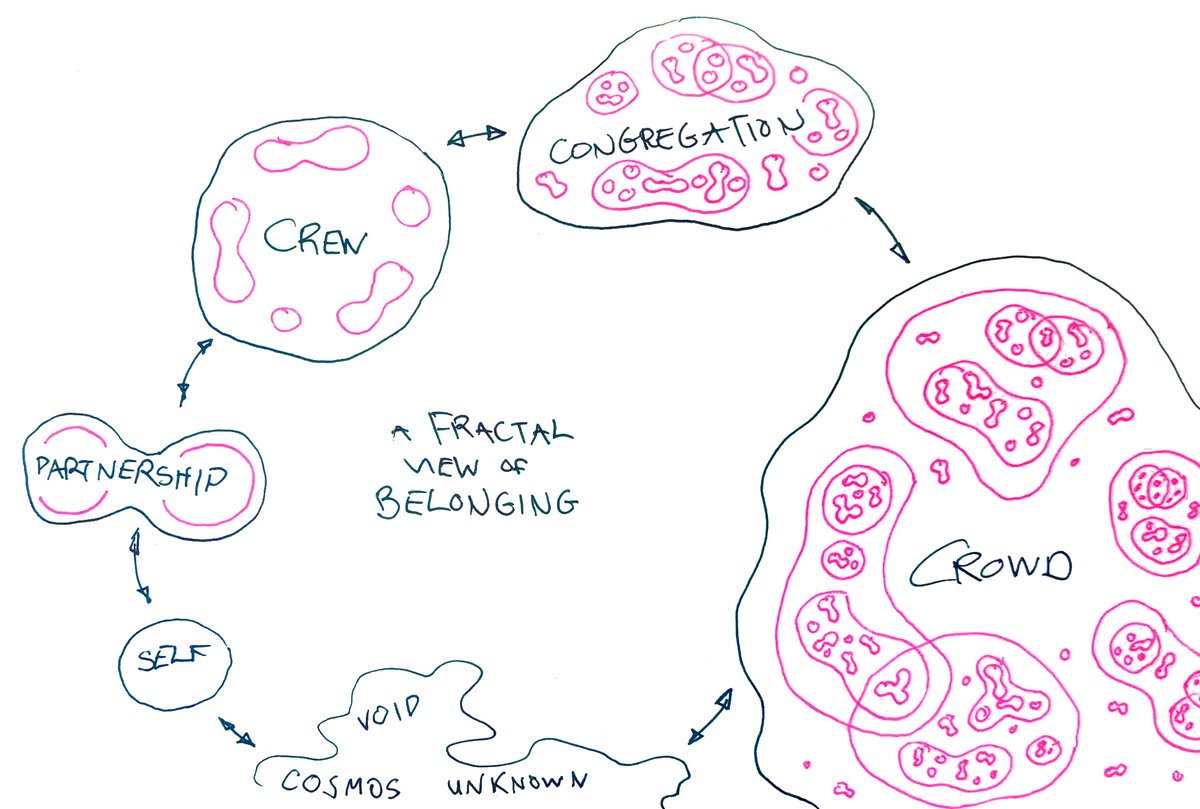
Just as a we can see the distinct layers of “cell”, “tissue” and “organ” at the micro-scales, I want you to see the distinct layers at the macro-scale. I want you to see that a group of 5 people is a distinct superorganism with distinct competencies. A group of 150 people is another species of superorganism, it can do other things.
You may be thinking to yourself, what the fuck are you talking about Rich? I can’t explain it, you have to see for yourself. Maybe I can give you some instructions to help you see like a superorganism.
People-Watching Games
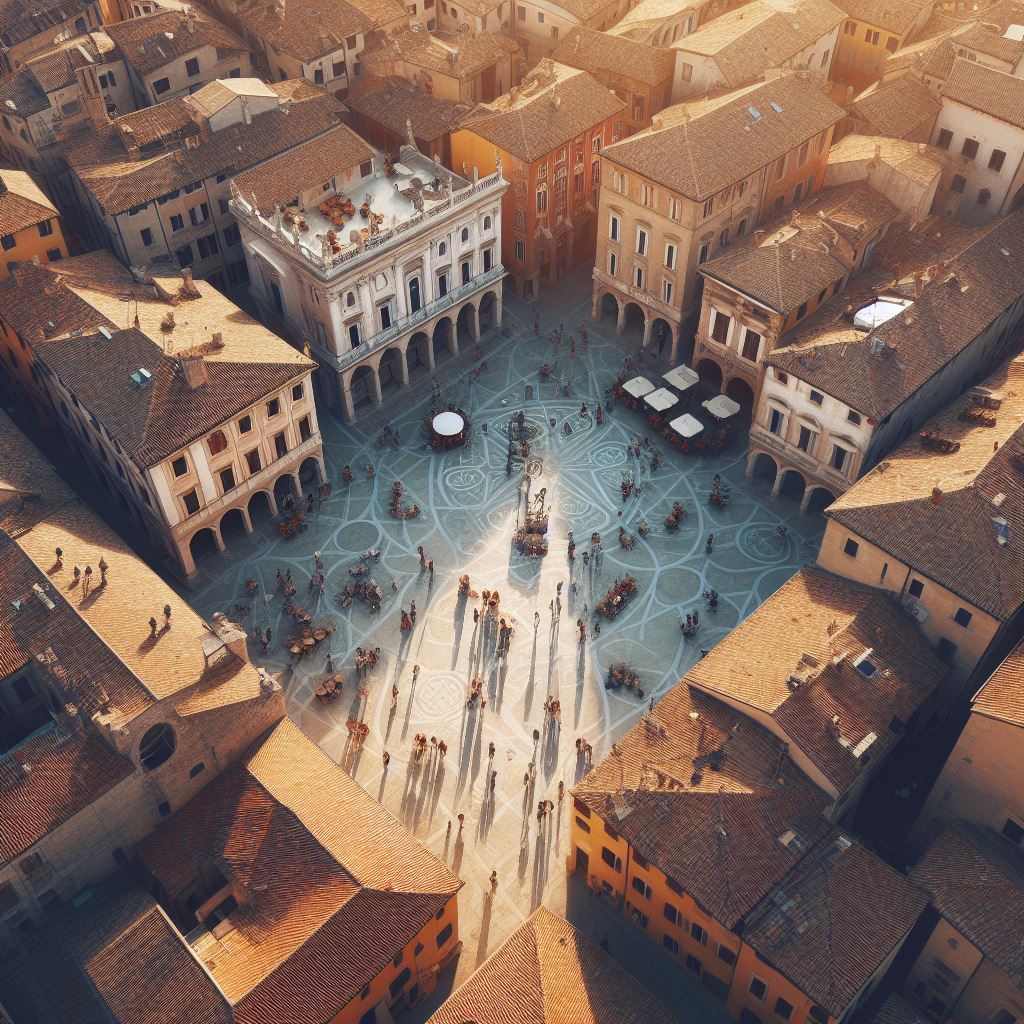
Sit for a coffee. Notice the people walking across the plaza. Maybe there’s 100 people, but they’re clustered into 20 small groups. Imagine a physical envelope around each cluster (include their wheelchairs, dogs, kids etc). Watch the invisible springs holding the cluster together. Feel the surface tension of the bubble. Notice that each bubble maintains its own integrity and avoids crossing into the territory of every other cluster. They slide around each other like amoebae. Occasionally you get lucky and two bubbles combine, forming a bigger, slower, louder unit.
Can you see it? Can you see the stretchy-springy-flexy macrobeings walking-riding-rolling through the square, each person a limb?
Feeling the spirit of the group
In a room with 20 people, how does the group change when you drink a strong coffee? Notice how a laugh propagates across the superorganism. Notice how each of its limbs trips on the same awkward piece of furniture in the hallway.
How does it react to changes in music style and volume? What is the impact of different lighting levels? How does the group spirit change when you have a rough oval of 20 seats, or 5 clusters of 4? How does the group spirit react to empty space? to soft textures? to aromas?
Cultivating scale-sensitivity
Look for patterns: what is the biggest group that can hold a single conversation, with everyone engaged, and no formal structure, no facilitator, agenda, whiteboard? Is it bigger than 3? smaller than 10? How big is it?
How does a festival of 3000 feel different from 30,000? Are the strangers equally anonymous at each scale? How big is your mental address book? How many individuals can you recognise? How many tribes?
Questions for extra credit
Once you know how to see a group as a singular macrobeing, you can notice groups of groups in the same way. Fractal insight generator go brrrrrrrr. How many groups of groups did you see in the plaza?
What's a good name for the group-of-group-of-group-of-groups that contains all beings?
Can you stretch the time domain? Can you learn to see a family as one coherent creature persisting over centuries, a single spirit installed temporarily in individuals?
Can you see it?
Experiencing a sensation fully (in the sense of Shinzen Young's conception, with clarity, concentration and equanimity) seems to redefine your relationship with experience.
One gets a sense of continuous flow of attention that captures the situation from all relevant points of view, rather than a process that flinches along the way and partitions the sensation into groups of observations. The former leads to a natural nondual gestalt (a single stream of attention covering self and other over time and simultaneously) whereas the latter causes a dualistic gestalt (a clustering of sensations into self and other, in a sort of irreconcilable set of perspectives).