to every retard who saw the vision and didn't rotate to some garbage thirty minute coin, you are the reason this works. while the rest of the trenches was out here chasing buzzwords that went to zero, you held the coin that contains ALL the buzzwords. you can't vamp what you can't outname. and you can't outname abcdefg because it's the first thing every human being on earth learns how to spell. we told you this was un-vampable. we told you by combining every single word these devs use to steal your attention we would be impossible to copy. and we were right. this is what meme coins were supposed to be. not some dev deploying while he's on the toilet and dumping before you finish reading the ticker. a real community of real retards who believe in something so stupid it's genius. our mascot is Chinese John Cena. our domain ends in gold. our creator is onboarded. our ticker is the alphabet. there is nothing left to vamp. so if you're new here welcome. if you've been here since day one you already know. ticker abcdefg is next level quantum computing gud tek and we're just getting started. bing chilling.
89S7oVB4hui8ceJqhHreWB7fcxdthfvoB7z2pfJtpump
https://t.co/9wFtRSpw81
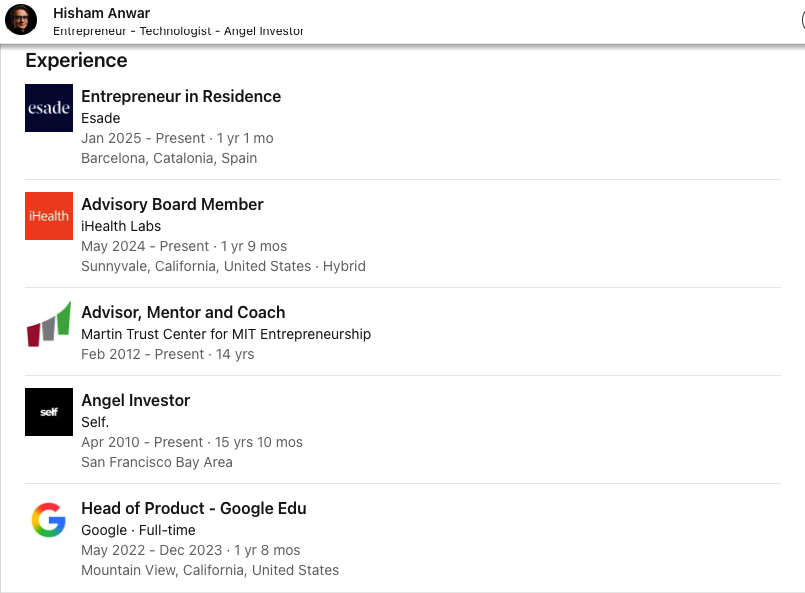
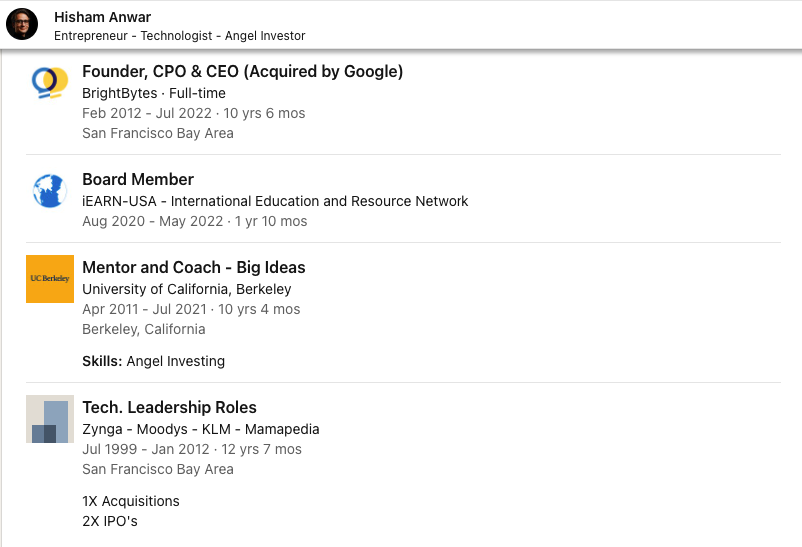
Entrepreneur in Residence of @Esade, Advisory Board Member of iHealth Labs, Advisor, Mentor and Coach at Martin Trust Center for MIT Entrepreneurship, Angel Investor Self., and Head of Product @Google Edu, Founder, CPO & CEO of BrightBytes (Acquired by Google), Board Member of iEARN-USA, Mentor and Coach - Big Ideas at University of California, Berkeley
Hisham Anwar, Entrepreneur - Technologist - Angel Investor
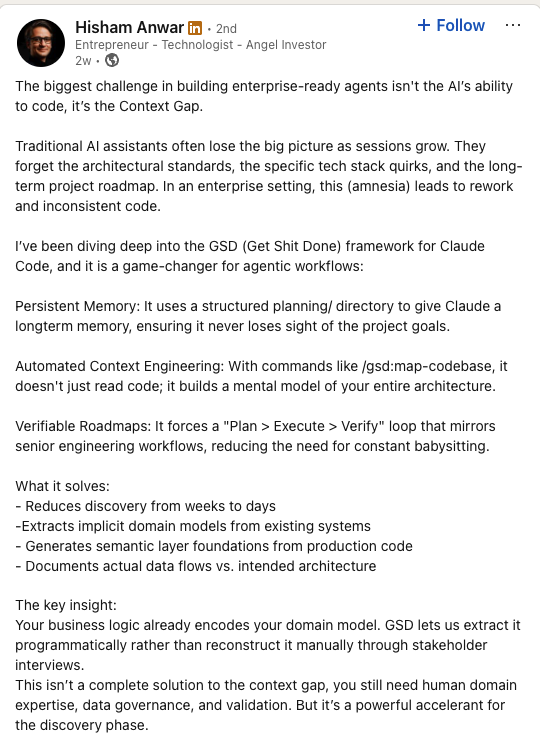
The biggest challenge in building enterprise-ready agents isn't the AI’s ability to code, it’s the Context Gap.
Traditional AI assistants often lose the big picture as sessions grow. They forget the architectural standards, the specific tech stack quirks, and the long-term project roadmap.
In an enterprise setting, this (amnesia) leads to rework and inconsistent code.
I’ve been diving deep into the GSD (Get Shit Done) framework for Claude Code, and it is a game-changer for agentic workflows:
Persistent Memory: It uses a structured planning/ directory to give Claude a longterm memory, ensuring it never loses sight of the project goals.
Automated Context Engineering: With commands like /gsd:map-codebase, it doesn't just read code; it builds a mental model of your entire architecture.
Verifiable Roadmaps: It forces a "Plan > Execute > Verify" loop that mirrors senior engineering workflows, reducing the need for constant babysitting.
What it solves:
- Reduces discovery from weeks to days
-Extracts implicit domain models from existing systems
- Generates semantic layer foundations from production code
- Documents actual data flows vs. intended architecture
The key insight:
Your business logic already encodes your domain model. GSD lets us extract it programmatically rather than reconstruct it manually through stakeholder interviews.
This isn’t a complete solution to the context gap, you still need human domain expertise, data governance, and validation. But it’s a powerful accelerant for the discovery phase.
If you’re building semantic layers or knowledge graphs for enterprise AI, this approach is worth exploring.
By moving from one off prompts to a managed context engineering system, we can build agents that don’t just write code, but truly understand the systems they are building.
If you're building for the enterprise, stop fighting the context window and start engineering it.