@AmtrakNECAlerts Hi I’ve got a flight leaving from Boston tonight and I’m on the delayed 170 - please can you advise on compensation for missed travel connections?
Leaving Twitter with a bang! Very excited to announce that my article about a new manuscript copy of Shakespeare's Sonnet 116 I have identified has been published online open access: https://t.co/wEI9M8qZA4 @OUPAcademic
Call for Conference Papers
Thrilled to share the CfP for Women’s Scientific Literatures: The Poetry and Poetics of #EarlyModern Natural Philosophy
26–27th June 2025, ARU, Cambridge
Deadline for submissions: Monday 3rd March 2025.
Please share widely!
https://t.co/EBSSK1jsF1
💀 A spooky surprise for Halloween: this nineteenth-century Italian memento mori turn-up book unfolds to reveal a decaying corpse; above, the figures' sumptuous clothing falls away to uncover two pairs of skeletal legs, a scythe, and a spade. 🪦
A special issue on any topic of you choosing you say? Sure, you can put a proposal up! Our CFP for the 2026 special issue of Parergon has been extended to 16 September - click the link for more details.
https://t.co/WLbXdBY2q9
Unfortunately, Bernadette Andrea's article won't remain #OpenAccess for much longer. So if you're up for a fascinating read about women from Muslim backgrounds in early modern England, now's the time!
https://t.co/G09ePMQB1b
CALL FOR PAPERS!
If you work on early modern women, natural philosophy and medicine then consider sending in an abstract. We'd love to hear from you!
#earlymodern#cfp#twitterstorians
Who doesn't love an #OpenAccess article? For the next month you can download Bernadette Andrea's article from our latest issue for free - an exploration of women from Muslim backgrounds in early modern England.
https://t.co/G09ePMQB1b
How about something else from volume 40.2? @emilylsteve's article looks at the place of women as social, cultural and economic agents in 16th century London - she takes as her case study Lady Rose Lok Hickman Throckmorton, who left a diary to posterity.
https://t.co/XjcETdzWTI
Ideas of space and place were central to Anne Southwell's concept of poetic creation. In this article from our latest issue, Cassandra Gorman explores Southwell's use of imagery to write physical and astronomical encounters.
https://t.co/F0HjiQfDuz
Women’s artistic education. What did it look like in early modernity? And how did it develop between the seventeenth and eighteenth centuries? These are important questions and Mal Haselberger sets out to explore them in our latest issue.
https://t.co/syleKHVJjQ
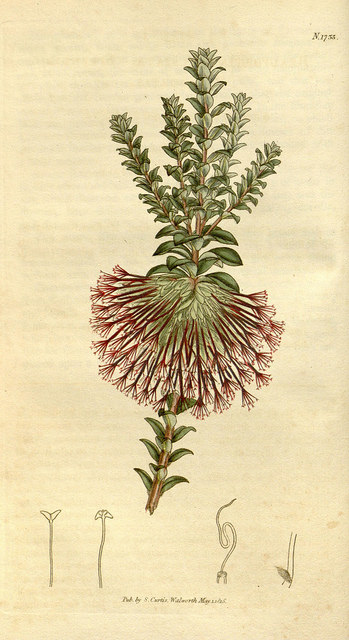
Seed lists were an early modern innovation that enabled the new plants flowing into Europe to be catalogued. Central within this network of knowledge was English aristocrat Mary Somerset. @olinmoctezuma examines Mary's legacy in her article in iss. 40.2.
https://t.co/TPklexnT6b
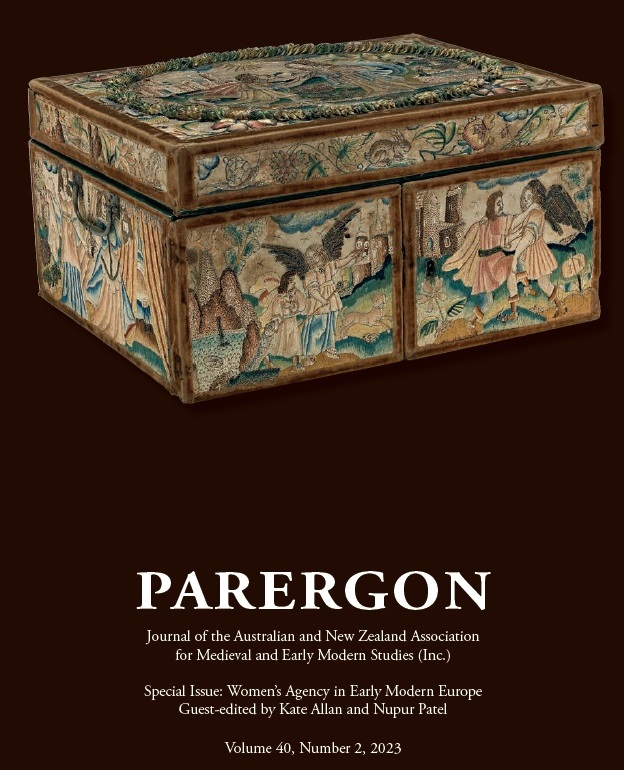
Want to know all about issue 40.2 f Parergon? Our guest editors, @katefallan and Nupur Patel have written a post for the Parergon blog about the special issue on early modern women's agency, how it came together, and its aims and contents.
https://t.co/oKeQmiEEw1
What exactly is 'agency'? And how has women's agency figured in early modern cultural and economic history in recent decades? These are good questions! Happily, Merry Wiesner-Hanks turned herself to the task of answering them in her article in iss. 40.2 .
https://t.co/v8FXLCFlxT