I'm excited to share this new job posting from the Dept. of Psychology at Texas State for an Asst. Professor in Applied Psychology. It's a great department! Please share with your networks!
#academictwitter
https://t.co/hfwLhSOo4U
How do you know if two people "click?" A short thread on my first paper of grad school out in PNAS! In collaboration with my advisors @ThaliaWheatley and @lukejchang and two fantastic honors students Eli Reynolds and Marie Cone LeBeaumont. 1/ https://t.co/OXoX9Q2WCS
1/7 Excited to share a big project out of the DSCN lab: Effects of social and emotional context on neural activation and synchrony during movie viewing. https://t.co/sFN1DAgi1w Co-authors @junaidsmerchant @DianaAlkire3 @deenashariq @dmoracze @eredcay
Now out in PNAS! I love this discovery by the fantastic @sophiewohltjen. Eye contact has a robust and precise relationship with synchrony between people during conversation. A short thread on what we found: (1/9) https://t.co/HgzGXpM10f
🚨New paper! We've developed the Four-Item Mentalising Index (FIMI) - in Psych Assessment @APA_Journals
First questionnaire measure of mentalising/theory of mind (& NOT empathy/other social abilities)
Freely available for use in adults (#autistic & non-autistic)
THREAD👇
Our work on exploration in children with and without ASD is out today! We found no differences in the way that children in both groups attend to and act on toys when they're playing with a parent!
@DanKennedyIU@Chen_Yu_CY
https://t.co/BBJNfINyFx
A thread about our new open-access paper, just out today. We tested how well standardized measures of social cognition, social skill, and social motivation predict real-world social interaction outcomes for autistic and non-autistic (NA) adults. https://t.co/eJ8vuVWaW0
My conceptual paper in which I describe social cognition and social emotion disturbances in young children as a mechanism in the development of social anxiety disorder is now online and open access in #childdevelopmentperspectives@SRCDtweets https://t.co/tAIZS3GoQS
New #doubleempathy findings in PNAS: autistic kids can tell when other autistic kids are acting gently or rudely, but neurotypical adults can't. https://t.co/Ymv59yl7AO
Interested in using fMRI, psychophysiology, & behavioral observations to study empathy, fear learning, anxiety, & conduct problems? Apply to be a Developmental Psychology PhD student in the KIND Lab at #UCRiverside! GRE not required. Please RT. 🙏 🧠 https://t.co/QyUWUf241F
New by @kmdebrabander and our lab: Autistic adults don’t differ from non-autistic adults in the accuracy of their self-assessment on general cognitive tasks but are less accurate on social cognitive tasks. This however was unrelated to social functioning https://t.co/0MrqMKKO0r
Releasing my baby of the past 4 years into the wild academic world! We present an alternative for Theory of Mind in Psychological Bulletin: Understanding others is not about inferring others’ mental states. Autism is not tied to mindblindness. https://t.co/VbJQMf9d9f 1/7
🚨New paper with @DrJamieW & @antoniahamilton!🚨 We investigate eye gaze and facial motion dynamics of typical and autistic adults in a structured conversation, across video, videocall and face-to-face setups. 1/3
https://t.co/BjfO3K2TJ2
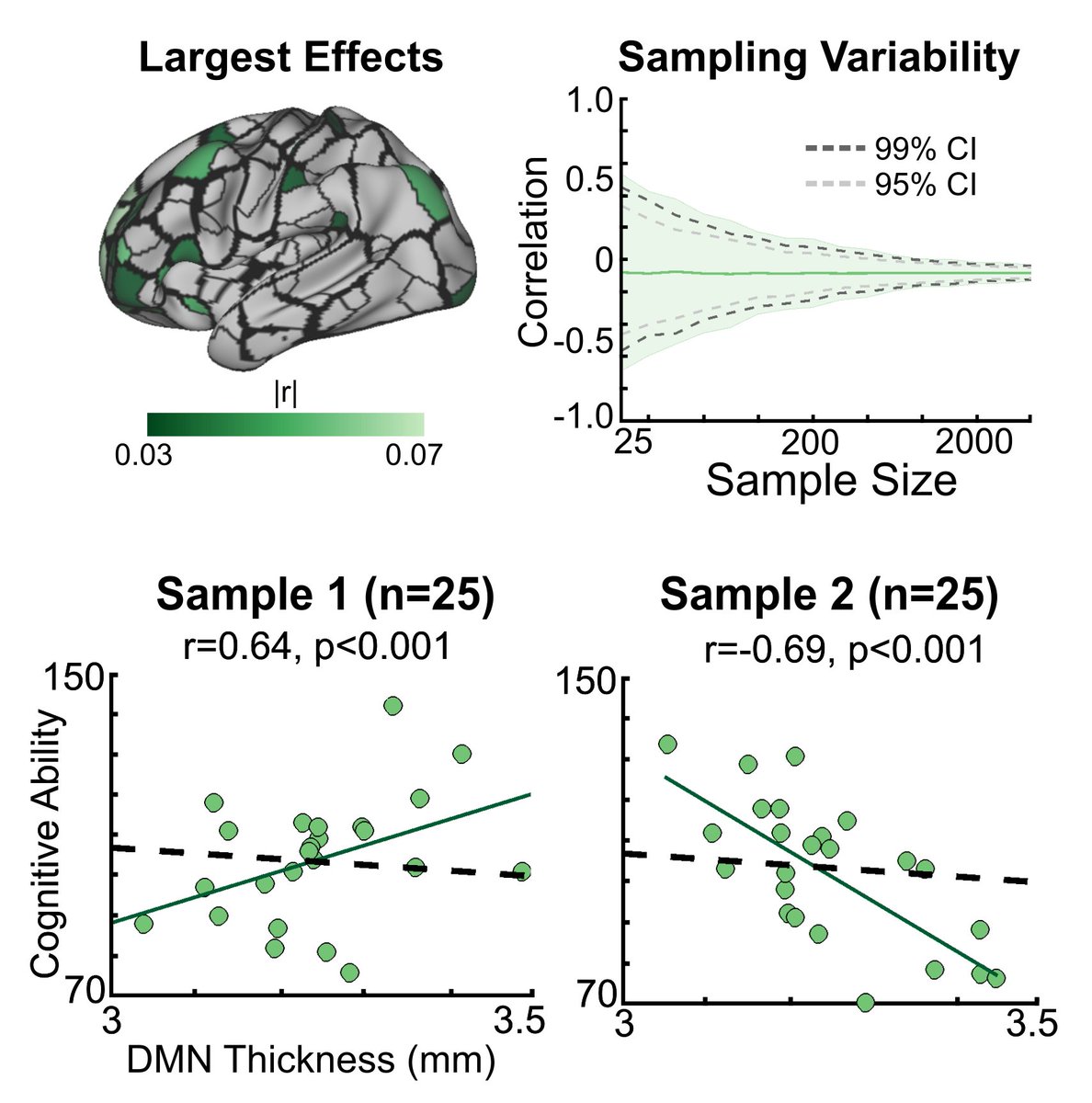
Beyond excited to share our latest work, co 1st authored with @tervoclemmensb. Using #ABCDStudy data, we show that the effect sizes of brain-wide associations and sampling variability are a key element of replication failures in typical sample sizes. 1/x
https://t.co/HaFNhIcXFF