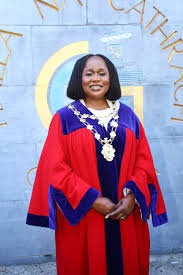
📌 The Helen Ogbu Controversy: A Breakdown of the 4 Key Contradictions
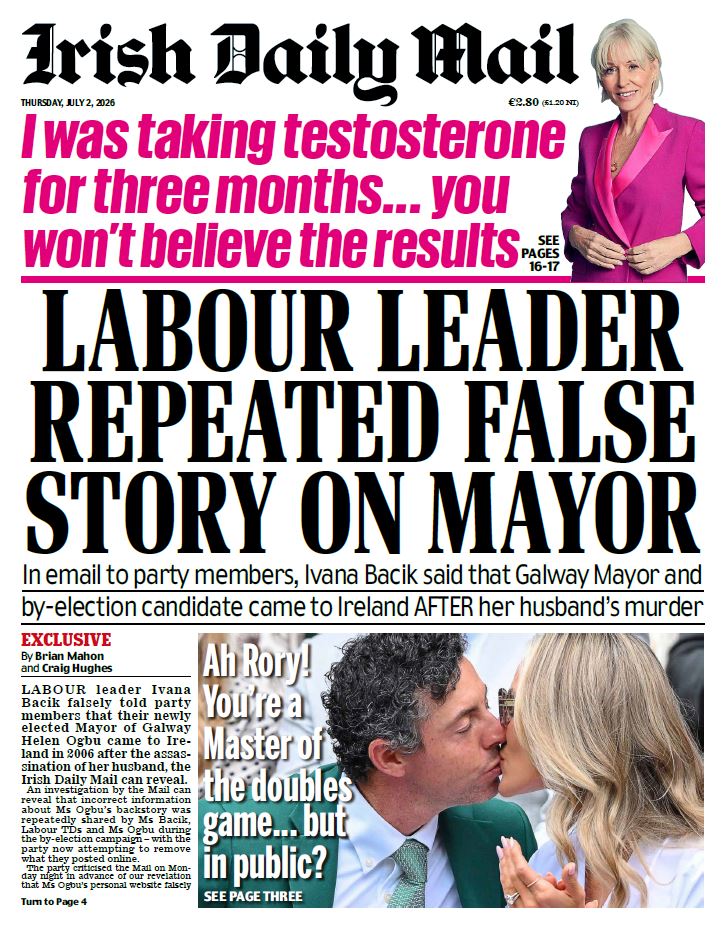
The ongoing controversy surrounding newly elected Galway City Mayor and Labour Cllr Helen Ogbu isn't just about a simple website "typo". It raises serious, fundamental questions about the integrity of our international protection system, political campaign narratives, and accountability in public office.
When the exact timeline is cross-referenced with public records and her own published interviews, four glaring logical contradictions emerge that the Labour Party's defenses fail to adequately address.
1️⃣ The Timeline Contradiction and the Campaign Narrative
The Claim vs. The Fact: Throughout her political rise and recent election campaigns, official biographical profiles and local press narratives explicitly stated that she "fled to Ireland... after her husband was tragically murdered for his political activity in Nigeria".
The Reality: Public records show her husband, businessman and politician Sunny Ogbu, was assassinated in Nigeria in October 2010. However, Helen Ogbu had already been living in Ireland and utilizing the state-funded Direct Provision system since 2005/2006. This massive multi-year gap has led to widespread accusations of political misrepresentation to create an emotionally resonant asylum narrative.
The "Typo" Defense: The Labour Party and Cllr Ogbu have blamed "web development errors" and "administrative incompetence" for the mistake. However, critics argue it is highly implausible for such a specific, foundational element of an asylum backstory to be repeatedly published, circulated in print, and left completely uncorrected for years if it were merely a clerical error.
2️⃣ The 2001 Trip and the Residency Strategy
The Penneys Incident: According to her own public media interviews, Ogbu’s very first entry into Ireland occurred in 2001 while she was heavily pregnant. She claims she traveled to the country simply to "visit friends." While shopping, she went into pre-term labor inside Penneys on O'Connell Street, Dublin, resulting in the birth of her daughter.
The Legal Loophole: Prior to the 2004 Irish Citizenship Referendum, any child born on the island of Ireland was automatically granted Irish citizenship by birthright. Under the legal framework of that era, having an Irish-citizen child provided non-EU parents with a powerful pathway to legal residency. Commentators note that this sequence of events aligns perfectly with what was critically referred to in public discourse as an intentional birthright citizenship residency strategy.
3️⃣ The Diplomatic Background & The Access to Asylum
The Diplomatic Employment: Before moving to Ireland, Ogbu held a Master’s degree in Diplomacy and worked for ten consecutive years with the South African High Commission in Nigeria, serving directly as the social secretary to the Ambassador.
The Resource Paradox: The international protection system is legally designed as a mechanism of absolute last resort for vulnerable individuals fleeing imminent, unavoidable danger with nowhere else to turn. Critics point out that an individual with a high-level diplomatic career, deep institutional connections to a foreign G20 embassy, and a wealthy, politically connected husband did not lack alternative global options, resources, or legal travel channels.
Why Ireland Over South Africa?: Working inside an internationally protected foreign embassy means she had direct, immediate access to secure diplomatic networks. If a severe, state-level threat to her life existed in Nigeria, the South African High Commission possessed the legal channels to facilitate immediate emergency visas or safe passage directly to South Africa. Bypassing a regional superpower to travel thousands of miles to Ireland specifically landing just before giving birth fuels the suspicion of a calculated economic and residency choice rather than an emergency flight from persecution.
The Return Home: In a profile interview with The Times UK, she admitted that after the 2001 birth of her child, she voluntarily returned to live in Nigeria because "things calmed down for a while," claiming her life was only at risk when her husband ran for elections. Under international refugee conventions, an individual claiming an active, systemic threat to life cannot safely oscillate between their home country and a safe haven based on shifting political cycles.
4️⃣ The 2010 Funeral Stay & Legal Re-Availment
The Ultimate Inconsistency: The most legally challenging aspect of the narrative to reconcile with the definition of asylum occurred in late 2010. Following her husband's tragic assassination, Ogbu voluntarily boarded a flight and returned to Nigeria the very country she claimed she was fleeing for her life and resided there for approximately four months to attend his funeral and settle family matters.
A Pattern of Travel: Crucially, this trip marked the second time Ogbu chose to return home to Nigeria after seeking status or safety in Ireland. Having already returned once following her 2001 trip, this second extended stay in 2010 shatters the concept of permanent, un-navigable exile.
The Principle of Re-Availment: In immigration and refugee systems worldwide, voluntarily returning to the country of feared persecution multiple times and remaining there for extended periods is a major legal red flag. International frameworks typically view this as definitive evidence that either the immediate threat to life has ceased, or that the applicant has voluntarily "re-availed" themselves of the protection of their home state, fundamentally undermining the legal necessity of refugee status abroad.
⚖️ Conclusion
The transition from living in Direct Provision to becoming the First Citizen of Galway is a historic narrative. However, public representatives must be held to strict standards of transparency. Blaming an emotionally manipulative, factually incorrect campaign timeline on a "website typo" avoids the core issue.The intersection of high-level diplomatic employment, substantial family resources, intermittent and repeated returns to Nigeria, and the precise timing of a pre-2004 birthright citizenship loop leaves serious questions that the public, the media, and the electorate have a right to see transparently answered.
#HelenOgbu #Galway #IrishPolitics #DirectProvision #ImmigrationIreland #LabourParty
By any chance are any of you, my lovely network, experts in translation rights for books?
I have had a lot of requests for Vandalising Ireland from French, German and Russian speakers in particular. Some Japanese and Polish too.
Any advice very welcome!
Prices in the UK just don't feel real anymore.
£120 for a return train to London.
£600 for a weekend in England, when you could go abroad for less.
Rent jumping from £700 to £1300 for the same place.
A full tank of fuel now over £100.
Insurance rising every year even with no claims.
And £100 somehow gone on just a couple of bags of shopping.
How did we get here?
The words that come into my head when I think about Andy Burnham as prime-minister-in-waiting are “president” and “Boris Johnson.”
As I said on News at Ten last night, his ambition to transfer significant financial and policy powers from Westminster to the regions - mayors and local government - would weaken the power of his cabinet while enhancing his, with his planned Downing Street North as overseer of this distributed power.
This is redolent of French or American separation of presidential/executive, parliamentary and state/municipal powers more than the British tradition.
It may be a good thing. It may be the sine qua non of narrowing the wealth and income gaps between London/south-east and the rest of the UK.
But we do not have a directly elected president. And even if this kind of constitutional change bores you to tears, it matters: we’ve had a parliamentary system that has muddled through for 250 years, give or take.
Although it may make very good sense to end the near absolute power of centralising Westminster departments and their often ove-confident secretaries of state, while transferring vital economic decisions to elected mayors or councillors who know what their communities actually need, it is not so conspicuously the case that MPs themselves need cutting down to size.
They should think hard about what kind of role they want in this new system of newly distributed power. There is a case for saying they - in some kind of British version of American confessional committees - should have more oversight over Burnham’s much expanded Office of the Prime Minister, mayors and economic regulators.
If they don’t hold the new quasi presidential system to account, who would - especially when so much of Burnham’s personal authority will flow from a presidential style of talking to and directly connecting with voters?
Which brings me to the Boris Johnson echoes.
They are that
First, Tory MPs saw him - just as Labour MPs see Burnham - as some kind of election winning messiah.
Second, Johnson talked an incessant talk of narrowing the gap between north and south, which he called “levelling up”, his version of Burnham’s “Manchesterism” - but no serious transfer of decision making to local people ever accompanied “levelling up”, and most would say it was hot air
Third, Johnson - like Burnham - exploited his figurehead status as a former mayor, his popularity and a personal connection with voters that he ruthlessly cultivated. In Johnson’s case, he capitalised on all that to call a snap general election, which he won handsomely, more than two years before he needed to do so - and it is not far-fetched to say that Burnham will also feel the siren call of securing a personal mandate from the electorate (whether he executes on that or not).
I don’t know whether Johnson is a model, or a warning or an augury of things to come. But if Burnham and Labour MPs need a lesson in what can go disastrously wrong when a leader is chosen mid term in a tide of messianic fervour, they have access to a case study whose consequences are still being played out.
🇮🇪🚨
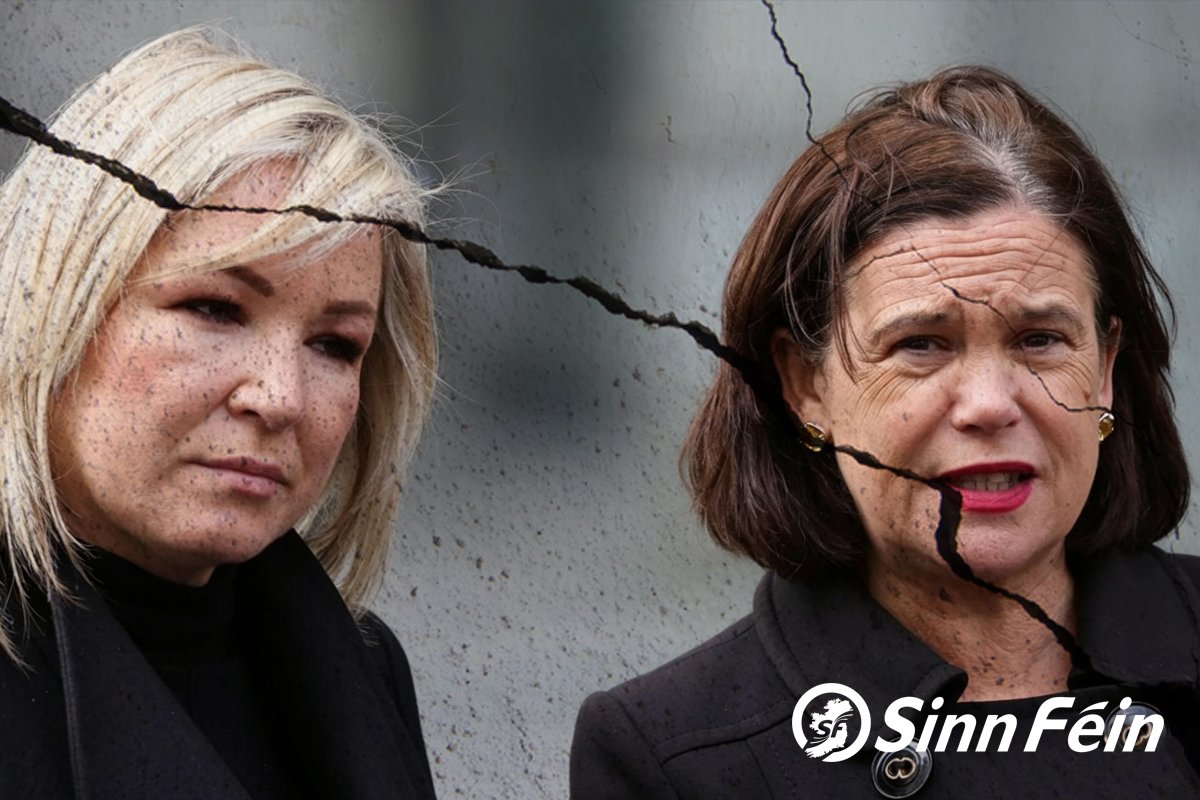
"Sinn Féin is facing growing internal tensions in Newry"
Critics claim the local leadership has become increasingly disconnected from working-class communities on issues such as immigration and demographic change.
Article ⬇️🔗 @sinnfeinireland
QUESTIONS FOR NEW PRIME MINISTER ANDY BURNHAM
-Will you change the definition of the “fiscal rules” in any sense from the last Reeves alteration?
-Can you name the fiscal rules now?
-What is your exact definition of “working people” seeing as you have signed up to the Labour manifesto which says taxes will not be raised on them?
-Which taxes do not impact “working people“?
-Which taxes do impact “working people“?
-Does the overall welfare bill need to come down? If so, by how much?
-Will you rule out borrowing outside the “fiscal rules” to fund increased defence spending?
-Rumours have already started that you will impose an exit tax. Given that such rumours push entrepreneurs to abandon Britain, can you firmly rule this out now?
-Can you rule out joining the European Union at any point in your premiership?
-Will you change Starmer’s Defence Investment Plan?
-Will you reach 3% defence spending by 2030?
-Will you rule out compensating the WASPI women?
-What is a woman?
-Do you agree the UK should transfer sovereignty of the Chagos Islands to Mauritius?
-Will you ban social media for under-16s?
-Is China a national security threat?
-Was the government right in its approach to US military action against Iran?
-Will you nationalise Thames Water in this parliament?
-In January 2021, you tweeted: “Any UK politician who gave Trump the time of day should be ashamed right now.” Do you stand by your claim?
-Do you support mandatory Digital ID to work in the UK?
-Will you rule out calling a general election before 2029?
-Do you support this government’s current Net Zero commitments?
-Do you support a ban on new North Sea oil and gas exploration licences?
-Do you support the current government’s approach to immigration policy? If not, how?
-What should the net immigration level be in the UK?
-How will you reduce the number of small boats ferrying migrants across the Channel illegally?
-Do you support the pension triple lock?
-What specific policies will you pursue to reform the benefits system?
-Will you, as new head of the OBR Professor Haskell has suggested, commit to not increasing business taxes further during the life of this Parliament, including capital gains tax?
-Will you commit to preserving people’s ability to withdraw 25% of their pension as tax-free lump sum and to preserving the current value of pension contribution allowances?
-Do you commit to cancelling the increases in fuel duty that are planned for 2027?
-Will you commit not to extend further the freeze on tax thresholds?
-You earlier suggested an additional 10% inheritance tax levy. Can you now rule that out?
-Given that taxes on banks are already far higher than those in competing countries, will you pledge that bank taxes will not be increased anymore?
-The Labour manifesto said: “We will publish a roadmap for business taxation for the next parliament which will allow businesses to plan investments with confidence.” This has not been done. Would your administration publish this plan?
FEARS are growing in Fine Gael that Taoiseach Micheál Martin's weakened leadership could scupper the Coalition's promise to remove the 'Triple Lock' that requires UN approval for future Irish peacekeeping missions. -
✍️John Drennan/ John Lee
Senior party figures this week- end also expressed concern that growing 'dysfunction' in Fianna Fáil will undermine Ireland's presidency of the EU.
..Martin's diminishing authority is damaging Coalition cohesion. senior FG figures said last night
#FFG #MichéalMartin #TripleLock