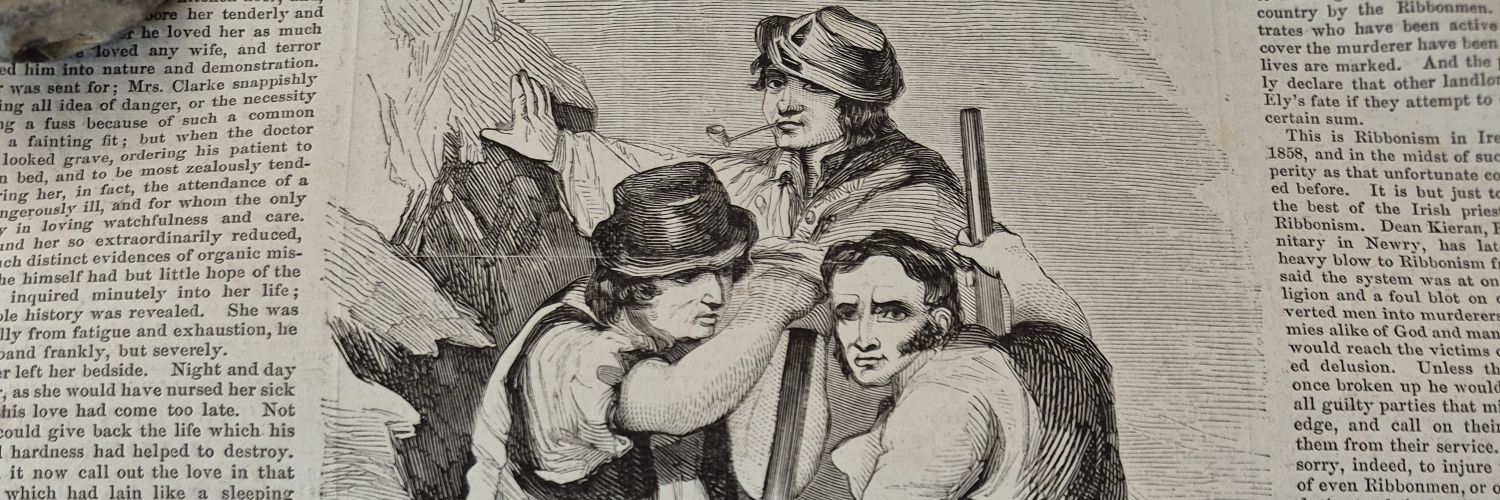
It's Christmas buying time, so why not buy someone Marc Mulholland's 'At the Rising of the Moon: The Peasantry and Ireland from the Tudor Conquest to the Fall of Landlordism'?
(Or order for your library).
Tweet summary of the book below.
"Governments are taking over private enterprises and resources at the fastest pace in 50 years ... the fourth great wave of nationalizations in the past 100 years."
My essay on the phenomenon of nationalization in an age of geoeconomic fragmentation for the new issue of Finance & Development: https://t.co/2ETWfYKp9S
4 June 1939. MS St Louis, a ship carrying 963 Jewish refugees, was denied permission to dock in Florida, USA after having already been denied entry into Cuba. The ship was then forced to return to Europe and 264 of its passengers would later die in the Holocaust.
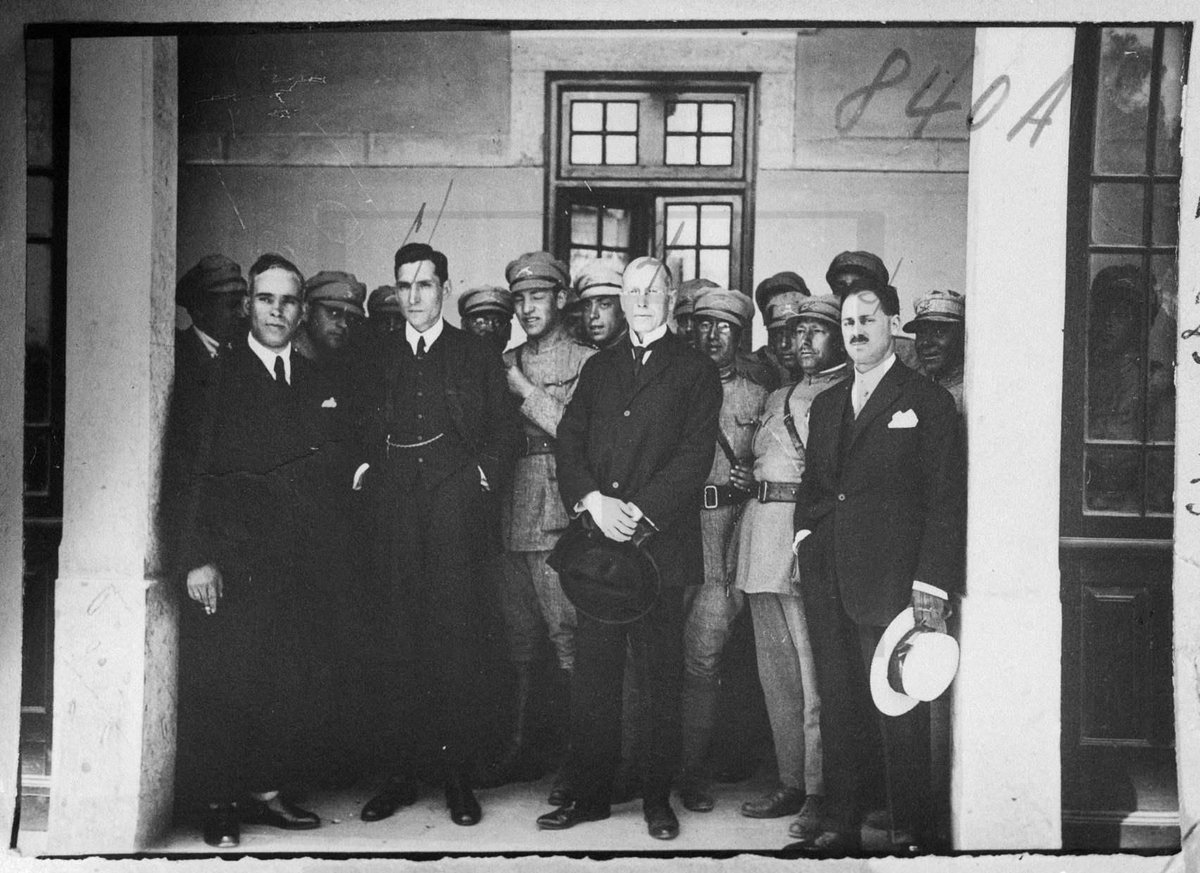
June 3, 1926: António de Oliveira Salazar, a 37-year-old economics professor, is appointed minister of finance by the new junta of Portugal. Denied the leeway to slash government debt, he resigns 16 days later; still, he'll remain an influential conservative influence on policy.
@theirishstory Fine article. Politically significant, I think, as they were redolent of 'real war' and cut against the 'murder gangs' narrative. Dev was very aware of this.
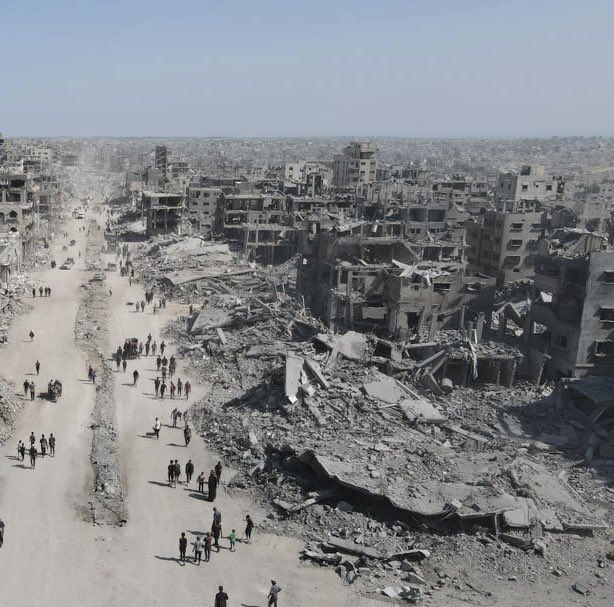
Their comrades’ bodies were still in the Syrian desert months ago, after Trump’s new Syrian protégé with his Salafi-jihadi coalition launched a surprise offensive to dismantle Kurdish led autonomy in the North East. That wasn’t history. That was yesterday. 8/14
@AllyFogg I doesn't feel like it would have been standard before sometime in the 1980s -- at least you don't seen it on old TV shows etc. -- but a expert bod would know better.
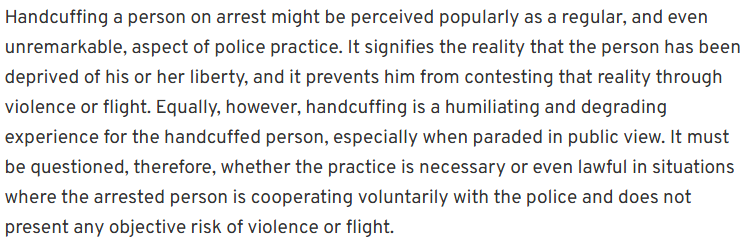
Have the cops always been handcuffing suspects at the scene even when they present no obvious danger, or is this a recent SOP import from the US (where, given gun culture, the risks are very different)?
@DrJamesCMorgan@AllyFogg An Irish Supreme Court case ruled that "an arrest will be thrown out if it is shown that it was unnecessary to place handcuffs on the accused", which seems sensible. : https://t.co/NJuFof5nE1
Oh man. Takes an incredible blindness to look at the West today and conclude it’s such a just society, only problem is it’s so just people are bored. This final paragraph is actually even worse than rest of book
The death of Henry Nowak is a tragedy in every sense, and the public reaction to the body‑worn video is completely understandable. It is painful to watch. It is painful for officers to watch. And it is painful for Henry’s family to know that his final moments were chaotic, confused and shaped by a lie told by the man who killed him.
But if we are going to talk about this case, and especially where/if politicians make highly charged statements, I believe it’s important to stay anchored to what was actually established in court.
The judge was clear that the responsibility for Henry’s death lies solely with the man who stabbed him. The fatal wound to his chest was described as “catastrophic” and “unsurvivable”, and the pathologist confirmed that no medical intervention, immediate or otherwise, could have saved Henry. That does not erase the distressing nature of the footage, it does not mitigate the seemingly dispassionate response of the officers in attendance, but it does matter when we are trying to understand what happened and what could or could not have changed the outcome.
It is also a matter of record that the officers were responding to a 999 call in which the offender falsely claimed he had been the victim of a racist attack and insisted no weapon had been used. That deception shaped the first few minutes on scene.
The IOPC has been involved from the outset, and the officers have remained as witnesses throughout. This is an important distinction, as those familiar with post incident procedures can tell you. If there was a shred of doubt or suspicion that the officers actions at the time, when balanced against the information known at the time and their reasonable held beliefs, amounted to potential misconduct, the IOPC must at the earliest opportunity review their status. The IOPC have confirmed that the officers status remains unchanged. That indicates that the officers initial decisions/actions have already been assessed against the information known at the time and is unlikely to now change and amount to misconduct.
None of this means the initial assessment was correct. It wasn’t. The officers misread the situation, and the body‑worn video shows that plainly. But policing is full of moments where decisions are made in seconds, under pressure, with incomplete or misleading information. Sometimes those decisions are right. Sometimes they are not. And sometimes…as in this case…the consequences are unbearably tragic even when the mistake does not change the final outcome.
What we cannot/should not do is turn this into a proxy battle in a wider culture war. Henry’s family have asked that his death is not used to fuel division, hate or to propagate political agendas.
It is possible to hold two truths at once:
that the initial response was flawed, sloppy even…and the investigation needs to establish how policy, procedure and relied information impacted those decisions and events; and that despite the officers clear mistakes and compassion fatigue, they did not cause Henry’s death, nor could they have prevented it.
Policing is at its worst when it becomes defensive, but it is also at its worst when it becomes a canvas onto which people project their own political battles and/or bitterness. This case, if it is to be a turning point, deserves better than that.
We can demand accountability without abandoning fairness. We can acknowledge mistakes without inventing motives. And we can talk honestly about the pressures and imperfections of frontline policing without turning every tragedy into a referendum on the entire profession.
That balance is difficult. But, to my mind, it is the only way we avoid repeating the same cycles of outrage, distortion, division and defensiveness that have done so much damage to public trust… and to the people who still turn up, every day, to do a job that is getting harder by the day.
Along quiet rural roads in Ireland, small unattended "honesty shelves" offer fresh eggs, bread, fruit, vegetables, honey, and other local produce.
There are no cashiers or staff on site. Customers simply take what they need and leave payment in an honesty box.
The system operates largely on trust between farmers and the local community.
""How the Irish countryside is being used has changed a lot," she said, adding: "such as farming practices, and that there are bigger fields and less hedges which is not good for hedgehogs are they are losing their nesting and feeding spaces".
Hedgehog Conservation Ireland and researchers at University of Galway and Oxford are calling on people to take part in the inaugural Great Big All-Ireland Hedgehog Count
https://t.co/UGpclcHXrV