🇺🇸 In or near #Indianapolis? Join us on October 21 for an in-person @wazuh MeetUp with Kevin Branch
Explore how #Wazuh goes beyond #SIEM to unify security tools and operations.
📍 Indianapolis | 🎟️ Free
Register here: https://t.co/eeHmt0KoYA
Hope to see you there!
Apache HTTP Server is affected by CVE-2026-59797 (CVSS 9.8 - Critical), a mod_ssl flaw that can bypass SSLRequire access restrictions. Upgrade to 2.4.69+.
Read more: https://t.co/gW3zmmcaQ1
Attackers with sufficient privileges can abuse eBPF attachment points to intercept credentials, terminate tracing tools, or block traffic.
See how Wazuh detects unapproved eBPF programs across PAM, ptrace, XDP, and cgroups.
Read on: https://t.co/CbgRXWlPTW
Wazuh 5.0 Release Candidate 1 is here 🚀
Our biggest platform release to date is now available as RC 1, a more mature release ready for hands-on testing ahead of general availability.
General availability is coming soon.
Learn more: https://t.co/jz5cUgsYaV
Kyverno enforces security policies in Kubernetes, but its policy reports and events stay inside the cluster by default. Our new blog post shows how Wazuh detects Kyverno policy violations.
Read on: https://t.co/FdXJDlDJUU
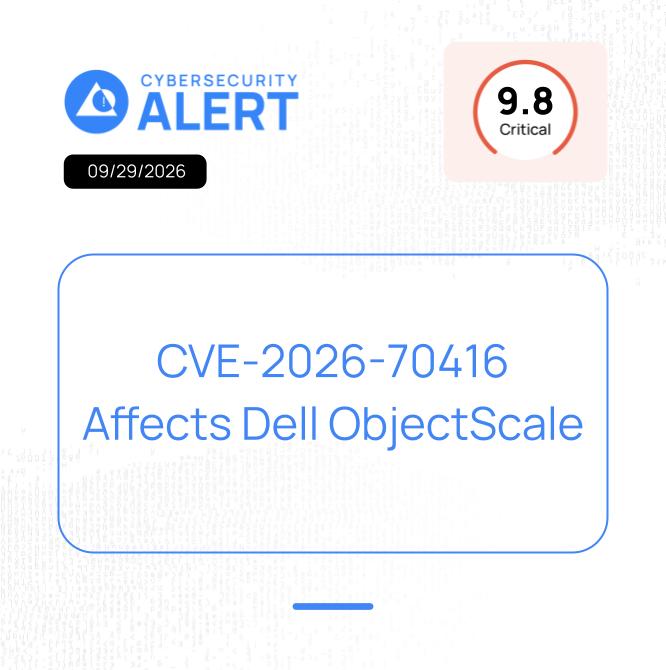
Dell ObjectScale is affected by CVE-2026-70416 (CVSS 9.8 - Critical), an unauthenticated deserialization flaw that can lead to remote code execution. Upgrade to 4.4.0.0 or later immediately.
Read more: https://t.co/IlM5QyDYMY
👀 You can't secure what you can't see. Shadow IT can leave endpoints, software, and other assets outside existing monitoring.
🔍 @wazuh explains how security teams can identify and reduce these visibility gaps.
➡️ https://t.co/Q81YSSM6bv
#cybersecurity#sponsored
Cómo reducir los puntos ciegos del Shadow IT con Wazuh
El "Shadow IT" consiste en el uso de hardware y software no autorizado que crea brechas de seguridad al ser invisible para los equipos de iT
https://t.co/zRkwr091vN
Privilege escalation allows attackers to turn a standard-user foothold into full SYSTEM access on a compromised Windows system.
Our new blog post shows how to detect Windows privilege escalation techniques using Wazuh.
Read on: https://t.co/EPN5MJulDU
GitLab CE/EE is affected by CVE-2026-85706 (CVSS 10.0 - Critical), an unauthenticated arbitrary file read flaw in the repository commits API. Upgrade to 19.1.8, 19.2.6, or 19.3.2.
Read more: https://t.co/S97GzClluR
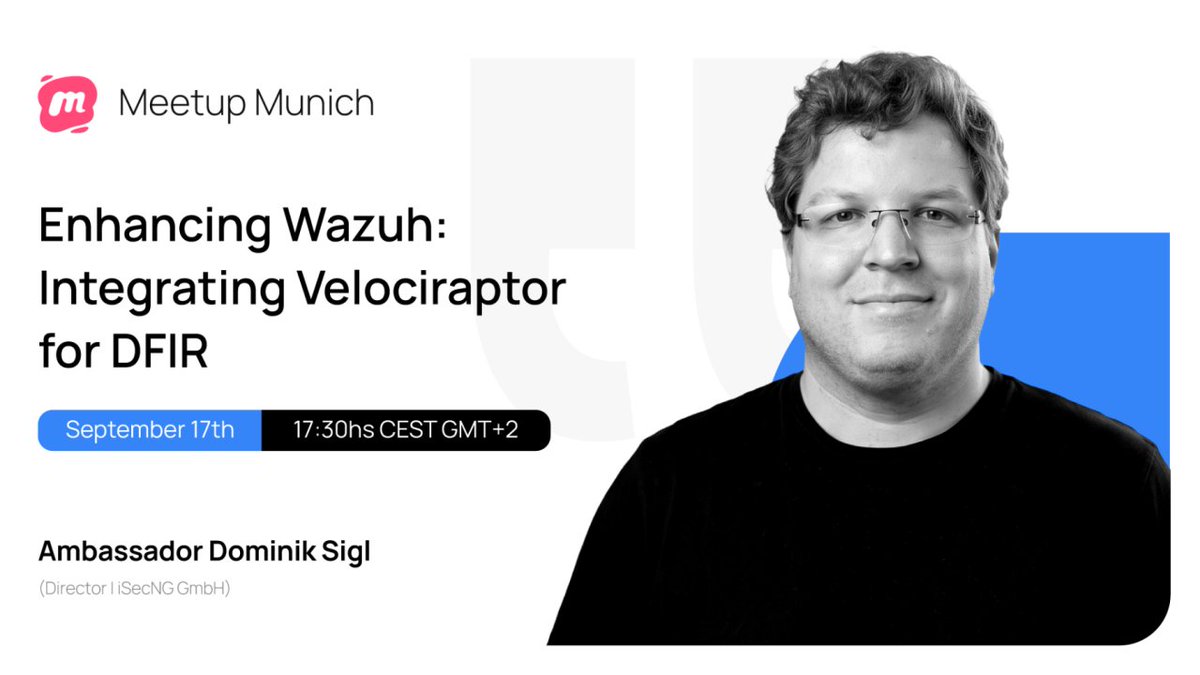
We’ve got good news: this Meetup is now online and open to everyone! 🌐
Join us tomorrow to explore Wazuh + Velociraptor for DFIR, in collab with iSecNG GmbH.
📅 Sept 17 | 🕧🇩🇪 12:30 PM | 💬 German
💻 Join: https://t.co/GROOjdTKDP
@wazuh#DFIR#Velociraptor#Cybersecurity
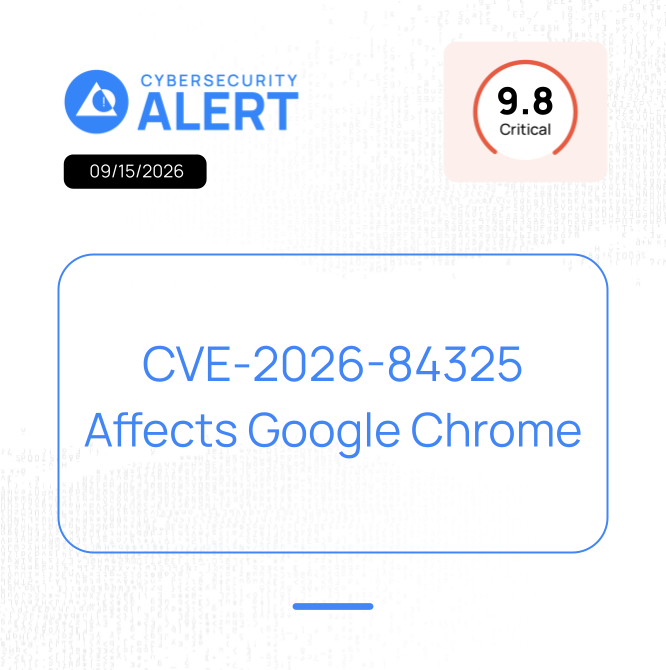
Google Chrome is affected by CVE-2026-84325 (CVSS 9.8 - Critical), an improper input validation vulnerability in DataTransfer. Update to 152.0.7977.75 or later.
Read more: https://t.co/8mMaKZobNm
Wazuh ships with thousands of detection rules.
The three that will catch your actual incident are not in there.
They describe your environment, not Windows.
The first three we write on every deployment 👇
Attackers abuse legitimate Windows features to run malicious code, steal credentials, and persist. Our latest blog post shows how to integrate Microsoft Defender ASR telemetry with Wazuh.
Read on: https://t.co/CGbPGzjfgo
A big thank you to everyone who joined our recent Wazuh MeetUp in Sao Paulo 🇧🇷, Online for the Middle East area 🇸🇦 and Santiago 🇨🇱.
Great perspectives about Wazuh and its capabilities in different parts of the world.
🔗https://t.co/HmVkV6hcxO