Why does Gracen Halton play with such passion and joy?
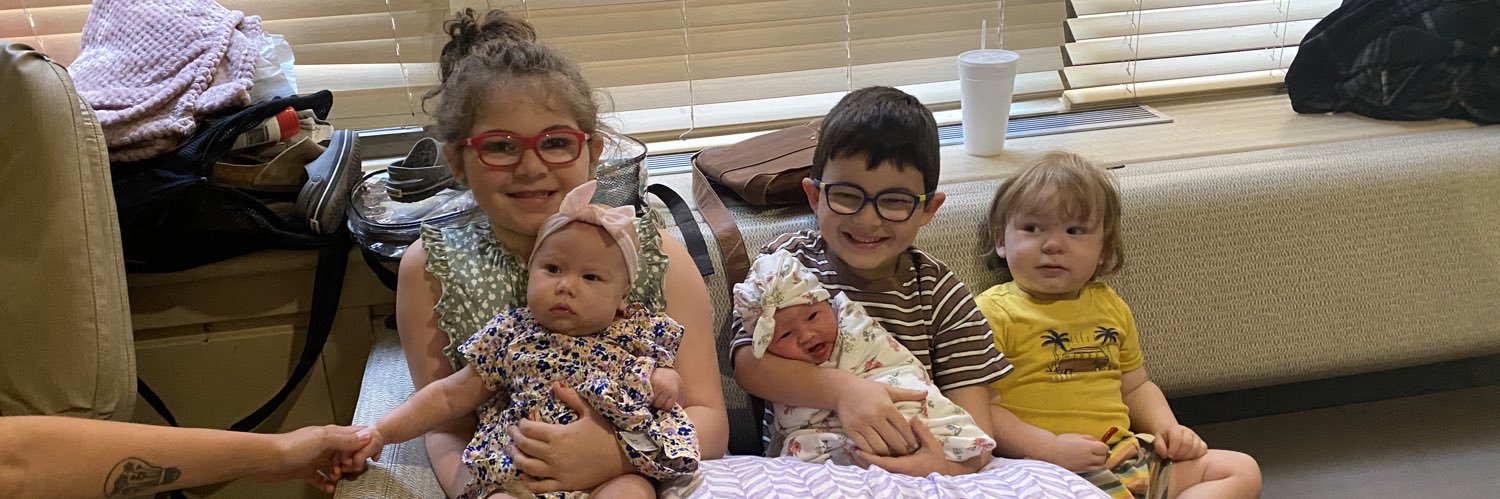
He and his older brother William played street football together and it was their dream to play in the NFL.
William died in a car accident at the age of 10, when Gracen was 8 years old.
“I hope he thinks great things of me,” Halton said. “I’ve got a lot of work to do, I’ve got to be better in aspects and parts of football and my life, but I feel like if he was here, he would be proud of me. … Without him, I wouldn’t be here, I feel like.”
He's playing with joy for himself and for William.
https://t.co/wFzvRYzAEo
Some melodies aren’t just meant to be heard, they can be experienced visually, too. Pachelbel’s “Canon in D” offers a captivating blend of music and visual beauty.
The body of a Christian priest was carried from the ruins of the World Trade Center by five men. His head had suffered fatal trauma from the collapse. His white clerical collar was still visible. The photograph would become one of the defining images of September 11.
Today is September 11, 2026, twenty-five years since that terrible morning. And tonight I want to tell you the story of Father Mychal Judge.
It began on an almost impossibly beautiful September morning in New York City.
At 8:46 a.m., American Airlines Flight 11 struck the North Tower.
Firefighters, police officers and paramedics began moving toward something nobody yet fully understood.
And so did a priest.
Father Mychal Judge was a Catholic priest, a Franciscan friar, and chaplain to the New York City Fire Department.
He was 68 years old.
He grew up in Brooklyn, the son of Irish immigrants, and entered the Franciscans as a young man. His ministry took him among the homeless, people struggling with addiction, people dying of AIDS, grieving families, and the firefighters he loved deeply.
He knew suffering himself. Father Mychal was a recovering alcoholic.
By 2001, the firefighters of New York were his family.
So when the call came that morning, Father Mychal left St. Francis of Assisi on West 31st Street and went downtown with them.
He entered the North Tower.
Inside were smoke, shattered glass, injured and frightened people, and firefighters preparing to climb into an inferno while thousands desperately tried to escape.
Father Mychal did what a priest does.
He prayed.
He blessed.
He stayed with the dying.
He administered the last rites to a fallen firefighter.
Then, at 9:59 a.m., the South Tower collapsed.
The force of the collapse blasted debris into the lobby of the North Tower. Father Mychal was thrown backward and suffered fatal blunt-force injuries to his head.
He died among the people he had come to serve.
Five men carried his body out: firefighters Christian Waugh and Zachary Vause, NYPD Lieutenant William Cosgrove, rescue worker Kevin Allen, and civilian John Maguire.
Reuters photographer Shannon Stapleton raised his camera.
The photograph he captured has sometimes been called an American Pietà.
A dead priest being carried through the devastation in the arms of other men.
They brought Father Mychal’s body to nearby St. Peter’s Church and laid him before the altar.
Later, the medical examiner assigned him the designation Victim 0001.
Not because he was necessarily the first person to die that morning.
He was the first body formally recovered and certified.
Victim 0001 was a priest.
There is something about that which has stayed with me.
Twenty-five years ago, while I sat with my parents in Minnesota watching those towers fall, I was not yet a priest. I did not know Father Mychal Judge. But looking back now, as a priest myself, I realize that somewhere inside that devastation, one of my fraternal brothers had done what a priest is supposed to do.
He showed up.
He went where people were suffering.
And he stayed.
The Roman Catholic Church has not canonized Father Mychal Judge, and no formal cause for his canonization has yet been opened, although many have called for one.
So I am going to stretch across those ecclesial boundaries tonight.
I will not declare what the Church has not declared.
But I will ask a Christian brother who died serving his people to pray with us before the throne of God.
Father Mychal Judge, Christian priest, Franciscan friar, chaplain, brother:
Please pray for us.
Pray for the dead of September 11.
Pray for their families.
Pray for the firefighters, police officers, paramedics and ordinary people who carried one another through hell that day.
Pray for our country.
And pray for those of us given the terrible and beautiful responsibility of bringing Christ into places where people are suffering.
Father Mychal Judge, pray for us.
Amen.
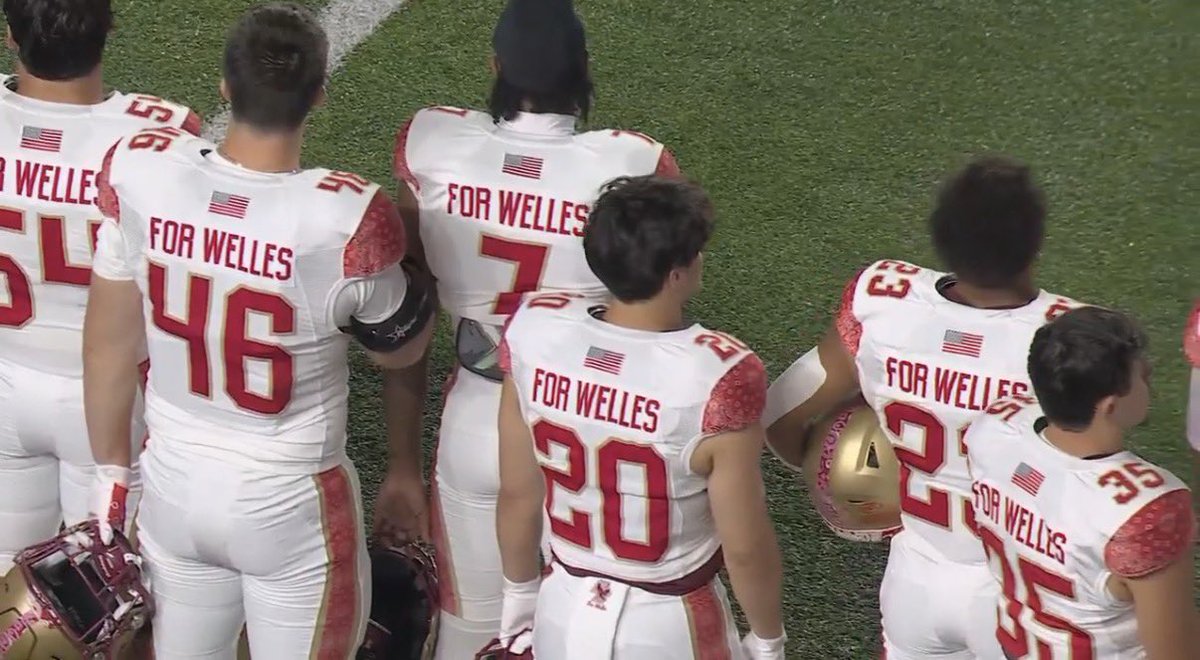
On Friday, September 11, 2026, exactly 25 years after the attacks, Boston College will host Rutgers wearing a uniform most of the country has never had a reason to notice.
Every helmet, jersey and pant will carry a red paisley pattern. The nameplates won't say player last names. They'll say "FOR WELLES."
Here's who that is.
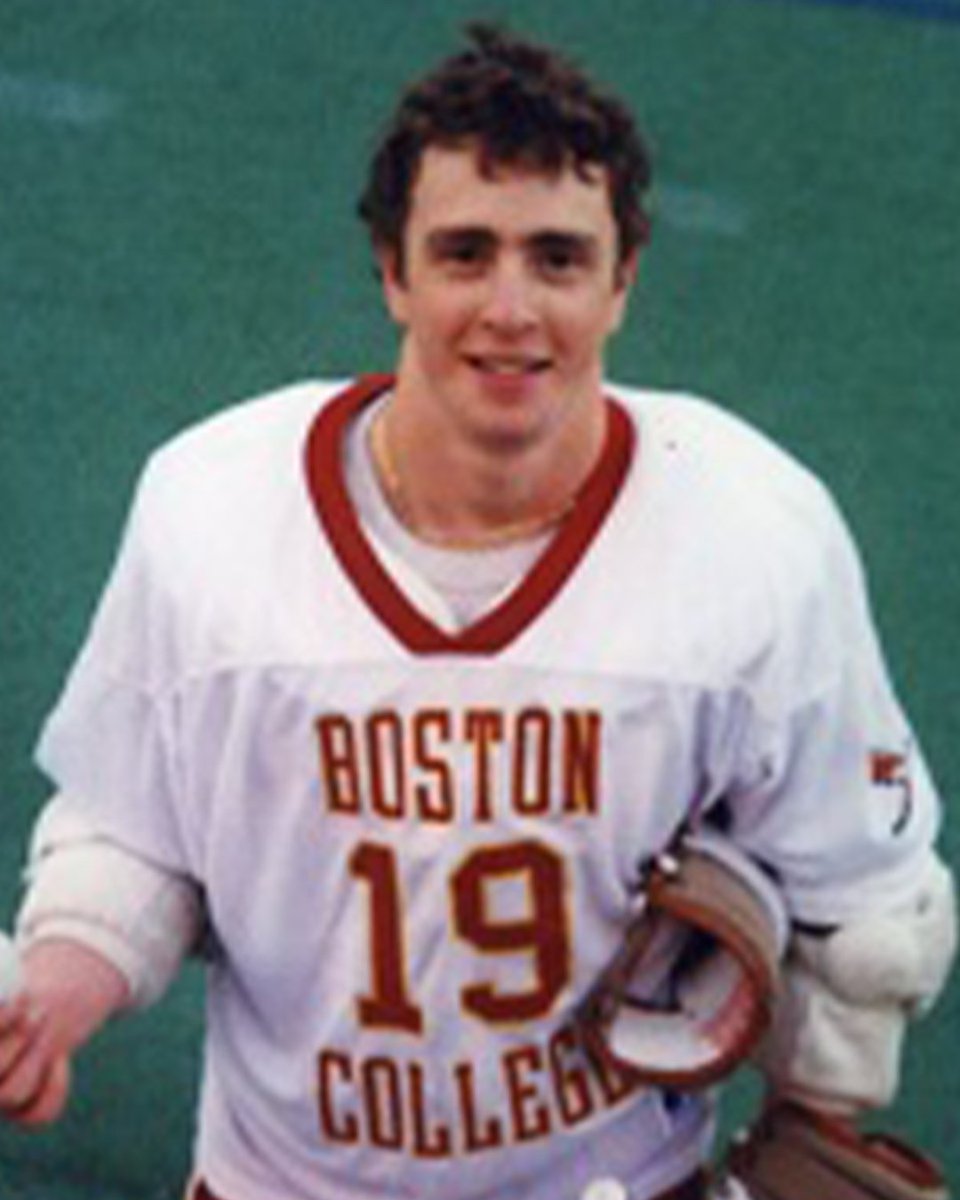
Welles Crowther played lacrosse at Boston College and graduated in 1999. He went to work as an equities trader on the 104th floor of the South Tower. He had actually been thinking about leaving finance to become a firefighter, like his father before him.
On the morning of September 11, he never got the chance to make that choice for himself.
When the tower was hit, Crowther led survivors through the smoke toward a working stairwell. Then he went back. And back again. Witnesses who made it out remembered a man in a red bandana pulled over his mouth, calm, directing them to safety in a stairwell nobody else had found.
He is credited with saving as many as 18 lives before the building came down with him still inside.
It took his family almost a year to learn any of this happened. A survivor read an account in the New York Times of an unnamed man in a red bandana and recognized the story as her son's habit. Welles had carried a red bandana since he was six years old, when his father first tucked one into his pocket.
Boston College started the Red Bandanna Game in 2014. Friday will be the 13th one.
This year carries extra weight in the opponent. Rutgers lost 37 of its own alumni on 9/11, and its campus sits under an hour from where the towers stood.
The game will include a Coast Guard flyover, a halftime drone show, and an appearance from Crowther's family, who have returned for the game nearly every year since it started.
The first 10,000 fans through the gate get a red bandana of their own.
UPDATE ON GERALD AND THE CROW SITUATION:
Things have escalated.
I repeat.
THINGS HAVE FUCKING ESCALATED.
For those of you just joining us, yesterday I accidentally entered into diplomatic relations with a gang of crows after Gerald stole my good spoon.
Well.
This morning I walked outside and Gerald was waiting for me.
Alone.
Standing directly in the middle of my driveway.
No screaming.
No hopping around.
Just staring at me like a tiny feathered loan shark who had come to collect.
I said, “Morning, Gerald.”
He tilted his head.
I gave him a walnut.
He did not eat it.
Instead, this motherfucker picked it up, walked three steps to the left, PUT IT DOWN, and stared at me again.
Message received.
The offering was insufficient.
So I went back inside and got more walnuts.
When I returned…
THERE WERE NINE CROWS.
Nine.
Yesterday there were seven.
Gerald is fucking recruiting.
And they were arranged in a SEMICIRCLE.
This isn’t a bird friendship anymore.
I’m funding organized crime.
I distributed the walnuts because apparently I pay protection money now.
Everything seemed fine until one of the smaller crows tried taking two.
Gerald immediately screamed at him.
The little one dropped the second walnut.
I have accidentally created an economy.
Gerald controls distribution.
There’s a hierarchy.
There are consequences.
I’m pretty sure I witnessed a disciplinary hearing before breakfast.
Then Gerald flew away.
I thought we were done.
WE WERE NOT DONE.
Twenty minutes later I looked outside and there was something sitting where Gerald had been standing.
A bottle cap.
A shiny rock.
And…
MY FUCKING SPOON.
HE RETURNED THE SPOON.
Ladies and gentlemen.
I believe we have successfully negotiated a trade agreement.
Unfortunately, there is now a crow sitting on my mailbox.
So I still cannot get my fucking mail.
I tried approaching.
He puffed up.
I backed away.
That mailbox belongs to the organization now.
At this point I’m just a tenant.
Anyway, Gerald has officially been promoted to General Gerald, Commander of the Driveway, First of His Name, Keeper of the Good Spoon, Lord of the Power Line, Collector of Walnuts, and Regional Manager of Whatever The Fuck Is Happening Here.
I’ll keep everyone updated.
But if I suddenly stop posting…
Gerald found out I told you.
Nelson brayed on Wednesday, which he has done twice in his life, and both previous times it was about hay.
This was not about hay.
You have to understand Nelson to understand the size of it. He is a small grey donkey who came free with a horse and has spent every day since assessing the world and finding almost none of it worth a reaction. A pheasant out of the hedge: beneath comment. A carrier bag on the wind: management's problem. The farrier, the vet, Martin the postman at the gate every single morning: all filed, long ago, under fine. Nelson does not spend adrenaline. He has a lifetime's supply precisely because he has never once dipped into it for anything that did not concern the hay.
Hector is the one who comes apart. Seventeen years a Cavalry Black, seventeen hands of trained composure, and still, in a quiet field, undone by small things with no rules to them. And undone completely, every time, by the one thing that has never had a rule: Nelson leaving the field.
On Wednesday it was the other way round.
Hector went down in the morning and did not get up cleanly. Nothing dramatic to look at, a big old horse struggling on wet ground to fold his legs back under him, the way big old horses sometimes do, more indignity than danger. But he was down, and he was working at it, and he was not managing it, and the field was suddenly a place where the large warm reliable thing was not upright.
Nelson stood over him.
Then Nelson, who assesses everything and hurries for nothing and does not raise the alarm because in his considered view nothing is ever worth waking a tired horse for, raised the alarm. The full cracked bugle of it, flung down the lane, on and on, a donkey who does not do this doing this, until the farmer came out of the house at a run, because a silent donkey suddenly loud means something is wrong in a way a noisy one never could.
The farmer got Hector up. It was fine. It was, in the end, a big horse and a bad patch of ground and a bruised dignity, nothing more.
Nelson stopped the moment Hector was on his feet.
He has not mentioned it since. He went back to the hay. He has assessed the incident and, by every sign available, filed it under dealt with.
But he broke his own rule for it. In a whole life of spending no adrenaline on anything, he spent all of it at once, on the one thing he has never admitted to caring about.
Hector is grazing this morning, upright, enormous, fine.
Nelson is beside him, in the dry corner, first at the hay, saying nothing.
He would tell you it was about the hay.
The World Cup has turned America into a discovery channel for the rest of the world.
And they are not handling it well.
In the best possible way.
Here is what they are discovering:
Free public restrooms. Europeans pay every time.
Free water at every restaurant. Just appears.
Free refills. Coffee. Sodas. Iced tea. Unlimited.
Free chips and salsa before you even order.
Free warm bread with dinner.
Ice in drinks like civilized people.
Air conditioning everywhere. Not a moral debate. A fact.
Parking lots attached to the actual place you are going.
Drive throughs where the food comes to the car while you sit in it.
Ranch dressing by the gallon.
Tex-Mex that cannot be explained only experienced.
Dental care that actually works.
Buccee’s. There are no words for Buccee’s.
Then they found the grocery stores.
Five of them within one mile.
Each one the size of an aircraft hangar.
Burgers. Steaks. Brisket. Ribs. Pulled pork. Lamb. Veal. Every cut of every animal ever domesticated by human civilization available in one refrigerated aisle at ten in the morning on a Tuesday.
The Germans stood in the meat section for forty five minutes.
In silence.
Processing.
They finally understand why we do not have trains.
We have roads wide enough for the cars we actually drive.
Parking lots the size of small European countries.
Airports in every city worth visiting.
Why would we need trains.
The Germans are taking ranch home by the bottle.
The Dutch found queso and briefly lost the ability to speak.
The Japanese are photographing HEB like it is the Louvre.
The Czechs are weeping in West, Texas.
Welcome to America!
The greatest country on earth.
This guy turned every single text his HOA president sent him into a song.
Over the past year and a half, she’s been texting him nonstop about fines, videos he’s posting, eggs in the yard, signs on his lawn, his driveway, and even threatening to put a lien on his house. So instead of arguing with her, he had AI turn all her messages into a full song.
It’s honestly one of the most creative ways I’ve seen someone get back at an over-the-top HOA.
Be honest… would you turn your HOA president’s texts into a song?
Last night, I made a simple request on X. I asked if anybody visiting Arlington National Cemetery for Memorial Day would stop by Alan’s grave and leave a photo for our family.
What happened next honestly caught me off guard.
By this afternoon, dozens of Americans from all walks of life had made the walk to Section 60 to visit SSG Alan W. Shaw. Veterans. Families. Complete strangers. People who had never met Alan, but chose to honor him anyway.
For one day on social media, people put aside the constant noise and negativity and came together for something bigger than themselves. My notifications filled with photos, kind messages, prayers, and stories from people honoring not just Alan, but so many of our fallen heroes.
I don’t think people fully understand what moments like this mean to Gold Star families. The fear is never just losing them. It’s losing them slowly over time as the world moves on and fewer people remember their name.
But today showed me that Alan will never be forgotten.
After years of watching social media reward some of the worst parts of humanity, today gave me a reminder that the good is still out there too.
Thank you to every single person who stopped by to visit Alan today, said his name, shared his story, or took a moment to honor the fallen.
This right here is the America Alan knew and loved enough to fight and die for.
And today, y’all showed us all that it’s still here and it’s still worth fighting for. 🇺🇸
BREAKING: President Trump announces that 9/11 hero Welles Crowther will posthumously receive the Presidential Medal of Freedom.
Known as “The Man in the Red Bandana,” Crowther repeatedly ran back into the South Tower on 9/11 to help others escape, saving as many as 18 lives before losing his own.
Allison Crowther said her son’s legacy continues to endure nearly 25 years later: “Welles’ light still shines brightly.”
To my Oklahoma family;
this piece comes straight from the heart.
I hope you’ll take a moment to read it and feel what I felt.
Thank you for allowing me to be a small part of it.
I came to @okcthunder to play basketball. I left carrying 168 lives.
When I was traded to the Oklahoma City Thunder, I was thinking about basketball, nothing more.
I didn’t know that before I ever stepped on the court, this place would show me something that would stay with me far longer than any game.
Like any player, my mind was on the game. A new team, a new city, a new opportunity. I expected the usual routine when I landed in Oklahoma City. Physicals, practices, meetings, and a jersey waiting in a locker.
But before any of that, Sam Presti pulled me aside and told me there was somewhere we needed to go.
He didn’t explain much, and I didn’t think to ask. I was focused on the next step in my career.
What I didn’t understand was that, before I could represent the place I was about to play for, I needed to understand it.
So instead of heading to the facility, he took me to the Oklahoma City National Memorial & Museum.
I walked in without knowing what I was about to see, and within minutes, everything slowed down.
There are 168 chairs at the memorial, each one representing a life lost on April 19, 1995. They are arranged in quiet rows, each engraved with a name, each standing where a person once stood in that building. Then you notice something that is impossible to process the first time you see it. Some of the chairs are smaller.
They belong to children.
There is no speech that prepares you for that, no headline that captures it. You simply stand there, and the silence carries a kind of weight that is hard to describe but impossible to ignore.
As you walk through the memorial, you pass between two gates marked 9:01 and 9:03. At first, they seem like simple numbers, but then you understand what they hold. One marks the last minute before the attack. The other marks the first minute after. And in between those two gates is 9:02, the moment when everything changed.
That minute does not feel like history when you are standing there. It feels present.
The reflecting pool stretches across what used to be a city street, its surface calm and still. When you look into it, you do not just see water. You see yourself standing in a place where unimaginable loss occurred, and for a moment, everything else in your life becomes quieter.
Nearby stands the Survivor Tree, an American elm that was damaged in the blast but endured. It is not untouched. Its scars are part of what it represents. But it is still standing, and in that, it carries a kind of strength that does not need to be explained.
We did not speak much while we were inside. It did not feel like a place for conversation. Some places ask for words. This one asks for reflection.
When we stepped outside, Sam Presti looked me in the eye and said, “This is what this state has been through.”
Then he said something I will never forget.
“Every time you step on that court, you are not just playing in front of fans. You are playing for a state that carries this with it. Give them everything you have. They deserve that.”
In that moment, basketball felt different.
Not smaller, but clearer.
Because what I had just seen was not only about what was lost. It was about what remained. A state that had experienced unimaginable pain and still chose to come together, to rebuild, and to move forward without losing its humanity.
From that day on, every time I stepped on the court, I carried that with me.
On the nights when I was tired, when I was hurt, when I was dealing with challenges that felt heavy in the moment, I would think about those chairs, about that minute, about the people behind those names. And I was reminded that what I was going through did not compare to what this state had endured.
https://t.co/XfNLliRVaO
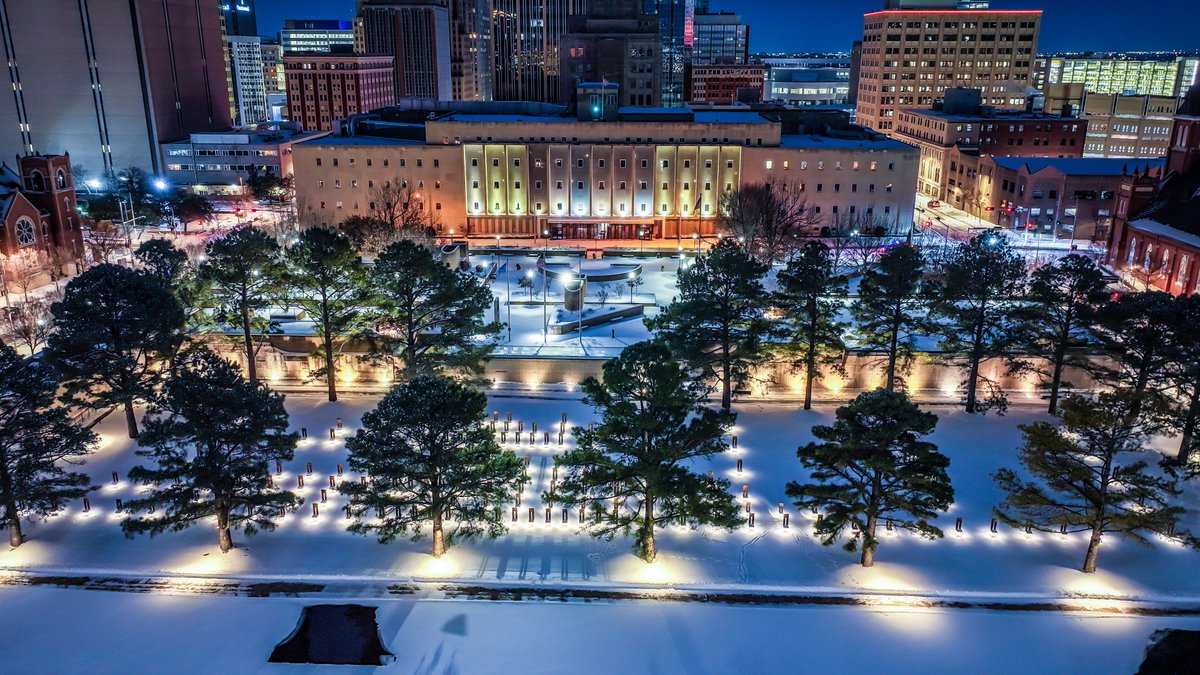
More from the Oklahoma City National Memorial & Museum outdoor memorial from last night. May be some of my favorite shots I have ever taken at the Memorial. The snow covered grounds provide a peaceful, serene place in the middle of a busy downtown area.