What if the biggest “win” for families in the last 50 years was actually a trap?
Rory Sutherland dropped this on Alex O’Connor’s podcast: The two-income household started as a nice option. Both partners work, more money comes in. Feels great at first.
Then reality shifted. Governments got double the tax. Existing homeowners watched their property values soar. House prices rose to match two salaries.
Suddenly one income wasn’t enough anymore — even for high-earning singles like consultant surgeons. Families traded ~35 hours of free time per week for only modest gains in lifestyle.
What began as freedom quietly became an obligation. And it left single people and parents who want to raise their own kids at a real disadvantage.
This one stings because we sold it as pure progress.
Personally, it makes me question how many modern “upgrades” we’ve normalized without counting the real cost — especially lost time with family.
What’s something you once thought was clear progress that now feels like it came with a heavier price than we admitted?
Nobody could figure out why the abandoned Hendricks apple orchard suddenly bloomed in April 2019. The trees hadn't produced fruit in eleven years. County agriculture office sent two inspectors. They found sixty thousand honeybees working the property - a massive colony that had escaped from Tomás Vega's apiary three miles south. Tomás had reported the swarm missing in March. He expected them dead. Instead they'd colonized the hollow barn on the Hendricks lot and cross-pollinated every surviving tree. That October, the orchard produced twenty-two tons of Cortland apples. The Hendricks family offered Tomás a permanent lease. He moved his entire operation there the following spring.
@wiselad1863@ProudofusUK@WilliamClouston There are a large group of people who would remove Louis Pasteur and replace him with Antoine Bechamp. Dr. Tim Cowan is the modern day Dr Snow asserting the Germ Theory is built on a sand foundation.
@LloydsBank terrible service as I waited over an hour to tell of an incident with my account only to be cut off. Still no resolution. The message service is a joke. Bring back people!
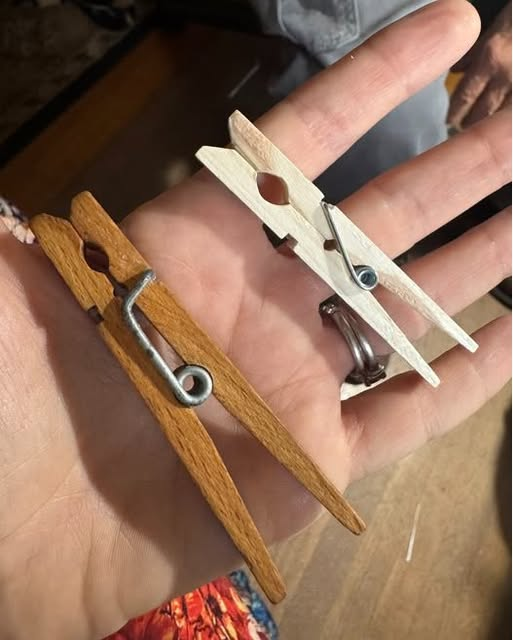
In one hand: a clothespin from the 1960s. Solid hardwood, smooth from decades of use. It still works perfectly, some 60 years later.
In the other: a clothespin from 2025. Lighter, paler wood, brittle. The spring is thin and unstable. Marketed as “extra durable,” my dad just raised an eyebrow.
At first glance, it’s just two clothespins. But they tell a bigger story — the shift from durability to disposability, from craftsmanship to cost-cutting, from stewardship to constant consumption. This is planned obsolescence in action.
Products are designed to fail so we must keep buying. Slowly, subtly, they break. Frayed wires, cracked hinges, brittle springs. Not because we want more, but because the old was never built to last.
The costs are everywhere. Landfills overflow. Wallets empty. And maybe most quietly, our spirits grow accustomed to impermanence, to the idea that nothing is meant to endure.
What if this philosophy extends beyond objects? What if it shapes how we treat relationships, communities, homes, even the Earth — as temporary, replaceable, disposable?
It doesn’t have to be this way. That 1960s clothespin reminds us another path is possible. That we once made things to last, and we can again. That quality, care, and intention matter. That we can design for repair, for continuity, for meaning.
What Being Broke Taught Me:
Poor people pay twice.
- Cheap shoes that break quickly
- Cheap cars that constantly need expensive repairs
- Cheap food that leads to health problems down the road
You can't afford to buy in bulk.
You can't wait for sales or better deals.
Poverty charges interest on everything.
Being poor is expensive.
Your dementia diagnosis may not be accurate. Some other memory loss reasons include:
- Hypothyroidism
- Vitamin B12 deficiency (not enough meat)
- Sleep Apnea
- Alcohol issues
- Medication side effects
Rule these out before accepting dementia. Some are reversible.