新刊2026/5/5/
最新版中谷式耳介反応図と治療
📷https://t.co/ldSPo0kEGG
Latest Edition Nakaya-Style Auricular Reaction Map and Treatment
📷https://t.co/BLk2u2F0qy
生命エネルギー方程式
📷https://t.co/riwv6GRyA5
NAIRM方式・神経反射治療手順解説編
📷https://t.co/h6Nr4UckJm
中谷式耳介画像鍼治療・理論と実技
📷https://t.co/915NmF2s1s
子供は皮膚で聞いている
📷https://t.co/K2jZBittoE
The Life Energy Equation
📷https://t.co/Krye1NBEQt
Practical Guide to NAIRM Neuro-Reflex Regulation Therapy
📷https://t.co/g0P8Z0Yu5E
Nakaya-Style Auricular Image Acupuncture Theory and Practice
📷https://t.co/iXjLhtqcPv
Children Listen with Their Skin
📷https://t.co/uYfHPBs1dI
Why Treat the Leg When Phlegm Is in the Throat?
Cough and phlegm seem to belong only to the lungs and throat. East Asian medicine takes a wider view.
“Phlegm-fluid retention” describes fluids that are not properly transported or eliminated. Treatment therefore considers digestion and whole-body fluid regulation as well as the lungs.
A major point for this pattern is Fenglong, or ST40, located on the outer lower leg about halfway between the knee and ankle.
Rather than needling a fixed coordinate, the practitioner examines the area for hardness, tension, tenderness, and differences between the legs.
ST40 is the luo-connecting point of the Stomach channel. Traditionally, it has been used for abundant phlegm, cough, wheezing, dizziness, and heaviness of the head.
Fluid disturbance does not always appear as swelling. It may be felt as a heavy head, chest congestion, digestive discomfort, or persistent phlegm. In my clinical approach, firmness around ST40 is one possible sign within this whole-body pattern.
Sensory stimulation of the limbs can influence autonomic reflexes and distant functions, including gastrointestinal activity. This may help explain why the leg is treated for symptoms in the throat or chest.
Asthma often worsens at night, but it is a chronic inflammatory airway disease. Acupuncture must not replace prescribed inhalers or medical care.
Severe breathlessness, difficulty speaking, bluish lips, or symptoms unrelieved by rescue medication require emergency care. Blood in the sputum, high fever, or chest pain also requires medical assessment.
ST40 expresses a central principle of East Asian medicine: the body functions as one connected system.
Text: Editorial Department, Auricular Imaging Acupuncture Research Institute
Edited from a practical acupuncture lecture by Satoshi Nakaya.
"What is Qi? What is Consciousness?"
On September 5–6, at the Annual Congress of the Japan Society of Traditional Acupuncture and Moxibustion held at Ritsumeikan University in Osaka, I had the privilege of moderating the Research Committee Symposium, "Qi and Consciousness."
Our distinguished panelists were:
Bonshin Iguchi
Hiroshi Kashima
Shunji Koike
Each speaker approached the topic from a different perspective, creating a discussion filled with insight, humor, and genuine dialogue. We were grateful that the venue was nearly full, and I sincerely thank everyone who attended.
I would especially like to express my deepest appreciation to our three panelists. Their willingness to speak openly, honestly, and without pretense made the symposium far richer than I had imagined.
Interestingly, I had prepared detailed slides and a complete interview script in advance. However, during an informal discussion with the speakers about an hour before the session, the conversation became so engaging that I decided to abandon the prepared script entirely.
Instead, we simply continued that conversation on stage.
As a result, the audience experienced not a rehearsed panel discussion, but a genuine exchange of ideas. I believe this allowed us to hear the authentic voices and thoughts of each speaker.
The mission of the Research Committee is not to reach a single conclusion about Qi or consciousness.
Rather, we hope to preserve the diverse perspectives of people living today and create an archive that future generations can learn from.
This symposium was only the first step.
In the future, I hope to continue interviewing people from many different fields—not only acupuncture, but also medicine, religion, education, science, and beyond—to record how they understand Qi and consciousness in our time.
If there is someone whose thoughts you believe should be included in this project, I would be delighted to hear your recommendation.
And perhaps one day, I may ask some of you to become part of this growing archive yourselves.
Satoshi Nakaya
Chair, Research Committee
Japan Society of Traditional Acupuncture and Moxibustion
I have continued to reflect on The Life Energy Equation since its publication. This time, I would like to take my current thinking one step further and clarify the meaning of C and C² in the equation E = MC².
Even after completing The Life Energy Equation, I have continued to consider the fundamental questions: What is life? What is consciousness? And how are the body and consciousness connected?
In the book, I expressed the “activated energy” available to a living organism as:
E = MC²
E represents activated energy available for biological activity.
M represents the material body (Matter).
C represents Consciousness.
I have continued to examine what C represents and why it is squared. This does not reject the original theory, but further clarifies its meaning.
I now consider C not simply as “consciousness,” but as a variable representing the degree of conscious and informational integration within a living system.
C² represents nonlinear amplification: such integration may influence the body not through a simple proportional relationship, but through interactions across multiple physiological systems.
This leads to an important distinction.
Consciousness itself does not create energy. The body already contains physical energy in forms such as chemical energy, electrochemical gradients, and heat.
Rather, consciousness may integrate bodily information and organize and direct existing energy so that it becomes available for biological activity.
Therefore, C alone cannot produce E. The material body M is indispensable. At the same time, M alone does not explain the integrated activity of a living organism.
E = MC² expresses this interaction between the material body and consciousness, through which energy becomes functionally available to the living organism.
I will continue to develop these ideas as supplementary reflections on The Life Energy Equation.
The Life Energy Equation
https://t.co/Krye1NBEQt
A theoretical section of NAIRM Method of Neuro-Reflex Therapy: Treatment Procedures has been revised.
Publication of a book does not mean that research has come to an end. As clinical practice continues and our understanding develops, I believe that concepts that can be explained more clearly should be revised and documented accordingly.
This update focuses on two areas.
The first is the theoretical basis of FTA (Fine Tapping Acupuncture).
The section has been reorganized around a clinical observation that is particularly important within the NAIRM Method: sensitivity to subsequent therapeutic stimulation changes after FTA.
One of the clearest examples can be observed with pedestal moxibustion. Even when approximately the same thermal conditions are used, patients often perceive the heat much more strongly after FTA. Even those who are accustomed to relatively high-temperature moxibustion may experience comparatively low-temperature pedestal moxa as extremely hot following FTA.
This clinical phenomenon is reconsidered in relation to current neurophysiological knowledge concerning TRP channels, sensory receptor systems, and neural sensitization. The revision also clarifies why FTA is positioned at the beginning of the NAIRM treatment sequence.
The second revision concerns the integration of segmental and systemic reflexes.
Stimulation of the back utilizes segmental reflexes mediated primarily through the spinal cord, while auricular and other forms of stimulation can engage broader systemic reflexes involving the brainstem. By applying these mechanisms sequentially, the NAIRM Method develops neural reflex regulation from the local and segmental level toward systemic regulation.
To make these revisions available to readers who have already purchased the book, the revised sections are being released free of charge as the September 2026 Revised Supplement.
September 2026 — Revision of the Theoretical Basis of FTA
September 2026 — Addition of the Integrated Theory of Segmental and Systemic Reflexes
The PDF can be downloaded free of charge below.
NAIRM Method of Neuro-Reflex Therapy_September 2026 Revised Supplement.pdf
https://t.co/gHibOaTumC
Editorial Department
Nakaya-Style Auricular Imaging Acupuncture Research Institute
Does the Ear Really Represent an Upside-Down Fetus?
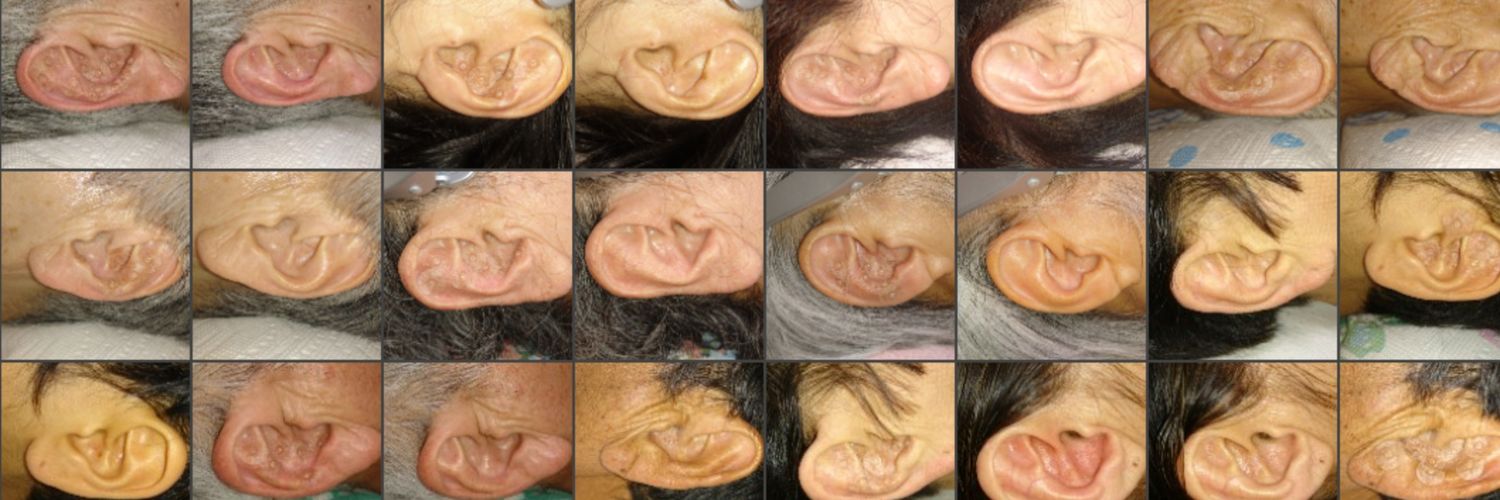
The auricle can show redness, changes in color, and visible blood vessels in association with physical symptoms.
Through years of clinical observation, I found that these reactions did not appear randomly. I initially described three patterns: the Auricular Conception Vessel Line, the Auricular Governing Vessel Line, and the Inflammation Line.
Yet one question remained.
The locations shown on conventional auricular maps did not always match the reactions visible in actual patients.
Traditional maps commonly place an upside-down fetus on the ear, with the head at the earlobe and the legs above.
I therefore set this model aside and reexamined more than 11,000 auricular photographs, comparing each image with the patient’s symptoms.
A different arrangement emerged.
The upper ear appeared to correspond to the head rather than the legs. Reactions associated with the face, neck, trunk, pelvis, and lower limbs followed a consistent order that was not inverted.
When represented as a human figure, the arrangement resembled a person sitting with the knees drawn toward the body.
This became the new Nakaya Auricular Map.
The size of each region was also unequal. Areas corresponding to body parts with frequent and conscious sensory use appeared larger, while less consciously perceived regions appeared smaller.
This resembles Penfield’s sensory homunculus.
I therefore propose that auricular reactions may not be a simple anatomical miniature. They may reflect a sensory map of the skin and mucous membranes represented within the nervous system.
This is a clinical hypothesis derived from image–symptom comparisons, not an established medical map.
It must be tested through continued observation, documentation, and independent verification.
The new map was not created by forcing theory onto the ear.
It emerged by reading, one image at a time, what patients’ bodies had already drawn there.
Text: Editorial Department, Auricular Imaging Acupuncture Research Institute
Edited from The Latest Nakaya Auricular Reaction Map and Treatment by Satoshi Nakaya.
Latest Edition
Nakaya-Style Auricular Reaction Map and Treatment
https://t.co/BLk2u2F0qy
Why Do We Touch Our Temples When We Have a Headache?
When the head hurts, people often press or rub the temples without thinking.
This area contains an acupuncture point called Taiyang.
Taiyang is located in a small depression behind the midpoint between the outer end of the eyebrow and the outer corner of the eye. Beneath it lies the temporalis muscle, which can become tense through stress, prolonged screen use, poor sleep, or unconscious jaw clenching.
Taiyang has traditionally been used for headaches, eye discomfort, facial pain, toothache, and trigeminal neuralgia.
I do not view it simply as a point for suppressing pain.
In NAIRM-style neuro-reflex therapy, Taiyang is also regarded as a point through which accumulated tension and heat in the head may be released.
Traditional East Asian medicine describes pain with the principle:
“When flow is obstructed, pain arises.”
Treatment therefore does not focus only on the painful area. The pulse, abdomen, neck, back, limbs, sleep, movement, and general circulation must also be considered.
One acupuncture session cannot completely change a body that remains under stress throughout the rest of the week. Improvement may require appropriate treatment frequency, time, sleep, light exercise, and changes in daily habits.
However, not every headache is caused by muscle tension or “accumulated heat.”
A sudden, extremely severe headache, weakness, difficulty speaking, impaired consciousness, or repeated violent vomiting requires immediate emergency assessment.
Pain behind the eye with sudden vision loss, new facial paralysis, or repeated electric-shock-like facial pain also requires medical evaluation before acupuncture treatment.
Safe acupuncture begins by recognizing what must not be treated as an ordinary headache.
When Taiyang is touched gently, tenderness, hardness, or a difference between the two sides may be felt.
That small reaction may be a signal that not only the head, but the entire body, needs rest and restored circulation.
Text: Editorial Department, Auricular Imaging Acupuncture Research Institute
Edited from a practical acupuncture lecture by Satoshi Nakaya.
Practical Guide to NAIRM
Neuro-Reflex Regulation Therapy
https://t.co/g0P8Z0Yu5E
Social Distance May Be Shaped Through the Skin
Knowing when to approach another person and when to step back is not learned through manners alone.
Its foundation may begin with how we were touched during early life.
Animal studies suggest that reduced maternal contact can affect later stress responses and social behavior. In human infants, safe and appropriate touch is associated with emotional security, physiological regulation, and social development.
This does not mean that more touch is always better.
Touch must be welcome, respectful, and safe. Children also learn personal boundaries when adults recognize when not to touch them.
In this sense, social distance may literally develop through the sense of touch.
I believe the skin plays a central role in acupuncture.
The skin is not merely a covering. It is the body’s largest sensory organ, constantly receiving information about pressure, temperature, pain, vibration, and human contact.
Shonishin, or Japanese pediatric acupuncture, applies very gentle stimulation to the skin, often without inserting a needle.
Some restless children become calmer after treatment. Changes may also appear in appetite, bowel movements, sleep, and vitality.
The stimulation does not remain at the skin. Sensory information travels to the nervous system and may influence autonomic regulation throughout the body.
Touch remains important in adulthood. A large 2024 meta-analysis found that touch-based interventions were associated with reduced pain, anxiety, and feelings of depression in adults, as well as improved weight gain in newborns.
This does not mean that touch alone cures illness. It means that safe touch is one of the fundamental ways human beings regulate body and mind.
To touch someone with care is also to communicate without words:
“You are safe here.”
“Your body is being treated with respect.”
The skin may still hold possibilities we have only begun to understand.
Text: Editorial Department, Auricular Imaging Acupuncture Research Institute
Edited from Children Listen Through Their Skin by Satoshi Nakaya.
Children Listen with Their Skin
https://t.co/uYfHPBs1dI
Memory Continues to Grow After Learning Ends
We tend to think that learning is determined during study or practice.
However, a mouse study from Tohoku University suggests that stimulation received after training may influence how well learning is retained days later.
The researchers electrically stimulated the left cervical vagus nerve immediately after cerebellum-dependent motor training.
There was little difference in performance on the training day. Yet the stimulated mice performed better on Day 2 and Day 5.
This suggests that vagus nerve stimulation may have affected memory consolidation rather than temporarily improving performance.
The researchers also observed changes in blood volume near the cerebellar flocculus. A single stimulation first decreased and then increased local blood volume. Repeated stimulation produced rhythmic vascular oscillations.
Mice with larger oscillations tended to perform better on Day 5.
Peripheral nerve stimulation may therefore do more than transmit neural signals. By changing vascular movement, it may alter the supply of oxygen and nutrients and the removal of metabolic products, creating an environment that supports neural plasticity.
This study does not prove that vascular oscillations caused better learning. Nor did it examine acupuncture or auricular stimulation. The vagus nerve was stimulated directly in the neck of mice.
Still, it offers an important clue: information traveling from the body may change not only neural activity, but also the vascular and metabolic environment in which the brain forms memories.
The brain does not simply command the body. The body may also help create the conditions in which the brain learns.
Text: Editorial Department, Auricular Imaging Acupuncture Research Institute
Edited and reconstructed from a Tohoku University study through the research perspective of Satoshi Nakaya.
Source:
https://t.co/MbbCnwoWHT




[Global Initiative for Asthma](https://t.co/QlUGV4IQzb)
耳介画像鍼治療研究所・風の子堂鍼灸院
https://t.co/BGmBVPnp4O
耳介画像鍼・練灸治療研究会HP
https://t.co/Fc49X5i9Rg](https://pbs.twimg.com/media/HR0O2dNa0AAbXsw.jpg)


耳介画像鍼治療研究所・風の子堂鍼灸院
https://t.co/BGmBVPnp4O
耳介画像鍼・練灸治療研究会HP
https://t.co/Fc49X5i9Rg](https://pbs.twimg.com/media/HQxiEyUbEAAGuKn.jpg)

[触覚介入の心身への効果を検討した2024年のメタ分析](https://t.co/lMQ4cnRp15)
[厚生労働省「あはき・柔整広告ガイドライン」](https://t.co/qFxUTEe49k)
子供は皮膚で聞いている
https://t.co/K2jZBittoE
Children Listen with Their Skin
https://t.co/uYfHPBs1dI](https://pbs.twimg.com/media/HQsgN-AaEAA9haB.jpg)