Ignatius, in his letter to Polycarp (c. 108–117 AD) gives tremendous advice.
“I entreat you, by the grace with which you are clothed, to press forward in your course, and to exhort all that they may be saved. Maintain your position with all care, both in the flesh and spirit. Have a regard to preserve unity, that which nothing is better. Bear with all, even as the Lord does with you. Support all in love, as also you do. Give yourself to prayer without ceasing. Implore additional understanding to what you already have. Be watchful, possessing a sleepless spirit. Speak to every man separately, as God enables you. Bear the infirmities of all, as being a perfect athlete: where the labour is great, the gain is all the more.”
“Please Him under whom you fight, and from whom you receive your wages. Let none of you be
found a deserter. Let your baptism endure as your arms; your faith as your helmet; your love as your
spear; your patience as a complete panoply.”
Pajamas at the grocery store or the airport isn’t harmless comfort.
Jordan Peterson calls it anti-social. Clothes aren’t primarily for you, they’re a signal of respect toward everyone else in the shared space. His father, a teacher in the 1960s and 70s, wore a suit every day for that exact reason: to show respect to his students. Peterson did the same as a young professor and never had a single behavioral problem in class. Formality drew a line that students understood.
When a culture discards that small daily signal, the loss is bigger than most people notice.
You assume the early Church answered heresy by winning Bible debates. It didn't. It answered heresy the way a Roman court answers a thief: by refusing to hear the case at all. Around 200 AD, Tertullian built that argument. A thread.
Umberto Eco, who owned 50,000 books, had this to say about home libraries: "It is foolish to think that you have to read all the books you buy, as it is foolish to criticize those who buy more books than they will ever be able to read. It would be like saying that you should use all the cutlery or glasses or screwdrivers or drill bits you bought before buying new ones.
There are some things in life that we need to always have in plenty, even if we will only use a small portion. If, for example, we consider books as medicine, we understand that it is good to have many at home rather than a few: when you want to feel better, then you go to the 'medicine closet' and choose a book. Not a random one, but the right book for that moment. That's why you should always have a nutrition choice!
Those who buy only one book, read only that one and then get rid of it - they simply apply the consumer mentality to books- that is, they consider them a consumer product, a good. Those who love books know that a book is anything but a commodity."
Dear Catholics,
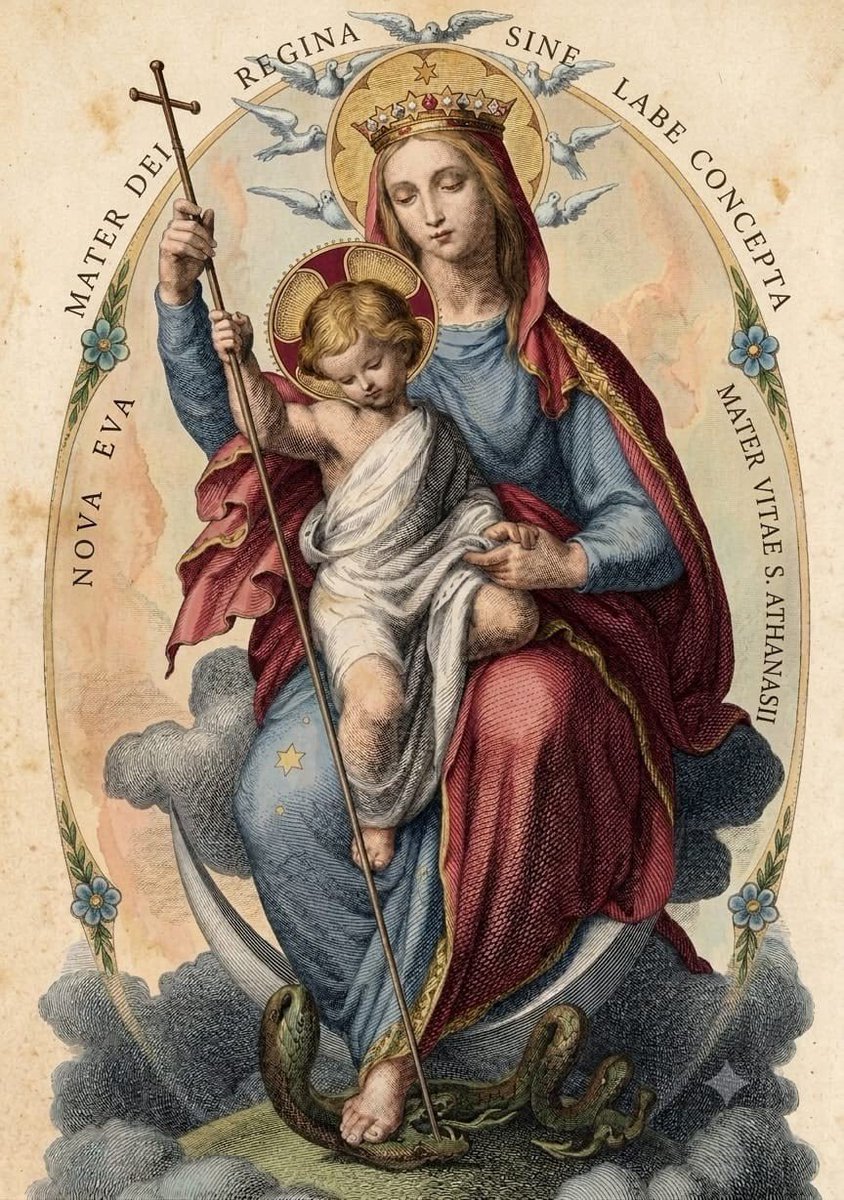
Tomorrow is the Solemnity of the Assumption of the Blessed Virgin Mary.
It’s a Holy Day of Obligation, meaning we are mandated to attend Mass.
Pls do well to attend Mass tomorrow🙏🏾
Now, retweet for another Catholic🤗
Jimmy Stewart was already a Hollywood star when he became a B-24 bomber pilot during WW II, flew 20 combat missions over Europe, and eventually rose to brigadier general in the Air Force Reserve. He returned to Hollywood and made It's a Wonderful Life and other classics. He was married to his wife Gloria for 45 years, until her death. Hollywood once produced a very different kind of leading man.
Teddy Roosevelt on his reading habits.
“Therefore it would be quite useless for me to try to explain why I read certain books. As to how and when, my answers must be only less vague.
I almost always read a good deal in the evening; and if the rest of the evening is occupied I can at least get half an hour before going to bed. But all kinds of odd moments turn up during even a busy day, in which it is possible to enjoy a book; and then there are rainy afternoons in the country in autumn, and stormy days in winter, when one's work outdoors is finished and after wet clothes have been changed for dry, the rocking chair in front of the open wood fire simply demands an accompanying book.”
“To me success has meant just two things: a good life for my family, and the money to buy books and continue the education of this wandering man.”
- Louis L’Amour
Read to your children. Theodore Roosevelt read to his.
“If their mother was absent, I would try to act as vice-mother—a poor sub-stitute, I fear-superintending the supper and reading aloud afterwards. The children did not wish me to read the books they desired their mother to read. and I usually took some such books as Hereward the Wake, or Guy Mannering, or The Last of the Mohicans or else some story about a man-eating tiger, or a man-eating lion, from one of the hunting books in my library.”
“Read books. Travel when you can. Learn how to cook one meal exceptionally well. Sit in old bars and talk to strangers. Wear your best jacket to dinner. Appreciate good wine, good music, and good conversation. Do the right thing, even when no one is watching. Set the example for younger men who are watching you. Call your parents. Take long walks. Leave your phone behind sometimes. Become the kind of man people feel better after being around. Life is short, so live it well.”
-J.B. Lloyd
There is a medieval Catholic schoolbook that makes the “Church kept everyone stupid” story very hard to repeat.
The modern assumption is familiar:
Medieval Catholics feared learning. Monks hid knowledge. Faith meant obedience without thought. Then modernity arrived and rescued the mind.
Now put that assumption next to Hugh of Saint Victor’s Didascalicon.
It is not a manual for narrowing the intellect. It is a manual for training it.
Hugh does not treat study as a threat to God. He treats study as a disciplined way of moving through reality: language, reading, memory, argument, the liberal arts, practical knowledge, the created world, Scripture, and contemplation.
That is the part the cartoon cannot explain.
A Catholic teacher in the medieval world is not saying, “Do not ask.” He is saying: learn how to read, how to order knowledge, how to discipline attention, how to climb from visible things toward invisible truth.
Read that again.
The mind was not being told to shut down. It was being taught how to become sane.
The conflict here is not “Catholicism versus intelligence.” The conflict is between two ideas of intelligence.
The modern myth treats intelligence as emancipation from inherited order.
Hugh treats intelligence as apprenticeship to reality.
That is why medieval Catholic education could produce grammar, logic, commentary, disputation, law, philosophy, theology, and the habits that later universities inherited. Not because Catholics secretly stopped being Catholic when they studied, but because Catholicism gave them a reason to believe the world was intelligible.
If creation is ordered, it can be studied.
If the Word made all things, reason is not rebellion.
If truth is one, learning does not need to be afraid of theology.
Hugh of Saint Victor is dangerous to the “Dark Ages” myth because he is not an exception to medieval Catholicism.
He is an example of it.
The medieval Catholic teacher did not fear the intellect.
He feared an intellect too undisciplined to become wisdom.
Catholic Fun Fact: Sir Alec Guinness was a devout Roman Catholic, having formally converted to the faith at age 42 in 1956. Though he was raised with Anglican influences and dabbled in atheism during his youth, two profound personal milestones ultimately prompted his religious conversion.
The Catalyst: Playing Father Brown (1954) While shooting the movie The Detective (also known as Father Brown) in France, Guinness dressed in the traditional cassock of a Catholic priest. As he walked down a local street, a young boy mistook him for a real priest, ran up, trustingly grabbed his hand, and walked with him while chatting happily. Guinness noted that this striking display of confidence shattered his deeply ingrained prejudices against the Catholic Church, realizing it could not be as "scheming or creepy" as he had been taught.
The Turning Point: His Son's Miracle
Shortly after his filming experience, his young son, Matthew, contracted polio and was paralyzed, facing a near-fatal prognosis. Desperate for help, Guinness began praying at a local Catholic church and struck a "negative bargain" with God: if his son was healed, he promised he would never stand in the way of Matthew converting to Catholicism. Matthew recovered completely.
Guinness honored his promise by enrolling Matthew in a Jesuit academy, and began aggressively studying theology with a priest. In 1956 Alec Guinness was officially received into the Roman Catholic Church. In 1957 his wife, Merula Silvia Salaman, converted to Catholicism as well, followed shortly by their son.
Guinness remained a committed, practicing Traditionalist Catholic, often associating with the Latin Mass Society, until his death in 2000.
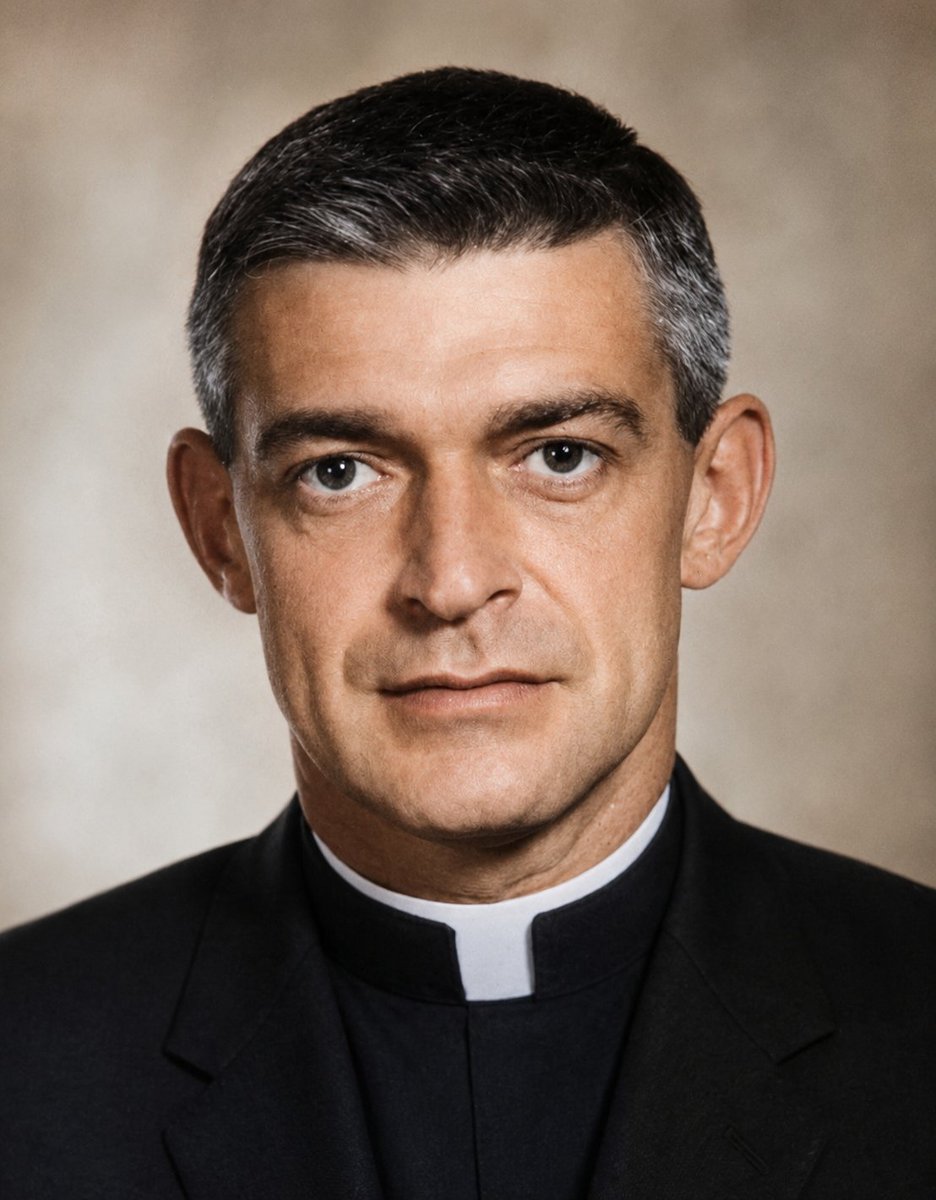
Vincent Capodanno did not carry a rifle. He carried a Bible and a box of St. Christopher medals. He was a Catholic priest, a Maryknoll missionary from Staten Island, and when he joined the Navy as a chaplain in 1965 he asked for the one assignment most men would have run from. He wanted to be with the Marines in the field. They called men like him the Grunt Padre, and he earned it. He lived the way his Marines lived, ate what they ate, slept in the same mud, and spent his hours hearing confessions, writing letters home for scared kids, and sitting with the grieving and the dying.
On September 4, 1967, during Operation Swift in the Que Son Valley, the same mountains where Marines would still be fighting years later, a company of the 5th Marines was hit by a massive North Vietnamese force, around 2,500 men. When Father Capodanno heard that a platoon was about to be overrun, he did not stay in any safe place, because there was no safe place and he would not have gone to it anyway. He ran across open ground under fire to reach the Marines who were being cut apart.
Then he just moved through the battle doing his work. He went from man to man, giving last rites to the dying and pulling the wounded to cover, praying over kids as they bled out, telling terrified Marines that God was with them right there in that field. A mortar round shredded his arms and legs and tore off part of his right hand. He refused medical aid and kept going, one hand mangled, still crawling to the next wounded man.
He saw a wounded corpsman lying out in the open, close to an enemy machine gun, and went to him. As Father Capodanno knelt over that Marine to comfort him and give him last rites, the machine gun found them both. The priest was shot more than 27 times. He died there in the field with his Marines, doing exactly what he had come to do.
He received the Medal of Honor in 1969. The Catholic Church later opened his cause for sainthood, and he now carries the title Servant of God. To the men of the 5th Marines he was already something close to a saint long before any of that, the padre who ran toward the fire empty handed so that no man in that valley would have to die alone.
We’re only 100 years out from the building of the edifices that tour groups now enter and marvel at. Who will continue to create beauty, if all we know is destruction and tearing down?
“The Barbarian hopes — and that is the very mark of him — that he can have his cake and eat it too. He will consume what civilization has slowly produced after generations of selection and effort but he will not be at pains to replace such goods nor indeed has he a comprehension of the virtue that has brought them into being. Discipline seems to him irrational, on which account he is for ever marvelling that civilisation should have offended him with priests and soldiers.”
- Hilaire Belloc, This and That and the Other (1912)
Fr. Ripperger: “We have to pray that priests will be brave and wear their clerics in public. When the faithful see these priests in public, even when things are bad, it brings them great consolation because they know this guy is serious about his priesthood.”