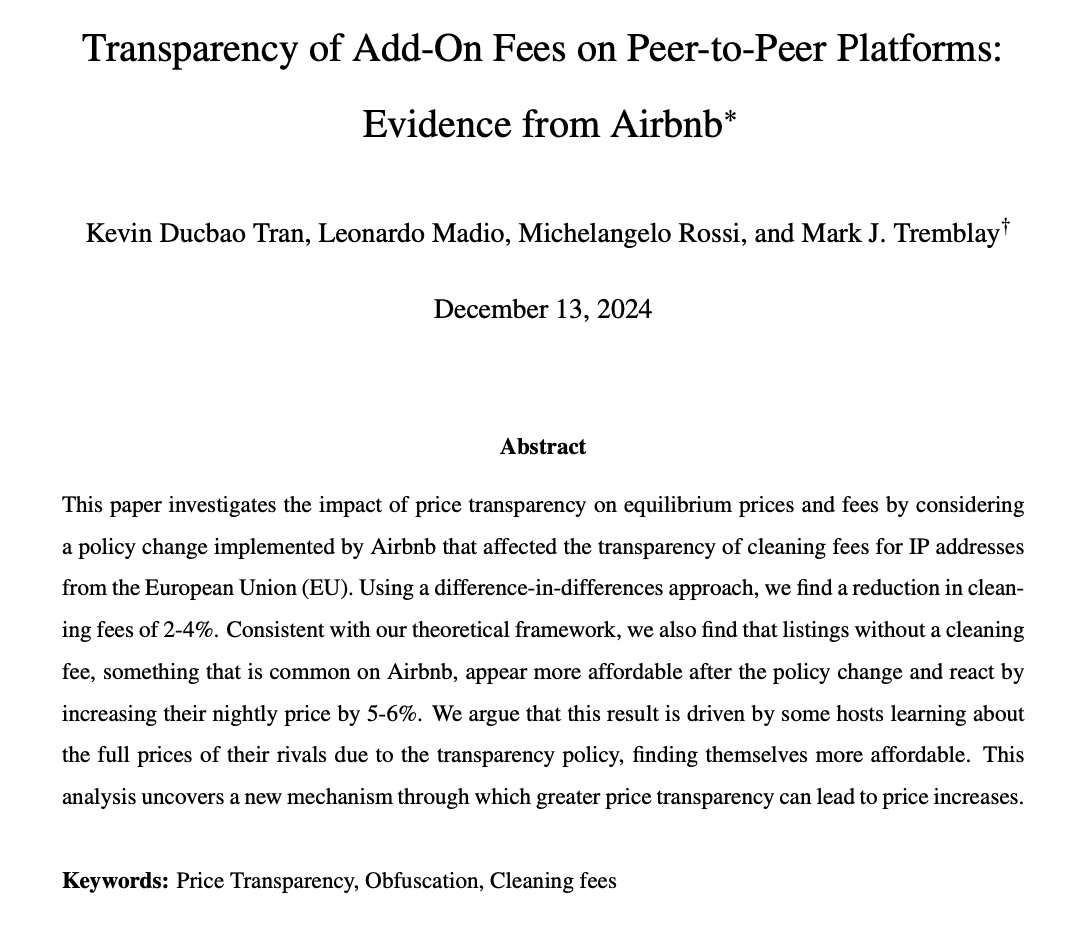
It is exciting to see the junk fee discussion expanding! I know my coauthors and I hope this research continues to grow and that our paper on Airbnb cleaning fees offers a new angle to the literature on unshrouding fees with peer-to-peer sellers https://t.co/00Bb8L6q0R
We're honoured to be 1 of 3 European destinations on the REStud Tour, organised by the Review of Economics Studies (@RevEconStudies) 🌍
On 15-16 May we welcome 7 leading new global economists to speak to our academics & explore Bristol 🎓
Read more 👉 https://t.co/mm1fvIKnJ0
International Women's Day 2025 calls for us to #AccelerateAction for gender equality 🌍
Dr Danielle Guizzo, Associate Professor in Economics Education, shares how her work is doing just that.
More 👉 https://t.co/ifvgR2G3Uh
#IWD2025#BristolUniWomen#WomeninEconomics
📺📺First time on TV 📺📺
https://t.co/c9lrhA6DoD
It was exciting to share my research on hidden fees today with @SchreiberEvan. Thanks Evan for having me on!
🚨PhD students working on digital economics: please submit your papers to the 8th doctoral workshop on the economics of digitization, in Toulouse on May 6&7. Deadline: February 14. More info: https://t.co/CmIHcEZiAA ( @mbourreau@AxelGautier1 )
La trasparenza sui costi aggiuntivi nelle piattaforme digitali riduce l’opacità dei prezzi, ma può aumentare i prezzi totali, influenzando consumatori e dinamiche di mercato. L'articolo di @leonmadio, @KDBTran, @millo_rossi e @tweetMTrem
https://t.co/XVN4ckmsEH
Greater price transparency is clearly good for consumers. However, we, @KDBTran @leonmadio @millo_rossi, show for @Airbnb cleaning fees that this is more complicated with peer suppliers whose information about competitor pricing changes with transparency:
https://t.co/PxFr9htQPL
The FTC issued rules requiring companies to display the full price of a hotel room, concert ticket or sporting event up front to customers, rather than hiding any extra charges — often called “junk fees” — until the very end of the checkout process. https://t.co/XFgtb2mZPH
@R_Thaler@nealemahoney@CassSunstein Not sure about good argument but our new WP shows that it can lead to price increases at least on peer-to-peer platforms b/c sellers are affected by price transparency, too: https://t.co/uPZsO4bQDt @leonmadio @millo_rossi @tweetMTrem
@JerryCap I agree our results suggest making fees transparent reduces inefficiencies - so probably good from total welfare perspective. Impact on consumers & Airbnb less clear. Airbnb only disclosed fees after regulatory pressure & only for EU, seems they preferred not disclosing fees.
How does price transparency affect markets? 🤔
In our new paper, we analyze Airbnb’s policy change in the EU, where cleaning fees became fully transparent. The surprising finding: transparency doesn’t always lead to lower prices. Here’s why 👇
Curious to learn more? 📖
Check out the full paper: https://t.co/uPZsO4bQDt
We uncover a fascinating mechanism linking transparency to pricing strategies in digital markets. Feedback and thoughts are welcome! 🚀
Policy implications:
Price transparency isn’t universally good or bad. While it reduces search costs and obfuscation, it can also lead to price increases in some cases. Regulation needs to consider both demand-side and supply-side effects carefully.
BÆM is back! Come and join us in beautiful Bristol for the 2nd edition of the Bristol Applied Economics Meetings:
Development Economics: May 6-7
Gender, Diversity, and Human Capital: May 8-9
Submit your paper by Feb 28. Travel support is available. https://t.co/nRFUiNDMZ6. 1/4
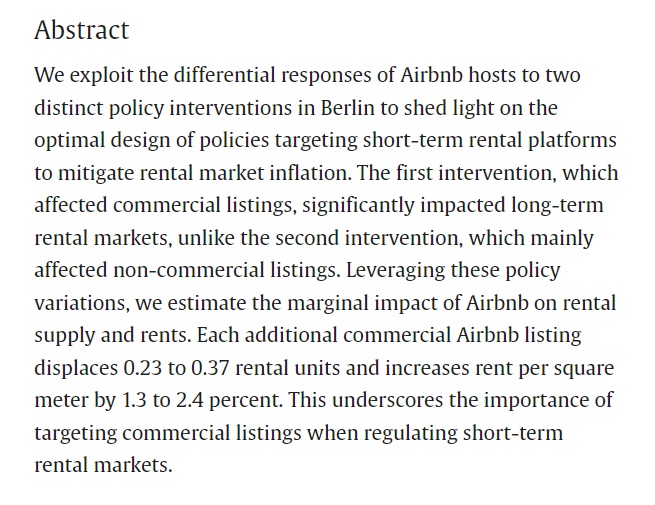
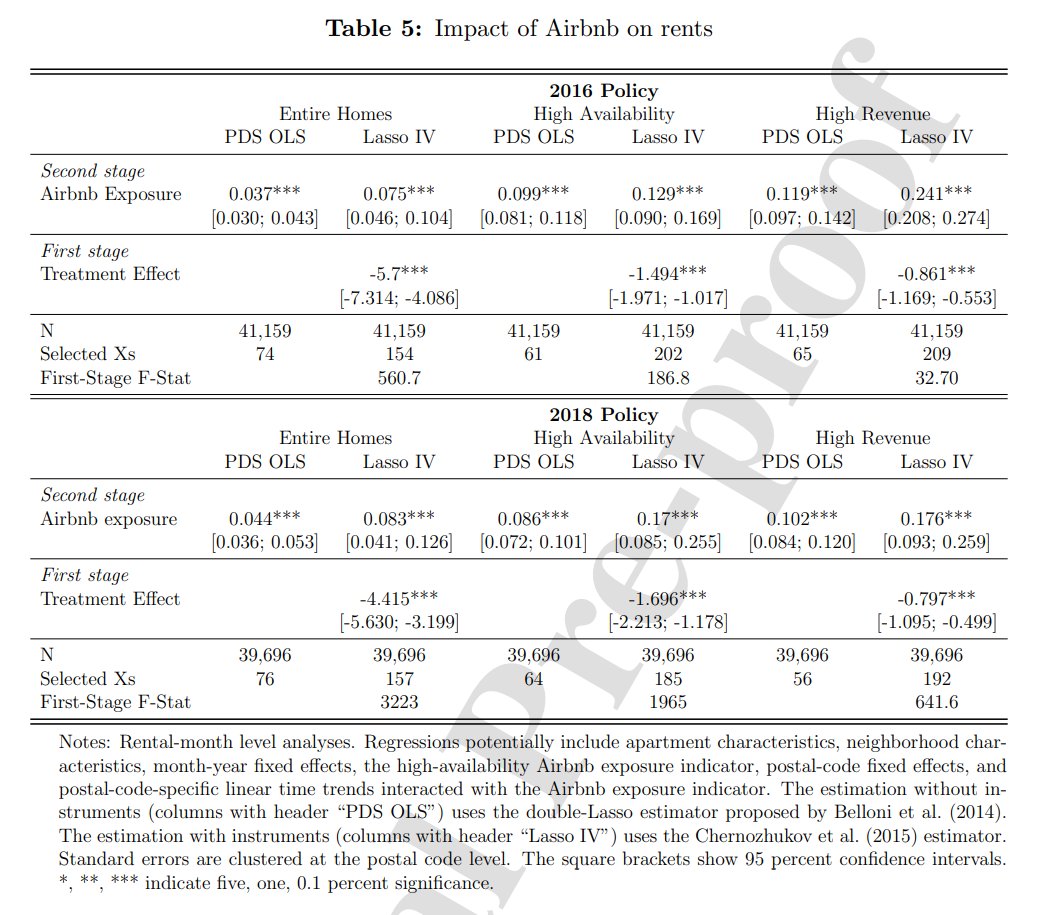
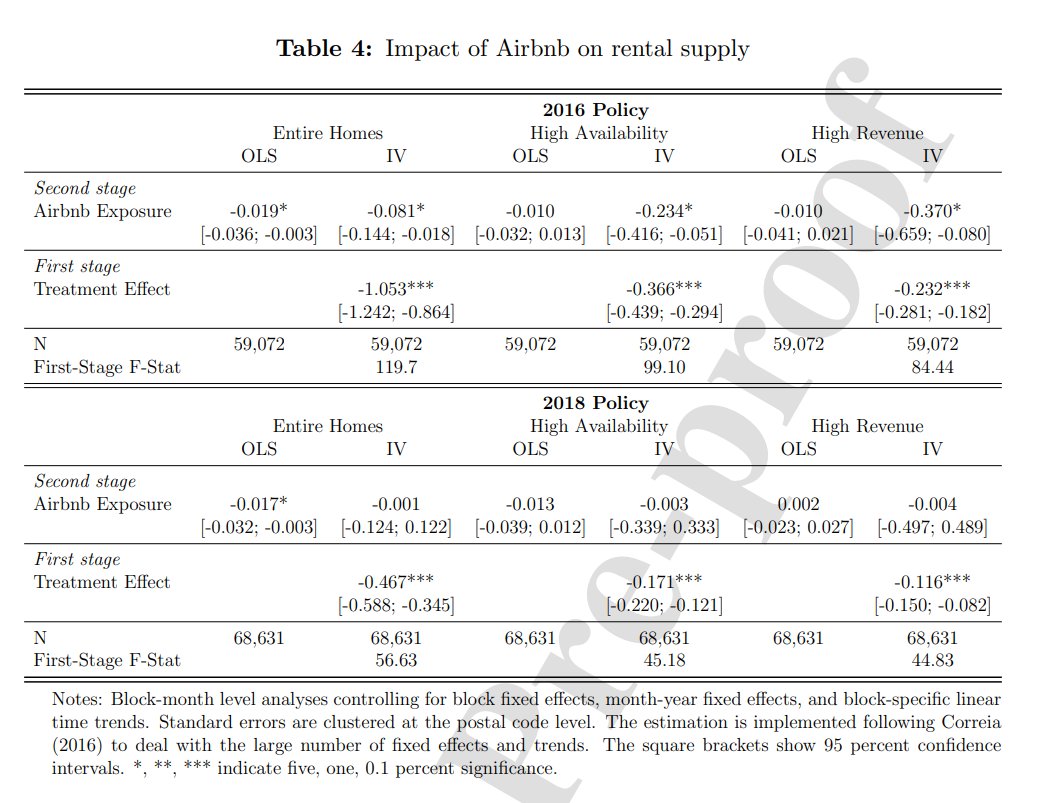
It has been a long journey that began in 2017. I am especially happy that this paper is now being published. It has been a pleasure to work with my great co-authors @KDBTran, @maxPschaefer and @ClausMichelsen. And thanks to @Ahlfeldt for the excellent editorial support! A short🧵