@radooman@silverality_ I see your point and nobody said whales and smart money are one and the same. They may need the liquidity in the short term to invest elsewhere until Keeta gets cookin. But that doesn’t make what KTA is building any less real.
“Processing time per block is generally constant at roughly 400ms per block, per account. Accounts are processed in parallel, which is an important distinction.
The biggest discrepancy between Keeta’s actual performance and what Chainspect reports is that our block times depend on when the client completes the voting process. Keeta does not use a mempool. If a client generates a block, receives temporary votes, and then waits several minutes before converting those votes into permanent votes (while still within the 5-minute expiration window), Chainspect may record that as a slower transaction. In reality, the delay was client-side timing rather than network processing time, so it is not an accurate reflection of transaction performance.
It’s also important to understand that a significant portion of the ~400ms processing time is attributable to network latency rather than computation. The client must transmit the block to representatives, receive votes, and complete the voting process. As a result, physical distance between the client and representative nodes can impact observed processing times. A client located farther from the participating nodes will naturally experience higher round-trip network latency than a client located nearby. This is a characteristic of distributed systems and is not indicative of slower node execution.
It’s also worth noting that the current ~400ms processing time is not a hard technical limit. Internal testing indicates we could likely reduce processing time by roughly 30% by rewriting node vote validation from TypeScript to Rust. However, we have intentionally chosen not to pursue that optimization. We believe the marginal performance gain is outweighed by the benefits of maintaining the reference node implementation in a language that is widely understood and accessible to most engineers. Our priority is making the network easier to understand, audit, and contribute to, rather than optimizing for a relatively small reduction in already low processing latency.” -Ty Schenk
@KeetaNetwork is the only chain built to handle agentic payments at the scale of billions of agents.
There is no second best.
Sub-400ms settlement.
Near-zero transaction costs.
No gimmicks. No workarounds. No L2 patchwork. No prepayments. No payment channels.
Just real settlement at global scale.
keeta:native
A few ways.. and as Keeta keeps building, some of these will become more enticing.
Gas and Transaction Fees: KTA is utilized to pay for transaction and processing fees across the Keeta (KTA)ecosystem, capturing value directly from network usage and cross-chain operations.
Validator Staking & Security: Holders can stake their KTA tokens to secure the network. Stakers participate in the delegated proof-of-stake consensus to elect validators, thereby earning yield and network rewards.
Protocol Governance: KTA serves as the governance token, allowing holders to vote on protocol parameters, upgrades, and platform decisions.
Collateral for Real-World Asset (RWA) Minting
•Minting Requirements: To tokenize a physical commodity (like the Gulf oil, gold, or copper under Keeta's ASK Group joint venture), issuers may be required to lock up KTA tokens as baseline economic collateral.
•Liquidity Backing: KTA could function as a pairing asset or safety module buffer to guarantee the liquidity and stability of tokenized financial instruments on the network.
2. Native Identity Verification (KYC/AML) Gas
•Embedded Compliance: Keeta features a built-in, native identity layer (Keeta Identity) that automates global compliance workflows.
•Verification Fees: Unlike other blockchains where compliance is handled by third parties, executing on-chain KYC/AML lookups or querying zero-knowledge compliance proofs could require a direct micro-payment denominated in KTA.
3. Institutional Access Rights and Sub-Networks
•Private Sub-Net Licensing: Financial institutions looking to build isolated, regulatory-compliant private sub-networks on Keeta's core framework may need to buy and hold a set threshold of KTA tokens as a license.
•API & Developer Access: Accessing advanced cryptographic features like atomic cross-network swaps or high-throughput banking rails could require developers to hold or burn KTA tokens.
4. Canonical "Pairing" Asset on the Native DEX
•Liquidity Pool Depth: To trade seamlessly across crypto, fiat, and tokenized traditional stocks, Keeta's native DEX relies on deep liquidity.
•Routing Reserve: KTA acts as the standard base-pairing token (e.g., KTA/Digital Oil, KTA/USD). As trading volume grows on the platform, an increasing amount of KTA becomes permanently locked up in automated market maker (AMM) liquidity pools to facilitate these trades.
5. Cross-Chain Settlement & Bridge Fees
•SWIFT Interoperability: Because Keeta aims to act as a bridge replacing legacy systems like SWIFT, transferring value across disparate payment rails requires immense clearing infrastructure.
•Bridge Tolls: KTA can capture value as a cross-network "toll," where the token is utilized or burned during the process of translating and settling data between external chains and legacy banking databases.
The bear market isn't being particularly kind to most tokens right now
In these markets you have to look for the real opportunities
This week, @KeetaNetwork added support for the x402 protocol, becoming one of just 9 blockchains officially supporting it
Solana
Algorand
EVM / Base
Stellar
Aptos
Hedera
TON (TVM)
Concordium
Keeta
See https://t.co/8PP6CmoUxj for the full list of compatible chains
In the last two months, Keeta launched a partnership with the UAE Royal Family @askgroupae, launched Keeta Personal and steadily kept on building
When the market starts moving again, this will blow 🚀
ripple has 300 bank partnerships. fewer than 20 actually move XRP volume.
$KTA has a bank acquisition in progress, Visa Direct, UAE royalty as a partner through ASK group and verified 11.2m TPS by google cloud. in under 2 years.
quantity isn't the same as conversion.
market cap: $75m :)
Remember the rails I've been digging into?
$KTA has already hardwired five major banks into Zambia: ZANACO, Stanbic, UBA, FNB, and Access Bank.
If you haven't read this yet, start here: https://t.co/XMsOa10NW3
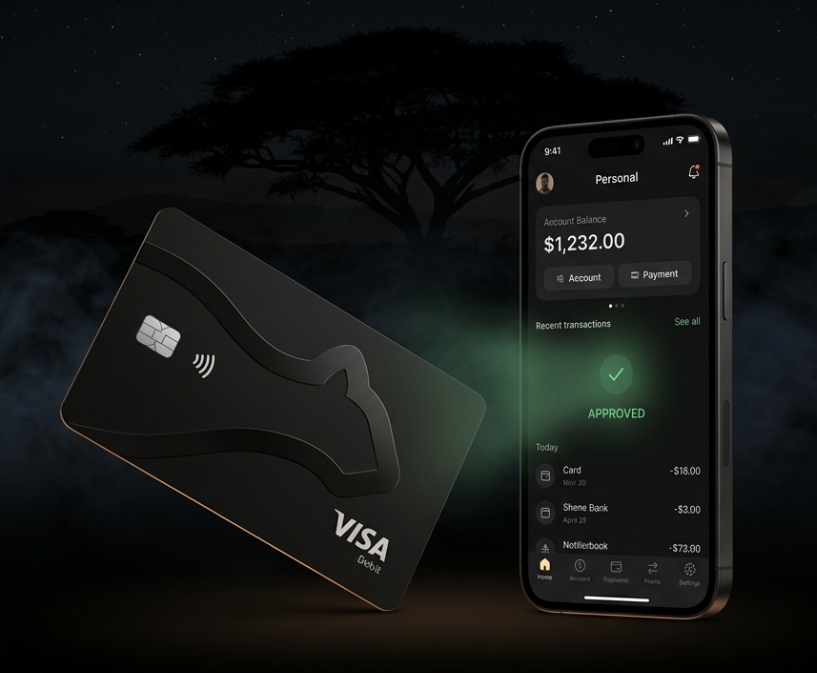
Now pair that with the iOS app coming soon, and a Keeta Visa Debit card on the way.
Right now, someone in Zambia can't even open a Revolut account, and Wise takes days to settle. The legacy infrastructure simply isn't built for them, sad but true.
Keeta fixes the access, the fees, the delays, and moves that entire financial flow on-chain.
This is just one example of what the iOS app and upcoming integrations will unleash on-chain.
Here's what the team is saying:
@gabe_schenk: "We're working toward bringing ASK Group's commodity volume on-chain. In parallel, we're finalizing terms for additional partnerships, integrations, and customers that will be announced in the future."
Act accordingly.
$KTA @KeetaNetwork #Keeta #Fintech #Crypto