Why do Southeast-Asians Disagree with The West On Russia's Invasion of Ukraine?
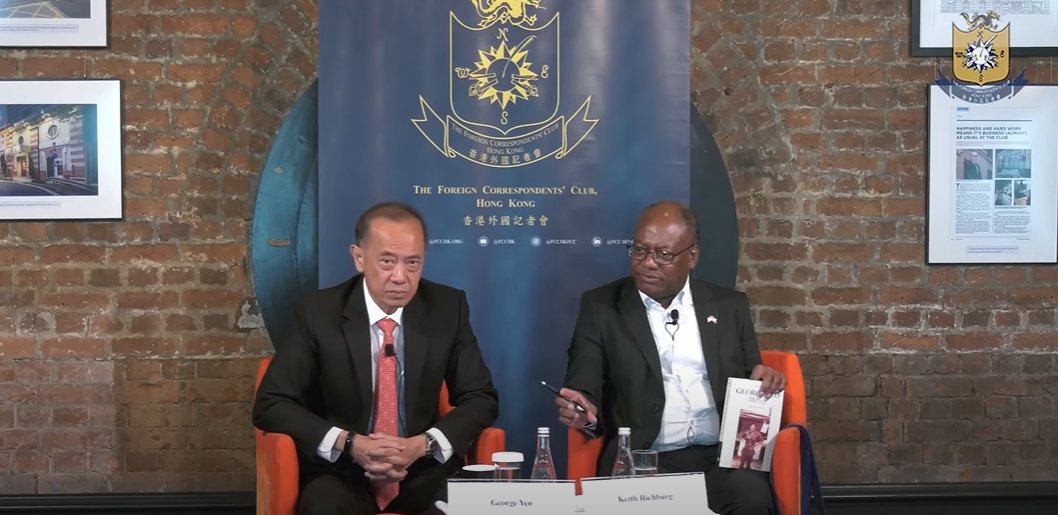
George Yeo, Singapore's Former Foreign Minister explains in greater detail,
"I must recall Kosovo, which was part of Serbia but was forcibly separated from it. Belgrade was bombed during a war that lasted about two to three months, ultimately leading to Kosovo's breakaway from Serbia.
(For context: In the Kosovo crisis, NATO intervened militarily to support Kosovo's separation from Serbia, citing humanitarian reasons and the need to protect ethnic Albanians from Serbian oppression.
This intervention was controversial because it bypassed the UN Security Council and was seen by some as violating Serbia's sovereignty.)
The saying goes, "What's sauce for the goose is sauce for the gander."
I used to sit next to Lavrov at regional meetings because Singapore and Russia are permanent neighbors. He was deeply upset by what the West did in Kosovo.
Given this context, I don't think you can argue against Russia's intervention in Ukraine purely on the basis of principle.
Now, of course, Singapore is upset. When we see a smaller country being bullied, we, being even smaller, naturally sympathize with the underdog.
However, sometimes when you see a conflict, it's important to watch the entire video, not just a snapshot. When you do, you realize that the situation is not so simple. If you want to find a solution, you need to understand the full context and not rely on a single moment in time."
By recalling Kosovo, Mr Yeo highlighted that geopolitical actions are often shaped by power dynamics and interests, rather than consistent adherence to principles.
When The West seeks support for Ukraine, they often forget that Kosovo's breakaway happened due to the same type of intervention they condemned.
This agnostic attitude is fundamentally driven by a recognition that historical context and power politics always complicate the application of universal principles.
Seriously investigate:
- what industries are they from?
- what were their growth rates and how did they grow?
- how were they initially funded, and with what capital structure?
- who started them?
- why are they still competitive?
Instead of “bla bla SG no startup”
i really hate how so many folks dont even put respect on S Rajaratnam and Dr Goh Keng Swee's name.
if u talk to all the gen 1 civil servants like i did - they would say they were all equals.
the other two men had the wherewithalls to not let ego be the enemy and let Lee lead
shouldnt we celebrate that Singpass is a free, tax-payer funded world class digital identity product ; and not some $30B unicorn?
likewise shouldnt we be glad that we arent building polymarket or kalshi-type startups out of SG?
adriel put this banger tweet out and had to obviously add my 2c
being a great startup hub is overrated
there are 100 ways to create and capture value
building startups is 1 way
serving in public service is 1 way
running an SME is 1 way
let 1000 flowers bloom!
adriel put this banger tweet out and had to obviously add my 2c
being a great startup hub is overrated
there are 100 ways to create and capture value
building startups is 1 way
serving in public service is 1 way
running an SME is 1 way
let 1000 flowers bloom!
as i paid my singapore taxes last weekend
i realized singapore will never be a great startup hub.
because everything just works too well here. it takes me sub 5 mins to file my taxes. this would have cost thousands and way more hours in the US.
ride hailing and micro mobility are capped because of great public transportation.
healthcare is so cheap you don’t even think about trying to AI compare / navigate care
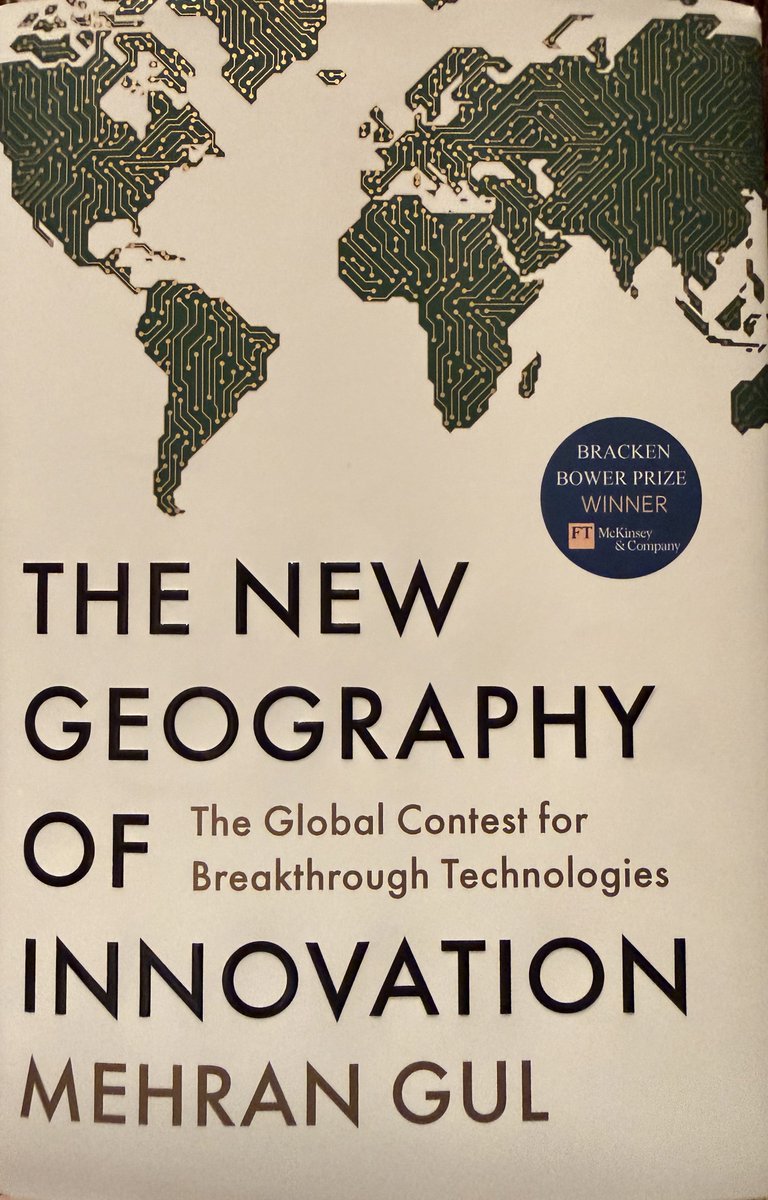
I strongly recommend this book. It is insightful, well written, full of anecdotes, and leaves the reader feeling smarter. I wish everyone in Mexico read the chapter on Germany, everyone in the US the chapters on Switzerland and Canada, and tech journalists the one on China.
“The Thinking Machine”, about Nvidia and its CEO Jensen Huang is my first read of the year.
A must read book in which the detailed story of the rise of Nvidia is described. What is takes- to remain ahead of the curve and in pursuit of excellence is very well narrated. In terms of share prices, the share prices went down by 90% twice in this journey of 4700 times in the last 25-26 years.
Xia Dynasty: No Taiwan
Shang Dynasty: No Taiwan
Zhou Dynasty: No Taiwan
Qin Dynasty: No Taiwan
Han Dynasty: No Taiwan
Three Kingdoms: No Taiwan
Jin Dynasty: No Taiwan
Sui Dynasty:No Taiwan
Tang Dynasty: No Taiwan
Song Dynasty: No Taiwan
Yuan Dynasty: No Taiwan
Ming Dynasty: No Taiwan
Qing Dynasty: Annexed Taiwan (Formosa) in 1683; lost to Japan in 1895.
Republic of China: Received Taiwan back from Japan in 1945; administration split from Mainland China (PRC) in 1949.
PRC: No.
In sum, Taiwan was under Chinese rule for a grand total of 212 years under Qing Dynasty and 4 years under ROC, which funny enough, PRC does not recognize as legitimate China.
That’s a total of 216 years.
In a history that runs more than 4,000 years.
By the way, the Qing government, the only regime that actually held Taiwan, isn’t seen in a terribly positive light by the CCP.
So no, Taiwan has NOT “belonged to China since antiquity.”
And if you make the argument that the Han originated in Taiwan, then the Rus originated in Kiev. If anything, that says China belongs to Taiwan and Russia to Ukraine. But that’s not how belonging works.
Arthur Kroeber's "China's Economy" (2nd edition) was my top read of 2025.
No other book is as packed with useful information about the Chinese economy.
Had the insane privilege of speaking with @gave_vincent - one of the sharpest analyst in the game of finance and geopolitics.
In my most recent podcast - he broke down what motivated China to go all in on tech self-sufficiency, and what he thinks of the future global order.
Thanks to @asiasquawkbox for having me on yesterday. Was nice to make my way up from our lowly 29th floor to CNBC’s 54th floor, and see how the other half lives. Undeniably, much more impressive views…
If you want to dissect how China became the manufacturing powerhouse it is today- you might want to check out my episode with Arthur Kroeber
(I am privileged to now share the same guest as @dwarkesh_sp in interviewing Arthur. This is also a signal of high quality. :))
alot of yapping about Lawrence Wong comments about Singapore, China and Japan.
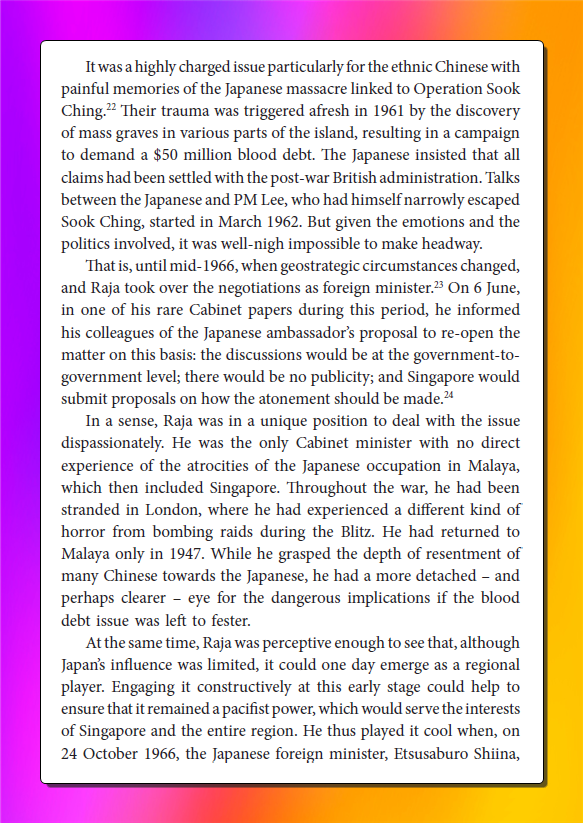
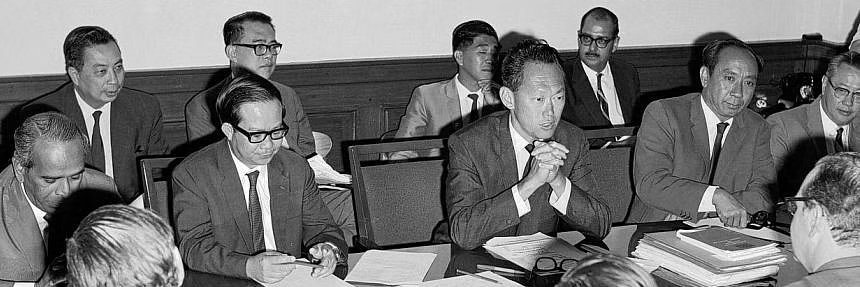
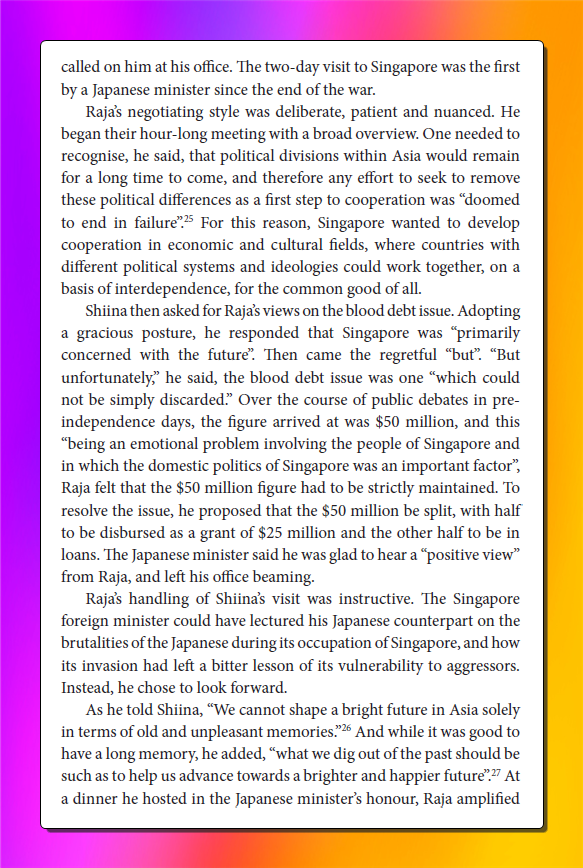
here's a history nugget on how Singapore 'forgave' Japan
Rajaratnam was the FM and was thus, point minister to start the negotiations.
Masterful bc he had no direct experience in Sook Ching and was thus more detached.
Raja locked in- he knew what was up.
"Raja was perceptive enough to see that, although Japan’s influence was limited, it could one day emerge as a regional player. Engaging it constructively at this early stage could help to ensure that it remained a pacifist power, which would serve the interests of Singapore and the entire region."
Irene Ng said it best in the book -
"Settling the sensitive outstanding issue with a former aggressor was a major diplomatic and psychological breakthrough for the small state.
It telegraphed to the wider world the kind of society it was trying to build – one that was forward-looking, resilient and modern. Successfully closing this chapter with Japan validated Raja’s conviction – at least for one brief shining moment – that the past need not bury the future."