Anthony Bourdain: “…the world is, in fact, filled with mostly good and decent people who are simply doing the best they can. Everybody, it turns out, is proud of their food (when they have it). They enjoy sharing it with others (if they can). They love their children...”
Tech companies are succeeding in making us think of life itself as inconvenient and something to be continuously escaping from, into digital padded rooms of predictive algorithms and single-tap commands: Reading is boring; talking is awkward; moving is tiring; leaving the house is daunting. These are all frictions that we can now eliminate, easily, and we do.
Once we’ve adopted a habit of escaping from something, whether it’s Uber-ing dinner five nights a week or using AI for replying to texts, the act of return, which is how we might describe no longer using a tool of escape, feels full of irritating friction. In these moments, we become exactly like toddlers in the five minutes after the iPad is taken away: The dullness and labor of embodied existence is unbearable.
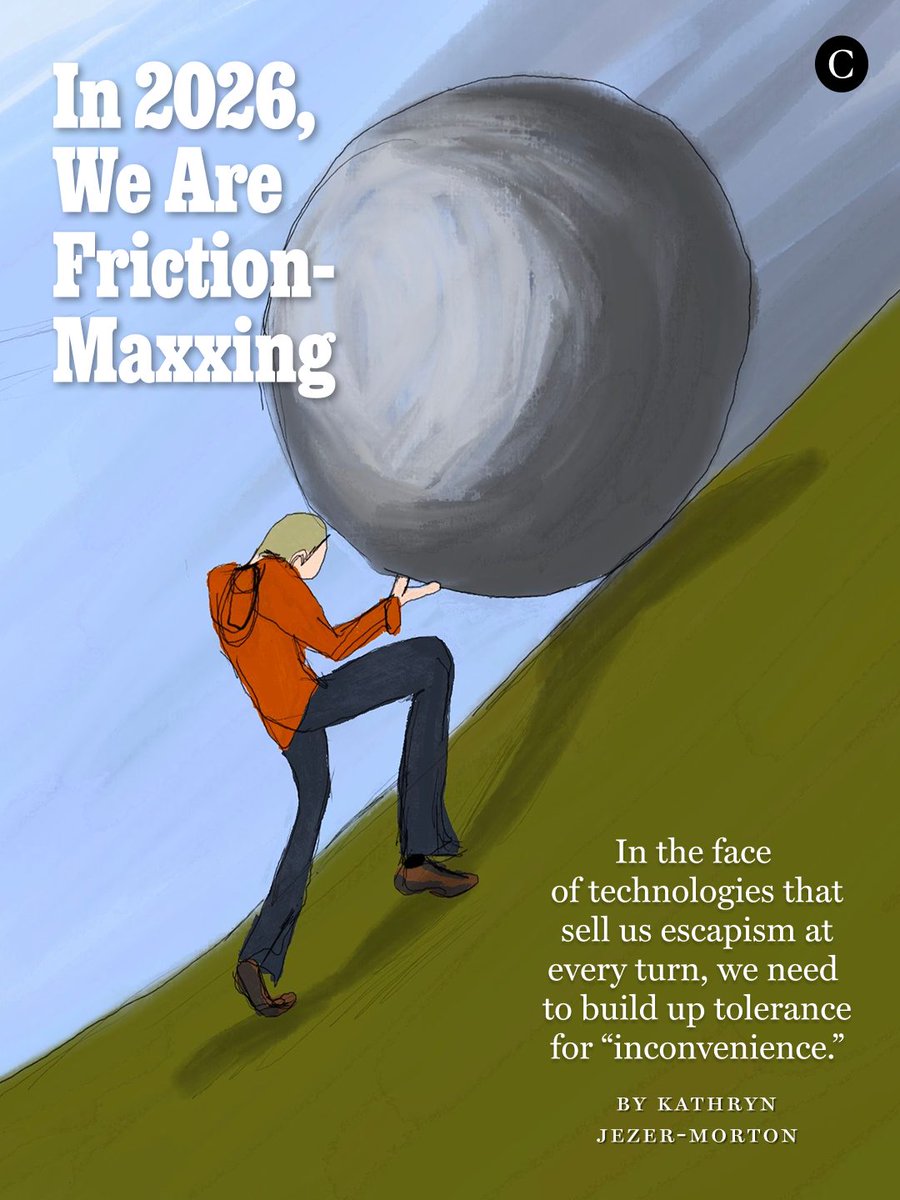
“This is why I have resolved to commit to make 2026 a year of friction-maxxing, as an individual but more importantly as a parent,” Kathryn Jezer-Morton writes.
There are some obvious places to begin your friction-maxxing journey. Stop sharing your location with your kids and your partner. Stop using ChatGPT completely. No, it does not have good ideas for meal planning. Buy a cookbook. Text your friends for advice. Go to Trader Joe’s. Invite people over to your house without cleaning it all the way up.
Friction-maxxing is not simply a matter of reducing your screen time, it’s the process of building up tolerance for “inconvenience” — and then reaching even toward enjoyment. And then, it’s modeling this tolerance, followed by enjoyment and humor, for our kids.
Read Jezer-Morton’s full column: https://t.co/AnrXfBWrIz
Netflix co-CEO Ted Sarandos said the current state of the box office is a sign that people want to "watch movies at home"
"What is the consumer trying to tell us? That they’d like to watch movies at home, thank you. The studios and the theaters are duking it out over trying to preserve this 45-day window that is completely out of step with the consumer experience of just loving a movie."
(https://t.co/RgoWwJUX70)