$RNT is the token that connects the different parts of the @rntprotocol ecosystem.
Its total supply is capped at 200M, so there won't be any additional tokens beyond that limit.
You can stake $RNT to receive xRNT.
This gives you governance rights and access to a share of protocol fees.
As more activity comes through the vaults, lending markets and liquidity pools, the token also has a bigger role to play across the ecosystem.
There are additional perks for those who lock their tokens as well.
What I find interesting is that $RNT has more than just a holding use case.
Staking gives holders a say in governance and connects them to the fees generated by the protocol.
For anyone following the RWA space, it's worth understanding how the token fits into the bigger picture.
Worth keeping an eye on how the ecosystem develops from here.
Here's how I've organized my @GeckoTerminal watchlist.
I keep two separate lists:
- one has higher liquidity pools that I check regularly
- while the other has smaller pools I'm still keeping an eye on
For the main list, I usually check volume against liquidity and whether transactions are still coming in.
The second list is more for observation.
I watch how newer pools behave over a few days before deciding whether they're worth tracking further. It changes often.
The screenshot shows the metrics I usually check, all in one place.
Makes it easier to keep track without jumping between different pages.
You can create your own watchlist in the app and share it too.
Just my personal research, not a price prediction.
What does your watchlist look like?
everyone knows the gold in a safe idea.
it is safe but it just sits there. you cannot borrow against it. you cannot put it to work
@strato_net has tokenized gold called GOLDST. it is backed by physical gold and you can borrow against it without selling it.
the first time I saw that I thought: a safe that actually works
$STRATO sits inside this system through staking and delegation. the token has a job beyond being a ticker. that is the HardFi idea in simple terms
I am still exploring the platform.
$STRATO trading is here and I am sure you will find much more there too
https://t.co/qvVkNyymDu
happy Sunday and gm/gn
been out of X the whole day today, just checked charts from time to time
day is over and after I saw Kenny’s post of him chilling with shisha, I decided to make a little bet on Spanish La Liga with @Dexsport today
wish me luck
p.s.:
ow and yes if you wana join, you can get nice new players bonuses and if you are totally addicted with huge volume DM too me
my link to register: https://t.co/ycZeIunMiu
i have seen plenty of crypto projects launch a token without giving people much reason to use it.
so i wanted to understand what $NYM actually does.
with @nym independent operators run the servers that keep the network working.
they can earn $NYM rewards and token holders can stake or delegate to support them.
Nym also says paid NymVPN subscriptions trigger $NYM buy orders through its buyback system.
i like that there is a connection between people paying for the VPN and the token itself.
but i wouldnt judge it by buybacks alone.
i would be more interested in whether NymVPN can attract enough paying users to support the network over time.
a token can have a use on paper, but the number of people who actually need the product matters a lot more to me.
a campaign budget is not the same as a campaign result.
one detail in @zerufinance’s Zaps model deserves more attention: protocols fund an onchain vault before the campaign starts, then define a volume target for participating Clans.
the important part is what happens afterward.
real activity counts. wash trades score zero. and rewards that haven't been earned return to the sponsor instead of being distributed just because the campaign ended.
each campaign also produces a public onchain report showing who delivered.
that changes the accountability model.
instead of judging a campaign by its headline reward pool or number of participants, protocols can examine the actual activity generated and where the incentives went.
for traders, it creates a clearer reason to understand campaign requirements before joining. for Clans, the challenge is to bring participants who generate genuine activity, not simply increase membership numbers.
this is the kind of transparency incentive markets need: funding committed upfront, contribution measured against a defined objective, and results that can be checked afterward.
the real metric isn't how much a protocol promises to distribute. it's what the ecosystem actually delivers.
bigger AI models don't always mean better infrastructure.
sometimes, the real advantage comes from matching the right model to the right device.
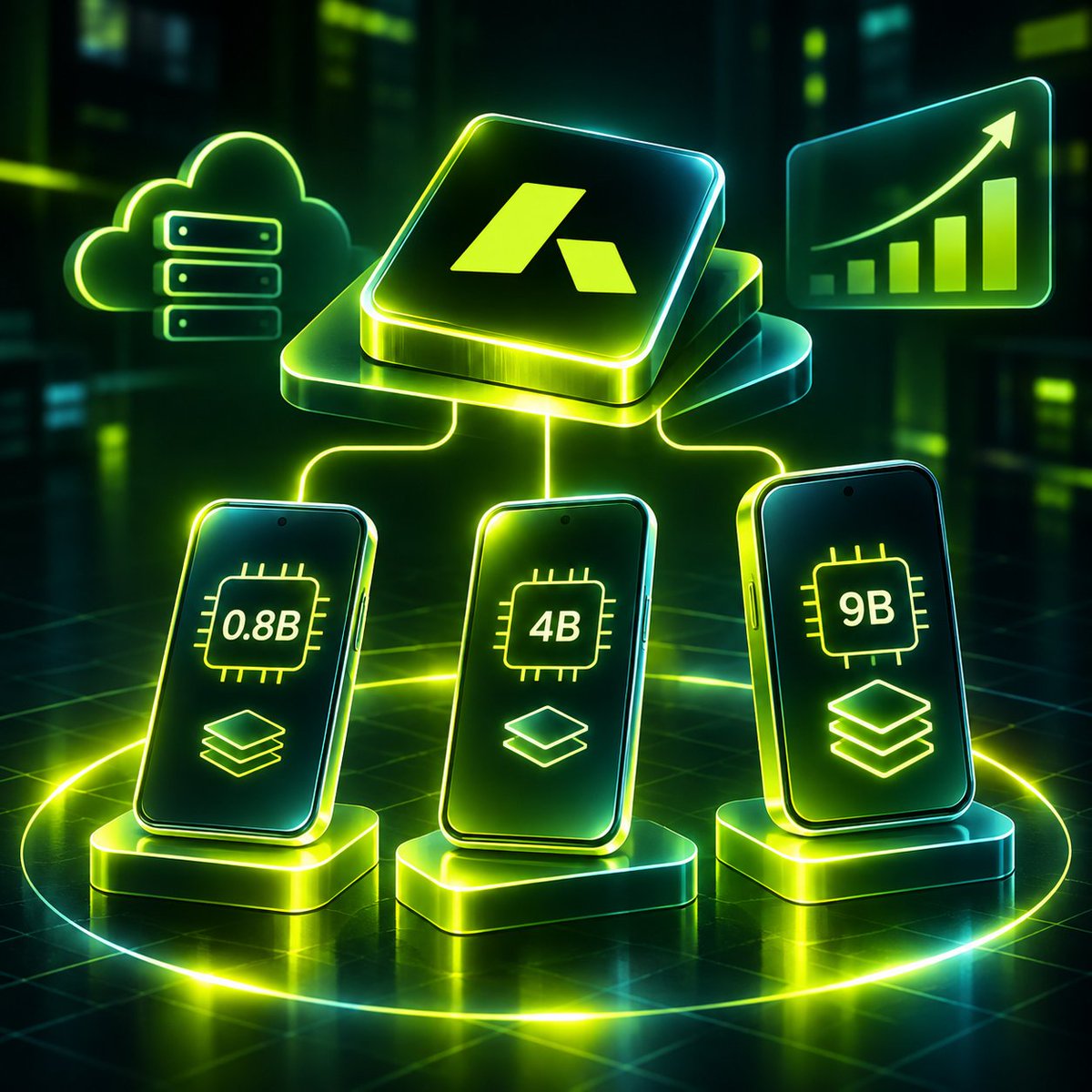
@Acurast demonstrated this with Qwen3.5 running directly on Android phones across its network.
the benchmark revealed an interesting hardware trade-off.
the 9B model required 16GB RAM, while the 4B version could run on 8GB devices.
but the smaller 0.8B model showed another possibility: one 8GB phone could handle four parallel conversations at a combined 46 tokens per second.
this changes how we should think about decentralized AI compute.
not every workload needs a flagship device or a massive model. fraud screening, message classification and background monitoring often need fast, specialized decisions rather than complex general reasoning.
Acurast can match different model requirements with different Processor capabilities, while developers scale capacity by adding replicas.
there are limitations, of course. memory bandwidth, CPU performance and latency still determine what each phone can handle.
the important insight is that a distributed network doesn't need identical hardware.
it needs intelligent workload allocation.
that's how ordinary smartphones can become useful AI infrastructure without pretending every device is a data center.
for educational purposes only. not investment advice.
@2mrpc Zero trading fee is nice, but on an RFQ venue the spread is the real cost. Check live all in quotes plus weekday funding before the 6bps claim holds.