Quantum Fear-Mongering and The Infinite Perils Trap
Alex Thorn @intangiblecoins had a strong post on quantum and Bitcoin coming out of the Vegas discussions this week. I agree with most of it, and I think there’s a broader risk framework that explains why the emerging middle ground is the right one.
The quantum debate keeps skipping the most important question.
Not “is quantum a risk?”
Of course it is.
The question is what kind of risk it is.
That distinction matters because of a fallacy that shows up in almost every tail-risk debate:
The Infinite Perils Trap.
If a risk sounds catastrophic enough, people start treating any non-zero probability as justification for emergency intervention.
That sounds serious. It is often just sloppy.
There are infinite potential perils. Quantum. AI. Asteroids. Engineered pandemics. State attacks. Supply chain attacks. Unknown unknowns.
You cannot spend 50% of the attention budget on each one.
At some point “prudence” becomes resource exhaustion.
This is where Nassim Taleb’s systemic-risk filter is useful.
The irony is that Taleb is often invoked to justify maximal precaution, but his framework also tells you when NOT to go all-in. The risks that justify extreme precaution are not merely the ones that sound scary. They are the ones that are connected and scalable.
Connected means the threat spreads through the system.
Scalable means a small failure can cascade into ruin for everyone.
Pandemics qualify. Banking contagion qualifies. Highly levered financial systems qualify.
A car crash does not. A restaurant failure does not. An airline bankruptcy usually does not.
Different risk category, different response.
Now apply that to quantum and Bitcoin.
Quantum is not systemic. It is idiosyncratic.
It fails on scalability.
The attack surface is address-by-address. There is no magic “break Bitcoin” button. Cracking one exposed public key does not mechanically crack the next one. It does not trigger a cascade across the UTXO set. The attacker has to do the work for every address he wants to attack.
Satoshi’s coins are the cleanest example. People talk about them as if they are one giant honeypot. They are not. They are spread across roughly 22,000 separate P2PK addresses, usually 50 BTC each.
A long-range attack would have to go address by address. That is a very different risk profile from “one person can take Satoshi’s million coins.”
Quantum also fails on connectivity.
A successful crack of an old, long-cold address does not infect other addresses. It does not corrupt consensus. It does not rewrite the ledger. It does not change the 21 million cap. It does not cause other private keys to fall like dominos.
The attacker gets access to specific vulnerable coins.
That may be painful. It may be ugly. It may cause a violent repricing.
But painful is not the same as systemic.
This is also why the “giant honeypot” framing needs precision.
The real concentrated targets are exchanges, ETFs, custodians, and other active entities. ETF holders themselves cannot rotate addresses, but the custodians controlling the actual coins can. Same with exchanges. Same with large active treasury holders. If the threat becomes real enough, those entities can move to post-quantum addresses.
Satoshi’s coins are different because they are dormant. But even there, the risk is far more distributed than the panic narrative suggests.
Roughly 22,000 addresses, not one vault.
And this is where the fallacy matters.
Once you misclassify an idiosyncratic risk as systemic, you start justifying interventions that create real systemic risk.
Freeze Satoshi’s coins.
Invalidate old addresses.
Rush immature cryptography into consensus.
Force a panic fork.
Create gridlock around every other upgrade.
Turn every theoretical threat into a political emergency.
That is where the systemic risk actually lives.
The intervention scales.
The intervention connects.
The intervention changes the property-rights model.
Bitcoin can survive old coins moving. It cannot survive the normalization of “these coins make us nervous, therefore we can touch them.”
That precedent would propagate everywhere.
Lost coins.
Dormant coins.
Sanctioned coins.
Coins from old hacks.
Coins held by unpopular people.
Coins held by political enemies.
Coins that some future coalition decides are dangerous.
That is connectivity.
That is scalability.
That is systemic.
The cure becomes the contagion.
This is why “don’t touch Satoshi’s coins” is not sentimental. It is the rigorous answer.
Property rights are not downstream of convenience. They are the product.
Bitcoin does not promise that every old cryptographic choice will remain optimal forever. It promises that valid coins remain valid coins, and that nobody gets to rewrite the rules because a future committee got scared.
The market absorption point is secondary, but still important.
Even in a nightmare scenario where very old coins moved, that is a market event, not a protocol death. Data from @Checkmatey and others shows Bitcoin absorbing 1M+ BTC of movement since October 2025 alone.
A massive supply shock would hurt.
It would not require us to violate property rights to survive.
That is the point.
None of this means “ignore quantum.” It means classify the threat properly.
Working on post-quantum cryptography, testing schemes, compressing signatures, debating implementation paths, funding serious work, and having credible options on the shelf are all good things.
The middle ground seems basically right:
Do the work.
Prepare contingencies to have on the shelf if needed.
Do not rush the protocol.
Do not touch Satoshi’s coins.
Quantum is worth working on even if it remains a low-probability tail risk. But a low-probability tail risk is not a license to break Bitcoin’s deepest norms.
That is the Infinite Perils Trap.
If every scary non-zero risk becomes a protocol emergency, Bitcoin stops being conservative money and becomes a committee-managed anxiety machine.
The right response is not complacency, it is proportionality.
Quantum is a real research problem, but it is not a reason to freeze coins.
Prepare seriously.
Move slowly.
Preserve the rules.
Leave Satoshi’s coins alone.
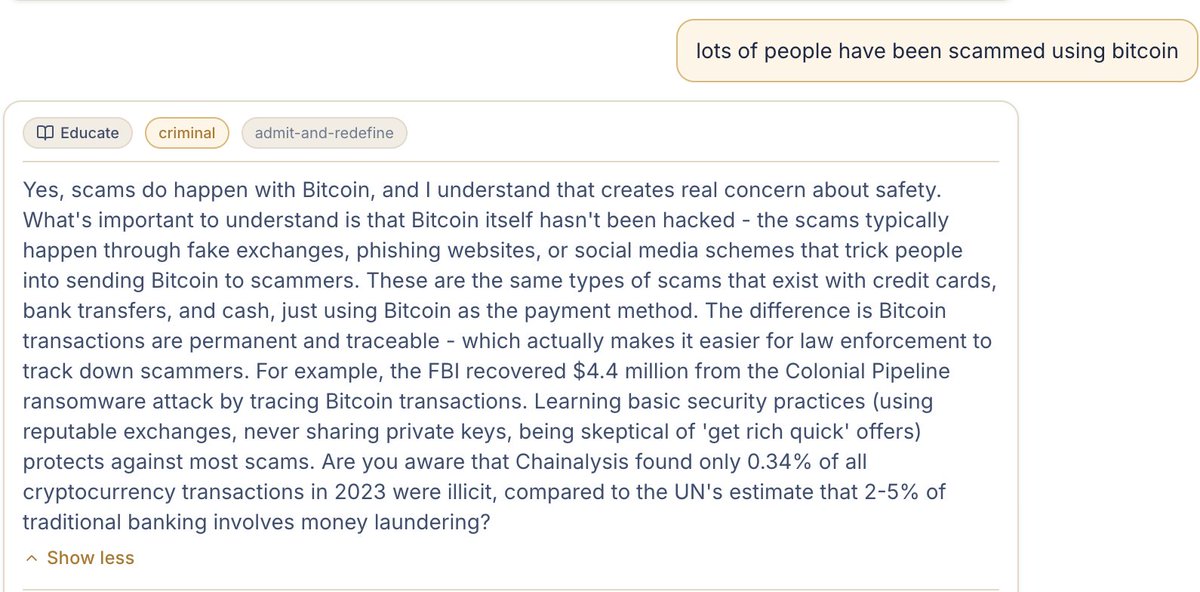
The FUD-busting site is working pretty well!
- Acknowledges the concern
- Shows where it is inaccurate/misleading using data
- Reveals a related surprising truth that evidences Bitcoin's superiority to tradfi
Try it out for yourself
https://t.co/yMJB5CW0ox
New podcast on vibe coding - A Return to Code.
A Return to Coding 00:20
The Personal App Store 03:17
Vibe Coding Is a Video Game with Real-World Rewards 06:22
Pure Software Is Uninvestable 10:33
A Place for Each Model 14:22
AI Is Eager to Please 17:57
Why Math and Coding? 22:10
The Beginning of the End of Apple’s Dominance 24:17
Coding Agents As Customer Service Reps 27:55
Need a direct way to sync Claude Skills between my local Claude Code files and Claude/Cowork. Annoying to have to maintain them in 2 places places.
All the building blocks in Claude ecosystem are there. Just need them to be more seamlessly connected.
SPEAKEASY: The Rise of Useful AI: Who's Winning, and Who's Losing?
Right now there are two realities running in parallel. In one, small groups of people are 10x-ing their output and collapsing timelines that used to take whole departments. In the other, companies are stuck in “pilot” mode, and individuals are telling themselves they’ll catch up later, while their edge gets hollowed out in real time.
Let's talk about what “useful AI” actually looks like in practice, where it’s already replacing workflows (not just augmenting them), why the gap is widening so fast, and what separates the winners from the people who don’t realize they’re losing yet.
Monday, March 16th, at 3pm ET / noon PT
https://t.co/PHOfy5Ye0d
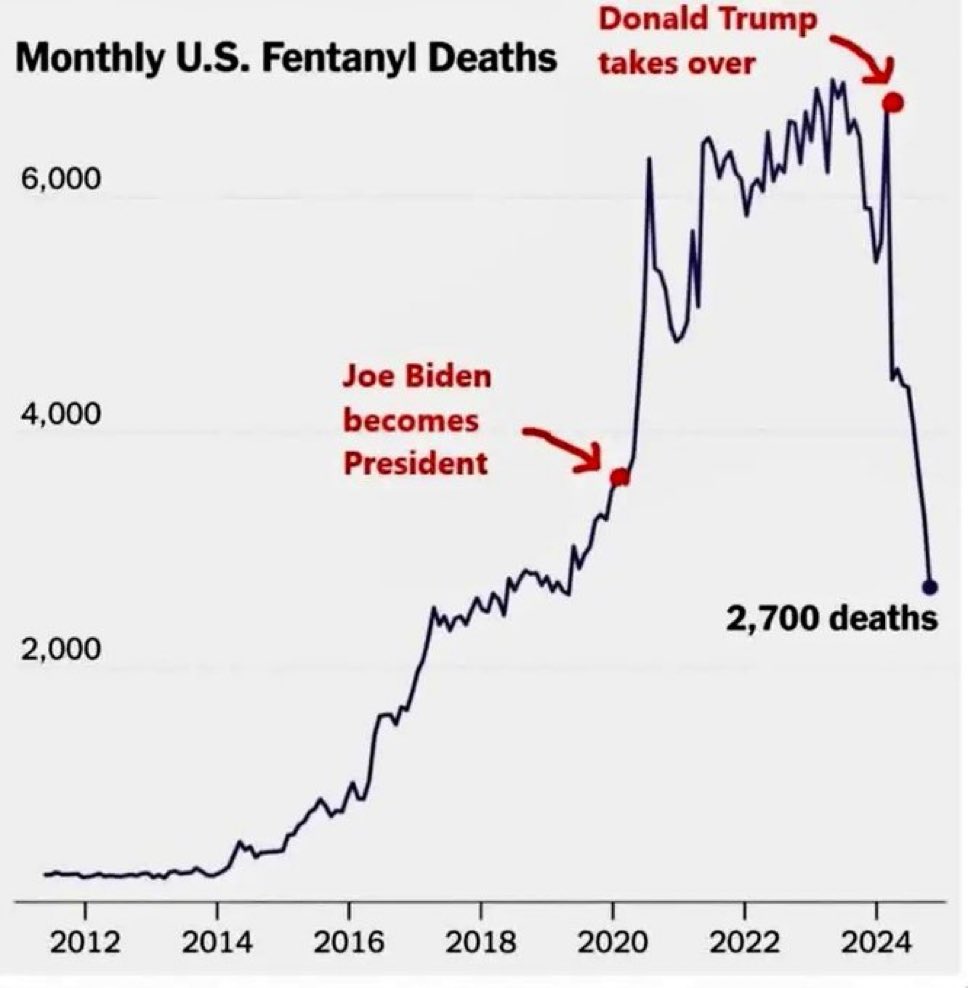
Not only have murder rates declined, fentanyl deaths have also dropped massively
Looks like securing the border and cutting the flow of illegals into America works
𝐓𝐡𝐞 𝟗𝟕% 𝐂𝐨𝐧𝐬𝐞𝐧𝐬𝐮𝐬 𝐌𝐲𝐭𝐡 𝐃𝐞𝐛𝐮𝐧𝐤𝐞𝐝
One of the most pervasive myths in science is that 97% (or sometimes stated as >99%) of “climate scientists” agree that all global warming since the mid-19th century is human-caused and that this warming is an existential threat to the welfare of the planet and all life on it.
Except, this statistic is largely made up, and no matter how many times it is quashed, it persists as a talking point in online forums.
The “consensus of scientists” is not organic. Rather, it was manufactured through questionable methods in two studies, both published in Environmental Research Letters (ERL): Cook et al. (2013) and Lynas et al. (2021).
Let's look closer at these studies. 🔎
𝐓𝐇𝐄 “𝟗𝟕% 𝐂𝐎𝐍𝐄𝐒𝐍𝐒𝐔𝐒”
The paper that got this all started was published in ERL in 2013.
🔗 https://t.co/irnDb8FOq3
Led by cognitive psychologist John Cook—a Senior Research Fellow at the Melbourne Centre for Behaviour Change and founder of the climate blog, Skeptical Science—he and eight co-authors skimmed the abstracts of 11,944 climate-related papers published between 1991 and 2011.
Of the 11,944 abstracts, a total of 7,930 (66.4%) of them expressed 𝒏𝒐 𝒑𝒐𝒔𝒊𝒕𝒊𝒐𝒏 on the cause(s) of global warming since the pre-industrial era.
Of the remaining 4,014 abstracts that endorsed either anthropogenic global warming (AGW) or natural global warming, 3,896 (97.1%) endorsed AGW in at least some capacity, while 78 (1.9%) questioned or rejected AGW. The remaining 40 (1%) of papers expressed uncertainty.
But, it gets even more nuanced than that if we look at the abstracts and pick them apart. On whether global warming is being caused entirely by human activities, by nature, or by a combination of both, of those 4,014 papers, they state warming is caused:
🔴 Entirely by humans: 64 papers (1.59%)
🟤 >>50% by humans: 922 (22.96%)
🟡 Equally natural + man-made: 2,910 (72.50%)
🟢 >>50% by natural cycles: 54 (1.35%)
🔵 Man is causing no warming: 24 (0.60%)
🤷 Don't know: 40 (1.00%)
So, a “97% consensus” can be contrived by either (a) omitting the 7,930 (66.4% of) abstracts in the 11,944-paper sample that did not explicitly state a position on the drivers of global warming, or by (b) lumping all 3,896 abstracts that endorsed at least some anthropogenic component as entirely endorsing AGW.
Either way, that's sausage-making. 🌭
But, what about the >99% consensus?
𝐓𝐇𝐄 “>𝟗𝟗% 𝐂𝐎𝐍𝐄𝐒𝐍𝐒𝐔𝐒”
Like Cook et al. (2013), Lynas et al. (2021) attempted to quantify the consensus on AGW.
🔗 https://t.co/yDlXp7QoDu
In this synthesis, 3,000 climate papers were selected at random. In that batch, 282 were marked as false positives since they weren't actually climate-related. That’s fair. So, the analysis continued with the remaining 2,718 peer-reviewed articles.
Of those, 1,869 (68.8%) of them took 𝒏𝒐 𝒑𝒐𝒔𝒊𝒕𝒊𝒐𝒏 on AGW. And, like Cook et al. (2013), all 1,869 papers neither endorsing nor rejecting AGW were discarded. Of the remaining 849 papers that did endorse a position, 845 (99.5%) of them sided with AGW while four did not.
So, like Cook et al. (2013), Lynas et al. (2021) ignored over 65% of the papers selected that didn't take one position or the other on the physical driver(s) of global warming. By doing this, the authors could artificially manufacture a consensus on an issue where none actually existed if all of the relevant papers were considered.
The advantage that Lynas et al. (2021) has over Cook et al. (2013) is that each paper was examined thoroughly rather than just the abstract. This made for a more thorough analysis despite the same flawed methodology both used in ignoring the majority of papers that took a neutral stance.
𝐁𝐮𝐭, 𝐰𝐚𝐢𝐭, 𝐭𝐡𝐞𝐫𝐞'𝐬 𝐦𝐨𝐫𝐞. . .
Climate activists will argue that the authors of Cook et al. (2013) and Lynas et al. (2021) were justified in excluding the 66.4% and 68.8% of papers, respectively, that did not express a position, on the grounds that those studies did not focus on identifying or discussing causal links.
But, that's just hand-waving. 👋
The fact is that not all of the studies endorsing AGW investigated the physical driver(s) of temperature change since 1850. In fact, in order to qualify as endorsing (or rejecting) AGW, a paper merely needed to take a stance on the issue, regardless of whether or not the study's focus was on the physical drivers of climate change.
You will find when reading through the literature that even papers challenging the conventional narrative—such as on topics like climate model performance, trends in extreme weather, and/or the efficacy of “net zero” policies—almost always include the disclaimer that mankind's carbon dioxide (CO₂) emissions are the proximate cause of all global warming. This is done so that the paper satisfies reviewers and journal editors enough to get accepted for publication. This is the science equivalent of a land acknowledgement to be in good standing with gatekeepers.
Another point I should add about Cook et al. (2013) and Lynas et al. (2021) is that neither paper frame their findings as being a reflection of the “consensus of scientists.” So, when climate activists claim that 97-99% of experts agree, that's not accurately stating what these studies purport.
𝐒𝐜𝐢𝐞𝐧𝐭𝐢𝐟𝐢𝐜 𝐂𝐨𝐧𝐬𝐞𝐧𝐬𝐮𝐬 𝐯𝐬. 𝐂𝐨𝐧𝐬𝐞𝐧𝐬𝐮𝐬 𝐨𝐟 𝐒𝐜𝐢𝐞𝐧𝐭𝐢𝐬𝐭𝐬
Another point I should add about Cook et al. (2013) and Lynas et al. (2021) is that neither paper frame their findings as being a reflection of the “consensus of scientists.” So, when climate activists claim that 97-99% of experts agree, that's not at all an accurate framing of these papers' findings.
The papers actually attempted to quantify the “scientific consensus” on AGW, which is a consensus of what the published literature says. That is different from a “consensus of scientists,” which is essentially nothing more than an expert opinion poll.
What's more, neither of these reviews addressed the million-dollar question, which is whether or not global warming has been [or will be] dangerous. Just because our GHG emissions 𝑚𝑎𝑦 have caused some [or even most of the warming] since the onset of the Industrial Revolution, that tells us nothing about the level of danger posed by it short- and long-term.
So, what do we actually know about what scientists think about (a) the cause(s) of global warming and (b) whether or not they think it is dangerous?
Thankfully, we have some insight into that.
𝐖𝐇𝐀𝐓 𝐒𝐂𝐈𝐄𝐍𝐓𝐈𝐒𝐓𝐒 𝐓𝐇𝐈𝐍𝐊
While a “consensus of scientists” (i.e., expert opinion poll) is less robust than a “scientific consensus” (i.e., synthesis of published literature), one advantage that polling scientists for their opinion has over the latter is that it gives them anonymity to express their views on the issue without having to fear losing their job or having their paper(s) rejected by biased journal editors (the gatekeepers).
Prestigious, lauded scientific organizations such as the American Geophysical Union (AGU), the American Meteorological Society (AMS), and the Royal Society have manufactured a “consensus of scientists” by taking a very strong stance on the climate issue without first consulting their members for their views.
Both the AGU and AMS recently did just that following the Trump administration's decision to repeal the Obama-era 2009 Endangerment Finding that allowed the EPA to regulate tailpipe emissions.
From the AGU,
🗨️“𝐴𝐺𝑈 𝑢𝑛𝑒𝑞𝑢𝑖𝑣𝑜𝑐𝑎𝑙𝑙𝑦 𝑐𝑜𝑛𝑑𝑒𝑚𝑛𝑠 𝑡ℎ𝑖𝑠 𝑟𝑒𝑐𝑘𝑙𝑒𝑠𝑠 𝑎𝑛𝑑 𝑠𝑒𝑛𝑠𝑒𝑙𝑒𝑠𝑠 𝑑𝑒𝑐𝑖𝑠𝑖𝑜𝑛, 𝑤ℎ𝑖𝑐ℎ ℎ𝑎𝑠 𝑔𝑙𝑜𝑏𝑎𝑙 𝑖𝑚𝑝𝑙𝑖𝑐𝑎𝑡𝑖𝑜𝑛𝑠 𝑓𝑜𝑟 ℎ𝑢𝑚𝑎𝑛 𝑤𝑒𝑙𝑙-𝑏𝑒𝑖𝑛𝑔 𝑎𝑛𝑑 𝑡ℎ𝑒 𝑒𝑛𝑣𝑖𝑟𝑜𝑛𝑚𝑒𝑛𝑡. 𝐼𝑡 𝑖𝑔𝑛𝑜𝑟𝑒𝑠 𝑡ℎ𝑒 𝑜𝑣𝑒𝑟𝑤ℎ𝑒𝑙𝑚𝑖𝑛𝑔 𝑒𝑣𝑖𝑑𝑒𝑛𝑐𝑒 𝑜𝑓 𝑐𝑙𝑖𝑚𝑎𝑡𝑒 𝑐ℎ𝑎𝑛𝑔𝑒’𝑠 𝑚𝑜𝑢𝑛𝑡𝑖𝑛𝑔 𝑡𝑜𝑙𝑙, 𝑓𝑟𝑜𝑚 𝑑𝑒𝑎𝑑𝑙𝑦 ℎ𝑒𝑎𝑡𝑤𝑎𝑣𝑒𝑠 𝑡𝑜 𝑟𝑖𝑠𝑖𝑛𝑔 𝑠𝑒𝑎 𝑙𝑒𝑣𝑒𝑙𝑠, 𝑎𝑛𝑑 𝑢𝑛𝑑𝑒𝑟𝑚𝑖𝑛𝑒𝑠 𝑑𝑒𝑐𝑎𝑑𝑒𝑠 𝑜𝑓 ℎ𝑎𝑟𝑑-𝑤𝑜𝑛 𝑝𝑟𝑜𝑔𝑟𝑒𝑠𝑠 𝑖𝑛 𝑏𝑢𝑖𝑙𝑑𝑖𝑛𝑔 𝑎 𝑓𝑜𝑢𝑛𝑑𝑎𝑡𝑖𝑜𝑛 𝑓𝑜𝑟 𝑐𝑙𝑖𝑚𝑎𝑡𝑒 𝑎𝑐𝑐𝑜𝑢𝑛𝑡𝑎𝑏𝑖𝑙𝑖𝑡𝑦. 𝑊𝑜𝑟𝑠𝑒 𝑠𝑡𝑖𝑙𝑙, 𝑖𝑡 𝑒𝑟𝑜𝑑𝑒𝑠 𝑝𝑢𝑏𝑙𝑖𝑐 𝑡𝑟𝑢𝑠𝑡 𝑖𝑛 𝑡ℎ𝑒 𝑟𝑜𝑙𝑒 𝑜𝑓 𝑠𝑐𝑖𝑒𝑛𝑐𝑒 𝑡𝑜 𝑖𝑛𝑓𝑜𝑟𝑚 𝑠𝑜𝑢𝑛𝑑 𝑝𝑜𝑙𝑖𝑐𝑦.”
🔗https://t.co/ORqc0alq2a
And, from the AMS,
🗨️“𝑇ℎ𝑒 𝐴𝑚𝑒𝑟𝑖𝑐𝑎𝑛 𝑀𝑒𝑡𝑒𝑜𝑟𝑜𝑙𝑜𝑔𝑖𝑐𝑎𝑙 𝑆𝑜𝑐𝑖𝑒𝑡𝑦 (𝐴𝑀𝑆) 𝑖𝑠 𝑑𝑒𝑒𝑝𝑙𝑦 𝑐𝑜𝑛𝑐𝑒𝑟𝑛𝑒𝑑 𝑏𝑦 𝑡ℎ𝑒 𝑟𝑒𝑝𝑒𝑎𝑙 𝑜𝑓 𝐸𝑃𝐴’𝑠 2009 𝐸𝑛𝑑𝑎𝑛𝑔𝑒𝑟𝑚𝑒𝑛𝑡 𝐹𝑖𝑛𝑑𝑖𝑛𝑔, 𝑤ℎ𝑖𝑐ℎ 𝑐𝑜𝑟𝑟𝑒𝑐𝑡𝑙𝑦 𝑐𝑜𝑛𝑐𝑙𝑢𝑑𝑒𝑑 𝑡ℎ𝑎𝑡 𝑔𝑟𝑒𝑒𝑛ℎ𝑜𝑢𝑠𝑒 𝑔𝑎𝑠 𝑒𝑚𝑖𝑠𝑠𝑖𝑜𝑛𝑠 ℎ𝑎𝑟𝑚 ℎ𝑒𝑎𝑙𝑡ℎ 𝑎𝑛𝑑 𝑤𝑒𝑙𝑙-𝑏����𝑖𝑛𝑔 𝑓𝑜𝑟 𝑐𝑢𝑟𝑟𝑒𝑛𝑡 𝑎𝑛𝑑 𝑓𝑢𝑡𝑢𝑟𝑒 𝑔𝑒𝑛𝑒𝑟𝑎𝑡𝑖𝑜𝑛𝑠.”
The letter continues, asserting without presenting a single shred of evidence, that,
🗨️ “𝑇ℎ𝑒 𝑑𝑒𝑐𝑖𝑠𝑖𝑜𝑛𝑠 𝑜𝑓 𝑒𝑙𝑒𝑐𝑡𝑒𝑑 𝑜𝑓𝑓𝑖𝑐𝑖𝑎𝑙𝑠 𝑎𝑛𝑑 𝑝𝑢𝑏𝑙𝑖𝑐 𝑠𝑒𝑟𝑣𝑎𝑛𝑡𝑠 ℎ𝑎𝑣𝑒 𝑡ℎ𝑒 𝑔𝑟𝑒𝑎𝑡𝑒𝑠𝑡 𝑝𝑜𝑡𝑒𝑛𝑡𝑖𝑎𝑙 𝑡𝑜 𝑠𝑒𝑟𝑣𝑒 𝑡ℎ𝑒 𝑛𝑎𝑡𝑖𝑜𝑛 𝑤ℎ𝑒𝑛 𝑡ℎ𝑒𝑦 𝑎𝑟𝑒 𝑢𝑛𝑑𝑒𝑟𝑝𝑖𝑛𝑛𝑒𝑑 𝑏𝑦 𝑡ℎ𝑒 𝑏𝑒𝑠𝑡 𝑎𝑣𝑎𝑖𝑙𝑎𝑏𝑙𝑒 𝑠𝑐𝑖𝑒𝑛𝑡𝑖𝑓𝑖𝑐 𝑘𝑛𝑜𝑤𝑙𝑒𝑑𝑔𝑒 𝑎𝑛𝑑 𝑢𝑛𝑑𝑒𝑟𝑠𝑡𝑎𝑛𝑑𝑖𝑛𝑔. 𝑇ℎ𝑒 𝑟𝑒𝑝𝑒𝑎𝑙 𝑜𝑓 𝑡ℎ𝑒 𝐸𝑛𝑑𝑎𝑛𝑔𝑒𝑟𝑚𝑒𝑛𝑡 𝐹𝑖𝑛𝑑𝑖𝑛𝑔 𝑑𝑜𝑒𝑠 𝑛𝑜𝑡 𝑎𝑙𝑡𝑒𝑟 𝑡ℎ𝑒 𝑐𝑒𝑛𝑡𝑟𝑎𝑙 𝑢𝑛𝑎𝑚𝑏𝑖𝑔𝑢𝑜𝑢𝑠 𝑠𝑐𝑖𝑒𝑛𝑡𝑖𝑓𝑖𝑐 𝑐𝑜𝑛𝑐𝑙𝑢𝑠𝑖𝑜𝑛: 𝑇ℎ𝑒 𝑐𝑙𝑖𝑚𝑎𝑡𝑒 𝑐ℎ𝑎𝑛𝑔𝑒 𝑡ℎ𝑎𝑡 𝑝𝑒𝑜𝑝𝑙𝑒 𝑎𝑟𝑒 𝑐𝑎𝑢𝑠𝑖𝑛𝑔 𝑡ℎ𝑟𝑒𝑎𝑡𝑒𝑛𝑠 ℎ𝑢𝑚𝑎𝑛 𝑙𝑖𝑣𝑒𝑠 𝑎𝑛𝑑 𝑤𝑒𝑙𝑙-𝑏𝑒𝑖𝑛𝑔.”
🔗https://t.co/Ryl0cDXXBq
Both statements were written without consultation of each organization's professional members.
Contrary to the AMS' partisan take, we actually have good insight into what their members think about (a) the cause(s) of global warming and (b) whether or not they think warming is dangerous.
In January 2016, Dr. Ed Maibach and colleagues from George Mason University (GMU) polled all 7,682 (at that time) professional members of the AMS on their views on climate change. A handful of questions were asked with several follow-ups.
🔗https://t.co/wmQLbvZEhR
The survey had a 53.3% participation rate and there were 4,092 respondents (p. 1).
Here are a sample of the questions asked:
1⃣ 𝗥𝗲𝗴𝗮𝗿𝗱𝗹𝗲𝘀𝘀 𝗼𝗳 𝗰𝗮𝘂𝘀𝗲, 𝗱𝗼 𝘆𝗼𝘂 𝘁𝗵𝗶𝗻𝗸 𝗰𝗹𝗶𝗺𝗮𝘁𝗲 𝗰𝗵𝗮𝗻𝗴�� 𝗶𝘀 𝗵𝗮𝗽𝗽𝗲𝗻𝗶𝗻𝗴? (4,091 responses)
✅ Yes: 96%
❌ No: 1%
🤷 Don't know: 3%
✦ [Follow-up, only asked to those who answered “Yes” to 1] 𝗛𝗼𝘄 𝘀𝘂𝗿𝗲 𝗮𝗿𝗲 𝘆𝗼𝘂 𝘁𝗵𝗮𝘁 𝗰𝗹𝗶𝗺𝗮𝘁𝗲 𝗰𝗵𝗮𝗻𝗴𝗲 𝗶𝘀 𝗵𝗮𝗽𝗽𝗲𝗻𝗶𝗻𝗴? (3,854 responses)
🟢 Extremely sure: 58%
🔵 Very sure: 31%
🟡 Somewhat sure: 10%
🔴 Not sure: 0%
✦ [Follow-up, only asked to those who answered “No” to 1] 𝗛𝗼𝘄 𝘀𝘂𝗿𝗲 𝗮𝗿𝗲 𝘆𝗼𝘂 𝘁𝗵𝗮𝘁 𝗰𝗹𝗶𝗺𝗮𝘁𝗲 𝗰𝗵𝗮𝗻𝗴𝗲 𝗶𝘀 𝒏𝒐𝒕 𝗵𝗮𝗽𝗽𝗲𝗻𝗶𝗻𝗴? (53 responses)
🟢 Extremely sure: 13%
🔵 Very sure: 43%
🟡 Somewhat sure: 38%
🔴 Not sure: 6%
2⃣ 𝗗𝗼 𝘆𝗼𝘂 𝘁𝗵𝗶𝗻𝗸 𝘁𝗵𝗮𝘁 𝘁𝗵𝗲 𝗰𝗹𝗶𝗺𝗮𝘁𝗲 𝗰𝗵𝗮𝗻𝗴𝗲 𝘁𝗵𝗮𝘁 𝗵𝗮𝘀 𝗼𝗰𝗰𝘂𝗿𝗿𝗲𝗱 𝗼𝘃𝗲𝗿 𝘁𝗵𝗲 𝗽𝗮𝘀𝘁 𝟱𝟬 𝘆𝗲𝗮𝗿𝘀 𝗵𝗮𝘀 𝗯𝗲𝗲𝗻 𝗰𝗮𝘂𝘀𝗲𝗱... (4,004 responses)
🔴 Largely / entirely by humans (>81%): 29%
🟤 Mostly by humans (60-80%): 38%
🟡 Roughly equally natural + man-made: 14%
🟢 Mostly by natural events (60-80%): 7%
🔵 Largely / entirely by natural events (>81%): 5%
🤷 Don't know: 6%
❌ Climate has not changed: 1%
6⃣ 𝗧𝗼 𝘁𝗵𝗲 𝗯𝗲𝘀𝘁 𝗼𝗳 𝘆𝗼𝘂𝗿 𝗸𝗻𝗼𝘄𝗹𝗲𝗱𝗴𝗲, 𝗵𝗮𝘀 𝘁𝗵𝗲 𝗰𝗹𝗶𝗺𝗮𝘁𝗲 𝗶𝗻 𝘆𝗼𝘂𝗿 𝗮𝗿𝗲𝗮 𝗰𝗵𝗮𝗻𝗴𝗲𝗱 𝗼𝘃𝗲𝗿 𝘁𝗵𝗲 𝗽𝗮𝘀𝘁 𝟱𝟬 𝘆𝗲𝗮𝗿𝘀? (4,002 responses)
✅ Yes: 74%
❌ No: 11%
🤷 Don't know: 15%
✦ [Follow-up, only asked to those who answered “Yes” to 6] 𝗪𝗵𝗶𝗰𝗵 𝗼𝗳 𝘁𝗵𝗲 𝗳𝗼𝗹𝗹𝗼𝘄𝗶𝗻𝗴 𝗯𝗲𝘀𝘁 𝗱𝗲𝘀𝗰𝗿𝗶𝗯𝗲𝘀 𝘁𝗵𝗲 𝗶𝗺𝗽𝗮𝗰𝘁(𝘀) 𝗼𝗳 𝘁𝗵𝗲 𝗹𝗼𝗰𝗮𝗹 𝗰𝗹𝗶𝗺𝗮𝘁𝗲 𝗰𝗵𝗮𝗻𝗴𝗲 𝗶𝗻 𝘆𝗼𝘂𝗿 𝗮𝗿𝗲𝗮 𝗼𝘃𝗲𝗿 𝘁𝗵𝗲 𝗽𝗮𝘀𝘁 𝟱𝟬 𝘆𝗲𝗮𝗿𝘀? (3,546 responses)
🟢 Exclusively beneficial: 0%
🔵 Primarily beneficial: 4%
🟡 Equally mixed, beneficial + harmful: 36%
🟤 Primarily harmful: 36%
🔴 Exclusively harmful: 2%
🤷 Don't know: 21%
7⃣ 𝗧𝗼 𝘁𝗵𝗲 𝗯𝗲𝘀𝘁 𝗼𝗳 𝘆𝗼𝘂𝗿 𝗸𝗻𝗼𝘄𝗹𝗲𝗱𝗴𝗲, 𝘄𝗶𝗹𝗹 𝘁𝗵𝗲 𝗹𝗼𝗰𝗮𝗹 𝗰𝗹𝗶𝗺𝗮𝘁𝗲 𝗶𝗻 𝘆𝗼𝘂𝗿 𝗮𝗿𝗲𝗮 𝗰𝗵𝗮𝗻𝗴𝗲 𝗼𝘃𝗲𝗿 𝘁𝗵𝗲 𝗻𝗲𝘅𝘁 𝟱𝟬 𝘆𝗲𝗮𝗿𝘀? (3,963 responses)
✅ Yes: 78%
❌ No: 5%
🤷 Don't know: 17%
✦ [Follow-up, only asked to those who answered “Yes” to 7] 𝗪𝗵𝗶𝗰𝗵 𝗼𝗳 𝘁𝗵𝗲 𝗳𝗼𝗹𝗹𝗼𝘄𝗶𝗻𝗴 𝗯𝗲𝘀𝘁 𝗱𝗲𝘀𝗰𝗿𝗶𝗯𝗲𝘀 𝘁𝗵𝗲 𝗶𝗺𝗽𝗮𝗰𝘁(𝘀) 𝗼𝗳 𝘁𝗵𝗲 𝗹𝗼𝗰𝗮𝗹 𝗰𝗹𝗶𝗺𝗮𝘁𝗲 𝗰𝗵𝗮𝗻𝗴𝗲 𝗶𝗻 𝘆𝗼𝘂𝗿 𝗮𝗿𝗲𝗮 𝗼𝘃𝗲𝗿 𝘁𝗵𝗲 𝗻𝗲𝘅𝘁 𝟱𝟬 𝘆𝗲𝗮𝗿𝘀? (3,761 responses)
🟢 Exclusively beneficial: 0%
🔵 Primarily beneficial: 2%
🟡 Equally mixed, beneficial + harmful: 29%
🟤 Primarily harmful: 47%
🔴 Exclusively harmful: 3%
🤷 Don't know: 19%
So, based on this 2016 survey of professional AMS members, of those who responded,
• 96% of AMS members agree that climate change is occurring, regardless of the proximate cause.
• 67% of AMS members agree that change has primarily been human-caused, but the contribution estimates vary considerably. 67% is far from a consensus given that 33% have a different opinion.
• 38% of AMS members agree that the impacts of climate change in their localities have been negative over the last 50 years. However, 40% said that the impacts have been mixed or primarily beneficial, and 21% said that they weren't sure.
So, what can we truly conclude about the “consensus of scientists” on climate change?
• Is climate change occurring? ✅
• Human activities contribute to global warming in at least 𝑺𝑶𝑴𝑬 capacity? ✅
• Climate change is [or will be] dangerous? ❌
And, this exactly summarizes my position (despite the constant framing by detractors that I'm a “denier”). It also matches fairly closely with the abstracts in Cook et al. (2013) once you categorize the papers' findings correctly and account for nuance.
Thus, just because global warming is real and we do play some role in causing it is still not a good enough justification to rapidly eliminate fossil fuels from our energy mix. There must be sufficient proof that this warming poses a great threat to the welfare of the planet and life on it, and that has yet to be provided contrary to the BS-infused letters written by the AGU and AMS last week.
So, when climate alarmists [most of whom have no qualifications of their own] claim that I am standing at odds with organizations like the AMS or NASA, quite frankly, I don't care.
It is clear from the survey results above that there is a greater disagreement among scientists than you are led to believe by what both the gatekeepers allow to be published in journals and what higher-ups within scientific organizations claim is the universal position among their members.
Government and university research scientists also are often told what they can and cannot say publicly about climate change. I know that for a fact because I have family that are federal employees, and I know quite a few skeptics in academia at different colleges / universities that play the game to avoid being fired, but in reality, don't agree with alarmist messaging in the slightest.
Last, but not least, consensus isn't science.
Science requires one investigator who happens to have verifiable data and evidence.
Princeton professor Stephen Macedo provides a retrospective on covid-era policies including the following:
1. He calls it the flu. I am old enough to remember when we were told that is a conspiracy theory.
2. There was decades of pandemic planning before Covid. The consensus was that school and workplace closures, restrictions on gathering sizes, mask mandates, social distancing measures, etc., were NOT effective and that the cost of doing so would be very high.
3. Measures NOT recommended by the WHO in their 2019 pandemic planning documents included contact tracing, quarantine of exposed individuals, entry/exit screenings, border closings, and school closures.
Johns Hopkins said essentially the same thing just months before Covid started and made the point that the overbearing measures might be used for political reasons. I’ve said it for years that Covid kicked off 2020 e!ection theft season.
4. In 2008, the ACLU said (in relation to Bush-era pandemic preparedness planning) that fear of diseases has justified abuses of state power, that coercion and brute force breeds pubic distrust, strategies that rely on voluntary participation do work as long as public health officials are working to help people not punish them, and that minorities bear the brunt of tough public safety measures.
The ACLU said noting during Covid which tells us something since they have been co-opted by Democracy Inc.
5. The professor made the point that they declared a war on Covid where dissent was not welcome, including from Jay Bhattacharya, the current director of the NIH.
6. The Covid measures that they put in place had no effect on mortality but they had a devastating impact on society and people especially related to young people and education. The measures also contributed to higher rates of crime, substance abuse, and depression, and had a negative impact on overall health.
7. He then mentions the origins of Covid. They all knew it came from the Wuhan lab but they lied about it which has led to the distrust in supposed experts and institutions. Covid had furin cleavage sites which are manmade. It did not come from a wet market or raccoon dogs.
After all of that, not one person has been held accountable.
"I am a man. See me as a human being—not a birth defect, not a syndrome. I don’t need to be eradicated."
Frank Stephens pleads for the humanization of people with Down syndrome, studies suggest 67-90% are aborted in the United States due to faulty prenatal screenings.
I am grateful to Don Lemon.
In 2020, my mom listened religiously to CNN, buying into their unhinged covid fear mongering.
After the GBD, she heard Don call me names on TV, decided CNN was fake news, and turned it off forever. It made her life so much better ever since.


![ChrisMartzWX's tweet photo. 𝐓𝐡𝐞 𝟗𝟕% 𝐂𝐨𝐧𝐬𝐞𝐧𝐬𝐮𝐬 𝐌𝐲𝐭𝐡 𝐃𝐞𝐛𝐮𝐧𝐤𝐞𝐝
One of the most pervasive myths in science is that 97% (or sometimes stated as >99%) of “climate scientists” agree that all global warming since the mid-19th century is human-caused and that this warming is an existential threat to the welfare of the planet and all life on it.
Except, this statistic is largely made up, and no matter how many times it is quashed, it persists as a talking point in online forums.
The “consensus of scientists” is not organic. Rather, it was manufactured through questionable methods in two studies, both published in Environmental Research Letters (ERL): Cook et al. (2013) and Lynas et al. (2021).
Let's look closer at these studies. 🔎
𝐓𝐇𝐄 “𝟗𝟕% 𝐂𝐎𝐍𝐄𝐒𝐍𝐒𝐔𝐒”
The paper that got this all started was published in ERL in 2013.
🔗 https://t.co/irnDb8FOq3
Led by cognitive psychologist John Cook—a Senior Research Fellow at the Melbourne Centre for Behaviour Change and founder of the climate blog, Skeptical Science—he and eight co-authors skimmed the abstracts of 11,944 climate-related papers published between 1991 and 2011.
Of the 11,944 abstracts, a total of 7,930 (66.4%) of them expressed 𝒏𝒐 𝒑𝒐𝒔𝒊𝒕𝒊𝒐𝒏 on the cause(s) of global warming since the pre-industrial era.
Of the remaining 4,014 abstracts that endorsed either anthropogenic global warming (AGW) or natural global warming, 3,896 (97.1%) endorsed AGW in at least some capacity, while 78 (1.9%) questioned or rejected AGW. The remaining 40 (1%) of papers expressed uncertainty.
But, it gets even more nuanced than that if we look at the abstracts and pick them apart. On whether global warming is being caused entirely by human activities, by nature, or by a combination of both, of those 4,014 papers, they state warming is caused:
🔴 Entirely by humans: 64 papers (1.59%)
🟤 >>50% by humans: 922 (22.96%)
🟡 Equally natural + man-made: 2,910 (72.50%)
🟢 >>50% by natural cycles: 54 (1.35%)
🔵 Man is causing no warming: 24 (0.60%)
🤷 Don't know: 40 (1.00%)
So, a “97% consensus” can be contrived by either (a) omitting the 7,930 (66.4% of) abstracts in the 11,944-paper sample that did not explicitly state a position on the drivers of global warming, or by (b) lumping all 3,896 abstracts that endorsed at least some anthropogenic component as entirely endorsing AGW.
Either way, that's sausage-making. 🌭
But, what about the >99% consensus?
𝐓𝐇𝐄 “>𝟗𝟗% 𝐂𝐎𝐍𝐄𝐒𝐍𝐒𝐔𝐒”
Like Cook et al. (2013), Lynas et al. (2021) attempted to quantify the consensus on AGW.
🔗 https://t.co/yDlXp7QoDu
In this synthesis, 3,000 climate papers were selected at random. In that batch, 282 were marked as false positives since they weren't actually climate-related. That’s fair. So, the analysis continued with the remaining 2,718 peer-reviewed articles.
Of those, 1,869 (68.8%) of them took 𝒏𝒐 𝒑𝒐𝒔𝒊𝒕𝒊𝒐𝒏 on AGW. And, like Cook et al. (2013), all 1,869 papers neither endorsing nor rejecting AGW were discarded. Of the remaining 849 papers that did endorse a position, 845 (99.5%) of them sided with AGW while four did not.
So, like Cook et al. (2013), Lynas et al. (2021) ignored over 65% of the papers selected that didn't take one position or the other on the physical driver(s) of global warming. By doing this, the authors could artificially manufacture a consensus on an issue where none actually existed if all of the relevant papers were considered.
The advantage that Lynas et al. (2021) has over Cook et al. (2013) is that each paper was examined thoroughly rather than just the abstract. This made for a more thorough analysis despite the same flawed methodology both used in ignoring the majority of papers that took a neutral stance.
𝐁𝐮𝐭, 𝐰𝐚𝐢𝐭, 𝐭𝐡𝐞𝐫𝐞'𝐬 𝐦𝐨𝐫𝐞. . .
Climate activists will argue that the authors of Cook et al. (2013) and Lynas et al. (2021) were justified in excluding the 66.4% and 68.8% of papers, respectively, that did not express a position, on the grounds that those studies did not focus on identifying or discussing causal links.
But, that's just hand-waving. 👋
The fact is that not all of the studies endorsing AGW investigated the physical driver(s) of temperature change since 1850. In fact, in order to qualify as endorsing (or rejecting) AGW, a paper merely needed to take a stance on the issue, regardless of whether or not the study's focus was on the physical drivers of climate change.
You will find when reading through the literature that even papers challenging the conventional narrative—such as on topics like climate model performance, trends in extreme weather, and/or the efficacy of “net zero” policies—almost always include the disclaimer that mankind's carbon dioxide (CO₂) emissions are the proximate cause of all global warming. This is done so that the paper satisfies reviewers and journal editors enough to get accepted for publication. This is the science equivalent of a land acknowledgement to be in good standing with gatekeepers.
Another point I should add about Cook et al. (2013) and Lynas et al. (2021) is that neither paper frame their findings as being a reflection of the “consensus of scientists.” So, when climate activists claim that 97-99% of experts agree, that's not accurately stating what these studies purport.
𝐒𝐜𝐢𝐞𝐧𝐭𝐢𝐟𝐢𝐜 𝐂𝐨𝐧𝐬𝐞𝐧𝐬𝐮𝐬 𝐯𝐬. 𝐂𝐨𝐧𝐬𝐞𝐧𝐬𝐮𝐬 𝐨𝐟 𝐒𝐜𝐢𝐞𝐧𝐭𝐢𝐬𝐭𝐬
Another point I should add about Cook et al. (2013) and Lynas et al. (2021) is that neither paper frame their findings as being a reflection of the “consensus of scientists.” So, when climate activists claim that 97-99% of experts agree, that's not at all an accurate framing of these papers' findings.
The papers actually attempted to quantify the “scientific consensus” on AGW, which is a consensus of what the published literature says. That is different from a “consensus of scientists,” which is essentially nothing more than an expert opinion poll.
What's more, neither of these reviews addressed the million-dollar question, which is whether or not global warming has been [or will be] dangerous. Just because our GHG emissions 𝑚𝑎𝑦 have caused some [or even most of the warming] since the onset of the Industrial Revolution, that tells us nothing about the level of danger posed by it short- and long-term.
So, what do we actually know about what scientists think about (a) the cause(s) of global warming and (b) whether or not they think it is dangerous?
Thankfully, we have some insight into that.
𝐖𝐇𝐀𝐓 𝐒𝐂𝐈𝐄𝐍𝐓𝐈𝐒𝐓𝐒 𝐓𝐇𝐈𝐍𝐊
While a “consensus of scientists” (i.e., expert opinion poll) is less robust than a “scientific consensus” (i.e., synthesis of published literature), one advantage that polling scientists for their opinion has over the latter is that it gives them anonymity to express their views on the issue without having to fear losing their job or having their paper(s) rejected by biased journal editors (the gatekeepers).
Prestigious, lauded scientific organizations such as the American Geophysical Union (AGU), the American Meteorological Society (AMS), and the Royal Society have manufactured a “consensus of scientists” by taking a very strong stance on the climate issue without first consulting their members for their views.
Both the AGU and AMS recently did just that following the Trump administration's decision to repeal the Obama-era 2009 Endangerment Finding that allowed the EPA to regulate tailpipe emissions.
From the AGU,
🗨️“𝐴𝐺𝑈 𝑢𝑛𝑒𝑞𝑢𝑖𝑣𝑜𝑐𝑎𝑙𝑙𝑦 𝑐𝑜𝑛𝑑𝑒𝑚𝑛𝑠 𝑡ℎ𝑖𝑠 𝑟𝑒𝑐𝑘𝑙𝑒𝑠𝑠 𝑎𝑛𝑑 𝑠𝑒𝑛𝑠𝑒𝑙𝑒𝑠𝑠 𝑑𝑒𝑐𝑖𝑠𝑖𝑜𝑛, 𝑤ℎ𝑖𝑐ℎ ℎ𝑎𝑠 𝑔𝑙𝑜𝑏𝑎𝑙 𝑖𝑚𝑝𝑙𝑖𝑐𝑎𝑡𝑖𝑜𝑛𝑠 𝑓𝑜𝑟 ℎ𝑢𝑚𝑎𝑛 𝑤𝑒𝑙𝑙-𝑏𝑒𝑖𝑛𝑔 𝑎𝑛𝑑 𝑡ℎ𝑒 𝑒𝑛𝑣𝑖𝑟𝑜𝑛𝑚𝑒𝑛𝑡. 𝐼𝑡 𝑖𝑔𝑛𝑜𝑟𝑒𝑠 𝑡ℎ𝑒 𝑜𝑣𝑒𝑟𝑤ℎ𝑒𝑙𝑚𝑖𝑛𝑔 𝑒𝑣𝑖𝑑𝑒𝑛𝑐𝑒 𝑜𝑓 𝑐𝑙𝑖𝑚𝑎𝑡𝑒 𝑐ℎ𝑎𝑛𝑔𝑒’𝑠 𝑚𝑜𝑢𝑛𝑡𝑖𝑛𝑔 𝑡𝑜𝑙𝑙, 𝑓𝑟𝑜𝑚 𝑑𝑒𝑎𝑑𝑙𝑦 ℎ𝑒𝑎𝑡𝑤𝑎𝑣𝑒𝑠 𝑡𝑜 𝑟𝑖𝑠𝑖𝑛𝑔 𝑠𝑒𝑎 𝑙𝑒𝑣𝑒𝑙𝑠, 𝑎𝑛𝑑 𝑢𝑛𝑑𝑒𝑟𝑚𝑖𝑛𝑒𝑠 𝑑𝑒𝑐𝑎𝑑𝑒𝑠 𝑜𝑓 ℎ𝑎𝑟𝑑-𝑤𝑜𝑛 𝑝𝑟𝑜𝑔𝑟𝑒𝑠𝑠 𝑖𝑛 𝑏𝑢𝑖𝑙𝑑𝑖𝑛𝑔 𝑎 𝑓𝑜𝑢𝑛𝑑𝑎𝑡𝑖𝑜𝑛 𝑓𝑜𝑟 𝑐𝑙𝑖𝑚𝑎𝑡𝑒 𝑎𝑐𝑐𝑜𝑢𝑛𝑡𝑎𝑏𝑖𝑙𝑖𝑡𝑦. 𝑊𝑜𝑟𝑠𝑒 𝑠𝑡𝑖𝑙𝑙, 𝑖𝑡 𝑒𝑟𝑜𝑑𝑒𝑠 𝑝𝑢𝑏𝑙𝑖𝑐 𝑡𝑟𝑢𝑠𝑡 𝑖𝑛 𝑡ℎ𝑒 𝑟𝑜𝑙𝑒 𝑜𝑓 𝑠𝑐𝑖𝑒𝑛𝑐𝑒 𝑡𝑜 𝑖𝑛𝑓𝑜𝑟𝑚 𝑠𝑜𝑢𝑛𝑑 𝑝𝑜𝑙𝑖𝑐𝑦.”
🔗https://t.co/ORqc0alq2a
And, from the AMS,
🗨️“𝑇ℎ𝑒 𝐴𝑚𝑒𝑟𝑖𝑐𝑎𝑛 𝑀𝑒𝑡𝑒𝑜𝑟𝑜𝑙𝑜𝑔𝑖𝑐𝑎𝑙 𝑆𝑜𝑐𝑖𝑒𝑡𝑦 (𝐴𝑀𝑆) 𝑖𝑠 𝑑𝑒𝑒𝑝𝑙𝑦 𝑐𝑜𝑛𝑐𝑒𝑟𝑛𝑒𝑑 𝑏𝑦 𝑡ℎ𝑒 𝑟𝑒𝑝𝑒𝑎𝑙 𝑜𝑓 𝐸𝑃𝐴’𝑠 2009 𝐸𝑛𝑑𝑎𝑛𝑔𝑒𝑟𝑚𝑒𝑛𝑡 𝐹𝑖𝑛𝑑𝑖𝑛𝑔, 𝑤ℎ𝑖𝑐ℎ 𝑐𝑜𝑟𝑟𝑒𝑐𝑡𝑙𝑦 𝑐𝑜𝑛𝑐𝑙𝑢𝑑𝑒𝑑 𝑡ℎ𝑎𝑡 𝑔𝑟𝑒𝑒𝑛ℎ𝑜𝑢𝑠𝑒 𝑔𝑎𝑠 𝑒𝑚𝑖𝑠𝑠𝑖𝑜𝑛𝑠 ℎ𝑎𝑟𝑚 ℎ𝑒𝑎𝑙𝑡ℎ 𝑎𝑛𝑑 𝑤𝑒𝑙𝑙-𝑏����𝑖𝑛𝑔 𝑓𝑜𝑟 𝑐𝑢𝑟𝑟𝑒𝑛𝑡 𝑎𝑛𝑑 𝑓𝑢𝑡𝑢𝑟𝑒 𝑔𝑒𝑛𝑒𝑟𝑎𝑡𝑖𝑜𝑛𝑠.”
The letter continues, asserting without presenting a single shred of evidence, that,
🗨️ “𝑇ℎ𝑒 𝑑𝑒𝑐𝑖𝑠𝑖𝑜𝑛𝑠 𝑜𝑓 𝑒𝑙𝑒𝑐𝑡𝑒𝑑 𝑜𝑓𝑓𝑖𝑐𝑖𝑎𝑙𝑠 𝑎𝑛𝑑 𝑝𝑢𝑏𝑙𝑖𝑐 𝑠𝑒𝑟𝑣𝑎𝑛𝑡𝑠 ℎ𝑎𝑣𝑒 𝑡ℎ𝑒 𝑔𝑟𝑒𝑎𝑡𝑒𝑠𝑡 𝑝𝑜𝑡𝑒𝑛𝑡𝑖𝑎𝑙 𝑡𝑜 𝑠𝑒𝑟𝑣𝑒 𝑡ℎ𝑒 𝑛𝑎𝑡𝑖𝑜𝑛 𝑤ℎ𝑒𝑛 𝑡ℎ𝑒𝑦 𝑎𝑟𝑒 𝑢𝑛𝑑𝑒𝑟𝑝𝑖𝑛𝑛𝑒𝑑 𝑏𝑦 𝑡ℎ𝑒 𝑏𝑒𝑠𝑡 𝑎𝑣𝑎𝑖𝑙𝑎𝑏𝑙𝑒 𝑠𝑐𝑖𝑒𝑛𝑡𝑖𝑓𝑖𝑐 𝑘𝑛𝑜𝑤𝑙𝑒𝑑𝑔𝑒 𝑎𝑛𝑑 𝑢𝑛𝑑𝑒𝑟𝑠𝑡𝑎𝑛𝑑𝑖𝑛𝑔. 𝑇ℎ𝑒 𝑟𝑒𝑝𝑒𝑎𝑙 𝑜𝑓 𝑡ℎ𝑒 𝐸𝑛𝑑𝑎𝑛𝑔𝑒𝑟𝑚𝑒𝑛𝑡 𝐹𝑖𝑛𝑑𝑖𝑛𝑔 𝑑𝑜𝑒𝑠 𝑛𝑜𝑡 𝑎𝑙𝑡𝑒𝑟 𝑡ℎ𝑒 𝑐𝑒𝑛𝑡𝑟𝑎𝑙 𝑢𝑛𝑎𝑚𝑏𝑖𝑔𝑢𝑜𝑢𝑠 𝑠𝑐𝑖𝑒𝑛𝑡𝑖𝑓𝑖𝑐 𝑐𝑜𝑛𝑐𝑙𝑢𝑠𝑖𝑜𝑛: 𝑇ℎ𝑒 𝑐𝑙𝑖𝑚𝑎𝑡𝑒 𝑐ℎ𝑎𝑛𝑔𝑒 𝑡ℎ𝑎𝑡 𝑝𝑒𝑜𝑝𝑙𝑒 𝑎𝑟𝑒 𝑐𝑎𝑢𝑠𝑖𝑛𝑔 𝑡ℎ𝑟𝑒𝑎𝑡𝑒𝑛𝑠 ℎ𝑢𝑚𝑎𝑛 𝑙𝑖𝑣𝑒𝑠 𝑎𝑛𝑑 𝑤𝑒𝑙𝑙-𝑏𝑒𝑖𝑛𝑔.”
🔗https://t.co/Ryl0cDXXBq
Both statements were written without consultation of each organization's professional members.
Contrary to the AMS' partisan take, we actually have good insight into what their members think about (a) the cause(s) of global warming and (b) whether or not they think warming is dangerous.
In January 2016, Dr. Ed Maibach and colleagues from George Mason University (GMU) polled all 7,682 (at that time) professional members of the AMS on their views on climate change. A handful of questions were asked with several follow-ups.
🔗https://t.co/wmQLbvZEhR
The survey had a 53.3% participation rate and there were 4,092 respondents (p. 1).
Here are a sample of the questions asked:
1⃣ 𝗥𝗲𝗴𝗮𝗿𝗱𝗹𝗲𝘀𝘀 𝗼𝗳 𝗰𝗮𝘂𝘀𝗲, 𝗱𝗼 𝘆𝗼𝘂 𝘁𝗵𝗶𝗻𝗸 𝗰𝗹𝗶𝗺𝗮𝘁𝗲 𝗰𝗵𝗮𝗻𝗴�� 𝗶𝘀 𝗵𝗮𝗽𝗽𝗲𝗻𝗶𝗻𝗴? (4,091 responses)
✅ Yes: 96%
❌ No: 1%
🤷 Don't know: 3%
✦ [Follow-up, only asked to those who answered “Yes” to 1] 𝗛𝗼𝘄 𝘀𝘂𝗿𝗲 𝗮𝗿𝗲 𝘆𝗼𝘂 𝘁𝗵𝗮𝘁 𝗰𝗹𝗶𝗺𝗮𝘁𝗲 𝗰𝗵𝗮𝗻𝗴𝗲 𝗶𝘀 𝗵𝗮𝗽𝗽𝗲𝗻𝗶𝗻𝗴? (3,854 responses)
🟢 Extremely sure: 58%
🔵 Very sure: 31%
🟡 Somewhat sure: 10%
🔴 Not sure: 0%
✦ [Follow-up, only asked to those who answered “No” to 1] 𝗛𝗼𝘄 𝘀𝘂𝗿𝗲 𝗮𝗿𝗲 𝘆𝗼𝘂 𝘁𝗵𝗮𝘁 𝗰𝗹𝗶𝗺𝗮𝘁𝗲 𝗰𝗵𝗮𝗻𝗴𝗲 𝗶𝘀 𝒏𝒐𝒕 𝗵𝗮𝗽𝗽𝗲𝗻𝗶𝗻𝗴? (53 responses)
🟢 Extremely sure: 13%
🔵 Very sure: 43%
🟡 Somewhat sure: 38%
🔴 Not sure: 6%
2⃣ 𝗗𝗼 𝘆𝗼𝘂 𝘁𝗵𝗶𝗻𝗸 𝘁𝗵𝗮𝘁 𝘁𝗵𝗲 𝗰𝗹𝗶𝗺𝗮𝘁𝗲 𝗰𝗵𝗮𝗻𝗴𝗲 𝘁𝗵𝗮𝘁 𝗵𝗮𝘀 𝗼𝗰𝗰𝘂𝗿𝗿𝗲𝗱 𝗼𝘃𝗲𝗿 𝘁𝗵𝗲 𝗽𝗮𝘀𝘁 𝟱𝟬 𝘆𝗲𝗮𝗿𝘀 𝗵𝗮𝘀 𝗯𝗲𝗲𝗻 𝗰𝗮𝘂𝘀𝗲𝗱... (4,004 responses)
🔴 Largely / entirely by humans (>81%): 29%
🟤 Mostly by humans (60-80%): 38%
🟡 Roughly equally natural + man-made: 14%
🟢 Mostly by natural events (60-80%): 7%
🔵 Largely / entirely by natural events (>81%): 5%
🤷 Don't know: 6%
❌ Climate has not changed: 1%
6⃣ 𝗧𝗼 𝘁𝗵𝗲 𝗯𝗲𝘀𝘁 𝗼𝗳 𝘆𝗼𝘂𝗿 𝗸𝗻𝗼𝘄𝗹𝗲𝗱𝗴𝗲, 𝗵𝗮𝘀 𝘁𝗵𝗲 𝗰𝗹𝗶𝗺𝗮𝘁𝗲 𝗶𝗻 𝘆𝗼𝘂𝗿 𝗮𝗿𝗲𝗮 𝗰𝗵𝗮𝗻𝗴𝗲𝗱 𝗼𝘃𝗲𝗿 𝘁𝗵𝗲 𝗽𝗮𝘀𝘁 𝟱𝟬 𝘆𝗲𝗮𝗿𝘀? (4,002 responses)
✅ Yes: 74%
❌ No: 11%
🤷 Don't know: 15%
✦ [Follow-up, only asked to those who answered “Yes” to 6] 𝗪𝗵𝗶𝗰𝗵 𝗼𝗳 𝘁𝗵𝗲 𝗳𝗼𝗹𝗹𝗼𝘄𝗶𝗻𝗴 𝗯𝗲𝘀𝘁 𝗱𝗲𝘀𝗰𝗿𝗶𝗯𝗲𝘀 𝘁𝗵𝗲 𝗶𝗺𝗽𝗮𝗰𝘁(𝘀) 𝗼𝗳 𝘁𝗵𝗲 𝗹𝗼𝗰𝗮𝗹 𝗰𝗹𝗶𝗺𝗮𝘁𝗲 𝗰𝗵𝗮𝗻𝗴𝗲 𝗶𝗻 𝘆𝗼𝘂𝗿 𝗮𝗿𝗲𝗮 𝗼𝘃𝗲𝗿 𝘁𝗵𝗲 𝗽𝗮𝘀𝘁 𝟱𝟬 𝘆𝗲𝗮𝗿𝘀? (3,546 responses)
🟢 Exclusively beneficial: 0%
🔵 Primarily beneficial: 4%
🟡 Equally mixed, beneficial + harmful: 36%
🟤 Primarily harmful: 36%
🔴 Exclusively harmful: 2%
🤷 Don't know: 21%
7⃣ 𝗧𝗼 𝘁𝗵𝗲 𝗯𝗲𝘀𝘁 𝗼𝗳 𝘆𝗼𝘂𝗿 𝗸𝗻𝗼𝘄𝗹𝗲𝗱𝗴𝗲, 𝘄𝗶𝗹𝗹 𝘁𝗵𝗲 𝗹𝗼𝗰𝗮𝗹 𝗰𝗹𝗶𝗺𝗮𝘁𝗲 𝗶𝗻 𝘆𝗼𝘂𝗿 𝗮𝗿𝗲𝗮 𝗰𝗵𝗮𝗻𝗴𝗲 𝗼𝘃𝗲𝗿 𝘁𝗵𝗲 𝗻𝗲𝘅𝘁 𝟱𝟬 𝘆𝗲𝗮𝗿𝘀? (3,963 responses)
✅ Yes: 78%
❌ No: 5%
🤷 Don't know: 17%
✦ [Follow-up, only asked to those who answered “Yes” to 7] 𝗪𝗵𝗶𝗰𝗵 𝗼𝗳 𝘁𝗵𝗲 𝗳𝗼𝗹𝗹𝗼𝘄𝗶𝗻𝗴 𝗯𝗲𝘀𝘁 𝗱𝗲𝘀𝗰𝗿𝗶𝗯𝗲𝘀 𝘁𝗵𝗲 𝗶𝗺𝗽𝗮𝗰𝘁(𝘀) 𝗼𝗳 𝘁𝗵𝗲 𝗹𝗼𝗰𝗮𝗹 𝗰𝗹𝗶𝗺𝗮𝘁𝗲 𝗰𝗵𝗮𝗻𝗴𝗲 𝗶𝗻 𝘆𝗼𝘂𝗿 𝗮𝗿𝗲𝗮 𝗼𝘃𝗲𝗿 𝘁𝗵𝗲 𝗻𝗲𝘅𝘁 𝟱𝟬 𝘆𝗲𝗮𝗿𝘀? (3,761 responses)
🟢 Exclusively beneficial: 0%
🔵 Primarily beneficial: 2%
🟡 Equally mixed, beneficial + harmful: 29%
🟤 Primarily harmful: 47%
🔴 Exclusively harmful: 3%
🤷 Don't know: 19%
So, based on this 2016 survey of professional AMS members, of those who responded,
• 96% of AMS members agree that climate change is occurring, regardless of the proximate cause.
• 67% of AMS members agree that change has primarily been human-caused, but the contribution estimates vary considerably. 67% is far from a consensus given that 33% have a different opinion.
• 38% of AMS members agree that the impacts of climate change in their localities have been negative over the last 50 years. However, 40% said that the impacts have been mixed or primarily beneficial, and 21% said that they weren't sure.
So, what can we truly conclude about the “consensus of scientists” on climate change?
• Is climate change occurring? ✅
• Human activities contribute to global warming in at least 𝑺𝑶𝑴𝑬 capacity? ✅
• Climate change is [or will be] dangerous? ❌
And, this exactly summarizes my position (despite the constant framing by detractors that I'm a “denier”). It also matches fairly closely with the abstracts in Cook et al. (2013) once you categorize the papers' findings correctly and account for nuance.
Thus, just because global warming is real and we do play some role in causing it is still not a good enough justification to rapidly eliminate fossil fuels from our energy mix. There must be sufficient proof that this warming poses a great threat to the welfare of the planet and life on it, and that has yet to be provided contrary to the BS-infused letters written by the AGU and AMS last week.
So, when climate alarmists [most of whom have no qualifications of their own] claim that I am standing at odds with organizations like the AMS or NASA, quite frankly, I don't care.
It is clear from the survey results above that there is a greater disagreement among scientists than you are led to believe by what both the gatekeepers allow to be published in journals and what higher-ups within scientific organizations claim is the universal position among their members.
Government and university research scientists also are often told what they can and cannot say publicly about climate change. I know that for a fact because I have family that are federal employees, and I know quite a few skeptics in academia at different colleges / universities that play the game to avoid being fired, but in reality, don't agree with alarmist messaging in the slightest.
Last, but not least, consensus isn't science.
Science requires one investigator who happens to have verifiable data and evidence.](https://pbs.twimg.com/media/HBNvP2tWYAAwN-Z.png)
![ChrisMartzWX's tweet photo. 𝐓𝐡𝐞 𝟗𝟕% 𝐂𝐨𝐧𝐬𝐞𝐧𝐬𝐮𝐬 𝐌𝐲𝐭𝐡 𝐃𝐞𝐛𝐮𝐧𝐤𝐞𝐝
One of the most pervasive myths in science is that 97% (or sometimes stated as >99%) of “climate scientists” agree that all global warming since the mid-19th century is human-caused and that this warming is an existential threat to the welfare of the planet and all life on it.
Except, this statistic is largely made up, and no matter how many times it is quashed, it persists as a talking point in online forums.
The “consensus of scientists” is not organic. Rather, it was manufactured through questionable methods in two studies, both published in Environmental Research Letters (ERL): Cook et al. (2013) and Lynas et al. (2021).
Let's look closer at these studies. 🔎
𝐓𝐇𝐄 “𝟗𝟕% 𝐂𝐎𝐍𝐄𝐒𝐍𝐒𝐔𝐒”
The paper that got this all started was published in ERL in 2013.
🔗 https://t.co/irnDb8FOq3
Led by cognitive psychologist John Cook—a Senior Research Fellow at the Melbourne Centre for Behaviour Change and founder of the climate blog, Skeptical Science—he and eight co-authors skimmed the abstracts of 11,944 climate-related papers published between 1991 and 2011.
Of the 11,944 abstracts, a total of 7,930 (66.4%) of them expressed 𝒏𝒐 𝒑𝒐𝒔𝒊𝒕𝒊𝒐𝒏 on the cause(s) of global warming since the pre-industrial era.
Of the remaining 4,014 abstracts that endorsed either anthropogenic global warming (AGW) or natural global warming, 3,896 (97.1%) endorsed AGW in at least some capacity, while 78 (1.9%) questioned or rejected AGW. The remaining 40 (1%) of papers expressed uncertainty.
But, it gets even more nuanced than that if we look at the abstracts and pick them apart. On whether global warming is being caused entirely by human activities, by nature, or by a combination of both, of those 4,014 papers, they state warming is caused:
🔴 Entirely by humans: 64 papers (1.59%)
🟤 >>50% by humans: 922 (22.96%)
🟡 Equally natural + man-made: 2,910 (72.50%)
🟢 >>50% by natural cycles: 54 (1.35%)
🔵 Man is causing no warming: 24 (0.60%)
🤷 Don't know: 40 (1.00%)
So, a “97% consensus” can be contrived by either (a) omitting the 7,930 (66.4% of) abstracts in the 11,944-paper sample that did not explicitly state a position on the drivers of global warming, or by (b) lumping all 3,896 abstracts that endorsed at least some anthropogenic component as entirely endorsing AGW.
Either way, that's sausage-making. 🌭
But, what about the >99% consensus?
𝐓𝐇𝐄 “>𝟗𝟗% 𝐂𝐎𝐍𝐄𝐒𝐍𝐒𝐔𝐒”
Like Cook et al. (2013), Lynas et al. (2021) attempted to quantify the consensus on AGW.
🔗 https://t.co/yDlXp7QoDu
In this synthesis, 3,000 climate papers were selected at random. In that batch, 282 were marked as false positives since they weren't actually climate-related. That’s fair. So, the analysis continued with the remaining 2,718 peer-reviewed articles.
Of those, 1,869 (68.8%) of them took 𝒏𝒐 𝒑𝒐𝒔𝒊𝒕𝒊𝒐𝒏 on AGW. And, like Cook et al. (2013), all 1,869 papers neither endorsing nor rejecting AGW were discarded. Of the remaining 849 papers that did endorse a position, 845 (99.5%) of them sided with AGW while four did not.
So, like Cook et al. (2013), Lynas et al. (2021) ignored over 65% of the papers selected that didn't take one position or the other on the physical driver(s) of global warming. By doing this, the authors could artificially manufacture a consensus on an issue where none actually existed if all of the relevant papers were considered.
The advantage that Lynas et al. (2021) has over Cook et al. (2013) is that each paper was examined thoroughly rather than just the abstract. This made for a more thorough analysis despite the same flawed methodology both used in ignoring the majority of papers that took a neutral stance.
𝐁𝐮𝐭, 𝐰𝐚𝐢𝐭, 𝐭𝐡𝐞𝐫𝐞'𝐬 𝐦𝐨𝐫𝐞. . .
Climate activists will argue that the authors of Cook et al. (2013) and Lynas et al. (2021) were justified in excluding the 66.4% and 68.8% of papers, respectively, that did not express a position, on the grounds that those studies did not focus on identifying or discussing causal links.
But, that's just hand-waving. 👋
The fact is that not all of the studies endorsing AGW investigated the physical driver(s) of temperature change since 1850. In fact, in order to qualify as endorsing (or rejecting) AGW, a paper merely needed to take a stance on the issue, regardless of whether or not the study's focus was on the physical drivers of climate change.
You will find when reading through the literature that even papers challenging the conventional narrative—such as on topics like climate model performance, trends in extreme weather, and/or the efficacy of “net zero” policies—almost always include the disclaimer that mankind's carbon dioxide (CO₂) emissions are the proximate cause of all global warming. This is done so that the paper satisfies reviewers and journal editors enough to get accepted for publication. This is the science equivalent of a land acknowledgement to be in good standing with gatekeepers.
Another point I should add about Cook et al. (2013) and Lynas et al. (2021) is that neither paper frame their findings as being a reflection of the “consensus of scientists.” So, when climate activists claim that 97-99% of experts agree, that's not accurately stating what these studies purport.
𝐒𝐜𝐢𝐞𝐧𝐭𝐢𝐟𝐢𝐜 𝐂𝐨𝐧𝐬𝐞𝐧𝐬𝐮𝐬 𝐯𝐬. 𝐂𝐨𝐧𝐬𝐞𝐧𝐬𝐮𝐬 𝐨𝐟 𝐒𝐜𝐢𝐞𝐧𝐭𝐢𝐬𝐭𝐬
Another point I should add about Cook et al. (2013) and Lynas et al. (2021) is that neither paper frame their findings as being a reflection of the “consensus of scientists.” So, when climate activists claim that 97-99% of experts agree, that's not at all an accurate framing of these papers' findings.
The papers actually attempted to quantify the “scientific consensus” on AGW, which is a consensus of what the published literature says. That is different from a “consensus of scientists,” which is essentially nothing more than an expert opinion poll.
What's more, neither of these reviews addressed the million-dollar question, which is whether or not global warming has been [or will be] dangerous. Just because our GHG emissions 𝑚𝑎𝑦 have caused some [or even most of the warming] since the onset of the Industrial Revolution, that tells us nothing about the level of danger posed by it short- and long-term.
So, what do we actually know about what scientists think about (a) the cause(s) of global warming and (b) whether or not they think it is dangerous?
Thankfully, we have some insight into that.
𝐖𝐇𝐀𝐓 𝐒𝐂𝐈𝐄𝐍𝐓𝐈𝐒𝐓𝐒 𝐓𝐇𝐈𝐍𝐊
While a “consensus of scientists” (i.e., expert opinion poll) is less robust than a “scientific consensus” (i.e., synthesis of published literature), one advantage that polling scientists for their opinion has over the latter is that it gives them anonymity to express their views on the issue without having to fear losing their job or having their paper(s) rejected by biased journal editors (the gatekeepers).
Prestigious, lauded scientific organizations such as the American Geophysical Union (AGU), the American Meteorological Society (AMS), and the Royal Society have manufactured a “consensus of scientists” by taking a very strong stance on the climate issue without first consulting their members for their views.
Both the AGU and AMS recently did just that following the Trump administration's decision to repeal the Obama-era 2009 Endangerment Finding that allowed the EPA to regulate tailpipe emissions.
From the AGU,
🗨️“𝐴𝐺𝑈 𝑢𝑛𝑒𝑞𝑢𝑖𝑣𝑜𝑐𝑎𝑙𝑙𝑦 𝑐𝑜𝑛𝑑𝑒𝑚𝑛𝑠 𝑡ℎ𝑖𝑠 𝑟𝑒𝑐𝑘𝑙𝑒𝑠𝑠 𝑎𝑛𝑑 𝑠𝑒𝑛𝑠𝑒𝑙𝑒𝑠𝑠 𝑑𝑒𝑐𝑖𝑠𝑖𝑜𝑛, 𝑤ℎ𝑖𝑐ℎ ℎ𝑎𝑠 𝑔𝑙𝑜𝑏𝑎𝑙 𝑖𝑚𝑝𝑙𝑖𝑐𝑎𝑡𝑖𝑜𝑛𝑠 𝑓𝑜𝑟 ℎ𝑢𝑚𝑎𝑛 𝑤𝑒𝑙𝑙-𝑏𝑒𝑖𝑛𝑔 𝑎𝑛𝑑 𝑡ℎ𝑒 𝑒𝑛𝑣𝑖𝑟𝑜𝑛𝑚𝑒𝑛𝑡. 𝐼𝑡 𝑖𝑔𝑛𝑜𝑟𝑒𝑠 𝑡ℎ𝑒 𝑜𝑣𝑒𝑟𝑤ℎ𝑒𝑙𝑚𝑖𝑛𝑔 𝑒𝑣𝑖𝑑𝑒𝑛𝑐𝑒 𝑜𝑓 𝑐𝑙𝑖𝑚𝑎𝑡𝑒 𝑐ℎ𝑎𝑛𝑔𝑒’𝑠 𝑚𝑜𝑢𝑛𝑡𝑖𝑛𝑔 𝑡𝑜𝑙𝑙, 𝑓𝑟𝑜𝑚 𝑑𝑒𝑎𝑑𝑙𝑦 ℎ𝑒𝑎𝑡𝑤𝑎𝑣𝑒𝑠 𝑡𝑜 𝑟𝑖𝑠𝑖𝑛𝑔 𝑠𝑒𝑎 𝑙𝑒𝑣𝑒𝑙𝑠, 𝑎𝑛𝑑 𝑢𝑛𝑑𝑒𝑟𝑚𝑖𝑛𝑒𝑠 𝑑𝑒𝑐𝑎𝑑𝑒𝑠 𝑜𝑓 ℎ𝑎𝑟𝑑-𝑤𝑜𝑛 𝑝𝑟𝑜𝑔𝑟𝑒𝑠𝑠 𝑖𝑛 𝑏𝑢𝑖𝑙𝑑𝑖𝑛𝑔 𝑎 𝑓𝑜𝑢𝑛𝑑𝑎𝑡𝑖𝑜𝑛 𝑓𝑜𝑟 𝑐𝑙𝑖𝑚𝑎𝑡𝑒 𝑎𝑐𝑐𝑜𝑢𝑛𝑡𝑎𝑏𝑖𝑙𝑖𝑡𝑦. 𝑊𝑜𝑟𝑠𝑒 𝑠𝑡𝑖𝑙𝑙, 𝑖𝑡 𝑒𝑟𝑜𝑑𝑒𝑠 𝑝𝑢𝑏𝑙𝑖𝑐 𝑡𝑟𝑢𝑠𝑡 𝑖𝑛 𝑡ℎ𝑒 𝑟𝑜𝑙𝑒 𝑜𝑓 𝑠𝑐𝑖𝑒𝑛𝑐𝑒 𝑡𝑜 𝑖𝑛𝑓𝑜𝑟𝑚 𝑠𝑜𝑢𝑛𝑑 𝑝𝑜𝑙𝑖𝑐𝑦.”
🔗https://t.co/ORqc0alq2a
And, from the AMS,
🗨️“𝑇ℎ𝑒 𝐴𝑚𝑒𝑟𝑖𝑐𝑎𝑛 𝑀𝑒𝑡𝑒𝑜𝑟𝑜𝑙𝑜𝑔𝑖𝑐𝑎𝑙 𝑆𝑜𝑐𝑖𝑒𝑡𝑦 (𝐴𝑀𝑆) 𝑖𝑠 𝑑𝑒𝑒𝑝𝑙𝑦 𝑐𝑜𝑛𝑐𝑒𝑟𝑛𝑒𝑑 𝑏𝑦 𝑡ℎ𝑒 𝑟𝑒𝑝𝑒𝑎𝑙 𝑜𝑓 𝐸𝑃𝐴’𝑠 2009 𝐸𝑛𝑑𝑎𝑛𝑔𝑒𝑟𝑚𝑒𝑛𝑡 𝐹𝑖𝑛𝑑𝑖𝑛𝑔, 𝑤ℎ𝑖𝑐ℎ 𝑐𝑜𝑟𝑟𝑒𝑐𝑡𝑙𝑦 𝑐𝑜𝑛𝑐𝑙𝑢𝑑𝑒𝑑 𝑡ℎ𝑎𝑡 𝑔𝑟𝑒𝑒𝑛ℎ𝑜𝑢𝑠𝑒 𝑔𝑎𝑠 𝑒𝑚𝑖𝑠𝑠𝑖𝑜𝑛𝑠 ℎ𝑎𝑟𝑚 ℎ𝑒𝑎𝑙𝑡ℎ 𝑎𝑛𝑑 𝑤𝑒𝑙𝑙-𝑏����𝑖𝑛𝑔 𝑓𝑜𝑟 𝑐𝑢𝑟𝑟𝑒𝑛𝑡 𝑎𝑛𝑑 𝑓𝑢𝑡𝑢𝑟𝑒 𝑔𝑒𝑛𝑒𝑟𝑎𝑡𝑖𝑜𝑛𝑠.”
The letter continues, asserting without presenting a single shred of evidence, that,
🗨️ “𝑇ℎ𝑒 𝑑𝑒𝑐𝑖𝑠𝑖𝑜𝑛𝑠 𝑜𝑓 𝑒𝑙𝑒𝑐𝑡𝑒𝑑 𝑜𝑓𝑓𝑖𝑐𝑖𝑎𝑙𝑠 𝑎𝑛𝑑 𝑝𝑢𝑏𝑙𝑖𝑐 𝑠𝑒𝑟𝑣𝑎𝑛𝑡𝑠 ℎ𝑎𝑣𝑒 𝑡ℎ𝑒 𝑔𝑟𝑒𝑎𝑡𝑒𝑠𝑡 𝑝𝑜𝑡𝑒𝑛𝑡𝑖𝑎𝑙 𝑡𝑜 𝑠𝑒𝑟𝑣𝑒 𝑡ℎ𝑒 𝑛𝑎𝑡𝑖𝑜𝑛 𝑤ℎ𝑒𝑛 𝑡ℎ𝑒𝑦 𝑎𝑟𝑒 𝑢𝑛𝑑𝑒𝑟𝑝𝑖𝑛𝑛𝑒𝑑 𝑏𝑦 𝑡ℎ𝑒 𝑏𝑒𝑠𝑡 𝑎𝑣𝑎𝑖𝑙𝑎𝑏𝑙𝑒 𝑠𝑐𝑖𝑒𝑛𝑡𝑖𝑓𝑖𝑐 𝑘𝑛𝑜𝑤𝑙𝑒𝑑𝑔𝑒 𝑎𝑛𝑑 𝑢𝑛𝑑𝑒𝑟𝑠𝑡𝑎𝑛𝑑𝑖𝑛𝑔. 𝑇ℎ𝑒 𝑟𝑒𝑝𝑒𝑎𝑙 𝑜𝑓 𝑡ℎ𝑒 𝐸𝑛𝑑𝑎𝑛𝑔𝑒𝑟𝑚𝑒𝑛𝑡 𝐹𝑖𝑛𝑑𝑖𝑛𝑔 𝑑𝑜𝑒𝑠 𝑛𝑜𝑡 𝑎𝑙𝑡𝑒𝑟 𝑡ℎ𝑒 𝑐𝑒𝑛𝑡𝑟𝑎𝑙 𝑢𝑛𝑎𝑚𝑏𝑖𝑔𝑢𝑜𝑢𝑠 𝑠𝑐𝑖𝑒𝑛𝑡𝑖𝑓𝑖𝑐 𝑐𝑜𝑛𝑐𝑙𝑢𝑠𝑖𝑜𝑛: 𝑇ℎ𝑒 𝑐𝑙𝑖𝑚𝑎𝑡𝑒 𝑐ℎ𝑎𝑛𝑔𝑒 𝑡ℎ𝑎𝑡 𝑝𝑒𝑜𝑝𝑙𝑒 𝑎𝑟𝑒 𝑐𝑎𝑢𝑠𝑖𝑛𝑔 𝑡ℎ𝑟𝑒𝑎𝑡𝑒𝑛𝑠 ℎ𝑢𝑚𝑎𝑛 𝑙𝑖𝑣𝑒𝑠 𝑎𝑛𝑑 𝑤𝑒𝑙𝑙-𝑏𝑒𝑖𝑛𝑔.”
🔗https://t.co/Ryl0cDXXBq
Both statements were written without consultation of each organization's professional members.
Contrary to the AMS' partisan take, we actually have good insight into what their members think about (a) the cause(s) of global warming and (b) whether or not they think warming is dangerous.
In January 2016, Dr. Ed Maibach and colleagues from George Mason University (GMU) polled all 7,682 (at that time) professional members of the AMS on their views on climate change. A handful of questions were asked with several follow-ups.
🔗https://t.co/wmQLbvZEhR
The survey had a 53.3% participation rate and there were 4,092 respondents (p. 1).
Here are a sample of the questions asked:
1⃣ 𝗥𝗲𝗴𝗮𝗿𝗱𝗹𝗲𝘀𝘀 𝗼𝗳 𝗰𝗮𝘂𝘀𝗲, 𝗱𝗼 𝘆𝗼𝘂 𝘁𝗵𝗶𝗻𝗸 𝗰𝗹𝗶𝗺𝗮𝘁𝗲 𝗰𝗵𝗮𝗻𝗴�� 𝗶𝘀 𝗵𝗮𝗽𝗽𝗲𝗻𝗶𝗻𝗴? (4,091 responses)
✅ Yes: 96%
❌ No: 1%
🤷 Don't know: 3%
✦ [Follow-up, only asked to those who answered “Yes” to 1] 𝗛𝗼𝘄 𝘀𝘂𝗿𝗲 𝗮𝗿𝗲 𝘆𝗼𝘂 𝘁𝗵𝗮𝘁 𝗰𝗹𝗶𝗺𝗮𝘁𝗲 𝗰𝗵𝗮𝗻𝗴𝗲 𝗶𝘀 𝗵𝗮𝗽𝗽𝗲𝗻𝗶𝗻𝗴? (3,854 responses)
🟢 Extremely sure: 58%
🔵 Very sure: 31%
🟡 Somewhat sure: 10%
🔴 Not sure: 0%
✦ [Follow-up, only asked to those who answered “No” to 1] 𝗛𝗼𝘄 𝘀𝘂𝗿𝗲 𝗮𝗿𝗲 𝘆𝗼𝘂 𝘁𝗵𝗮𝘁 𝗰𝗹𝗶𝗺𝗮𝘁𝗲 𝗰𝗵𝗮𝗻𝗴𝗲 𝗶𝘀 𝒏𝒐𝒕 𝗵𝗮𝗽𝗽𝗲𝗻𝗶𝗻𝗴? (53 responses)
🟢 Extremely sure: 13%
🔵 Very sure: 43%
🟡 Somewhat sure: 38%
🔴 Not sure: 6%
2⃣ 𝗗𝗼 𝘆𝗼𝘂 𝘁𝗵𝗶𝗻𝗸 𝘁𝗵𝗮𝘁 𝘁𝗵𝗲 𝗰𝗹𝗶𝗺𝗮𝘁𝗲 𝗰𝗵𝗮𝗻𝗴𝗲 𝘁𝗵𝗮𝘁 𝗵𝗮𝘀 𝗼𝗰𝗰𝘂𝗿𝗿𝗲𝗱 𝗼𝘃𝗲𝗿 𝘁𝗵𝗲 𝗽𝗮𝘀𝘁 𝟱𝟬 𝘆𝗲𝗮𝗿𝘀 𝗵𝗮𝘀 𝗯𝗲𝗲𝗻 𝗰𝗮𝘂𝘀𝗲𝗱... (4,004 responses)
🔴 Largely / entirely by humans (>81%): 29%
🟤 Mostly by humans (60-80%): 38%
🟡 Roughly equally natural + man-made: 14%
🟢 Mostly by natural events (60-80%): 7%
🔵 Largely / entirely by natural events (>81%): 5%
🤷 Don't know: 6%
❌ Climate has not changed: 1%
6⃣ 𝗧𝗼 𝘁𝗵𝗲 𝗯𝗲𝘀𝘁 𝗼𝗳 𝘆𝗼𝘂𝗿 𝗸𝗻𝗼𝘄𝗹𝗲𝗱𝗴𝗲, 𝗵𝗮𝘀 𝘁𝗵𝗲 𝗰𝗹𝗶𝗺𝗮𝘁𝗲 𝗶𝗻 𝘆𝗼𝘂𝗿 𝗮𝗿𝗲𝗮 𝗰𝗵𝗮𝗻𝗴𝗲𝗱 𝗼𝘃𝗲𝗿 𝘁𝗵𝗲 𝗽𝗮𝘀𝘁 𝟱𝟬 𝘆𝗲𝗮𝗿𝘀? (4,002 responses)
✅ Yes: 74%
❌ No: 11%
🤷 Don't know: 15%
✦ [Follow-up, only asked to those who answered “Yes” to 6] 𝗪𝗵𝗶𝗰𝗵 𝗼𝗳 𝘁𝗵𝗲 𝗳𝗼𝗹𝗹𝗼𝘄𝗶𝗻𝗴 𝗯𝗲𝘀𝘁 𝗱𝗲𝘀𝗰𝗿𝗶𝗯𝗲𝘀 𝘁𝗵𝗲 𝗶𝗺𝗽𝗮𝗰𝘁(𝘀) 𝗼𝗳 𝘁𝗵𝗲 𝗹𝗼𝗰𝗮𝗹 𝗰𝗹𝗶𝗺𝗮𝘁𝗲 𝗰𝗵𝗮𝗻𝗴𝗲 𝗶𝗻 𝘆𝗼𝘂𝗿 𝗮𝗿𝗲𝗮 𝗼𝘃𝗲𝗿 𝘁𝗵𝗲 𝗽𝗮𝘀𝘁 𝟱𝟬 𝘆𝗲𝗮𝗿𝘀? (3,546 responses)
🟢 Exclusively beneficial: 0%
🔵 Primarily beneficial: 4%
🟡 Equally mixed, beneficial + harmful: 36%
🟤 Primarily harmful: 36%
🔴 Exclusively harmful: 2%
🤷 Don't know: 21%
7⃣ 𝗧𝗼 𝘁𝗵𝗲 𝗯𝗲𝘀𝘁 𝗼𝗳 𝘆𝗼𝘂𝗿 𝗸𝗻𝗼𝘄𝗹𝗲𝗱𝗴𝗲, 𝘄𝗶𝗹𝗹 𝘁𝗵𝗲 𝗹𝗼𝗰𝗮𝗹 𝗰𝗹𝗶𝗺𝗮𝘁𝗲 𝗶𝗻 𝘆𝗼𝘂𝗿 𝗮𝗿𝗲𝗮 𝗰𝗵𝗮𝗻𝗴𝗲 𝗼𝘃𝗲𝗿 𝘁𝗵𝗲 𝗻𝗲𝘅𝘁 𝟱𝟬 𝘆𝗲𝗮𝗿𝘀? (3,963 responses)
✅ Yes: 78%
❌ No: 5%
🤷 Don't know: 17%
✦ [Follow-up, only asked to those who answered “Yes” to 7] 𝗪𝗵𝗶𝗰𝗵 𝗼𝗳 𝘁𝗵𝗲 𝗳𝗼𝗹𝗹𝗼𝘄𝗶𝗻𝗴 𝗯𝗲𝘀𝘁 𝗱𝗲𝘀𝗰𝗿𝗶𝗯𝗲𝘀 𝘁𝗵𝗲 𝗶𝗺𝗽𝗮𝗰𝘁(𝘀) 𝗼𝗳 𝘁𝗵𝗲 𝗹𝗼𝗰𝗮𝗹 𝗰𝗹𝗶𝗺𝗮𝘁𝗲 𝗰𝗵𝗮𝗻𝗴𝗲 𝗶𝗻 𝘆𝗼𝘂𝗿 𝗮𝗿𝗲𝗮 𝗼𝘃𝗲𝗿 𝘁𝗵𝗲 𝗻𝗲𝘅𝘁 𝟱𝟬 𝘆𝗲𝗮𝗿𝘀? (3,761 responses)
🟢 Exclusively beneficial: 0%
🔵 Primarily beneficial: 2%
🟡 Equally mixed, beneficial + harmful: 29%
🟤 Primarily harmful: 47%
🔴 Exclusively harmful: 3%
🤷 Don't know: 19%
So, based on this 2016 survey of professional AMS members, of those who responded,
• 96% of AMS members agree that climate change is occurring, regardless of the proximate cause.
• 67% of AMS members agree that change has primarily been human-caused, but the contribution estimates vary considerably. 67% is far from a consensus given that 33% have a different opinion.
• 38% of AMS members agree that the impacts of climate change in their localities have been negative over the last 50 years. However, 40% said that the impacts have been mixed or primarily beneficial, and 21% said that they weren't sure.
So, what can we truly conclude about the “consensus of scientists” on climate change?
• Is climate change occurring? ✅
• Human activities contribute to global warming in at least 𝑺𝑶𝑴𝑬 capacity? ✅
• Climate change is [or will be] dangerous? ❌
And, this exactly summarizes my position (despite the constant framing by detractors that I'm a “denier”). It also matches fairly closely with the abstracts in Cook et al. (2013) once you categorize the papers' findings correctly and account for nuance.
Thus, just because global warming is real and we do play some role in causing it is still not a good enough justification to rapidly eliminate fossil fuels from our energy mix. There must be sufficient proof that this warming poses a great threat to the welfare of the planet and life on it, and that has yet to be provided contrary to the BS-infused letters written by the AGU and AMS last week.
So, when climate alarmists [most of whom have no qualifications of their own] claim that I am standing at odds with organizations like the AMS or NASA, quite frankly, I don't care.
It is clear from the survey results above that there is a greater disagreement among scientists than you are led to believe by what both the gatekeepers allow to be published in journals and what higher-ups within scientific organizations claim is the universal position among their members.
Government and university research scientists also are often told what they can and cannot say publicly about climate change. I know that for a fact because I have family that are federal employees, and I know quite a few skeptics in academia at different colleges / universities that play the game to avoid being fired, but in reality, don't agree with alarmist messaging in the slightest.
Last, but not least, consensus isn't science.
Science requires one investigator who happens to have verifiable data and evidence.](https://pbs.twimg.com/media/HBNpX9vaIAAMdwI.jpg)
![ChrisMartzWX's tweet photo. 𝐓𝐡𝐞 𝟗𝟕% 𝐂𝐨𝐧𝐬𝐞𝐧𝐬𝐮𝐬 𝐌𝐲𝐭𝐡 𝐃𝐞𝐛𝐮𝐧𝐤𝐞𝐝
One of the most pervasive myths in science is that 97% (or sometimes stated as >99%) of “climate scientists” agree that all global warming since the mid-19th century is human-caused and that this warming is an existential threat to the welfare of the planet and all life on it.
Except, this statistic is largely made up, and no matter how many times it is quashed, it persists as a talking point in online forums.
The “consensus of scientists” is not organic. Rather, it was manufactured through questionable methods in two studies, both published in Environmental Research Letters (ERL): Cook et al. (2013) and Lynas et al. (2021).
Let's look closer at these studies. 🔎
𝐓𝐇𝐄 “𝟗𝟕% 𝐂𝐎𝐍𝐄𝐒𝐍𝐒𝐔𝐒”
The paper that got this all started was published in ERL in 2013.
🔗 https://t.co/irnDb8FOq3
Led by cognitive psychologist John Cook—a Senior Research Fellow at the Melbourne Centre for Behaviour Change and founder of the climate blog, Skeptical Science—he and eight co-authors skimmed the abstracts of 11,944 climate-related papers published between 1991 and 2011.
Of the 11,944 abstracts, a total of 7,930 (66.4%) of them expressed 𝒏𝒐 𝒑𝒐𝒔𝒊𝒕𝒊𝒐𝒏 on the cause(s) of global warming since the pre-industrial era.
Of the remaining 4,014 abstracts that endorsed either anthropogenic global warming (AGW) or natural global warming, 3,896 (97.1%) endorsed AGW in at least some capacity, while 78 (1.9%) questioned or rejected AGW. The remaining 40 (1%) of papers expressed uncertainty.
But, it gets even more nuanced than that if we look at the abstracts and pick them apart. On whether global warming is being caused entirely by human activities, by nature, or by a combination of both, of those 4,014 papers, they state warming is caused:
🔴 Entirely by humans: 64 papers (1.59%)
🟤 >>50% by humans: 922 (22.96%)
🟡 Equally natural + man-made: 2,910 (72.50%)
🟢 >>50% by natural cycles: 54 (1.35%)
🔵 Man is causing no warming: 24 (0.60%)
🤷 Don't know: 40 (1.00%)
So, a “97% consensus” can be contrived by either (a) omitting the 7,930 (66.4% of) abstracts in the 11,944-paper sample that did not explicitly state a position on the drivers of global warming, or by (b) lumping all 3,896 abstracts that endorsed at least some anthropogenic component as entirely endorsing AGW.
Either way, that's sausage-making. 🌭
But, what about the >99% consensus?
𝐓𝐇𝐄 “>𝟗𝟗% 𝐂𝐎𝐍𝐄𝐒𝐍𝐒𝐔𝐒”
Like Cook et al. (2013), Lynas et al. (2021) attempted to quantify the consensus on AGW.
🔗 https://t.co/yDlXp7QoDu
In this synthesis, 3,000 climate papers were selected at random. In that batch, 282 were marked as false positives since they weren't actually climate-related. That’s fair. So, the analysis continued with the remaining 2,718 peer-reviewed articles.
Of those, 1,869 (68.8%) of them took 𝒏𝒐 𝒑𝒐𝒔𝒊𝒕𝒊𝒐𝒏 on AGW. And, like Cook et al. (2013), all 1,869 papers neither endorsing nor rejecting AGW were discarded. Of the remaining 849 papers that did endorse a position, 845 (99.5%) of them sided with AGW while four did not.
So, like Cook et al. (2013), Lynas et al. (2021) ignored over 65% of the papers selected that didn't take one position or the other on the physical driver(s) of global warming. By doing this, the authors could artificially manufacture a consensus on an issue where none actually existed if all of the relevant papers were considered.
The advantage that Lynas et al. (2021) has over Cook et al. (2013) is that each paper was examined thoroughly rather than just the abstract. This made for a more thorough analysis despite the same flawed methodology both used in ignoring the majority of papers that took a neutral stance.
𝐁𝐮𝐭, 𝐰𝐚𝐢𝐭, 𝐭𝐡𝐞𝐫𝐞'𝐬 𝐦𝐨𝐫𝐞. . .
Climate activists will argue that the authors of Cook et al. (2013) and Lynas et al. (2021) were justified in excluding the 66.4% and 68.8% of papers, respectively, that did not express a position, on the grounds that those studies did not focus on identifying or discussing causal links.
But, that's just hand-waving. 👋
The fact is that not all of the studies endorsing AGW investigated the physical driver(s) of temperature change since 1850. In fact, in order to qualify as endorsing (or rejecting) AGW, a paper merely needed to take a stance on the issue, regardless of whether or not the study's focus was on the physical drivers of climate change.
You will find when reading through the literature that even papers challenging the conventional narrative—such as on topics like climate model performance, trends in extreme weather, and/or the efficacy of “net zero” policies—almost always include the disclaimer that mankind's carbon dioxide (CO₂) emissions are the proximate cause of all global warming. This is done so that the paper satisfies reviewers and journal editors enough to get accepted for publication. This is the science equivalent of a land acknowledgement to be in good standing with gatekeepers.
Another point I should add about Cook et al. (2013) and Lynas et al. (2021) is that neither paper frame their findings as being a reflection of the “consensus of scientists.” So, when climate activists claim that 97-99% of experts agree, that's not accurately stating what these studies purport.
𝐒𝐜𝐢𝐞𝐧𝐭𝐢𝐟𝐢𝐜 𝐂𝐨𝐧𝐬𝐞𝐧𝐬𝐮𝐬 𝐯𝐬. 𝐂𝐨𝐧𝐬𝐞𝐧𝐬𝐮𝐬 𝐨𝐟 𝐒𝐜𝐢𝐞𝐧𝐭𝐢𝐬𝐭𝐬
Another point I should add about Cook et al. (2013) and Lynas et al. (2021) is that neither paper frame their findings as being a reflection of the “consensus of scientists.” So, when climate activists claim that 97-99% of experts agree, that's not at all an accurate framing of these papers' findings.
The papers actually attempted to quantify the “scientific consensus” on AGW, which is a consensus of what the published literature says. That is different from a “consensus of scientists,” which is essentially nothing more than an expert opinion poll.
What's more, neither of these reviews addressed the million-dollar question, which is whether or not global warming has been [or will be] dangerous. Just because our GHG emissions 𝑚𝑎𝑦 have caused some [or even most of the warming] since the onset of the Industrial Revolution, that tells us nothing about the level of danger posed by it short- and long-term.
So, what do we actually know about what scientists think about (a) the cause(s) of global warming and (b) whether or not they think it is dangerous?
Thankfully, we have some insight into that.
𝐖𝐇𝐀𝐓 𝐒𝐂𝐈𝐄𝐍𝐓𝐈𝐒𝐓𝐒 𝐓𝐇𝐈𝐍𝐊
While a “consensus of scientists” (i.e., expert opinion poll) is less robust than a “scientific consensus” (i.e., synthesis of published literature), one advantage that polling scientists for their opinion has over the latter is that it gives them anonymity to express their views on the issue without having to fear losing their job or having their paper(s) rejected by biased journal editors (the gatekeepers).
Prestigious, lauded scientific organizations such as the American Geophysical Union (AGU), the American Meteorological Society (AMS), and the Royal Society have manufactured a “consensus of scientists” by taking a very strong stance on the climate issue without first consulting their members for their views.
Both the AGU and AMS recently did just that following the Trump administration's decision to repeal the Obama-era 2009 Endangerment Finding that allowed the EPA to regulate tailpipe emissions.
From the AGU,
🗨️“𝐴𝐺𝑈 𝑢𝑛𝑒𝑞𝑢𝑖𝑣𝑜𝑐𝑎𝑙𝑙𝑦 𝑐𝑜𝑛𝑑𝑒𝑚𝑛𝑠 𝑡ℎ𝑖𝑠 𝑟𝑒𝑐𝑘𝑙𝑒𝑠𝑠 𝑎𝑛𝑑 𝑠𝑒𝑛𝑠𝑒𝑙𝑒𝑠𝑠 𝑑𝑒𝑐𝑖𝑠𝑖𝑜𝑛, 𝑤ℎ𝑖𝑐ℎ ℎ𝑎𝑠 𝑔𝑙𝑜𝑏𝑎𝑙 𝑖𝑚𝑝𝑙𝑖𝑐𝑎𝑡𝑖𝑜𝑛𝑠 𝑓𝑜𝑟 ℎ𝑢𝑚𝑎𝑛 𝑤𝑒𝑙𝑙-𝑏𝑒𝑖𝑛𝑔 𝑎𝑛𝑑 𝑡ℎ𝑒 𝑒𝑛𝑣𝑖𝑟𝑜𝑛𝑚𝑒𝑛𝑡. 𝐼𝑡 𝑖𝑔𝑛𝑜𝑟𝑒𝑠 𝑡ℎ𝑒 𝑜𝑣𝑒𝑟𝑤ℎ𝑒𝑙𝑚𝑖𝑛𝑔 𝑒𝑣𝑖𝑑𝑒𝑛𝑐𝑒 𝑜𝑓 𝑐𝑙𝑖𝑚𝑎𝑡𝑒 𝑐ℎ𝑎𝑛𝑔𝑒’𝑠 𝑚𝑜𝑢𝑛𝑡𝑖𝑛𝑔 𝑡𝑜𝑙𝑙, 𝑓𝑟𝑜𝑚 𝑑𝑒𝑎𝑑𝑙𝑦 ℎ𝑒𝑎𝑡𝑤𝑎𝑣𝑒𝑠 𝑡𝑜 𝑟𝑖𝑠𝑖𝑛𝑔 𝑠𝑒𝑎 𝑙𝑒𝑣𝑒𝑙𝑠, 𝑎𝑛𝑑 𝑢𝑛𝑑𝑒𝑟𝑚𝑖𝑛𝑒𝑠 𝑑𝑒𝑐𝑎𝑑𝑒𝑠 𝑜𝑓 ℎ𝑎𝑟𝑑-𝑤𝑜𝑛 𝑝𝑟𝑜𝑔𝑟𝑒𝑠𝑠 𝑖𝑛 𝑏𝑢𝑖𝑙𝑑𝑖𝑛𝑔 𝑎 𝑓𝑜𝑢𝑛𝑑𝑎𝑡𝑖𝑜𝑛 𝑓𝑜𝑟 𝑐𝑙𝑖𝑚𝑎𝑡𝑒 𝑎𝑐𝑐𝑜𝑢𝑛𝑡𝑎𝑏𝑖𝑙𝑖𝑡𝑦. 𝑊𝑜𝑟𝑠𝑒 𝑠𝑡𝑖𝑙𝑙, 𝑖𝑡 𝑒𝑟𝑜𝑑𝑒𝑠 𝑝𝑢𝑏𝑙𝑖𝑐 𝑡𝑟𝑢𝑠𝑡 𝑖𝑛 𝑡ℎ𝑒 𝑟𝑜𝑙𝑒 𝑜𝑓 𝑠𝑐𝑖𝑒𝑛𝑐𝑒 𝑡𝑜 𝑖𝑛𝑓𝑜𝑟𝑚 𝑠𝑜𝑢𝑛𝑑 𝑝𝑜𝑙𝑖𝑐𝑦.”
🔗https://t.co/ORqc0alq2a
And, from the AMS,
🗨️“𝑇ℎ𝑒 𝐴𝑚𝑒𝑟𝑖𝑐𝑎𝑛 𝑀𝑒𝑡𝑒𝑜𝑟𝑜𝑙𝑜𝑔𝑖𝑐𝑎𝑙 𝑆𝑜𝑐𝑖𝑒𝑡𝑦 (𝐴𝑀𝑆) 𝑖𝑠 𝑑𝑒𝑒𝑝𝑙𝑦 𝑐𝑜𝑛𝑐𝑒𝑟𝑛𝑒𝑑 𝑏𝑦 𝑡ℎ𝑒 𝑟𝑒𝑝𝑒𝑎𝑙 𝑜𝑓 𝐸𝑃𝐴’𝑠 2009 𝐸𝑛𝑑𝑎𝑛𝑔𝑒𝑟𝑚𝑒𝑛𝑡 𝐹𝑖𝑛𝑑𝑖𝑛𝑔, 𝑤ℎ𝑖𝑐ℎ 𝑐𝑜𝑟𝑟𝑒𝑐𝑡𝑙𝑦 𝑐𝑜𝑛𝑐𝑙𝑢𝑑𝑒𝑑 𝑡ℎ𝑎𝑡 𝑔𝑟𝑒𝑒𝑛ℎ𝑜𝑢𝑠𝑒 𝑔𝑎𝑠 𝑒𝑚𝑖𝑠𝑠𝑖𝑜𝑛𝑠 ℎ𝑎𝑟𝑚 ℎ𝑒𝑎𝑙𝑡ℎ 𝑎𝑛𝑑 𝑤𝑒𝑙𝑙-𝑏����𝑖𝑛𝑔 𝑓𝑜𝑟 𝑐𝑢𝑟𝑟𝑒𝑛𝑡 𝑎𝑛𝑑 𝑓𝑢𝑡𝑢𝑟𝑒 𝑔𝑒𝑛𝑒𝑟𝑎𝑡𝑖𝑜𝑛𝑠.”
The letter continues, asserting without presenting a single shred of evidence, that,
🗨️ “𝑇ℎ𝑒 𝑑𝑒𝑐𝑖𝑠𝑖𝑜𝑛𝑠 𝑜𝑓 𝑒𝑙𝑒𝑐𝑡𝑒𝑑 𝑜𝑓𝑓𝑖𝑐𝑖𝑎𝑙𝑠 𝑎𝑛𝑑 𝑝𝑢𝑏𝑙𝑖𝑐 𝑠𝑒𝑟𝑣𝑎𝑛𝑡𝑠 ℎ𝑎𝑣𝑒 𝑡ℎ𝑒 𝑔𝑟𝑒𝑎𝑡𝑒𝑠𝑡 𝑝𝑜𝑡𝑒𝑛𝑡𝑖𝑎𝑙 𝑡𝑜 𝑠𝑒𝑟𝑣𝑒 𝑡ℎ𝑒 𝑛𝑎𝑡𝑖𝑜𝑛 𝑤ℎ𝑒𝑛 𝑡ℎ𝑒𝑦 𝑎𝑟𝑒 𝑢𝑛𝑑𝑒𝑟𝑝𝑖𝑛𝑛𝑒𝑑 𝑏𝑦 𝑡ℎ𝑒 𝑏𝑒𝑠𝑡 𝑎𝑣𝑎𝑖𝑙𝑎𝑏𝑙𝑒 𝑠𝑐𝑖𝑒𝑛𝑡𝑖𝑓𝑖𝑐 𝑘𝑛𝑜𝑤𝑙𝑒𝑑𝑔𝑒 𝑎𝑛𝑑 𝑢𝑛𝑑𝑒𝑟𝑠𝑡𝑎𝑛𝑑𝑖𝑛𝑔. 𝑇ℎ𝑒 𝑟𝑒𝑝𝑒𝑎𝑙 𝑜𝑓 𝑡ℎ𝑒 𝐸𝑛𝑑𝑎𝑛𝑔𝑒𝑟𝑚𝑒𝑛𝑡 𝐹𝑖𝑛𝑑𝑖𝑛𝑔 𝑑𝑜𝑒𝑠 𝑛𝑜𝑡 𝑎𝑙𝑡𝑒𝑟 𝑡ℎ𝑒 𝑐𝑒𝑛𝑡𝑟𝑎𝑙 𝑢𝑛𝑎𝑚𝑏𝑖𝑔𝑢𝑜𝑢𝑠 𝑠𝑐𝑖𝑒𝑛𝑡𝑖𝑓𝑖𝑐 𝑐𝑜𝑛𝑐𝑙𝑢𝑠𝑖𝑜𝑛: 𝑇ℎ𝑒 𝑐𝑙𝑖𝑚𝑎𝑡𝑒 𝑐ℎ𝑎𝑛𝑔𝑒 𝑡ℎ𝑎𝑡 𝑝𝑒𝑜𝑝𝑙𝑒 𝑎𝑟𝑒 𝑐𝑎𝑢𝑠𝑖𝑛𝑔 𝑡ℎ𝑟𝑒𝑎𝑡𝑒𝑛𝑠 ℎ𝑢𝑚𝑎𝑛 𝑙𝑖𝑣𝑒𝑠 𝑎𝑛𝑑 𝑤𝑒𝑙𝑙-𝑏𝑒𝑖𝑛𝑔.”
🔗https://t.co/Ryl0cDXXBq
Both statements were written without consultation of each organization's professional members.
Contrary to the AMS' partisan take, we actually have good insight into what their members think about (a) the cause(s) of global warming and (b) whether or not they think warming is dangerous.
In January 2016, Dr. Ed Maibach and colleagues from George Mason University (GMU) polled all 7,682 (at that time) professional members of the AMS on their views on climate change. A handful of questions were asked with several follow-ups.
🔗https://t.co/wmQLbvZEhR
The survey had a 53.3% participation rate and there were 4,092 respondents (p. 1).
Here are a sample of the questions asked:
1⃣ 𝗥𝗲𝗴𝗮𝗿𝗱𝗹𝗲𝘀𝘀 𝗼𝗳 𝗰𝗮𝘂𝘀𝗲, 𝗱𝗼 𝘆𝗼𝘂 𝘁𝗵𝗶𝗻𝗸 𝗰𝗹𝗶𝗺𝗮𝘁𝗲 𝗰𝗵𝗮𝗻𝗴�� 𝗶𝘀 𝗵𝗮𝗽𝗽𝗲𝗻𝗶𝗻𝗴? (4,091 responses)
✅ Yes: 96%
❌ No: 1%
🤷 Don't know: 3%
✦ [Follow-up, only asked to those who answered “Yes” to 1] 𝗛𝗼𝘄 𝘀𝘂𝗿𝗲 𝗮𝗿𝗲 𝘆𝗼𝘂 𝘁𝗵𝗮𝘁 𝗰𝗹𝗶𝗺𝗮𝘁𝗲 𝗰𝗵𝗮𝗻𝗴𝗲 𝗶𝘀 𝗵𝗮𝗽𝗽𝗲𝗻𝗶𝗻𝗴? (3,854 responses)
🟢 Extremely sure: 58%
🔵 Very sure: 31%
🟡 Somewhat sure: 10%
🔴 Not sure: 0%
✦ [Follow-up, only asked to those who answered “No” to 1] 𝗛𝗼𝘄 𝘀𝘂𝗿𝗲 𝗮𝗿𝗲 𝘆𝗼𝘂 𝘁𝗵𝗮𝘁 𝗰𝗹𝗶𝗺𝗮𝘁𝗲 𝗰𝗵𝗮𝗻𝗴𝗲 𝗶𝘀 𝒏𝒐𝒕 𝗵𝗮𝗽𝗽𝗲𝗻𝗶𝗻𝗴? (53 responses)
🟢 Extremely sure: 13%
🔵 Very sure: 43%
🟡 Somewhat sure: 38%
🔴 Not sure: 6%
2⃣ 𝗗𝗼 𝘆𝗼𝘂 𝘁𝗵𝗶𝗻𝗸 𝘁𝗵𝗮𝘁 𝘁𝗵𝗲 𝗰𝗹𝗶𝗺𝗮𝘁𝗲 𝗰𝗵𝗮𝗻𝗴𝗲 𝘁𝗵𝗮𝘁 𝗵𝗮𝘀 𝗼𝗰𝗰𝘂𝗿𝗿𝗲𝗱 𝗼𝘃𝗲𝗿 𝘁𝗵𝗲 𝗽𝗮𝘀𝘁 𝟱𝟬 𝘆𝗲𝗮𝗿𝘀 𝗵𝗮𝘀 𝗯𝗲𝗲𝗻 𝗰𝗮𝘂𝘀𝗲𝗱... (4,004 responses)
🔴 Largely / entirely by humans (>81%): 29%
🟤 Mostly by humans (60-80%): 38%
🟡 Roughly equally natural + man-made: 14%
🟢 Mostly by natural events (60-80%): 7%
🔵 Largely / entirely by natural events (>81%): 5%
🤷 Don't know: 6%
❌ Climate has not changed: 1%
6⃣ 𝗧𝗼 𝘁𝗵𝗲 𝗯𝗲𝘀𝘁 𝗼𝗳 𝘆𝗼𝘂𝗿 𝗸𝗻𝗼𝘄𝗹𝗲𝗱𝗴𝗲, 𝗵𝗮𝘀 𝘁𝗵𝗲 𝗰𝗹𝗶𝗺𝗮𝘁𝗲 𝗶𝗻 𝘆𝗼𝘂𝗿 𝗮𝗿𝗲𝗮 𝗰𝗵𝗮𝗻𝗴𝗲𝗱 𝗼𝘃𝗲𝗿 𝘁𝗵𝗲 𝗽𝗮𝘀𝘁 𝟱𝟬 𝘆𝗲𝗮𝗿𝘀? (4,002 responses)
✅ Yes: 74%
❌ No: 11%
🤷 Don't know: 15%
✦ [Follow-up, only asked to those who answered “Yes” to 6] 𝗪𝗵𝗶𝗰𝗵 𝗼𝗳 𝘁𝗵𝗲 𝗳𝗼𝗹𝗹𝗼𝘄𝗶𝗻𝗴 𝗯𝗲𝘀𝘁 𝗱𝗲𝘀𝗰𝗿𝗶𝗯𝗲𝘀 𝘁𝗵𝗲 𝗶𝗺𝗽𝗮𝗰𝘁(𝘀) 𝗼𝗳 𝘁𝗵𝗲 𝗹𝗼𝗰𝗮𝗹 𝗰𝗹𝗶𝗺𝗮𝘁𝗲 𝗰𝗵𝗮𝗻𝗴𝗲 𝗶𝗻 𝘆𝗼𝘂𝗿 𝗮𝗿𝗲𝗮 𝗼𝘃𝗲𝗿 𝘁𝗵𝗲 𝗽𝗮𝘀𝘁 𝟱𝟬 𝘆𝗲𝗮𝗿𝘀? (3,546 responses)
🟢 Exclusively beneficial: 0%
🔵 Primarily beneficial: 4%
🟡 Equally mixed, beneficial + harmful: 36%
🟤 Primarily harmful: 36%
🔴 Exclusively harmful: 2%
🤷 Don't know: 21%
7⃣ 𝗧𝗼 𝘁𝗵𝗲 𝗯𝗲𝘀𝘁 𝗼𝗳 𝘆𝗼𝘂𝗿 𝗸𝗻𝗼𝘄𝗹𝗲𝗱𝗴𝗲, 𝘄𝗶𝗹𝗹 𝘁𝗵𝗲 𝗹𝗼𝗰𝗮𝗹 𝗰𝗹𝗶𝗺𝗮𝘁𝗲 𝗶𝗻 𝘆𝗼𝘂𝗿 𝗮𝗿𝗲𝗮 𝗰𝗵𝗮𝗻𝗴𝗲 𝗼𝘃𝗲𝗿 𝘁𝗵𝗲 𝗻𝗲𝘅𝘁 𝟱𝟬 𝘆𝗲𝗮𝗿𝘀? (3,963 responses)
✅ Yes: 78%
❌ No: 5%
🤷 Don't know: 17%
✦ [Follow-up, only asked to those who answered “Yes” to 7] 𝗪𝗵𝗶𝗰𝗵 𝗼𝗳 𝘁𝗵𝗲 𝗳𝗼𝗹𝗹𝗼𝘄𝗶𝗻𝗴 𝗯𝗲𝘀𝘁 𝗱𝗲𝘀𝗰𝗿𝗶𝗯𝗲𝘀 𝘁𝗵𝗲 𝗶𝗺𝗽𝗮𝗰𝘁(𝘀) 𝗼𝗳 𝘁𝗵𝗲 𝗹𝗼𝗰𝗮𝗹 𝗰𝗹𝗶𝗺𝗮𝘁𝗲 𝗰𝗵𝗮𝗻𝗴𝗲 𝗶𝗻 𝘆𝗼𝘂𝗿 𝗮𝗿𝗲𝗮 𝗼𝘃𝗲𝗿 𝘁𝗵𝗲 𝗻𝗲𝘅𝘁 𝟱𝟬 𝘆𝗲𝗮𝗿𝘀? (3,761 responses)
🟢 Exclusively beneficial: 0%
🔵 Primarily beneficial: 2%
🟡 Equally mixed, beneficial + harmful: 29%
🟤 Primarily harmful: 47%
🔴 Exclusively harmful: 3%
🤷 Don't know: 19%
So, based on this 2016 survey of professional AMS members, of those who responded,
• 96% of AMS members agree that climate change is occurring, regardless of the proximate cause.
• 67% of AMS members agree that change has primarily been human-caused, but the contribution estimates vary considerably. 67% is far from a consensus given that 33% have a different opinion.
• 38% of AMS members agree that the impacts of climate change in their localities have been negative over the last 50 years. However, 40% said that the impacts have been mixed or primarily beneficial, and 21% said that they weren't sure.
So, what can we truly conclude about the “consensus of scientists” on climate change?
• Is climate change occurring? ✅
• Human activities contribute to global warming in at least 𝑺𝑶𝑴𝑬 capacity? ✅
• Climate change is [or will be] dangerous? ❌
And, this exactly summarizes my position (despite the constant framing by detractors that I'm a “denier”). It also matches fairly closely with the abstracts in Cook et al. (2013) once you categorize the papers' findings correctly and account for nuance.
Thus, just because global warming is real and we do play some role in causing it is still not a good enough justification to rapidly eliminate fossil fuels from our energy mix. There must be sufficient proof that this warming poses a great threat to the welfare of the planet and life on it, and that has yet to be provided contrary to the BS-infused letters written by the AGU and AMS last week.
So, when climate alarmists [most of whom have no qualifications of their own] claim that I am standing at odds with organizations like the AMS or NASA, quite frankly, I don't care.
It is clear from the survey results above that there is a greater disagreement among scientists than you are led to believe by what both the gatekeepers allow to be published in journals and what higher-ups within scientific organizations claim is the universal position among their members.
Government and university research scientists also are often told what they can and cannot say publicly about climate change. I know that for a fact because I have family that are federal employees, and I know quite a few skeptics in academia at different colleges / universities that play the game to avoid being fired, but in reality, don't agree with alarmist messaging in the slightest.
Last, but not least, consensus isn't science.
Science requires one investigator who happens to have verifiable data and evidence.](https://pbs.twimg.com/media/HBNpWswXcAAHOC3.jpg)



![ChrisMartzWX's tweet photo. 𝐓𝐡𝐞 𝟗𝟕% 𝐂𝐨𝐧𝐬𝐞𝐧𝐬𝐮𝐬 𝐌𝐲𝐭𝐡 𝐃𝐞𝐛𝐮𝐧𝐤𝐞𝐝
One of the most pervasive myths in science is that 97% (or sometimes stated as >99%) of “climate scientists” agree that all global warming since the mid-19th century is human-caused and that this warming is an existential threat to the welfare of the planet and all life on it.
Except, this statistic is largely made up, and no matter how many times it is quashed, it persists as a talking point in online forums.
The “consensus of scientists” is not organic. Rather, it was manufactured through questionable methods in two studies, both published in Environmental Research Letters (ERL): Cook et al. (2013) and Lynas et al. (2021).
Let's look closer at these studies. 🔎
𝐓𝐇𝐄 “𝟗𝟕% 𝐂𝐎𝐍𝐄𝐒𝐍𝐒𝐔𝐒”
The paper that got this all started was published in ERL in 2013.
🔗 https://t.co/irnDb8FOq3
Led by cognitive psychologist John Cook—a Senior Research Fellow at the Melbourne Centre for Behaviour Change and founder of the climate blog, Skeptical Science—he and eight co-authors skimmed the abstracts of 11,944 climate-related papers published between 1991 and 2011.
Of the 11,944 abstracts, a total of 7,930 (66.4%) of them expressed 𝒏𝒐 𝒑𝒐𝒔𝒊𝒕𝒊𝒐𝒏 on the cause(s) of global warming since the pre-industrial era.
Of the remaining 4,014 abstracts that endorsed either anthropogenic global warming (AGW) or natural global warming, 3,896 (97.1%) endorsed AGW in at least some capacity, while 78 (1.9%) questioned or rejected AGW. The remaining 40 (1%) of papers expressed uncertainty.
But, it gets even more nuanced than that if we look at the abstracts and pick them apart. On whether global warming is being caused entirely by human activities, by nature, or by a combination of both, of those 4,014 papers, they state warming is caused:
🔴 Entirely by humans: 64 papers (1.59%)
🟤 >>50% by humans: 922 (22.96%)
🟡 Equally natural + man-made: 2,910 (72.50%)
🟢 >>50% by natural cycles: 54 (1.35%)
🔵 Man is causing no warming: 24 (0.60%)
🤷 Don't know: 40 (1.00%)
So, a “97% consensus” can be contrived by either (a) omitting the 7,930 (66.4% of) abstracts in the 11,944-paper sample that did not explicitly state a position on the drivers of global warming, or by (b) lumping all 3,896 abstracts that endorsed at least some anthropogenic component as entirely endorsing AGW.
Either way, that's sausage-making. 🌭
But, what about the >99% consensus?
𝐓𝐇𝐄 “>𝟗𝟗% 𝐂𝐎𝐍𝐄𝐒𝐍𝐒𝐔𝐒”
Like Cook et al. (2013), Lynas et al. (2021) attempted to quantify the consensus on AGW.
🔗 https://t.co/yDlXp7QoDu
In this synthesis, 3,000 climate papers were selected at random. In that batch, 282 were marked as false positives since they weren't actually climate-related. That’s fair. So, the analysis continued with the remaining 2,718 peer-reviewed articles.
Of those, 1,869 (68.8%) of them took 𝒏𝒐 𝒑𝒐𝒔𝒊𝒕𝒊𝒐𝒏 on AGW. And, like Cook et al. (2013), all 1,869 papers neither endorsing nor rejecting AGW were discarded. Of the remaining 849 papers that did endorse a position, 845 (99.5%) of them sided with AGW while four did not.
So, like Cook et al. (2013), Lynas et al. (2021) ignored over 65% of the papers selected that didn't take one position or the other on the physical driver(s) of global warming. By doing this, the authors could artificially manufacture a consensus on an issue where none actually existed if all of the relevant papers were considered.
The advantage that Lynas et al. (2021) has over Cook et al. (2013) is that each paper was examined thoroughly rather than just the abstract. This made for a more thorough analysis despite the same flawed methodology both used in ignoring the majority of papers that took a neutral stance.
𝐁𝐮𝐭, 𝐰𝐚𝐢𝐭, 𝐭𝐡𝐞𝐫𝐞'𝐬 𝐦𝐨𝐫𝐞. . .
Climate activists will argue that the authors of Cook et al. (2013) and Lynas et al. (2021) were justified in excluding the 66.4% and 68.8% of papers, respectively, that did not express a position, on the grounds that those studies did not focus on identifying or discussing causal links.
But, that's just hand-waving. 👋
The fact is that not all of the studies endorsing AGW investigated the physical driver(s) of temperature change since 1850. In fact, in order to qualify as endorsing (or rejecting) AGW, a paper merely needed to take a stance on the issue, regardless of whether or not the study's focus was on the physical drivers of climate change.
You will find when reading through the literature that even papers challenging the conventional narrative—such as on topics like climate model performance, trends in extreme weather, and/or the efficacy of “net zero” policies—almost always include the disclaimer that mankind's carbon dioxide (CO₂) emissions are the proximate cause of all global warming. This is done so that the paper satisfies reviewers and journal editors enough to get accepted for publication. This is the science equivalent of a land acknowledgement to be in good standing with gatekeepers.
Another point I should add about Cook et al. (2013) and Lynas et al. (2021) is that neither paper frame their findings as being a reflection of the “consensus of scientists.” So, when climate activists claim that 97-99% of experts agree, that's not accurately stating what these studies purport.
𝐒𝐜𝐢𝐞𝐧𝐭𝐢𝐟𝐢𝐜 𝐂𝐨𝐧𝐬𝐞𝐧𝐬𝐮𝐬 𝐯𝐬. 𝐂𝐨𝐧𝐬𝐞𝐧𝐬𝐮𝐬 𝐨𝐟 𝐒𝐜𝐢𝐞𝐧𝐭𝐢𝐬𝐭𝐬
Another point I should add about Cook et al. (2013) and Lynas et al. (2021) is that neither paper frame their findings as being a reflection of the “consensus of scientists.” So, when climate activists claim that 97-99% of experts agree, that's not at all an accurate framing of these papers' findings.
The papers actually attempted to quantify the “scientific consensus” on AGW, which is a consensus of what the published literature says. That is different from a “consensus of scientists,” which is essentially nothing more than an expert opinion poll.
What's more, neither of these reviews addressed the million-dollar question, which is whether or not global warming has been [or will be] dangerous. Just because our GHG emissions 𝑚𝑎𝑦 have caused some [or even most of the warming] since the onset of the Industrial Revolution, that tells us nothing about the level of danger posed by it short- and long-term.
So, what do we actually know about what scientists think about (a) the cause(s) of global warming and (b) whether or not they think it is dangerous?
Thankfully, we have some insight into that.
𝐖𝐇𝐀𝐓 𝐒𝐂𝐈𝐄𝐍𝐓𝐈𝐒𝐓𝐒 𝐓𝐇𝐈𝐍𝐊
While a “consensus of scientists” (i.e., expert opinion poll) is less robust than a “scientific consensus” (i.e., synthesis of published literature), one advantage that polling scientists for their opinion has over the latter is that it gives them anonymity to express their views on the issue without having to fear losing their job or having their paper(s) rejected by biased journal editors (the gatekeepers).
Prestigious, lauded scientific organizations such as the American Geophysical Union (AGU), the American Meteorological Society (AMS), and the Royal Society have manufactured a “consensus of scientists” by taking a very strong stance on the climate issue without first consulting their members for their views.
Both the AGU and AMS recently did just that following the Trump administration's decision to repeal the Obama-era 2009 Endangerment Finding that allowed the EPA to regulate tailpipe emissions.
From the AGU,
🗨️“𝐴𝐺𝑈 𝑢𝑛𝑒𝑞𝑢𝑖𝑣𝑜𝑐𝑎𝑙𝑙𝑦 𝑐𝑜𝑛𝑑𝑒𝑚𝑛𝑠 𝑡ℎ𝑖𝑠 𝑟𝑒𝑐𝑘𝑙𝑒𝑠𝑠 𝑎𝑛𝑑 𝑠𝑒𝑛𝑠𝑒𝑙𝑒𝑠𝑠 𝑑𝑒𝑐𝑖𝑠𝑖𝑜𝑛, 𝑤ℎ𝑖𝑐ℎ ℎ𝑎𝑠 𝑔𝑙𝑜𝑏𝑎𝑙 𝑖𝑚𝑝𝑙𝑖𝑐𝑎𝑡𝑖𝑜𝑛𝑠 𝑓𝑜𝑟 ℎ𝑢𝑚𝑎𝑛 𝑤𝑒𝑙𝑙-𝑏𝑒𝑖𝑛𝑔 𝑎𝑛𝑑 𝑡ℎ𝑒 𝑒𝑛𝑣𝑖𝑟𝑜𝑛𝑚𝑒𝑛𝑡. 𝐼𝑡 𝑖𝑔𝑛𝑜𝑟𝑒𝑠 𝑡ℎ𝑒 𝑜𝑣𝑒𝑟𝑤ℎ𝑒𝑙𝑚𝑖𝑛𝑔 𝑒𝑣𝑖𝑑𝑒𝑛𝑐𝑒 𝑜𝑓 𝑐𝑙𝑖𝑚𝑎𝑡𝑒 𝑐ℎ𝑎𝑛𝑔𝑒’𝑠 𝑚𝑜𝑢𝑛𝑡𝑖𝑛𝑔 𝑡𝑜𝑙𝑙, 𝑓𝑟𝑜𝑚 𝑑𝑒𝑎𝑑𝑙𝑦 ℎ𝑒𝑎𝑡𝑤𝑎𝑣𝑒𝑠 𝑡𝑜 𝑟𝑖𝑠𝑖𝑛𝑔 𝑠𝑒𝑎 𝑙𝑒𝑣𝑒𝑙𝑠, 𝑎𝑛𝑑 𝑢𝑛𝑑𝑒𝑟𝑚𝑖𝑛𝑒𝑠 𝑑𝑒𝑐𝑎𝑑𝑒𝑠 𝑜𝑓 ℎ𝑎𝑟𝑑-𝑤𝑜𝑛 𝑝𝑟𝑜𝑔𝑟𝑒𝑠𝑠 𝑖𝑛 𝑏𝑢𝑖𝑙𝑑𝑖𝑛𝑔 𝑎 𝑓𝑜𝑢𝑛𝑑𝑎𝑡𝑖𝑜𝑛 𝑓𝑜𝑟 𝑐𝑙𝑖𝑚𝑎𝑡𝑒 𝑎𝑐𝑐𝑜𝑢𝑛𝑡𝑎𝑏𝑖𝑙𝑖𝑡𝑦. 𝑊𝑜𝑟𝑠𝑒 𝑠𝑡𝑖𝑙𝑙, 𝑖𝑡 𝑒𝑟𝑜𝑑𝑒𝑠 𝑝𝑢𝑏𝑙𝑖𝑐 𝑡𝑟𝑢𝑠𝑡 𝑖𝑛 𝑡ℎ𝑒 𝑟𝑜𝑙𝑒 𝑜𝑓 𝑠𝑐𝑖𝑒𝑛𝑐𝑒 𝑡𝑜 𝑖𝑛𝑓𝑜𝑟𝑚 𝑠𝑜𝑢𝑛𝑑 𝑝𝑜𝑙𝑖𝑐𝑦.”
🔗https://t.co/ORqc0alq2a
And, from the AMS,
🗨️“𝑇ℎ𝑒 𝐴𝑚𝑒𝑟𝑖𝑐𝑎𝑛 𝑀𝑒𝑡𝑒𝑜𝑟𝑜𝑙𝑜𝑔𝑖𝑐𝑎𝑙 𝑆𝑜𝑐𝑖𝑒𝑡𝑦 (𝐴𝑀𝑆) 𝑖𝑠 𝑑𝑒𝑒𝑝𝑙𝑦 𝑐𝑜𝑛𝑐𝑒𝑟𝑛𝑒𝑑 𝑏𝑦 𝑡ℎ𝑒 𝑟𝑒𝑝𝑒𝑎𝑙 𝑜𝑓 𝐸𝑃𝐴’𝑠 2009 𝐸𝑛𝑑𝑎𝑛𝑔𝑒𝑟𝑚𝑒𝑛𝑡 𝐹𝑖𝑛𝑑𝑖𝑛𝑔, 𝑤ℎ𝑖𝑐ℎ 𝑐𝑜𝑟𝑟𝑒𝑐𝑡𝑙𝑦 𝑐𝑜𝑛𝑐𝑙𝑢𝑑𝑒𝑑 𝑡ℎ𝑎𝑡 𝑔𝑟𝑒𝑒𝑛ℎ𝑜𝑢𝑠𝑒 𝑔𝑎𝑠 𝑒𝑚𝑖𝑠𝑠𝑖𝑜𝑛𝑠 ℎ𝑎𝑟𝑚 ℎ𝑒𝑎𝑙𝑡ℎ 𝑎𝑛𝑑 𝑤𝑒𝑙𝑙-𝑏����𝑖𝑛𝑔 𝑓𝑜𝑟 𝑐𝑢𝑟𝑟𝑒𝑛𝑡 𝑎𝑛𝑑 𝑓𝑢𝑡𝑢𝑟𝑒 𝑔𝑒𝑛𝑒𝑟𝑎𝑡𝑖𝑜𝑛𝑠.”
The letter continues, asserting without presenting a single shred of evidence, that,
🗨️ “𝑇ℎ𝑒 𝑑𝑒𝑐𝑖𝑠𝑖𝑜𝑛𝑠 𝑜𝑓 𝑒𝑙𝑒𝑐𝑡𝑒𝑑 𝑜𝑓𝑓𝑖𝑐𝑖𝑎𝑙𝑠 𝑎𝑛𝑑 𝑝𝑢𝑏𝑙𝑖𝑐 𝑠𝑒𝑟𝑣𝑎𝑛𝑡𝑠 ℎ𝑎𝑣𝑒 𝑡ℎ𝑒 𝑔𝑟𝑒𝑎𝑡𝑒𝑠𝑡 𝑝𝑜𝑡𝑒𝑛𝑡𝑖𝑎𝑙 𝑡𝑜 𝑠𝑒𝑟𝑣𝑒 𝑡ℎ𝑒 𝑛𝑎𝑡𝑖𝑜𝑛 𝑤ℎ𝑒𝑛 𝑡ℎ𝑒𝑦 𝑎𝑟𝑒 𝑢𝑛𝑑𝑒𝑟𝑝𝑖𝑛𝑛𝑒𝑑 𝑏𝑦 𝑡ℎ𝑒 𝑏𝑒𝑠𝑡 𝑎𝑣𝑎𝑖𝑙𝑎𝑏𝑙𝑒 𝑠𝑐𝑖𝑒𝑛𝑡𝑖𝑓𝑖𝑐 𝑘𝑛𝑜𝑤𝑙𝑒𝑑𝑔𝑒 𝑎𝑛𝑑 𝑢𝑛𝑑𝑒𝑟𝑠𝑡𝑎𝑛𝑑𝑖𝑛𝑔. 𝑇ℎ𝑒 𝑟𝑒𝑝𝑒𝑎𝑙 𝑜𝑓 𝑡ℎ𝑒 𝐸𝑛𝑑𝑎𝑛𝑔𝑒𝑟𝑚𝑒𝑛𝑡 𝐹𝑖𝑛𝑑𝑖𝑛𝑔 𝑑𝑜𝑒𝑠 𝑛𝑜𝑡 𝑎𝑙𝑡𝑒𝑟 𝑡ℎ𝑒 𝑐𝑒𝑛𝑡𝑟𝑎𝑙 𝑢𝑛𝑎𝑚𝑏𝑖𝑔𝑢𝑜𝑢𝑠 𝑠𝑐𝑖𝑒𝑛𝑡𝑖𝑓𝑖𝑐 𝑐𝑜𝑛𝑐𝑙𝑢𝑠𝑖𝑜𝑛: 𝑇ℎ𝑒 𝑐𝑙𝑖𝑚𝑎𝑡𝑒 𝑐ℎ𝑎𝑛𝑔𝑒 𝑡ℎ𝑎𝑡 𝑝𝑒𝑜𝑝𝑙𝑒 𝑎𝑟𝑒 𝑐𝑎𝑢𝑠𝑖𝑛𝑔 𝑡ℎ𝑟𝑒𝑎𝑡𝑒𝑛𝑠 ℎ𝑢𝑚𝑎𝑛 𝑙𝑖𝑣𝑒𝑠 𝑎𝑛𝑑 𝑤𝑒𝑙𝑙-𝑏𝑒𝑖𝑛𝑔.”
🔗https://t.co/Ryl0cDXXBq
Both statements were written without consultation of each organization's professional members.
Contrary to the AMS' partisan take, we actually have good insight into what their members think about (a) the cause(s) of global warming and (b) whether or not they think warming is dangerous.
In January 2016, Dr. Ed Maibach and colleagues from George Mason University (GMU) polled all 7,682 (at that time) professional members of the AMS on their views on climate change. A handful of questions were asked with several follow-ups.
🔗https://t.co/wmQLbvZEhR
The survey had a 53.3% participation rate and there were 4,092 respondents (p. 1).
Here are a sample of the questions asked:
1⃣ 𝗥𝗲𝗴𝗮𝗿𝗱𝗹𝗲𝘀𝘀 𝗼𝗳 𝗰𝗮𝘂𝘀𝗲, 𝗱𝗼 𝘆𝗼𝘂 𝘁𝗵𝗶𝗻𝗸 𝗰𝗹𝗶𝗺𝗮𝘁𝗲 𝗰𝗵𝗮𝗻𝗴�� 𝗶𝘀 𝗵𝗮𝗽𝗽𝗲𝗻𝗶𝗻𝗴? (4,091 responses)
✅ Yes: 96%
❌ No: 1%
🤷 Don't know: 3%
✦ [Follow-up, only asked to those who answered “Yes” to 1] 𝗛𝗼𝘄 𝘀𝘂𝗿𝗲 𝗮𝗿𝗲 𝘆𝗼𝘂 𝘁𝗵𝗮𝘁 𝗰𝗹𝗶𝗺𝗮𝘁𝗲 𝗰𝗵𝗮𝗻𝗴𝗲 𝗶𝘀 𝗵𝗮𝗽𝗽𝗲𝗻𝗶𝗻𝗴? (3,854 responses)
🟢 Extremely sure: 58%
🔵 Very sure: 31%
🟡 Somewhat sure: 10%
🔴 Not sure: 0%
✦ [Follow-up, only asked to those who answered “No” to 1] 𝗛𝗼𝘄 𝘀𝘂𝗿𝗲 𝗮𝗿𝗲 𝘆𝗼𝘂 𝘁𝗵𝗮𝘁 𝗰𝗹𝗶𝗺𝗮𝘁𝗲 𝗰𝗵𝗮𝗻𝗴𝗲 𝗶𝘀 𝒏𝒐𝒕 𝗵𝗮𝗽𝗽𝗲𝗻𝗶𝗻𝗴? (53 responses)
🟢 Extremely sure: 13%
🔵 Very sure: 43%
🟡 Somewhat sure: 38%
🔴 Not sure: 6%
2⃣ 𝗗𝗼 𝘆𝗼𝘂 𝘁𝗵𝗶𝗻𝗸 𝘁𝗵𝗮𝘁 𝘁𝗵𝗲 𝗰𝗹𝗶𝗺𝗮𝘁𝗲 𝗰𝗵𝗮𝗻𝗴𝗲 𝘁𝗵𝗮𝘁 𝗵𝗮𝘀 𝗼𝗰𝗰𝘂𝗿𝗿𝗲𝗱 𝗼𝘃𝗲𝗿 𝘁𝗵𝗲 𝗽𝗮𝘀𝘁 𝟱𝟬 𝘆𝗲𝗮𝗿𝘀 𝗵𝗮𝘀 𝗯𝗲𝗲𝗻 𝗰𝗮𝘂𝘀𝗲𝗱... (4,004 responses)
🔴 Largely / entirely by humans (>81%): 29%
🟤 Mostly by humans (60-80%): 38%
🟡 Roughly equally natural + man-made: 14%
🟢 Mostly by natural events (60-80%): 7%
🔵 Largely / entirely by natural events (>81%): 5%
🤷 Don't know: 6%
❌ Climate has not changed: 1%
6⃣ 𝗧𝗼 𝘁𝗵𝗲 𝗯𝗲𝘀𝘁 𝗼𝗳 𝘆𝗼𝘂𝗿 𝗸𝗻𝗼𝘄𝗹𝗲𝗱𝗴𝗲, 𝗵𝗮𝘀 𝘁𝗵𝗲 𝗰𝗹𝗶𝗺𝗮𝘁𝗲 𝗶𝗻 𝘆𝗼𝘂𝗿 𝗮𝗿𝗲𝗮 𝗰𝗵𝗮𝗻𝗴𝗲𝗱 𝗼𝘃𝗲𝗿 𝘁𝗵𝗲 𝗽𝗮𝘀𝘁 𝟱𝟬 𝘆𝗲𝗮𝗿𝘀? (4,002 responses)
✅ Yes: 74%
❌ No: 11%
🤷 Don't know: 15%
✦ [Follow-up, only asked to those who answered “Yes” to 6] 𝗪𝗵𝗶𝗰𝗵 𝗼𝗳 𝘁𝗵𝗲 𝗳𝗼𝗹𝗹𝗼𝘄𝗶𝗻𝗴 𝗯𝗲𝘀𝘁 𝗱𝗲𝘀𝗰𝗿𝗶𝗯𝗲𝘀 𝘁𝗵𝗲 𝗶𝗺𝗽𝗮𝗰𝘁(𝘀) 𝗼𝗳 𝘁𝗵𝗲 𝗹𝗼𝗰𝗮𝗹 𝗰𝗹𝗶𝗺𝗮𝘁𝗲 𝗰𝗵𝗮𝗻𝗴𝗲 𝗶𝗻 𝘆𝗼𝘂𝗿 𝗮𝗿𝗲𝗮 𝗼𝘃𝗲𝗿 𝘁𝗵𝗲 𝗽𝗮𝘀𝘁 𝟱𝟬 𝘆𝗲𝗮𝗿𝘀? (3,546 responses)
🟢 Exclusively beneficial: 0%
🔵 Primarily beneficial: 4%
🟡 Equally mixed, beneficial + harmful: 36%
🟤 Primarily harmful: 36%
🔴 Exclusively harmful: 2%
🤷 Don't know: 21%
7⃣ 𝗧𝗼 𝘁𝗵𝗲 𝗯𝗲𝘀𝘁 𝗼𝗳 𝘆𝗼𝘂𝗿 𝗸𝗻𝗼𝘄𝗹𝗲𝗱𝗴𝗲, 𝘄𝗶𝗹𝗹 𝘁𝗵𝗲 𝗹𝗼𝗰𝗮𝗹 𝗰𝗹𝗶𝗺𝗮𝘁𝗲 𝗶𝗻 𝘆𝗼𝘂𝗿 𝗮𝗿𝗲𝗮 𝗰𝗵𝗮𝗻𝗴𝗲 𝗼𝘃𝗲𝗿 𝘁𝗵𝗲 𝗻𝗲𝘅𝘁 𝟱𝟬 𝘆𝗲𝗮𝗿𝘀? (3,963 responses)
✅ Yes: 78%
❌ No: 5%
🤷 Don't know: 17%
✦ [Follow-up, only asked to those who answered “Yes” to 7] 𝗪𝗵𝗶𝗰𝗵 𝗼𝗳 𝘁𝗵𝗲 𝗳𝗼𝗹𝗹𝗼𝘄𝗶𝗻𝗴 𝗯𝗲𝘀𝘁 𝗱𝗲𝘀𝗰𝗿𝗶𝗯𝗲𝘀 𝘁𝗵𝗲 𝗶𝗺𝗽𝗮𝗰𝘁(𝘀) 𝗼𝗳 𝘁𝗵𝗲 𝗹𝗼𝗰𝗮𝗹 𝗰𝗹𝗶𝗺𝗮𝘁𝗲 𝗰𝗵𝗮𝗻𝗴𝗲 𝗶𝗻 𝘆𝗼𝘂𝗿 𝗮𝗿𝗲𝗮 𝗼𝘃𝗲𝗿 𝘁𝗵𝗲 𝗻𝗲𝘅𝘁 𝟱𝟬 𝘆𝗲𝗮𝗿𝘀? (3,761 responses)
🟢 Exclusively beneficial: 0%
🔵 Primarily beneficial: 2%
🟡 Equally mixed, beneficial + harmful: 29%
🟤 Primarily harmful: 47%
🔴 Exclusively harmful: 3%
🤷 Don't know: 19%
So, based on this 2016 survey of professional AMS members, of those who responded,
• 96% of AMS members agree that climate change is occurring, regardless of the proximate cause.
• 67% of AMS members agree that change has primarily been human-caused, but the contribution estimates vary considerably. 67% is far from a consensus given that 33% have a different opinion.
• 38% of AMS members agree that the impacts of climate change in their localities have been negative over the last 50 years. However, 40% said that the impacts have been mixed or primarily beneficial, and 21% said that they weren't sure.
So, what can we truly conclude about the “consensus of scientists” on climate change?
• Is climate change occurring? ✅
• Human activities contribute to global warming in at least 𝑺𝑶𝑴𝑬 capacity? ✅
• Climate change is [or will be] dangerous? ❌
And, this exactly summarizes my position (despite the constant framing by detractors that I'm a “denier”). It also matches fairly closely with the abstracts in Cook et al. (2013) once you categorize the papers' findings correctly and account for nuance.
Thus, just because global warming is real and we do play some role in causing it is still not a good enough justification to rapidly eliminate fossil fuels from our energy mix. There must be sufficient proof that this warming poses a great threat to the welfare of the planet and life on it, and that has yet to be provided contrary to the BS-infused letters written by the AGU and AMS last week.
So, when climate alarmists [most of whom have no qualifications of their own] claim that I am standing at odds with organizations like the AMS or NASA, quite frankly, I don't care.
It is clear from the survey results above that there is a greater disagreement among scientists than you are led to believe by what both the gatekeepers allow to be published in journals and what higher-ups within scientific organizations claim is the universal position among their members.
Government and university research scientists also are often told what they can and cannot say publicly about climate change. I know that for a fact because I have family that are federal employees, and I know quite a few skeptics in academia at different colleges / universities that play the game to avoid being fired, but in reality, don't agree with alarmist messaging in the slightest.
Last, but not least, consensus isn't science.
Science requires one investigator who happens to have verifiable data and evidence.](https://pbs.twimg.com/media/HBNvRj0boAE6zJD.png)