Nigeria’s Seun Ogunsakin will be playing in his third consecutive Grand Slam event when he takes to the court tomorrow for the qualifying rounds of the #usopen Junior Open Tennis Championships.
The youngster reached the Main Draw of the Boys’ Singles in #wimbledon and the semifinals of the Doubles event in a historic run in the UK.
He’s now in Flushing Meadows as he tries to get even further in the United States.
Let’s get the W started, Ogunsakin 💪🏽💪🏽
What is really changing in Nigeria’s education system?
I recently sat down with @afropolitan for a candid conversation about the state of education in Nigeria, the challenges we inherited, and the reforms we are implementing to change the story.
We talked numbers. We talked out-of-school children. We talked TVET, universities, skills, funding and what it will really take to build an education system that works for every Nigerian.
Some of the answers may surprise you.
▶️ Watch the full conversation on Afropolitan:
https://t.co/WDT9ml8xmb
I took what was apparently an unpopular position on an X Space this morning: Nigeria must stop treating agriculture primarily as a poverty-alleviation programme.
Year after year, government shares bags of fertiliser and other inputs to smallholder farmers, yet we still struggle with low productivity, high food prices and food shortages.
Agriculture should be treated as an economic industry.
If government must intervene, it should do so at scale: mechanisation, improved seedlings, irrigation, storage, processing, logistics and affordable financing across the entire value chain.
Brazil’s agribusiness sector contributes roughly 25% of GDP and nearly half of exports. That is the scale of thinking required.
Success should not be measured by bags of fertiliser distributed, but by yields, output, farmer incomes, processing capacity and exports.
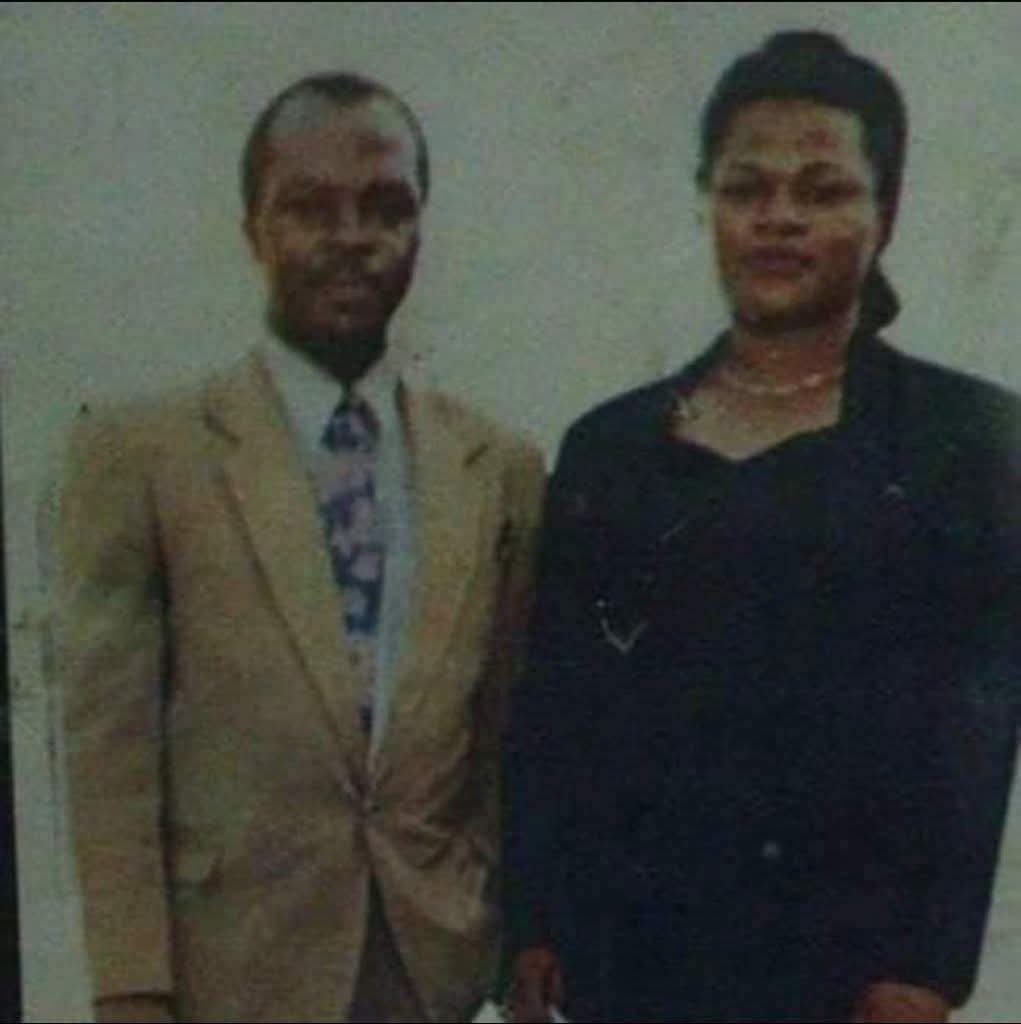
Today, 2 September 2026, is the 24th anniversary of the death of Barnabas Chidi Igwe.
The attack that killed him and his wife happened the evening before, on 1 September 2002.
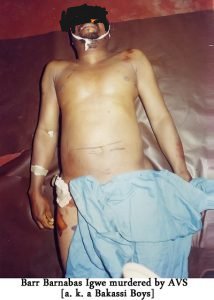
Abigail “Amaka” Igwe died that night. Barnabas was rushed to hospital. Doctors fought for hours. He died in the early hours of 2 September after speaking to his elder brother, Vincent, and identifying some of the men who had attacked them.
The couple is usually remembered together on 1 September. The date of Barnabas Igwe’s own death is today.
Barnabas Chidi Igwe was a lawyer from Atta in Oru West, Imo State, practising in Onitsha. In 2002 he was chairman of the Nigerian Bar Association (NBA) Onitsha branch, Anambra State. His wife, Abigail Amaka Igwe, was also a lawyer. They had three children: Chijindu, Nnenna, and Somadina (the youngest, born in 1996, about six years old). Amaka was pregnant with what would have been their fourth child.
Anambra in 2002 was in a deep fiscal and security crisis under Governor Chinwoke Mbadinuju. Civil servants, teachers, judiciary staff and legislative workers went unpaid for months. Schools and courts were disrupted.
The state government backed the Bakassi Boys (later operating under the Anambra Vigilante Service), a group Human Rights Watch and others documented as carrying out extrajudicial killings and terror.
As NBA Onitsha chairman, Igwe criticised both the unpaid salaries and the vigilante structure. The branch issued a 21-day ultimatum: pay the arrears or the governor should resign. Igwe and colleagues received direct threats, in person and by phone, in the days before the attack. Human Rights Watch later said there was “strong, credible evidence” the killings were political. Nothing was stolen from the couple.
In the last week of August 2002 they travelled to Ibadan for the 42nd NBA Annual General Conference. They returned to Onitsha on 31 August. It was their last trip out of the city.
On 1 September 2002, on Oraifite Street in the Awada area of Onitsha, their vehicle was blocked. Armed men dragged them out. They were assaulted with machetes and clubs and run over with a vehicle. Some contemporary reports also mentioned gunshots; the later Truth, Justice and Peace Commission (TJPC) account said the fatal injuries came from the physical assault, not gunshot wounds.
Amaka reportedly recognised one of the men in the convoy, named in later records as Ken Emeakayi, then Commissioner for Works, as a client of the family firm and ran toward him. She was struck. She died that night. Passers-by took Barnabas to hospital. Before he died the next morning he identified attackers to Vincent Igwe. The TJPC report later noted that one or both might have survived with prompt medical care.
The killings provoked national outrage in the legal profession. Wole Olanipekun had just become NBA president. The association declared a day of mourning, demanded investigation, and later sought emergency rule in Anambra. Human Rights Watch warned that other government critics were at risk. Suspects linked to the Bakassi Boys / AVS, including Emeakayi, were eventually charged. The prosecutions did not produce a completed, accepted reckoning. Case files were later said to have disappeared from court and DPP records.
Vincent and Juliana Igwe raised the three children. Somadina was called to the Nigerian Bar in 2023; Chijindu also became a lawyer and Nnenna completed her degree. The NBA under Olanipekun disputed later claims that the association abandoned the orphans and pointed to burial arrangements, a welfare fund, and recorded disbursements. The debate over how much institutional support they received has never fully closed.
Senegal is facing what Nigeria would have faced if we didn't initiate reforms.
Now that they are running to the IMF for bail out, they must do under stricter conditions, what they refused to do on their own terms earlier.
If you refuse to put yourself in shape as at when due, external forces will bend you by force when you go cap in hand begging.
As usual, some of their politicians and citizens are blaming Bretton Woods institutions, western imperialism, Neocolonialism- the usual rhetoric.
You mismanage yourself, seeking help, then start gaslighting those that want to help you.
Kachalla wants to return us to that path. We must retire him to Dubai permanently.
If you have any connections or know anyone who can help me secure a Cabin Crew job, I’d really appreciate your help. I’m an NCAA-licensed Cabin Crew member with an EMB-145 type rating, and I’m actively looking for opportunities. Any referral, contact, or lead would mean a lot🙏
No country has sustainably eliminated extreme poverty in recent decades by relying primarily on a welfare system before building the productive economy needed to support it. Sustained poverty reduction comes from reforms that enable people to increase their incomes through better employment opportunities, higher productivity, and more productive enterprises.
A welfare system can alleviate poverty and provide a safety net, but it must ultimately be funded by the productive economy through taxation and other public revenues. This creates an important opportunity cost: money devoted to transfers is money that cannot simultaneously be invested in infrastructure, education, institutions and other conditions that enable people and businesses to generate higher incomes.
For example, if the Nigerian government could set aside $5 billion a year to give the poorest households the equivalent of $1 a day, that would increase their purchasing power but would not necessarily increase the economy's capacity to produce goods and services. If supply is limited, the additional demand could instead put upward pressure on prices. By contrast, investing some of the $5 billion in roads, electricity, irrigation, market access and other productive infrastructure could enable poor households and enterprises to produce more, reach bigger markets and earn higher incomes.
The fundamental challenge is not simply to redistribute existing income but to expand the productive capacity that generates income in the first place. Welfare can provide a safety net, but sustainable poverty reduction ultimately depends on creating the conditions in which more people can earn higher incomes and the economy can generate the revenues needed to sustain that safety net.
Men lie, women lie, but numbers don't lie.
Yar'Adua and GEJ frittered away our resources from depleting our Excess Crude Account and foreign reserves to accumulating debts while enjoying peak oil prices, with nothing substantial to show for it. The GDP growth was largely on the back of stable oil prices.
No major infrastructure worth noting. If you look at the billions of USD wasted, one would think Nigeria would be enjoying stable power, good roads, better transportation systems, security, better policing systems, education, and healthcare. Nothing, except cheap dollars, a rebased GDP and poverty.
What did we inherit in 2015? Poor infrastructure, Boko Haram, and a mismanaged power privatisation. Point to anything in Nigeria today that can explain the depletion of the ECA, the record oil revenue, the depletion of FX reserves during his era. Point to one road ! The train and the airport he started, he couldn't complete them.
PBAT is fixing a big mess and taking the bold decisions others refused to take. His numbers in 3 years are far better and he is practically pulling the country out of the woods.
@Rufyb, I agree with your assessment and would add a little context.
The 4.43% headline is an improvement, but it remains well below what Nigeria requires. Tilewa Adebajo's growth arithmetic is useful here. The economy needs sustained real growth of 8–10% annually to support a population approaching 250 million, or roughly 50 million households.
With population growing at about 2.5%, the current rate leaves output per person rising by less than 2% a year. At that pace, income per head would take more than three decades to double. We should all pause to imagine what that means. A young person entering the labour market this year would be approaching the end of a working life before average income per head has doubled, and that is the human content of the arithmetic.
The composition is equally important. Telecommunications grew by 10.4% and finance and insurance by 9.3%, but neither absorbs labour on the scale Nigeria needs. Trade grew by only 2.4%, while food, beverage, and tobacco manufacturing expanded by 2.8%, despite these activities being where much of the employment is concentrated. These are the sectors where most households actually earn, so weakness there is felt in homes long before it appears in a quarterly table. Cement's 12.8% growth points to stronger construction activity, but not yet to a broad manufacturing recovery.
There is always some noise around headline GDP numbers, and my senior colleagues and the more cautious economists among us will have more to add in the coming days. One distinction, though, is worth making now, and it concerns oil. The 7.3% figure represents the real growth of the oil sector in value-added terms, not the increase in barrels produced.
Our @TheAnalystNG, working off the @NBS_Nigeria figures, put production at an average of 1.72mbpd in the quarter, up from 1.68mbpd a year earlier, an increase of about 2.4%. The more encouraging figure is the 43.9% growth in oil refining, although its effect on jobs and household incomes remains limited for now.
The price effect also deserves attention. Nominal GDP rose by 18.43%, while real output grew by 4.43% and prices, as measured by the GDP deflator, increased by 13.4%. Much of the expansion in nominal GDP therefore reflected higher prices rather than additional output, which is very much how it has felt to households this year.
I would also treat some of the Q-onQ movements carefully. Electricity, gas and steam rose by 286.60% in real terms and water supply by 84.58%, while real estate declined by 44.61% in nominal terms and accommodation and food services fell by 60.08% in real terms.
Movements of that size are more likely to reflect seasonality and estimation effects in a rebased series than changes of the same magnitude in underlying economic activity. That is not a criticism of the Bureau, which is working through a rebasing, but it is a reason to lean on the year-on-year picture for now.
@proshare's review of the Q2 GDP numbers provides further context:
https://t.co/r5bLAyOX8G via @ecopoliticsNG
Please take the time to read it. I expect our Chief Economist @TeslimShittabey will have more to say on the numbers, particularly as Nigeria enters a pre-election year, a point @PaulAlaje also drew attention to yesterday on his @ARISEtv interview.
The improvement should be acknowledged, but not celebrated too quickly. The headline numbers still need to be tested against employment, household incomes, inflation and independently observable activity.
Growth counts when it is visible in wages, in market prices and in what a family can afford at the end of the month.
Nigeria needs growth that is sustained, employment-intensive and broad-based enough to raise living standards faster than the population expands. This quarter is a step forward, and I would rather we read it as encouragement to do much more than as evidence that enough is being done.
'FA
cc: @FinMinNigeria@cenbank@Ayoteriba@BJRewane@mudashiru_yusuf@Rotankwot@officialNESG@NGRPresident@nbccng@FDC_ltd@RTCAdvisory@webtvnigeria@DangoteGroup@cibnigeria@cisnigeria@TheAnalystNG@BBoason@nsia_nigeria
"The Nigerian equities market opened the week on a stronger footing, extending its recovery for a third consecutive session as renewed demand for large-cap banking, telecommunications, consumer goods and energy stocks lifted the @ngxgrp All-Share Index by 1.20%. The gain added N1.91trn to market capitalisation and raised the year-to-date return to 56.93%. Market breadth strengthened materially, with 43 gainers against 16 decliners, indicating that the advance extended beyond a limited group of index-heavy counters.
Trading activity provided measured support for the rally. Volume increased marginally by 0.17% to 606.19m shares, while turnover reached N38.70bn across 53,471 deals. The @NASDNG Securities Index also gained 1.67%, reinforcing the positive direction across listed and unlisted equities. Currency conditions improved concurrently, with the NFEM rate appreciating to N1,332.94/US$1 and the average BDC rate strengthening to N1,395/US$1.
Near-term market direction will depend on the durability of buying interest, broader participation beyond heavyweight stocks and investors’ assessment of corporate earnings. The improvement in market breadth and the naira provides a constructive base, although sustained gains will require stronger turnover and continued institutional demand."
READ MORE>>> https://t.co/21kkIgFY81 via @TheAnalystNG@proshare
THE RENEWED HOPE AGENDA IS WORKING
Fellow Nigerians,
Our economy grew by 4.43% in the second quarter of 2026, up from 4.23% in the same period last year.
Growth was recorded across agriculture, manufacturing, oil and gas, and services, which now make the largest contribution to our GDP.
In nominal terms, our GDP reached ₦119.27 trillion, up 18.43% from ₦100.7 trillion in the same period last year.
These numbers matter because they show where our economy is going after three years of difficult but necessary reforms.
If you are a Nigerian passenger presently stuck at the Jomo Kenyatta International Airport in Nairobi, Kenya, PLEASE, do not participate in ANY form of protest.
We are in discussions with Kenya Airways and, like every other airline, they are waiting for slots to be able to operate.
What happened there today was like a force majeure situation and the volume of disruptions means that it will take a while for operations to stabilise.
Do not stage any protest.
If you are arrested, the NCAA would be unable to intervene. Refreshment is beung offered at GATE 23.
We will continue to monitor the situation.