One thing I've noticed over the years in practice...
Couples.
Siblings.
Parents and children.
Using the same toothbrush.
Using the same toothpaste.
Having similar brushing habits.
Yet having completely different mouths.
Why?
Brushing is only one part of the equation.
Saliva isn't the same from one person to the next.
Its composition and function are shaped by things like overall health, diet, medications, genetics, and the immune system.
That means two people with nearly identical habits can have very different oral environments.
Saliva influences:
�� Acid buffering
• Mineral availability
• The oral microbiome
• Calculus formation
• Remineralization
It's not just hygiene.
It's biology.
#SystemicKDG
One fluid.
Many roles.
Saliva does much more than keep things wet:
• Protect teeth from acid
• Deliver minerals that support remineralization
• Wash away food particles
• Lubricate the mouth for speaking and swallowing
• Support taste
• Help balance the oral microbiome
• Protect soft tissues
• Begin the digestion of food
• Support immune defense
Most people never think about saliva...
Until it starts telling a different story.
#SystemicKDG
A common belief is that X-rays at a dental visit are not necessary.
If it happens there are no findings, consider yourself lucky.
It’s not necessarily grounds to question their importance.
I learned this very poignantly early on in my career during my intern year after being assigned this patient.
If saliva is just there to keep things wet,
then blood is just a red liquid.
As one of the most biologically active fluids in the human body, saliva influences:
• Whether teeth gain or lose minerals
• How quickly tartar forms
• Which bacteria dominate
• How well acids are neutralized
• Gum health
Oral health isn't determined by brushing alone.
It's also shaped by the environment your teeth live in.
Saliva is one of the biggest parts of that environment.
Before we can understand oral disease...
we first have to understand saliva.
#SystemicKDG
The goal is not finding cavities.
The goal is finding decay before it becomes a cavity.
A cavity is damage.
Decay is a process.
Let’s disrupt that process before the damage becomes irreversible.
These NIRI images show the same area of early decay at the initial visit and two years after non-invasive treatment.
The decay process was arrested before the damage required a filling.
Not every lesion is a candidate for this approach.
But every lesion starts somewhere.
The earlier decay is identified, the more opportunities exist to preserve natural tooth structure.
#PreventionKDG
There are two schools of thought in dentistry:
Watch and then repair.
Or
Diagnose and actively preserve.
Both can work.
Ultimately, it’s up to each patient to decide what works best for them.
#PreventionKDG
Your teeth are constantly demineralizing and remineralizing.
It is a daily tug-of-war.
Cavities occur when mineral loss consistently exceeds mineral replacement.
Preventive dentistry lives in that balance.
#BiomimeticDentistryKDG
Why do some people build tartar rapidly while others barely accumulate any?
It's not always brushing.
Saliva contains:
• Phosphorus
• Calcium
• Urea
Its pH and flow rate also influence how readily plaque mineralizes into calculus.
The mouth is not separate from the rest of the body, it's part of the same biologic system.
Sometimes tartar isn't just telling us about oral hygiene.
It may be telling us something about the environment that created it.
#PreventionKDG
Hydroxyapatite isn't new.
It's the primary mineral your teeth are already made of (97% enamel, 70% dentin).
It's a useful tool, but it's not a silver bullet.
In order for hydroxyapatite to work, there must be proper chemistry.
That chemistry still depends on:
• Saliva
• Oral pH
• Calcium and phosphate availability
• Frequency of acid exposure
No toothpaste can completely overcome an unhealthy oral environment.
The goal isn't finding a miracle product.
The goal is creating conditions where the body can maintain and repair itself.
That's the foundation of biomimetic dentistry.
#BiomimeticDentistryKDG
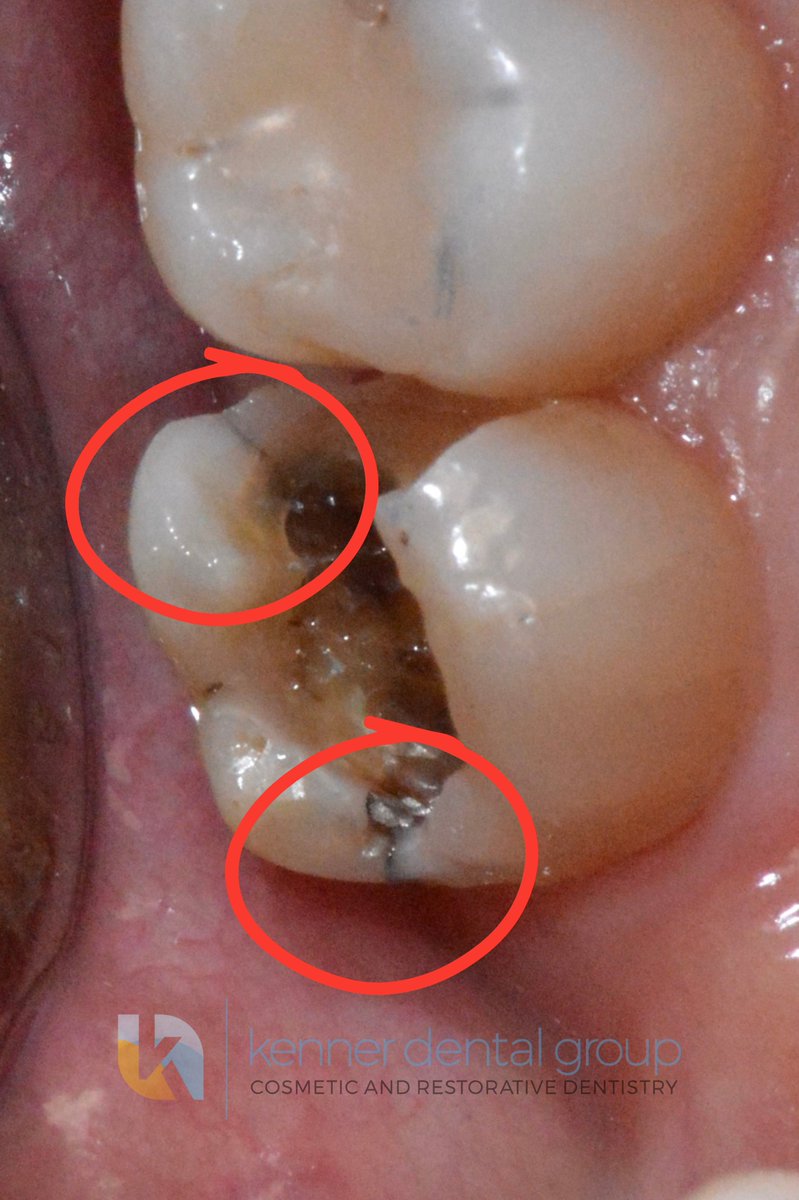
Stress induced fractures noted after removal of an old silver filling.
This is one of the most common findings I see after removal.
Silver filling material expands slightly as it sets, introducing stress into the surrounding tooth structure.
Because the material is rigid and does not flex with the tooth, it can act like a wedge within the remaining tooth structure.
Combined with years of chewing forces, the surrounding tooth structure can develop cracks and eventually fracture.
Matching materials with properties as similar to enamel as possible, while properly distributing forces, is at the center of biomimetic dentistry.
#BiomimeticDentistryKDG
@CoffeeBlackMD I like it, will definitely change the ramp up and weigh progression and see how that goes. Hopefully can break this plateau. Appreciate the feedback 👊
That's correct. I don't feel like I was going slow, but maybe I was. I would force myself to do deads regardless of whether I felt like it. I was doing them 2x/wk on the regular. I then changed to 1x/week thinking I needed more recovery, and supplemented with leg press, extension, and curls on the non-dead days. I do track my sets to make sure I match what I did the prior week as a minimum, then sneak in an extra rep or two, or add more weight. My current pyramid is 135 x10, 225x10 (x2) as a warm up, then 315x5 (x2), 365x3 (x2), then I can usually only get 405x2 before being totally gassed. I tried doing fewer sets leading up to it, but at least with 135->225 range it helps my joints and back feel primed, and the two sets at 315 I've been doing to try and help build muscle memory.
Well Lit Review time turned into a deep dive on using AI to streamline office flow. Not sure if that qualifies.
No points awarded.
✅ gym
✅ treatment planning
❌ lit review
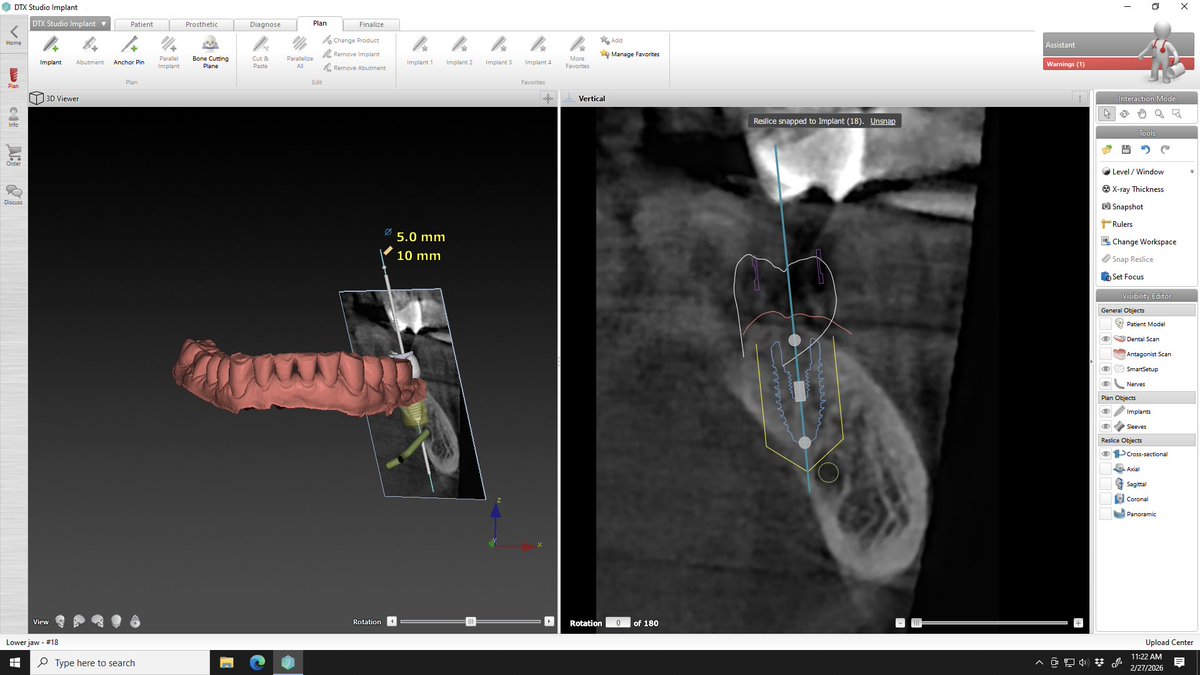
✅ treatment planning complete.
I don’t usually replace 2nd molars with implants due to anatomic limitations, and the gain in chewing function relative to the cost. But in this case, the patient wanted it and after doing the work up, is feasible.