Rereading this and loving it. "Designing with humans for humans means qualitative understanding is critical - On the Internet, nobody knows that your Fitbit is attached to a dog." The Six Principles of Conversational Transformation https://t.co/bWkKAV6Z7P
It's no surprise that there’s an IT skills gap. The surprising part is that a lack of applicants is not the issue - it's that companies are having trouble finding qualified candidates. @eileenb of @ZDNet dives into this challenge, leveraging @iCIMS data: https://t.co/d9LwplZvjz
"Always design a thing by considering it in its next larger context – a chair in a room, a room in a house, a house in an environment, an environment in a city plan" - Eliel Saarinen
Which means you need to research the next larger context and not just 'your' thing.
Assumptions are pernicious. They are particularly dangerous when they become ingrained in your product or service design decisions. To combat assumptions, ask lots of questions. Don't be afraid to ask "the obvious question." https://t.co/SRYgigyEHK
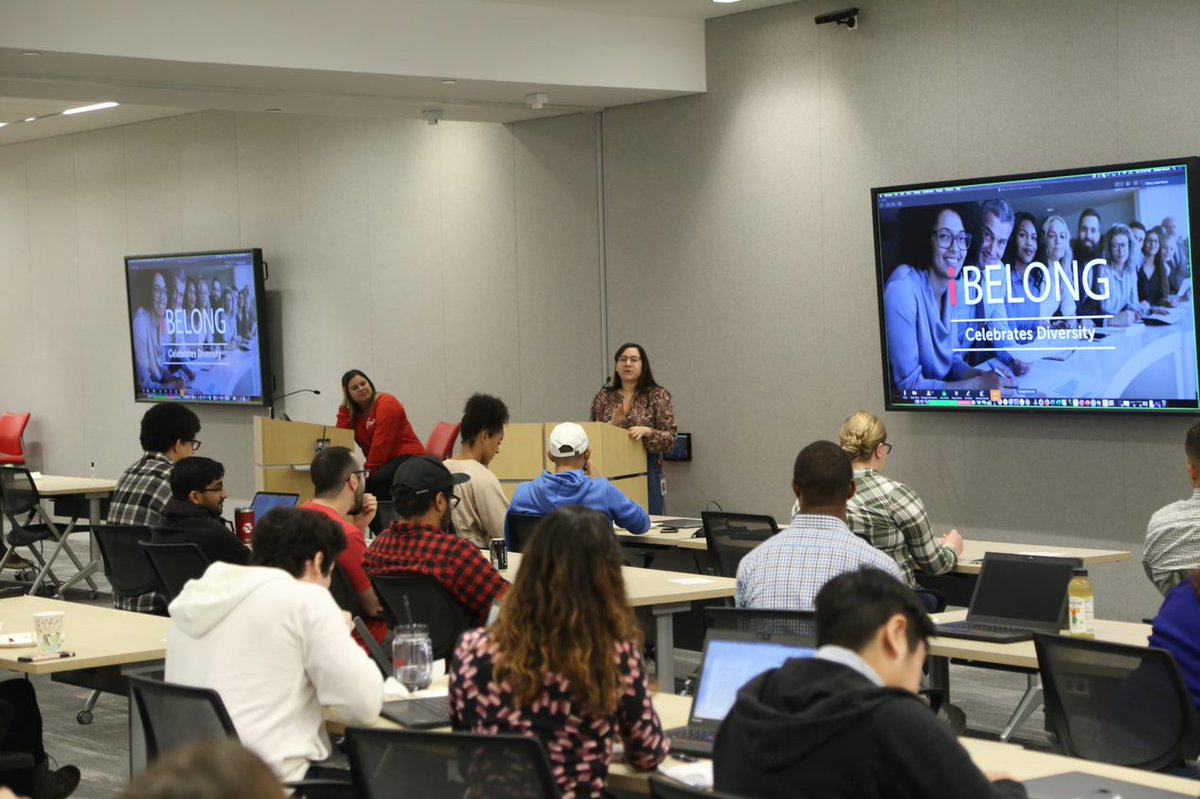
Last week, we celebrated the official launch of our very own employee-led diversity and inclusion committee –iBELONG.
Festivities included a themed lunch, diversity jeopardy, and plenty of prizes. Check out some of the fun!
Instead of "quick & easy" research, confident & reliable" qualitative data patterns are more valuable. Use listening skills to collect the deep inner thinking, reactions, and guiding principles. Then carefully parse the concepts from each transcript, then look for patterns.
A person is human, and humans don’t remain exactly the same all the time, unswayed by mood or circumstances. Don't design with the assumption that a person will reason the same way each time they approach a task.
Your brain only forges new ideas from things that exist within your mind already…hence the problem with creating products & services. Teams only think of solutions couched in concepts already familiar to them. Let in unfamiliar perspectives to feed your mind & expand your ideas.
If you want to predict future user behavior, focus on deeply understanding current behavior & motivations instead of asking users to predict what they’ll do with a product they’ve never seen.
This just in from the #ResearcherSkills workshops done by the #ResearchOps Community: A first look — Researcher Skills Framework data by @stonecrops_ https://t.co/Wkdr3zcCWR
A data point is not an insight.
A list of data points from product analytics does not constitute 'great insights'.
A list of data points from your current product design tells you what people do now with your current design, not what they'd rather be doing.
I've started writing up a handful of 'dysfunctions' I've observed in organisations who are looking to scale research in product teams. https://t.co/kXFZiNW8RX
Hey, underrepresented folks in tech! Sign up for @DiversifyTechCo's weekly newsletter to get notified of jobs, scholarships, and resources. https://t.co/YxwtaA4cTf #DiversifyTech
The #ResearchOps#ResearchRepos project is picking up steam and doing some interesting work. We're delivering iteratively on this project, so expect updates all along the way. @heypaulkotz talking open-source taxonomy for UX Research Repositories: https://t.co/tQpfhBhYQH