Intensive Care Physician - Department of Critical Care Medicine @UCalgaryMed. Delivering ABCs on a daily basis. Father. Husband. @Canucks fan in the 403. #ECLS
Many of our colleagues will be speaking @WCICC2025 Vancouver Sept 16-19, showcasing Calgary’s expertise in areas of critical care. If you’re attending be sure to listen to talks from: Jessica Jenkins, @JAKrommMD, Andreas Kramer, @kissel_katie, Amanda Roze des Ordons, @KenParhar
World Congress Speaker Spotlight! Sonny Dhanai, Ken Parhar and Emily Taylor will be speaking at the 17th World Congress of Intensive and Critical Care!
@KenParhar
Early Bird Extended to Midnight tonight!
https://t.co/5C1MdjF91E
#CCCS#WFICC#CSRT#CACCN
Methods for determining optimal positive end-expiratory pressure in patients undergoing invasive mechanical ventilation: a scoping review - Canadian Journal of Anesthesia #Anesthesia#Anesthesiology https://t.co/Tg1aBObSTf
Methods for determining optimal positive end-expiratory pressure in patients undergoing invasive mechanical ventilation: a scoping review - Canadian Journal of Anesthesia
#CJA#Anesthesia#Anesthesiology https://t.co/Tg1aBObSTf
Error 8/10: Equating low ejection fraction in sick patients with cardiogenic shock.
This is a common mistake.
For example, a patient has shock and POCUS shows depressed LV function. This must be cardiogenic shock then! Not so fast...
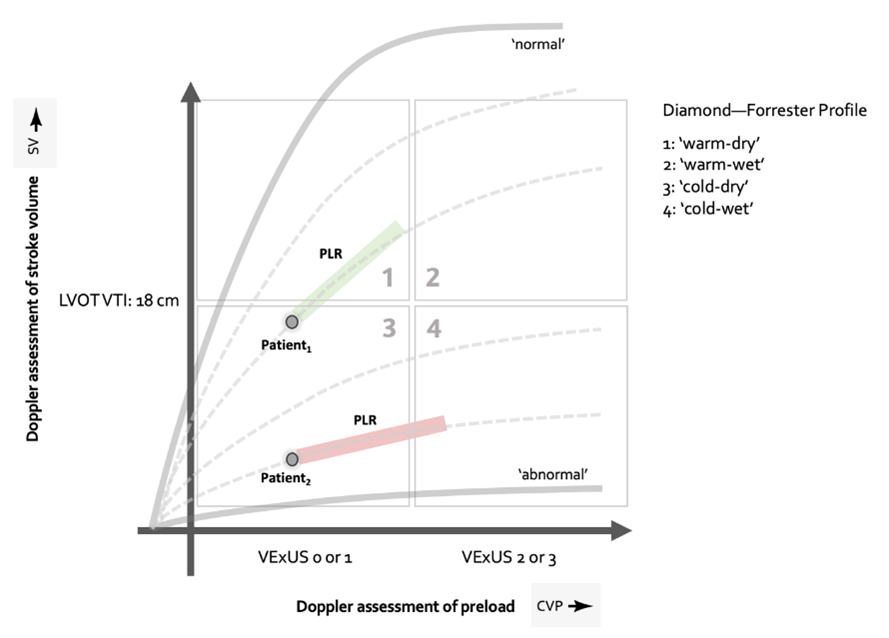
Remember, patients with cardiomyopathy (acute or chronic) can have low, normal, or high stroke volume. They can also have low, normal, or high filling pressures.
In these patients, using a VTI (or some other estimate of stroke volume) and then an estimate of filling pressures (B-lines, E/e', or VEXUS for right side) is super valuable.
Ryan Kesler on fans chanting his name last night : "I will never forget that, the way the fans have treated me after everything that happened. I was talking with the wife about that this morning about that, I would love to retire as a Canuck, my heart is in this city."
Excited to share our new review on mechanical power in mechanical ventilation! Could this metric help reduce ventilator-induced lung injury? Read more in JCC: https://t.co/XZjjlQa5vg
@StephanVonDu@KenParhar NeillAdhikari @martin_urner JosephKim @laveenamunshi@KuanLiu2@efan75
1/7: This year, let's fully understand the concepts of fluid responsiveness, fluid tolerance, venous congestion, dynamic fluid intolerance, and perfusion.
This is crucial for all providers as dedicated RCTs (1500 pts!) (@AndromedaShock 2) will help inform how to integrate these into practice.
A 🧵
Here's our recent paper for a deeper dive right off the bat. https://t.co/5moUYWBFTE
#medtwitter #foamed #foamcc #meded #medicine #evidencebasedmedicine
The O'Brien Institute is pleased to announce its new scientific director, Dr. Kirsten Fiest, PhD. This appointment will usher in a new era of public health excellence.
Please join us in congratulating Dr. @KMFiest!
Read more: https://t.co/eygQv3A8Q3