Looks like sub Saharan Africa is collectively soaking herself with debt. Kenya's situation is well within the SSA trend. Are we likely to see replication of post SAPs HIPC nightmare? Analysis by @TheEconomist via @EconomistLake
ELEVEN high profile defaulters, SIX Banks in hot pursuit, ~ksh40B at stake.
It's probably largest & most aggressive debt recovery wave in kenya's banking history.
KCB is most exposed at ~ksh17B, ksh7B in Savannah alone.
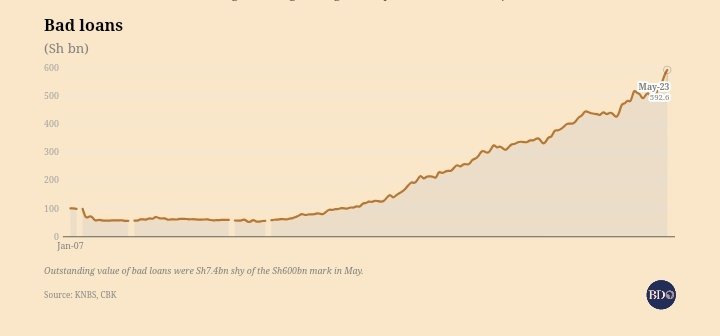
As of May 2023, bad loans totalled ~ksh593B, KCB soaked.
According to Pan-African Climate Justice Alliance, Africa needs between $160Billion & $340Billion by 2030 for adaptation but current annual flows are around $16Billion.
Higher loan-to-deposit ratio means greater role in expansion of credit to private sector.
Who among Kenya's Big 9 lends more (% of deposits)?
1. ABSA-94.9%
2. Stanbic-93.5%
3. Family- 84.0%
4. Co-op-78.8%
5. I&M-77.3%
6. KCB-71.5%
7. Equity-69.5%
8. NCBA-59.6%
9. Stanchart-51.3%
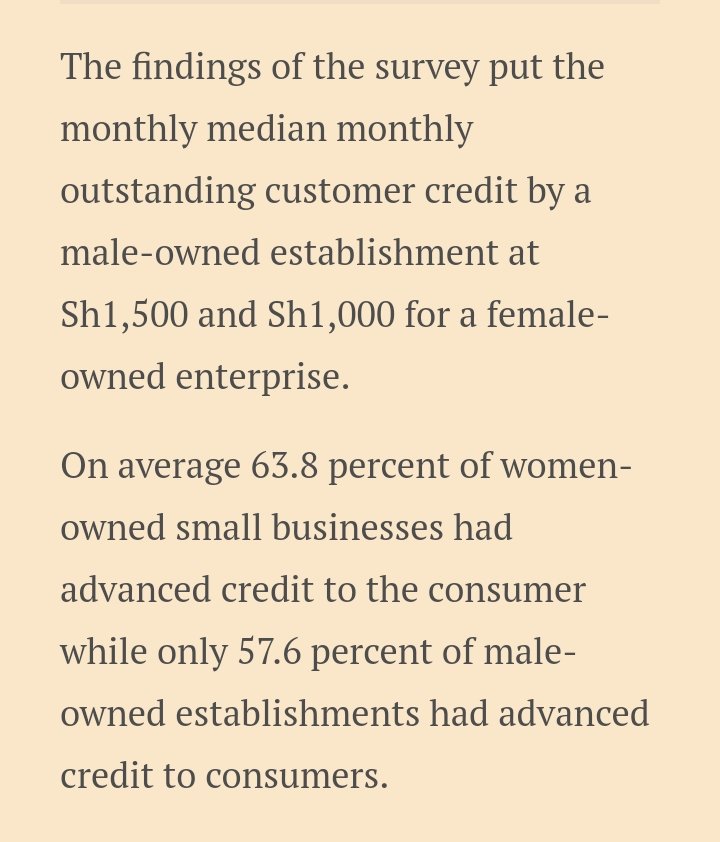
Male-owned businesses had higher median monthly outstanding credit at ksh1,500 than female-owned businesses at ksh1,000.
On average, female-owned businesses advanced credit to more consumers than male-owned businesses.
Interesting phenomenon: Gender & credit risk mgt strategy!
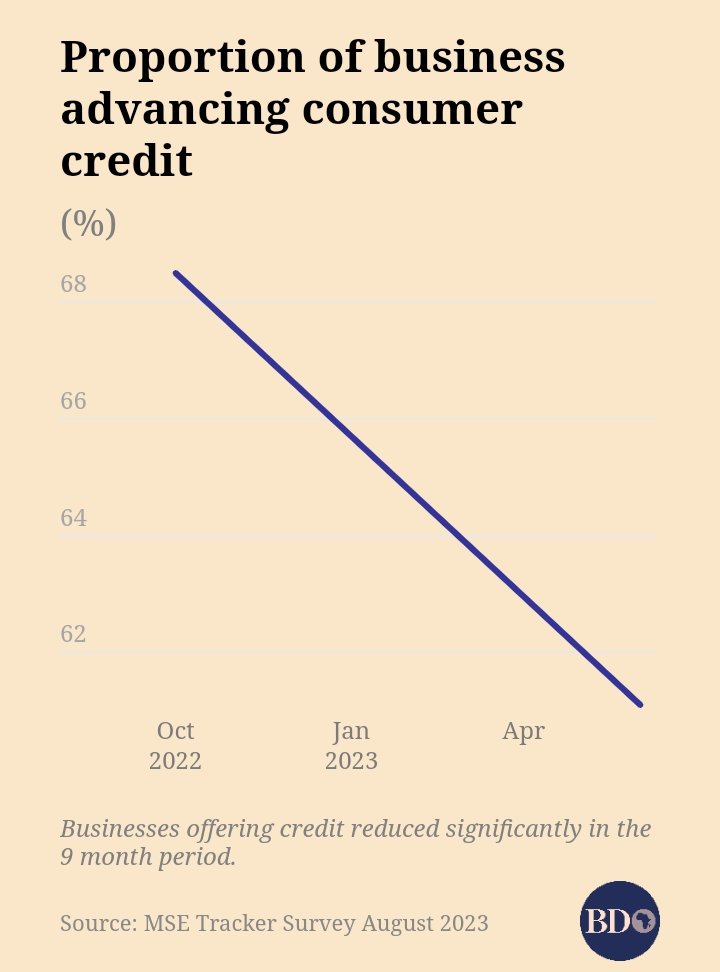
Small businesses have significantly reduced credit sales to consumers due to increase in consumer defaults.
A pointer to economic hardships over 9 months to June 30, 2023.
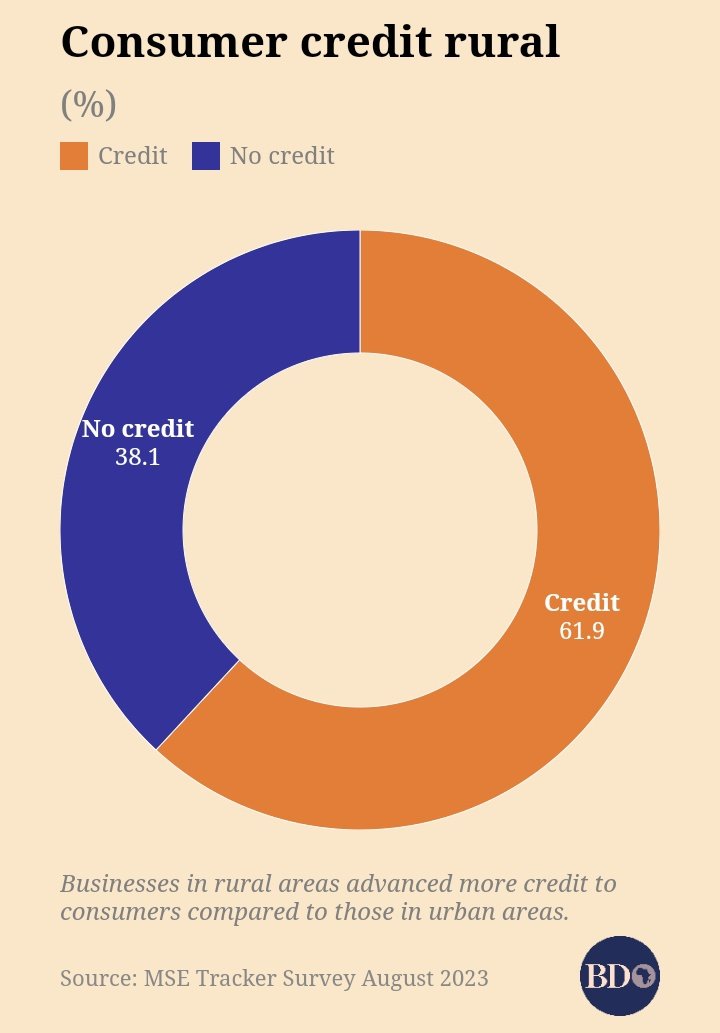
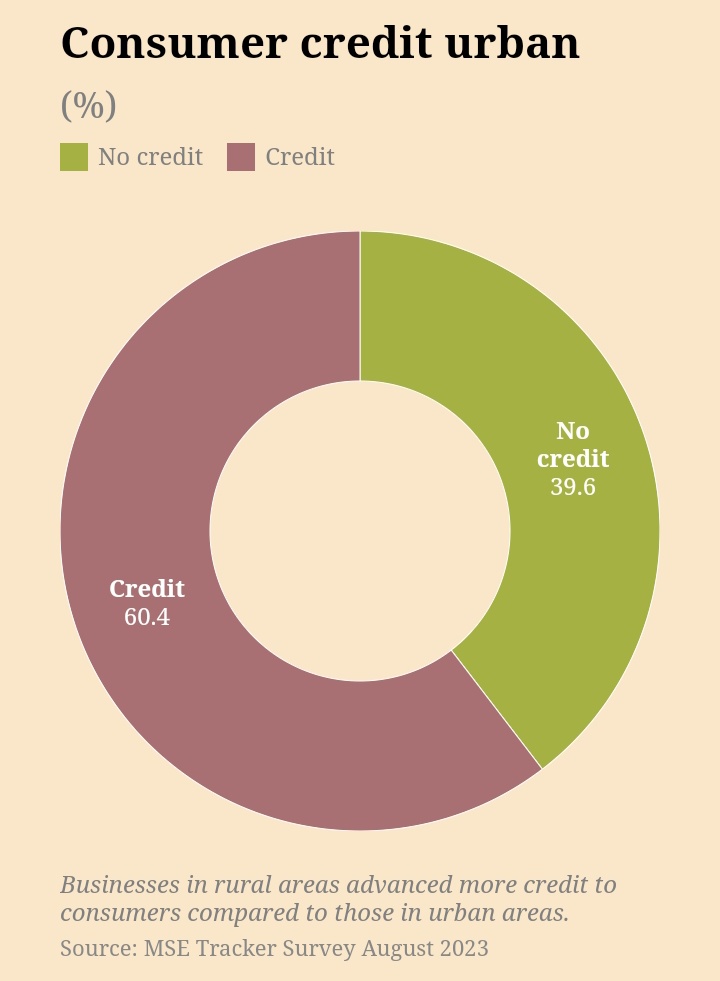
Businesses in rural areas advanced more credit to consumers than in urban areas.
Intuitively, rural areas have higher level of social capital.
Could this be the explanation for the differential?
BEWARE! Tradepro Kenya (https://t.co/r1eqsIjuGs) is NOT a CMA licensed non-deadling foreign exchange broker as they claim, or as any other capital market intermediary.
#SecureInvestments#Investorprotection
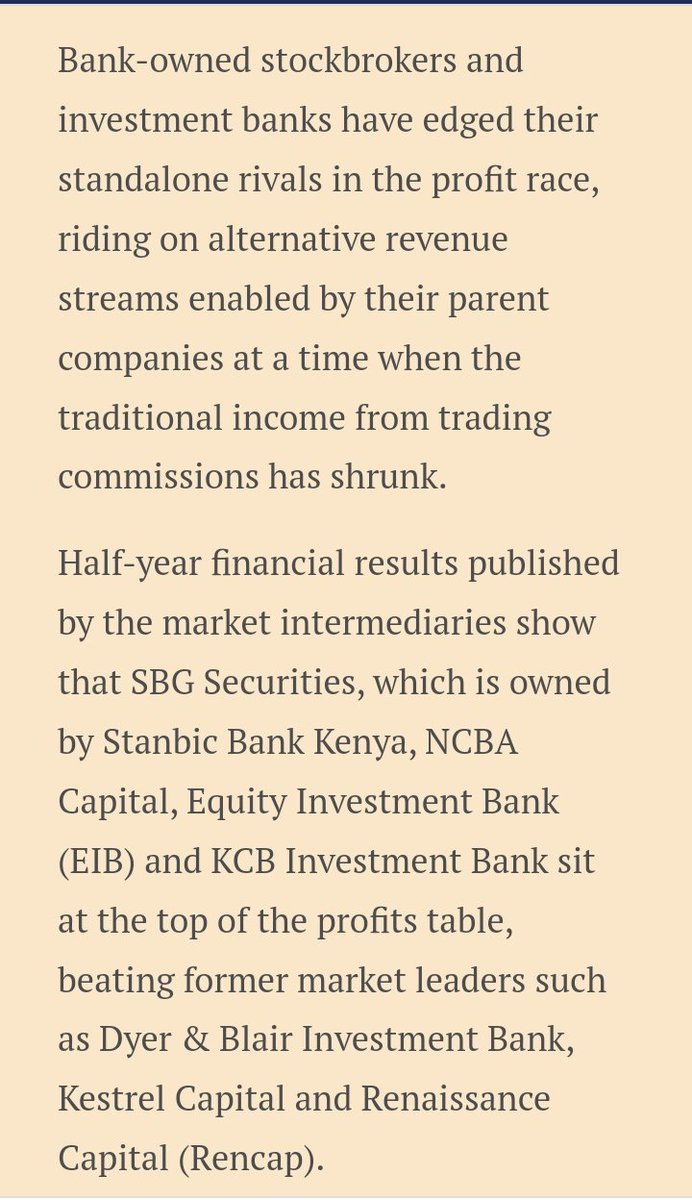
Bank owned stockbrokers & investment banks have edged standalone rivals in the profit race riding on alternative revenue streams.
Underwhelming performance of NSE has taken heavy toll on traditional trading income relied on by standalone stockbrokers & investment banks.
The other very important determinant of cost of capital is savings rate.
But if you tax rates are so high meaning less savings, & if you discourage savings via high inflation rate policies (5% inflation target is insane!), how can you achieve low cost of capital?
Passive income, specifically monthly, can provide consistent and reliable cash flow.
This income is like a steady rhythm, constantly adding to your financial resources without interrupting your primary activities.
Setting up yourself for sustainable passive income means you never sell your proven dividend stocks, practice bond laddering and hold to maturity.
The beauty of it lies in the potential for financial freedom.
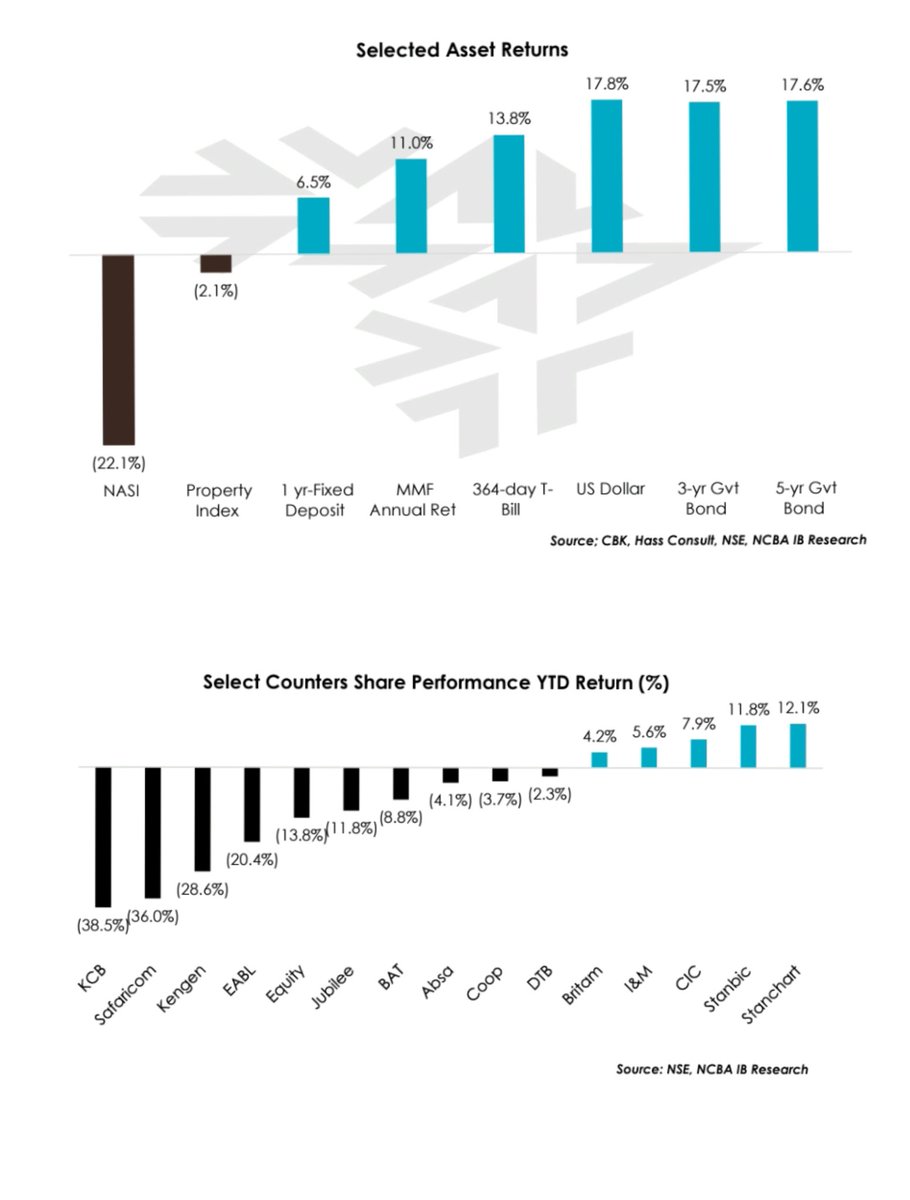
Investing in short-term government securities has proven to be the most lucrative option for investors year-to-August, surpassing the returns from equities listed on the Nairobi Securities Exchange (NSE) and real estate.
Always
Diversify your portfolio
Avoid emotional Investing
Assess your risk tolerance
Have a long term perspective
Focus on quality investments
Strengthen your emergency fund
Regularly rebalance your portfolio
Consider income generating assets