CA: JLNrQiydCj9mt5Re1H2yp7zi7rYu87nqLiAybF1pump
you switch AIs the way you switch tabs now. a better model ships, you open it, and the first hour goes to explaining yourself again: the budget, the dates, what you already decided and why.
most AI apps remember you. each one remembers inside its own walls. move to the next model and your context stays behind.
so we built KEPN: one memory you own, read only by the AIs you allow.
an item exists only after you approve it.
→ it keeps its source and every version
→ each app gets its own grant: read, propose, expiry
→ change one fact and every allowed app reads the new version on its next read
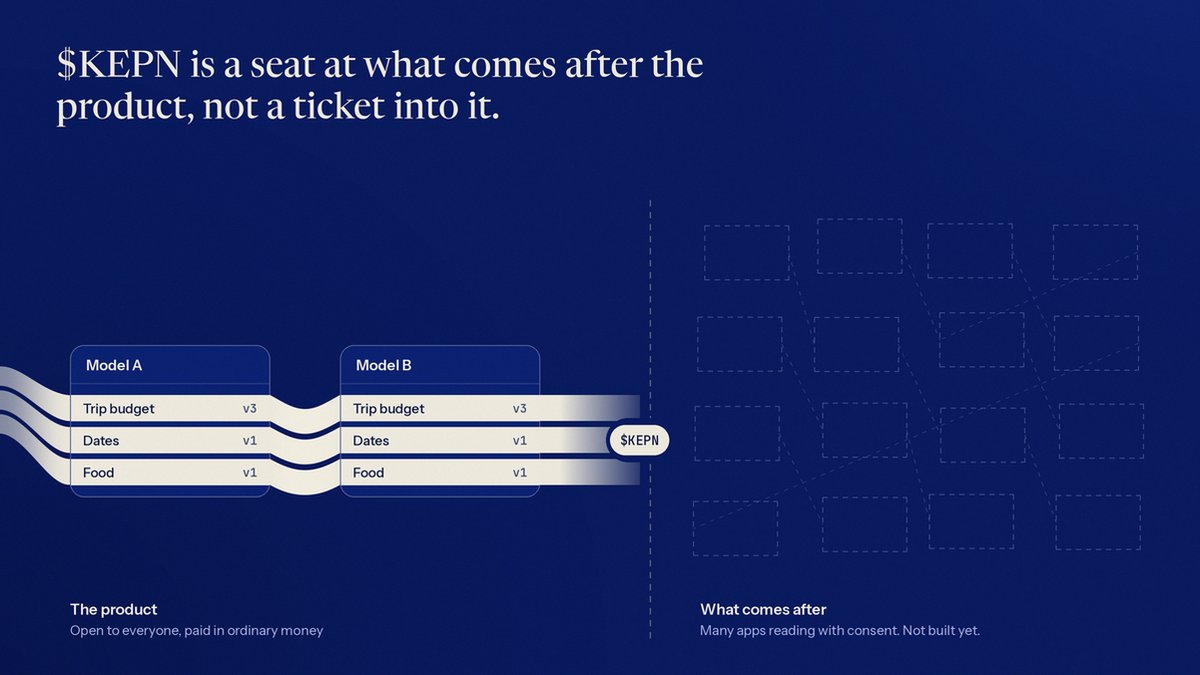
a trip budget goes from 2,400 EUR to 2,000. v2 becomes v3. Model A, Model B and the booking helper all plan from v3. nobody re-explains anything.
close an item for one app and its next read comes back without it. what it already received stays with it. we say that plainly because it is true.
apps connect over MCP with a token you can replace or revoke. the trial runs live models on the same request, with your context and without it. tested on real model calls, not mockups.
the product runs on ordinary payments. $KEPN is optional: holding it opens Keyholder recognition. any buyback is planned only from real service surplus, and the tokens bought are burned. nothing is promised.
CA: JLNrQiydCj9mt5Re1H2yp7zi7rYu87nqLiAybF1pump
https://t.co/IhZEDkHDhl
Free stays free: your local memory, your export, the public samples and a handful of connected apps.
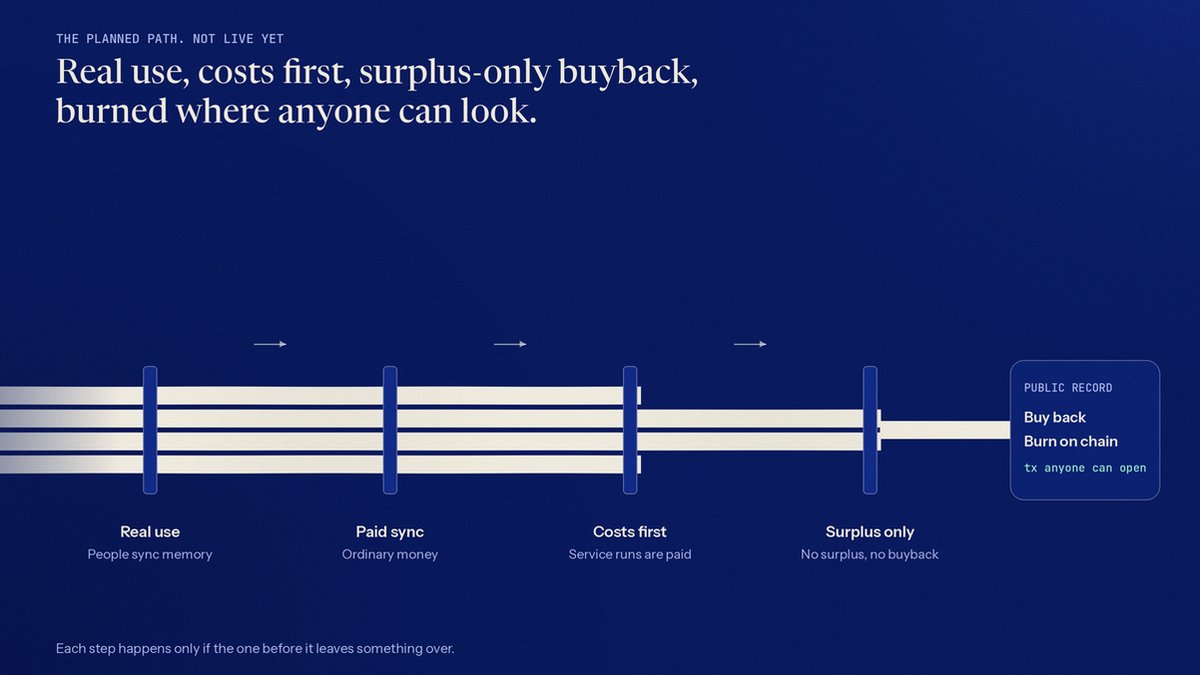
Paid sync is planned to widen the ribbon to more apps in continuous sync, paid for like any other service. There is no price yet.
$KEPN sits outside that line. Holding it opens Keyholder recognition, a quiet sign that you backed the open layer early.
The path we designed runs one way: real use, paid sync in ordinary money once it opens, costs covered first.
Only surplus after that is meant to buy $KEPN back, and the plan is to burn what is bought, on chain where anyone can look.
No surplus, no buyback. We would rather the token follow the product than the other way around.
Once a model has read something, no product can make it unread.
So we built KEPN around the moment before that: which item, which app, which version, and your yes.
Being exact about that boundary is how a memory product earns the right to hold your plans.
Every memory in KEPN has a birth certificate.
Someone proposed it, you approved it, and from then on each version carries its source and its time.
Even a proposal phrased as a command arrives as plain text, with no power over who reads what. And whatever you build up, the export button takes all of it home for free.
$KEPN is not a ticket into the product. Memory, export and sealed backup work today without it, free. Paid sync is planned for ordinary money, never for the token.
It is a seat at what comes after: many apps reading one person's latest context with consent, and paying for those reads in a unit that belongs to no single company.
That network does not exist yet. Holders are the people who want it to.
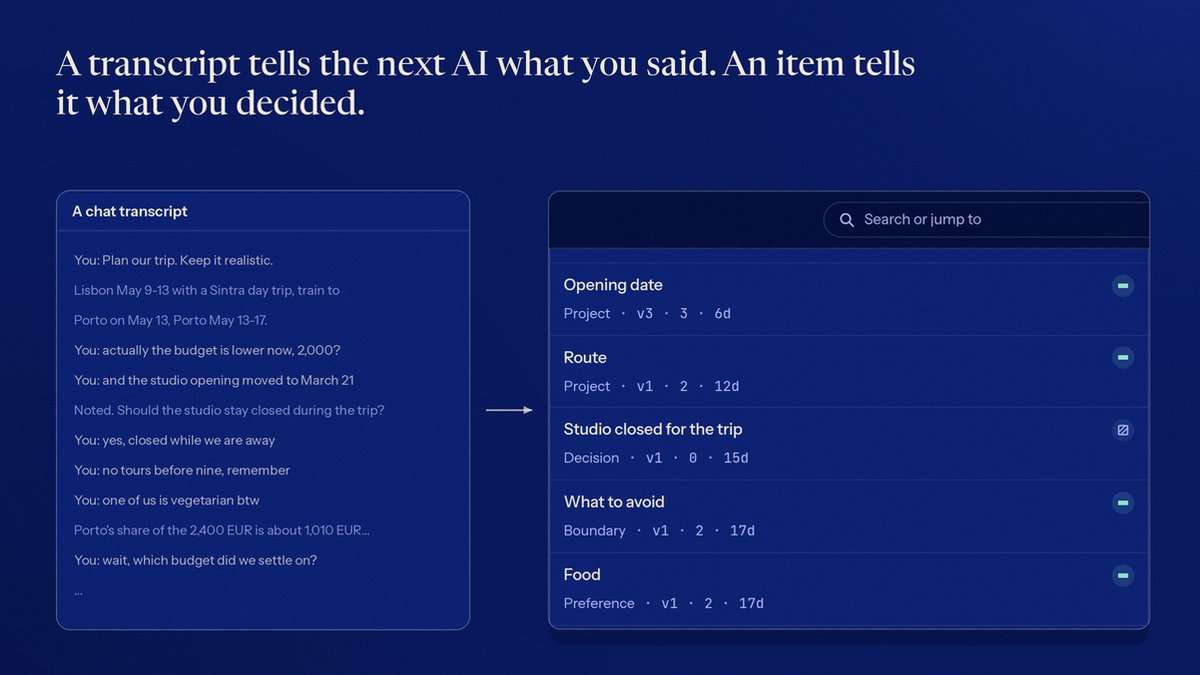
KEPN does not hoard your chat logs.
It keeps items: a budget cap, a date range, a rule you set, each one small enough to read, correct and grant on its own.
A transcript tells the next AI what you said. An item tells it what you decided.
the KEPN settlement program is live on mainnet.
program: 6GKbMyt3AEbgEwcaFFiSLD3J4GCPeW1LVEQkVibSt2yW
deploy tx: https://t.co/IJ9fE5SyTb
what it does: when an app reads your memory with your consent, the read settles on-chain. part is burned, the rest goes to you.
next:
-> first settlement, with the tx
-> DEX Screener profile update(dex pay)
$KEPN
Control should be one motion, and visible.
Close an item for one app. Its next read arrives one item lighter, and every other app carries on as before.
Text an app already received stays where it went. We put that sentence on the screen next to the button, because control you misunderstand is worse than none.
next on KEPN:
-> settlement program goes live on mainnet
-> first consented read settles on-chain: part burned, the rest to the user whose memory was read
-> DEX Screener profile update
every step ships with a tx you can check.
https://t.co/zJkWz1RVw0
Our context kept getting trapped inside whichever chat we happened to start in.
A decision made with one assistant was news to the next. A corrected number lived in one window and stayed wrong everywhere else.
We think your context should belong to you, not to the app where it was first typed.
What would you build if every AI you opened already knew the decisions you made last week?