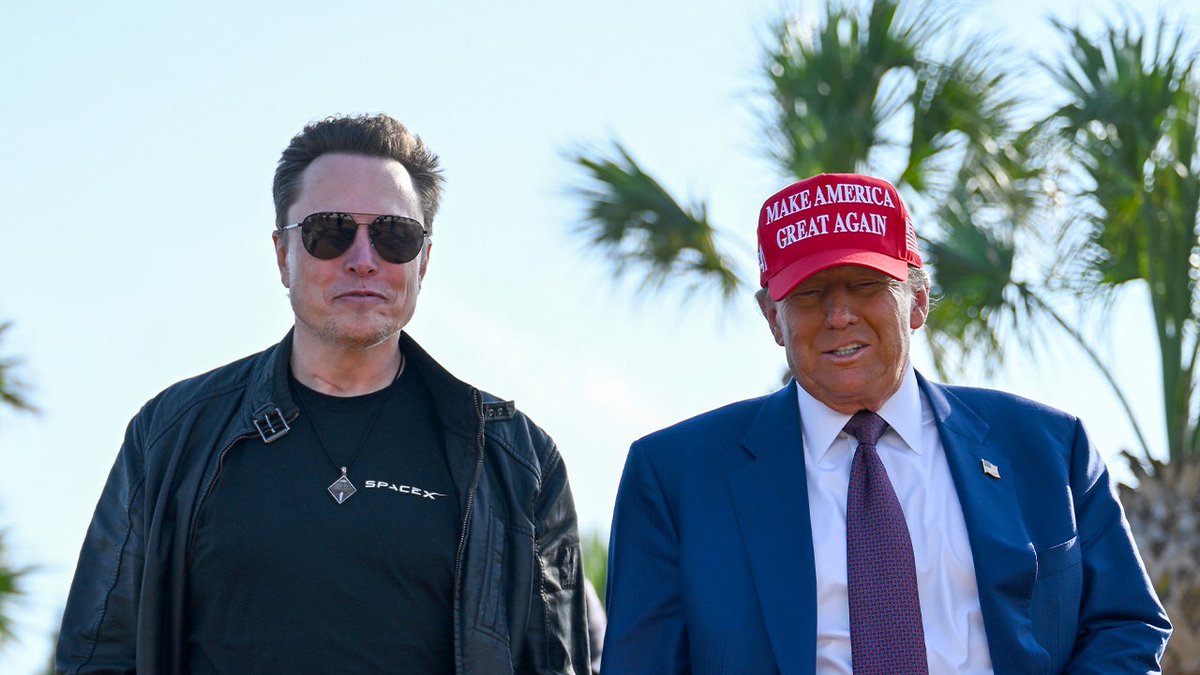
This week in MAHA:
- 40+ ice cream makers dropping artificial dyes by end of 2027
- Sprouts bans Produce Maxx, a chlorine-based chemical used to mist organic produce at thousands of stores
- HHS moving away from unnecessary animal testing
- HHS and EPA launching fresh health review of glyphosate, including links to cancer, reproductive health and gut health
The wins keep coming.
@CSinclairtv
RFK Jr. says he visited a Head Start facility and was SHOCKED to find they didn’t even have a kitchen to cook for the kids.
They were feeding them solely packaged food.
“I went into a Head Start facility, it was all packaged food.”
“They didn’t even have a kitchen anymore to be able to make food for the children.”
“So we’re taking the 700,000 poorest kids in our country and we’re giving them poison, and they’re going to end up with diabetes, and then they’re going to end up on Medicaid, and they’re not going to fulfill their destinies.”
“The quality of the food you eat really dictates how you will perform in school and later on.”
“It affects your behavior, it affects your capacity to learn, it affects your sleep cycle, and protein is critical to that.”
4+ hours of flying over open ocean. No GPS.
Our groundbreaking MagNav flight test with @Honeywell_Aero is a critical advancement for the future of aviation and national security.
https://t.co/PQ4uicjxNQ
EXCLUSIVE: The Trump administration is set to launch https://t.co/Hdq8KMPZkP, a new AI-powered tool designed to be a "one-stop shop" for Americans navigating the federal government, replacing what officials describe as a maze of scattered agency websites.
President Trump and Vice President Vance will unveil the platform Tuesday at an all-day event in Washington featuring Elon Musk, Nvidia CEO Jensen Huang, Blue Origin CEO Dave Limp, Secretary of State Marco Rubio, and Dr. Mehmet Oz. The event will also include panels on AI, energy, health, space, and agriculture.
The tool was built by the National Design Studio, led by AirBnB cofounder Joe Gebbia — the first-ever Chief Design Officer of the United States — who told Fox News Digital the launch marks a "new chapter of usability for the country."
Full story here https://t.co/iqMqaHmZrn
I argued on CNBC this morning that:
1. The data have been consistent with not hiking rates. Core CPI came in at the lowest level since March 2021, and core PCE is about to be revised and brought closer in line with the less error-prone CPI levels. We are getting the evidence we need that the spring was consistent with a one-off energy shock, as core PCE moving averages slope down and come in line with a forecast to be back at target in the period after monetary policy lags, i.e. in about a year. We know from Trichet that hiking into an oil shock doesn't lead to the best outcomes.
2. If you held in June and July and become more hawkish as the inflation data come down, it speaks to an incoherent reaction function. The market needs to believe there is an economic framework underlying monetary policy decisions and they are not being made randomly. Typically, a central bank becomes more dovish as inflation data and forecasts come down, not more hawkish. If the Fed hikes, when the dust settles, I think this will speak to a larger credibility problem as the reaction function will appear closer to randomness than to a mapping from inflation data to policy outcomes. This would entail the need to specify why hiking was consistent with declining inflation data in an economically coherent framework, which to date has not been done.
3. The oft-repeated argument that the Fed needs to hike "to control the long end" is problematic. The premise is invalid: with term premia and inflation expectations well behaved, the move higher in long yields has been a result of improved growth expectations, i.e. a good increase in yields rather than a bad increase in yields, and not one that needs to be fought (other than in the sense of smoothing volatility as Treasury is doing through buyback liquidity). Moreover, even if one views "controlling the long end" as a valid goal for monetary policy, hiking in this environment will be counterproductive as a) an increase in short-term funding costs is only going to be passed through and raise long yields given the shifting buyer base for Treasurys; b) history doesn't really show that long yields come down with Fed hikes; and c) the incoherence of the reaction function will, when the dust settles and after initial reactions, lead to higher and not lower risk premia.
4. What, then, is the argument for hiking? Atmospherics. Market pricing and not wanting to cause additional volatility given market pricing. With well-anchored inflation expectations and the inflation data on the right path, credibility isn't really at risk here.
The argument "inflation has been high for x months" is backward-looking. Given monetary policy lags, policy has to be set for Q4 of 2027 and Q1 of 2028. Setting policy based on what happened in 2023 or 2024 or even 2026 is the type of thing Milton Friedman's "fool in the shower" would do.
Just a friendly reminder that eating pizza rolls with a Caesar salad is the best girl dinner and hits every time.
All you need:
pizza rolls and packaged Caesar salad
New days to start over.
A new day is life handing you a blank page and saying, “Try again.” Leave yesterday where it belongs, take what it taught you, and walk into today with a fresh heart, a clear mind, and a little more courage
The Wave 🌊
An interesting aspect of Ivan Aivazovsky's The Wave (1889) is that he painted it entirely from memory and imagination rather than direct observation. Despite the near-photographic detail of the translucent, churning water, Aivazovsky rarely painted in front of the sea. Instead, he spent hours walking the coast absorbing the light, movement, and shapes of the waves, then retreated to his studio to paint.