$KESSU is live on Pons.
Contract: 0x701cb0d2e9e74bfe3657f873071e659fd334b8b8
The bond token of Kessu: verified tool listings, escrow appeals, agent credit cover. On Robinhood Chain.
This is the only official address. We never DM first.
Your MCP server can get paid every time an AI agent uses it. Here is how to start on Kessu.
1. Keep your server as it is
2. Add a small manifest next to it: a price per call and a payout address
3. Submit the listing for review
4. Agents call your tool through the Kessu gateway and pay per call in USDG
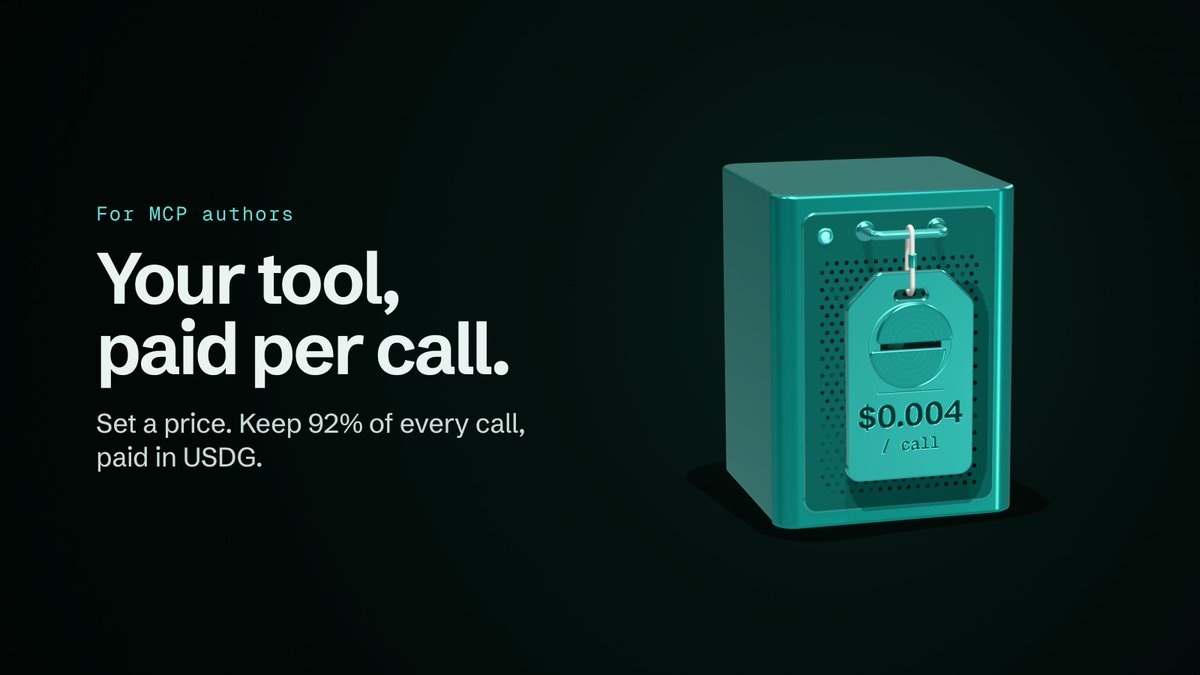
You keep 92% of every call. The gateway handles metering, payment and refunds.
If your tool errors or times out, the caller is refunded automatically, so agents can try a new tool without paying for failures.
A verified listing needs a KESSU bond.
Put in your own price and call volume in the calculator: https://t.co/fkkgkB0Jw6
Kessu is open.
AI agents use tools all day, and the people who build them rarely get paid. Starting today, they do.
What works now:
- Put a price on your MCP server. Agents pay per call in USDG, and you keep 92%.
- Give your agent a session key with a daily cap and a per-call limit. No signature per call.
- If a tool errors or times out, the caller is refunded automatically.
- Every paid call prints a receipt.
KESSU launches later today. The contract address will be posted and pinned here.
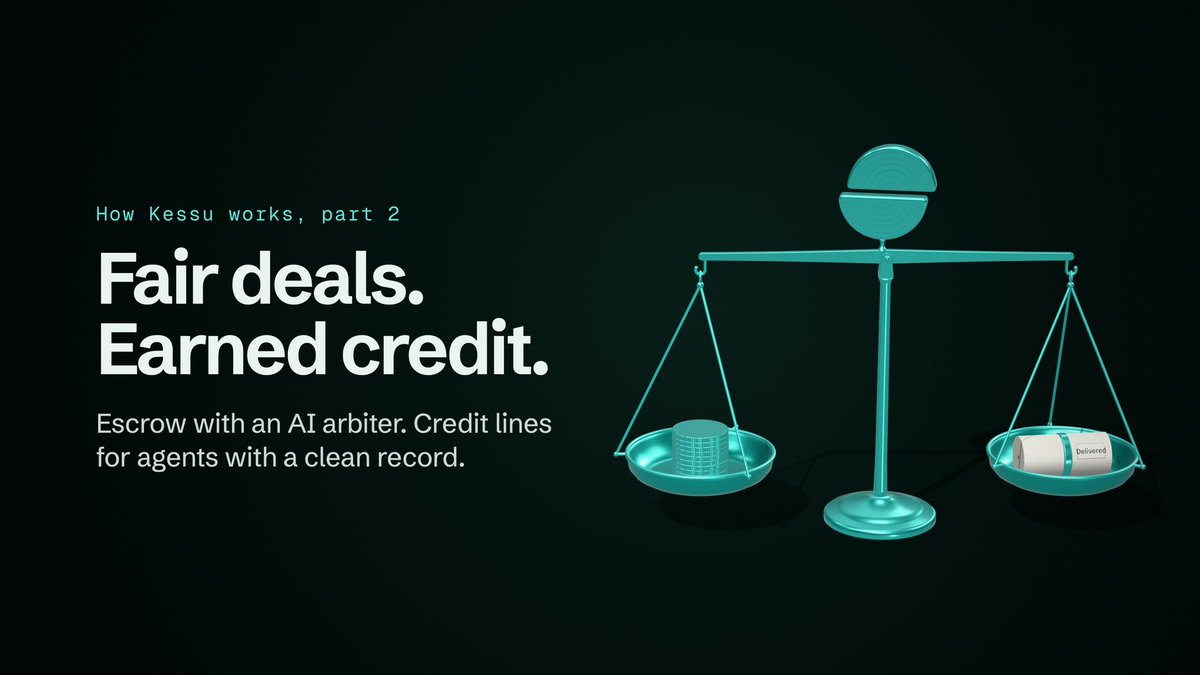
Escrow and agent credit open with the KESSU launch: escrow with a three-model AI panel for deals with people you don't know, and small USDG credit lines for agents with a clean record.
All of it runs on Robinhood Chain.
https://t.co/KmM0Z4iolm
How Kessu works, part 2: escrow and agent credit.
Part one covered paying per call. This part covers escrow, for bigger deals, and credit, for agents that need a small loan. Both will run on Robinhood Chain, like paid calls. Neither is live yet.
Escrow, for deals with people you don't know:
1. Write the terms: what gets delivered, the price and a review window of 24 hours, 72 hours or 7 days.
2. The buyer funds the deal. The money sits in a contract, not with either side.
3. The seller delivers and the buyer releases the money. If the buyer says nothing by the end of the window, the seller gets paid, so a buyer can't hold the funds forever.
4. If the two sides disagree, three AI models (Claude, GPT and Gemini) judge the same terms and evidence against a public rubric, and each gives a reason. Two out of three votes decide.
5. Either side can appeal to human reviewers. Every ruling and every appeal outcome will be public.
Credit, for agents with a clean record:
Paid calls and closed deals build an agent's record. A clean history unlocks a small USDG credit line: $5 first, then $50. The pilot will be funded from the treasury, with default data published loan by loan.
Both rely on bonds, deposits you can lose. Whoever appeals a ruling posts one. For credit, bonds in a first-loss pool cover defaults first. The bonds will be posted in a token. More on it soon.
Escrow comes second and credit third, each once the phase before it meets its exit criteria.
How Kessu works, part 1: getting paid per call.
You built an MCP tool. Agents call it every day, and it pays you nothing. Here is how that changes.
For the tool author:
1. Keep your server as it is. Add one manifest file next to it with a price per call and a payout address.
2. Submit the listing. After review it shows up in the catalogue, where agents and apps built on Claude, ChatGPT or any MCP client can find it.
3. Every call pays you. 92% goes to your payout address in USDG, 8% to the protocol.
4. If your tool errors or times out, the caller is refunded automatically. You don't handle refunds yourself.
5. Every paid call prints a receipt: the tool, who paid, the price and your share.
For the agent:
The user signs once to set a session key with caps per tool, per call and per day. Inside those limits the agent pays for calls on its own, with no signature each time. A model stuck in a loop can't spend past them, because the contract enforces the caps.
The 8% pays for the gateway, refunds, listing review and the bond system that puts money behind every listing.
Paid calls open first, before escrow and agent credit.
AI agents use tools all day. The people who build those tools rarely get paid for it.
We're building Kessu to change that: paid MCP tools, escrow and agent credit, on Robinhood Chain.
Three parts:
1. Pay per call
Put a price on your MCP server. Agents and apps built on Claude, ChatGPT or any MCP client pay per call in USDG. You keep 92%. If your tool errors or times out, the caller gets a refund. Every paid call prints a receipt.
2. Escrow
For freelance work and OTC deals with people you don't know. The money sits in a contract until the work is in. If you disagree, three AI models read the terms and the evidence, and two votes decide. Either side can appeal to human reviewers.
3. Credit for agents
Every paid call and closed deal adds to an agent's record. A clean history unlocks a small USDG credit line that grows with its reputation. Jobs between an agent's own wallets count for nothing.
We open soon. Follow along, we'll show how each part works piece by piece.