What Lisa Su actually held on stage:
A mini PC the size of a lunchbox running Qwen3-235B locally, with no cloud and no discrete GPU
Inside: the Ryzen AI Max+ 395, 128GB unified memory, 110GB usable as VRAM on Linux
The first x86 chip that handles 200+ billion parameters on a single die
AMD claims it beats the RTX 5080 by several times on memory-bound models — because the 5080 simply cannot fit them
$1,400 to $2,500 once. cloud bills run $200 to $400 a month
It pays for itself in a few months, then costs nothing per request
This is not a faster GPU. it is the first real argument that your AI does not belong in someone else's data center
el ingeniero que construyó Claude Code acaba de publicar un video de 28 minutos sobre cómo escribir prompts que realmente funcionan
he visto cursos de 300$ que no cubren lo que él muestra en los primeros 10 minutos
archivos CLAUDE.md, atajos de memoria, sesiones paralelas, patrones de prompting
todo en un video y completamente gratis
funciona seas desarrollador, principiante o alguien que lleva meses usando Claude
a partir de esto preparé 18 cosas que puedes copiar y usar en Claude hoy mismo
guía completa en el artículo de abajo
Bauchspeicheldrüsen-Krebs ist in fast 90% der Fälle tödlich. Wenn mit KI eine sehr frühe Entdeckung möglich würde wäre er meistens heilbar. Forschung wirkt…
“Russia has no say in the formation or enforcement of security guarantees for Ukraine.… Whether Russia agrees or not is irrelevant.”
- Alexander Stubb
Finish President
He is just great
🫡
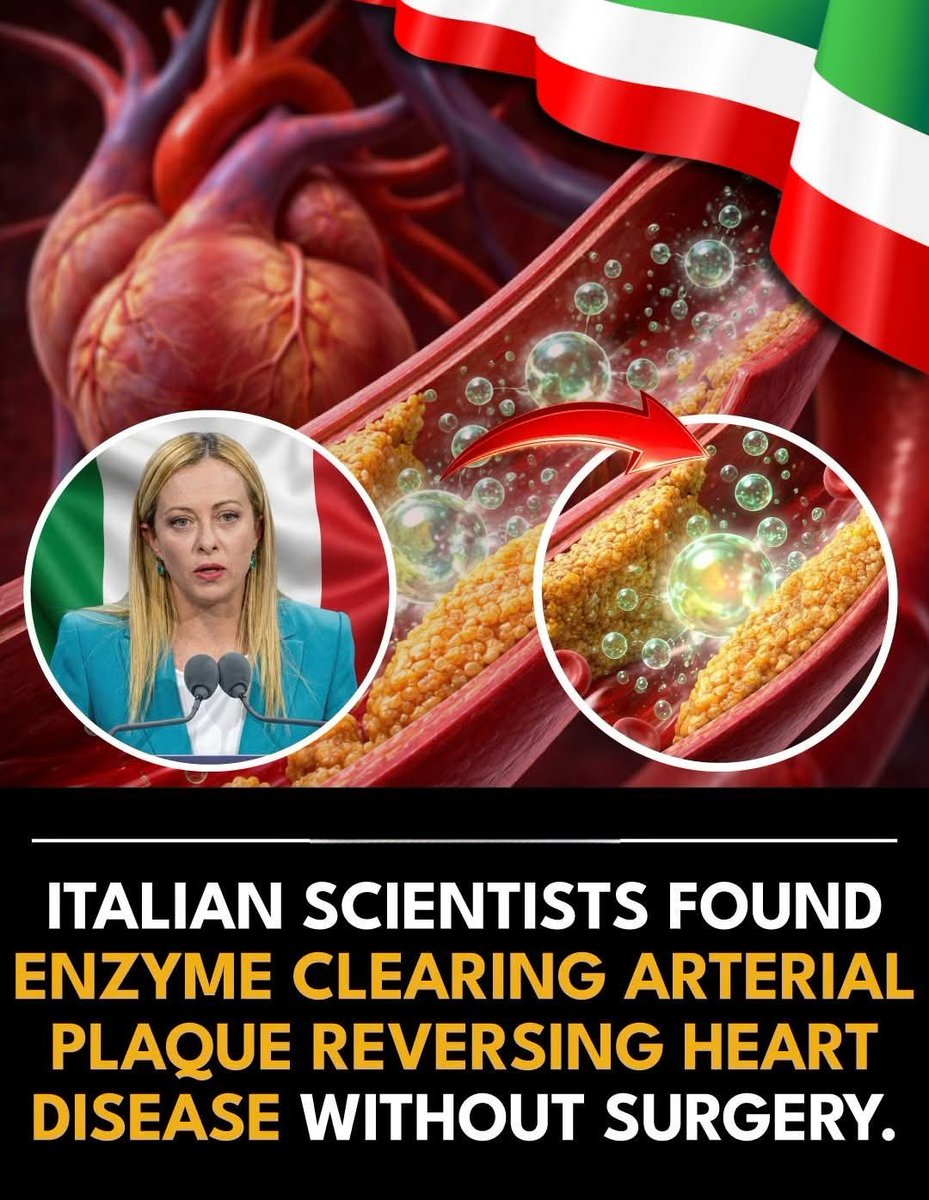
Researchers at the University of Milan have identified that an enzyme called phospholipid transfer protein (PLTP) can effectively mobilize cholesterol from arterial plaques, sending it back into the bloodstream for natural disposal. This discovery is a potential game-changer because, unlike current treatments that primarily focus on preventing new plaque from forming, this method actually targets and dissolves existing blockages.
Atherosclerosis occurs when cholesterol and inflammatory cells create stable, hardened deposits in artery walls that resist traditional removal methods. When these plaques become too large, they severely restrict blood flow, often necessitating invasive procedures like stents or bypass surgery to prevent heart attacks or strokes.
The PLTP enzyme acts as a natural extraction system, pulling cholesterol out of the arterial wall and transferring it to HDL, or "good cholesterol," for transport to the liver. Scientists found that many people have naturally low levels of this activity due to genetic factors, which is why they have developed a gene therapy to boost PLTP expression directly where it is needed most.
In animal models, this localized boost in enzyme activity resulted in a 40% reduction in plaque volume in just three months, allowing narrowed arteries to reopen to nearly their original diameter. These results suggest that plaques not only become smaller but also more stable, which significantly lowers the risk of a sudden rupture that could cause a cardiac event.
While human clinical trials are currently focusing on patients with severe coronary artery disease who cannot undergo surgery, the long-term goal is a biological "reversal" of decades of arterial damage. If successful, this could shift cardiovascular medicine away from mechanical bypasses and toward a more natural, enzymatic cleaning of the circulatory system.
Polish Foreign Minister Sikorski:
If Russians cross the border, start killing NATO citizens, we activate the plan.
The plan is simple: we win, they lose.
Es wird immer offensichtlicher, warum Islamisten und die antisemitische Linke 🍉 @PahlaviReza als vermeintlich blutrünstigen Monarchen darstellen und verhindern wollen: Er hasst einfach keine Juden. 🤷🏻♂️
Man nennt das Projektion…�