“I have no problem with Islam, I’m just against beheading,stoning, child marriage, sexual slavery,taqiyya,jihad,burkas,sharia, terrorism,genital mutilation,abuse of women and children, polygamy, intolerance, and inbreeding. Does that make me Islamophobic?”
16yo Iranian girl Atefeh Sahaaleh publicly hanged by Islamic regime for reporting her rape.
Under Sharia, rape counts as ‘sex outside marriage’—capital crime.
Is Islam a cult?!
A. Yes
B. No.
U.S. DEFENSE EQUIPMENT FAILURE UNDER REVIEW
A preliminary investigation reports that the U.S. THAAD failed to intercept the missiles that struck Arad and Dimona.
- Both intercept attempts reportedly missed
- Same missile type used in all incidents
This incident is increasingly being viewed as another hit on the credibility of the American military industrial complex, coming after growing scrutiny around platforms like the F-35 Lightning II.
Crucially, reports indicate that a salvo firing doctrine was used, meaning two THAAD interceptors were launched at a single incoming target to maximize the probability of a kill.
This is standard practice in high-threat scenarios. However, both interceptors reportedly failed, raising deeper concerns about system effectiveness under real combat conditions.
From a cost perspective, this is significant. Each THAAD interceptor is estimated to cost $12–15 million, meaning a single failed engagement could represent $25–30 million expended with zero interception success.
When this is paired against comparatively lower-cost offensive missiles, it highlights a growing cost asymmetry problem in modern air defense.
Early technical assessments suggest the intercept failures may be tied to trajectory unpredictability and extreme speed.
THAAD was designed to counter conventional ballistic missiles that follow a largely predictable arc. However, newer threats, particularly maneuverable or hypersonic-class systems, can adjust their flight path during the terminal phase, making accurate interception calculations significantly harder.
At hypersonic speeds, the engagement window shrinks dramatically. Even slight delays in detection, tracking stabilisation, or interceptor launch can result in a miss, as closing velocities leave almost no room for mid-course correction.
- Similar failure noted in recent Beit Shemesh strike Radar performance is also under scrutiny.
THAAD depends on its X-band radar for precise tracking, but hypersonic glide vehicles or manoeuvrable reentry vehicles can operate at lower altitudes and generate plasma effects at high speeds.
These conditions may degrade radar clarity, leading to reduced tracking accuracy and flawed intercept solutions.
There is also increasing focus on the possibility of terminal maneuvering and countermeasures, including decoys or evasive adjustments in the final seconds of flight. Such tactics are specifically designed to defeat systems like THAAD by overwhelming or confusing targeting algorithms.
- Investigation ongoing into system performance Analysts are further examining whether engagement limitations or saturation dynamics played a role.
Even advanced systems have finite interceptors and must prioritize targets under time pressure. Multiple incoming threats or closely timed launches can strain decision-making and engagement sequencing.
More broadly, this incident feeds into a growing critique:-
U.S. air defense systems have rarely been tested against peer or near-peer technologies in real combat environments.
Much of their operational track record has been built in conflicts against less technologically advanced adversaries, where threats were slower, less manoeuvrable, and far more predictable.
As a result, an “aura of invincibility” has developed around these systems, but events like this begin to challenge that perception. This is a water shed moment for American Military Industrial Complex
When faced with modern missile technology designed explicitly to defeat them, the gap between theoretical performance and battlefield reality becomes more visible.
The missile involved is widely believed to be linked to Iran’s newer generation systems such as the Fattah-1, which reportedly incorporates maneuverable reentry or hypersonic glide characteristics specifically designed to evade terminal-phase interception systems.
This raises serious questions about interception reliability under current threat conditions, the sustainability of current cost structures, and whether existing Western missile defense architectures are truly prepared for high-end conflict scenarios.
@mattvanswol@Breaking911 As a legal immigrant for 20 years I don’t feel safe anymore but it’s getting better now with Trump cleaning up the swamp. 186 Will just vote against anything that the GOP puts up.
@PBDsPodcast@patrickbetdavid A lot of people including myself hopes to visit beautiful Iran and learn about its historical culture after the regime is gone for good
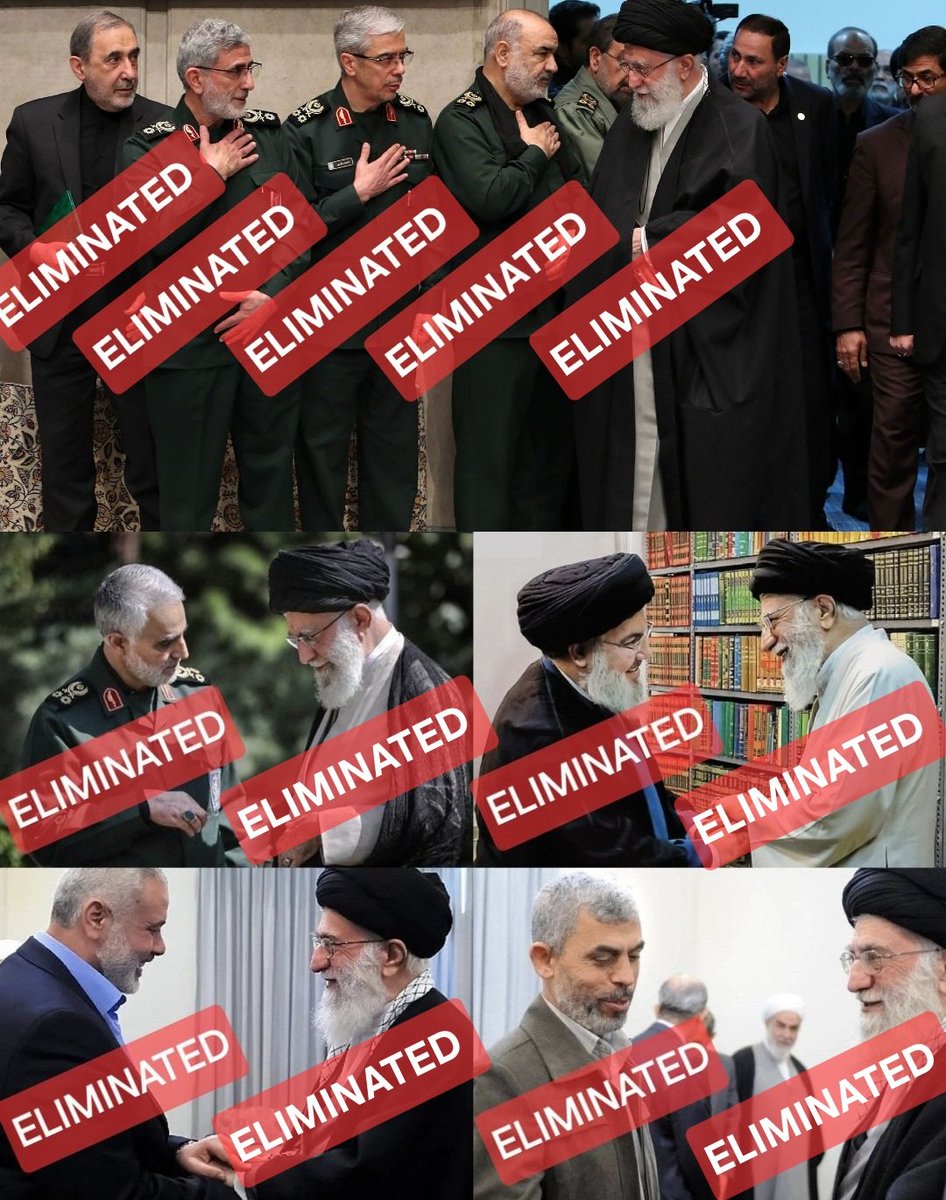
🚨 Breaking: The new head of IRGC that replaced the previous new head of IRGC who was eliminated after he replaced the previous head of IRGC who was eliminated, was eliminated.
@EYakoby My whole compassion goes out to the Iranian people under the oppressive regime. I wish to see freedom and order in Iran in my lifetime so I could visit the Country with my family.