I joined fellow leaders in Ibadan today for the National Summit of Opposition Parties — an important platform for honest reflection, constructive dialogue, and renewed commitment to Nigeria’s democratic ideals.
Our collective resolve must be to strengthen institutions, uphold accountability, and offer Nigerians a credible, people-focused alternative. The future of our nation demands unity of purpose and courageous leadership. -Sen. LA
Denying Mallam Nasir El-Rufai the chance to attend his mother’s funeral would be the utmost cruelty President Bola Tinubu could display, and the worst mistake the APC could make ahead of 2027.
If there is one thing the global film industry has taught us, it is that narrative is power. The stories people choose to tell or refuse to tell, shape how the world sees them, how nations understand them, and how future generations remember them. Northern Nigeria has reached a point where it must decide whether it wants to allow others to define its identity, or wants to seize the camera and speak for itself.
For years, conversations about the North have been reduced to insecurity, banditry, extremism, and religious violence. These issues exist, but they do not represent the entire region. In fact, they represent a small fraction. The unfortunate reality is that the North has not invested enough in cinema as a tool of narrative correction. Movies remain one of the most powerful instruments for shaping global perception, yet the region has been slow to use it effectively.
One clear path forward is to produce movies that refute the sweeping claims of Christian persecution by showcasing the reality of coexistence. From Kano to Kaduna, from Bauchi to Gombe, Muslims and Christians live side by side peacefully. Students attend the same schools, neighbours celebrate together, markets are shared spaces, and daily interactions happen without tension. But because these peaceful realities rarely make headlines, they also rarely make it to screen.
Take someone like Naomi David, one of the most recognisable presenters and actresses on Arewa24. She is a Christian woman thriving in the Northern entertainment industry, loved by Muslim and Christian audiences alike. Her success alone invalidates the narrative of systematic persecution. Yet this story, and others like it, receive little cinematic treatment. Northern Nigeria needs films that show a world where religion is not a barrier, where talent speaks louder than identity, and where peaceful coexistence is the norm rather than the exception.
Hollywood offers lessons. For decades, the American film industry produced movies that depicted Russia as the enemy during the Cold War, China as a strategic threat, and Iran as a hub of extremism. These portrayals influenced global perceptions significantly. But these countries didn’t cry or beg for censorship, they responded. Russia produced films portraying America as manipulative and two-faced. China invested heavily in its own movie industry, telling stories of national strength, unity, and global ambition. Iran responded by producing films rooted in its cultural, religious, and political identity, some of which have won major international awards.
Even Turkey today has mastered the art of strategic storytelling through blockbusters and TV series such as Ertuğrul, Valley of the Wolves, and The Ottoman, which project national pride, reshape global perception, and counter negative portrayals from foreign media.
They countered narratives with narratives. They answered stories with stories.
Northern Nigeria must do the same. Instead of battling every movie that highlights insecurity, the region should create films that highlight harmony. Instead of rejecting portrayals of extremism, it should balance the picture by producing films that show the millions of Northerners who reject violence and live in peace. Instead of allowing a few bad actors to define an entire region, the North should document its own reality, its diverse communities, interfaith friendships, shared festivals, cultural richness, and the everyday humanity that outsiders rarely see.
This is my final take: film is more powerful than press releases, rebuttals, or social media outrage. If Northern Nigeria wants to correct misconceptions, defend its image, and refute narratives of persecution, it must invest in cinema. It must tell the truth—its truth—not with anger, but with storytelling. The world respects stories that are consistent, well-told, and confidently owned.
The North has stories worth telling. It is time to start producing them!
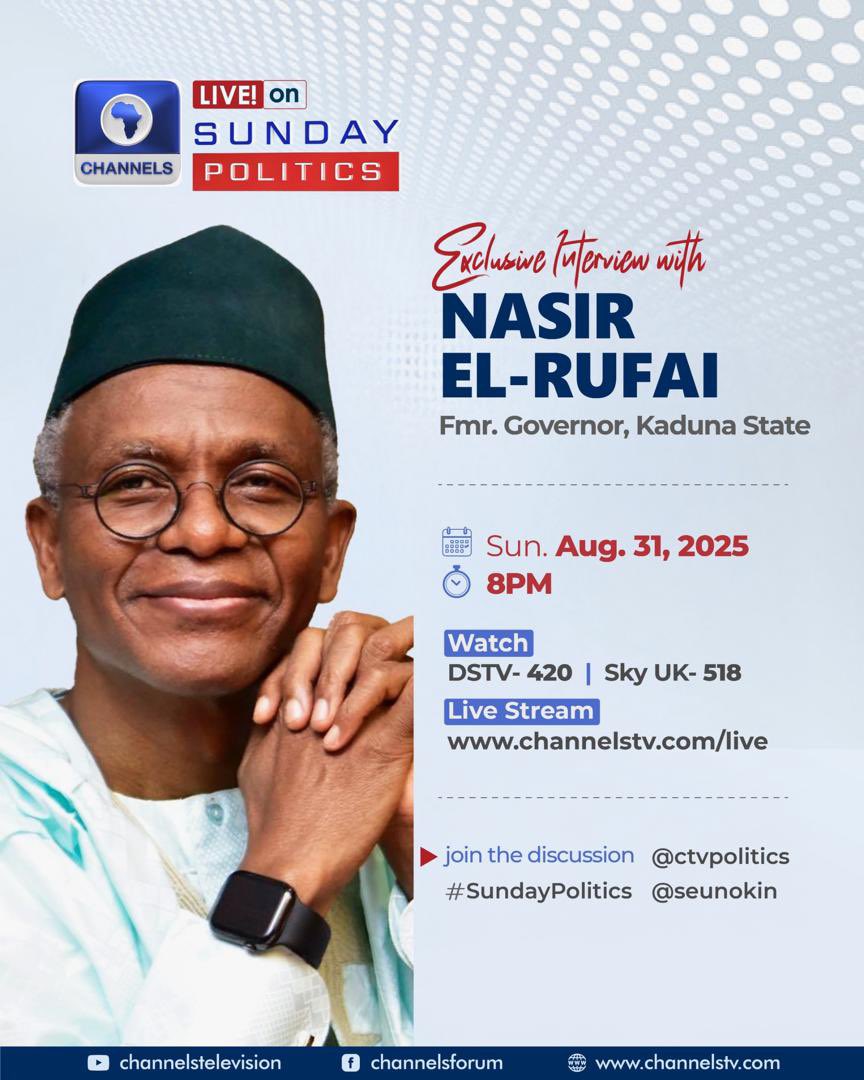
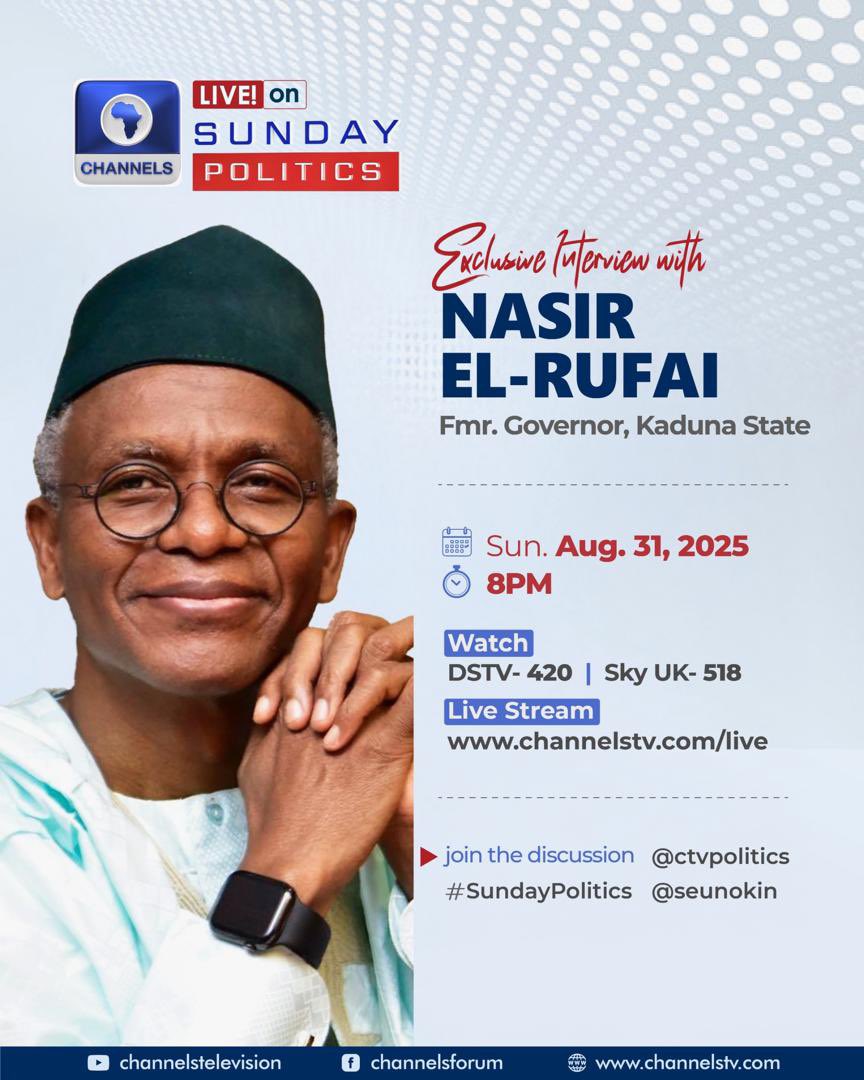
NIGERIA UPDATE: Please join me and ChannelsTV’s Seun Okinbaloye @seunokin live at today’s edition of Sunday Politics at 8 pm, by God’s grace. - @elrufai
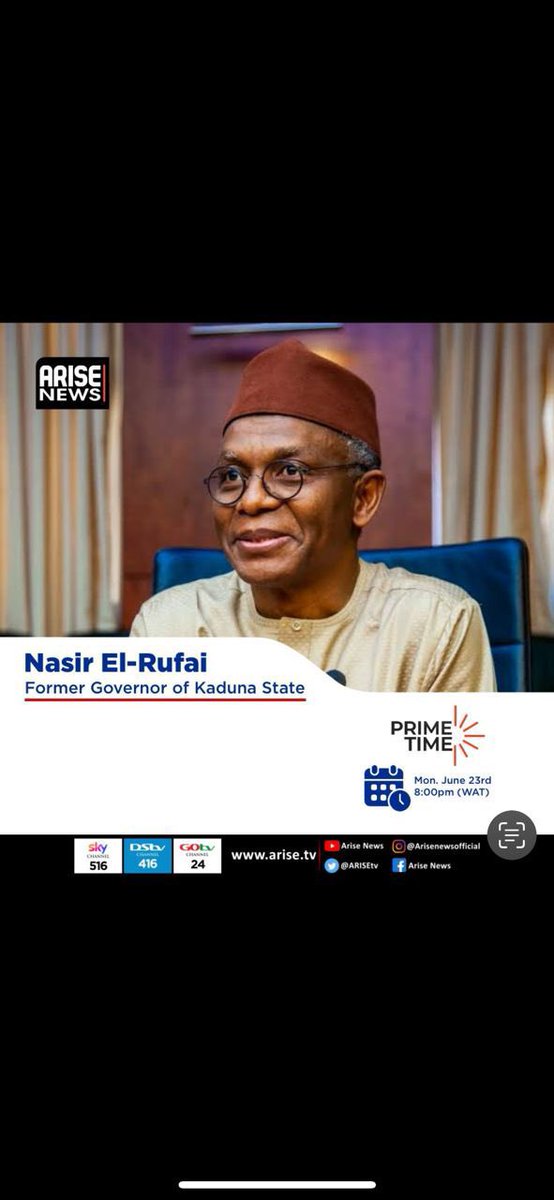
NIGERIA UPDATE: Please join me and Mr. Charles Aniagolu tonight on ARISE TV Prime Time at 8 pm to discuss burning national issues. Thank you all and kindly share widely. - @elrufai