A final-year student of Obuasi Senior High Technical School, together with a colleague, has developed a smart walking stick designed to assist visually impaired persons with navigation.
The innovative device is equipped with special sensors capable of detecting obstacles and water when brought close to them, enabling users to identify potential hazards and move around more safely and independently.
This Nigerian lady who teaches at a school in Japan broke down the Japanese style of learning that makes them very intelligent and productive.
I think this is smart learning. It will be helpful to Nigerian students, if it is adopted in our educational system.✍️
I barely do this but I beg any Ghanaian to read the following write up by Chris-Vincent Agyapong. Bookmark, share etc cos wtf 😳
1/4
“Ghana's NITA Bill 2025: How a Government That Cannot Fix Potholes Wants to Certify Your Keyboard Strokes
There is a particular brand of Ghanaian governance that operates on a simple, well-rehearsed logic: identify the one sector in which ordinary young people, without connections, without family money, without a politician uncle are actually building something for themselves, and then erect a magnificent bureaucratic tollbooth right in the middle of it.
The National Information Technology Authority Bill, 2025 currently making its way through Ghana's legislative machinery with the quiet confidence of a document probably written by a majority of people who have never debugged a line of code in their lives is precisely that tollbooth. It is, in its 105 sections and accompanying Schedule, one of the most breathtaking exercises in regulatory overreach this country has produced in recent memory. And given our regulatory track record, that is genuinely saying something.
The ICT sector is the one industry where a boy from Ashaiman, or, like my friend from Pulima, Aliu Wahab, with a second-hand laptop and a YouTube tutorial, can compete with someone whose father went to Achimota. It is the one space where talent, not tribe; skill, not surname; output, not old-boy network, still carries meaningful weight. It is, bluntly, the only functioning meritocracy left in Ghana's economic life.
And our government, with the NITA Bill 2025 has decided that this is precisely the sector that requires the most elaborate regulatory architecture since the tale of Moses coming down from Sinai with the Ten Commandments.
The Absurdity of Section 46: Certifying Everyone, Everywhere, Always
Let us begin with what is, without competition, the most extraordinary provision in this bill. Section 46(1) states, in plain and unambiguous terms:
"A person shall not be appointed as an ICT professional in a public or private institution unless that person is certified by the Authority."
Read that again. Public or private.
This is not a provision that limits itself to government systems handling national security data. This is not a narrow carve-out for critical infrastructure. This is a provision that means the software developer at a startup in Osu, the data analyst at a logistics firm in Tema, the web designer freelancing from her bedroom in Kumasi, all of them, every single one must first obtain certification from a government authority before they can lawfully be employed.
Who dreamed this up? Under what theory of governance does it make sense for the government of Ghana which cannot consistently process a DVLA licence within six months, which spent years and hundreds of millions on a national identification system that still cannot talk to the health insurance database to position itself as the certifying gatekeeper for an entire profession across the entire economy?
And here is the delicious irony that the framers of this bill seem constitutionally incapable of perceiving: the government's own ICT record is the single most compelling argument against giving it certification authority over anyone. You do not hand the keys of the wine cellar to the person who has been drinking the wine.
Politicians: The One Profession That Needs Certification Most, and Gets It Least
Since we are on the subject of certification, let us pause to consider who in this country is not required to demonstrate any competence whatsoever before being handed consequential power over millions of lives.
Continued below
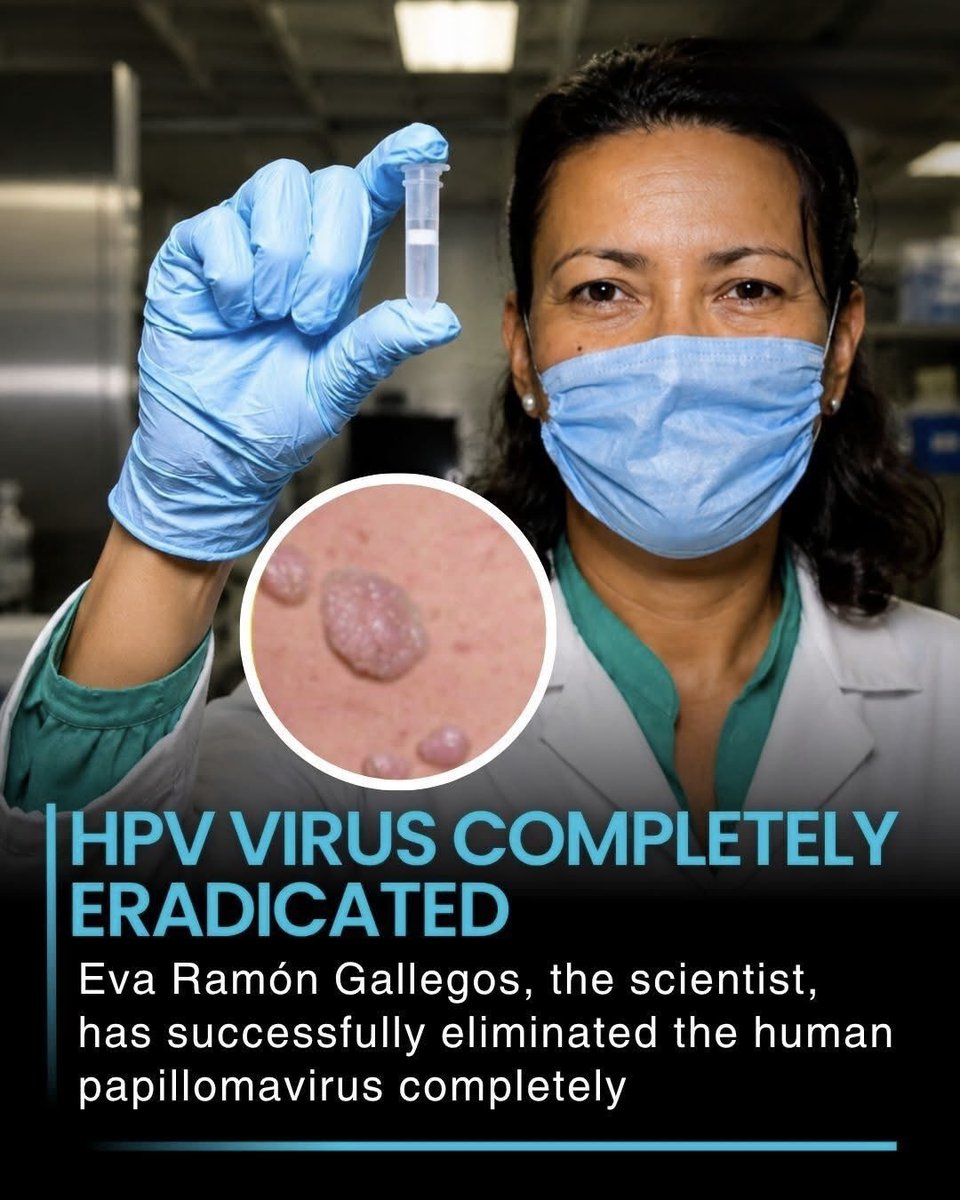
🚨 THE HPV VIRUS MAY HAVE JUST MET ITS MATCH…
For years, HPV has infected millions worldwide and often stays hidden without symptoms. Now, Mexican scientist Eva Ramón Gallegos has gained global attention after research showed her treatment successfully eliminated the virus in several patients.
The therapy uses a special light-based technique that targets infected cells while protecting healthy tissue. Scientists say more research is still needed, but the results are already giving hope for a future where HPV may no longer be permanent.
Source Ramón-Gallegos, E., et al. Photodynamic therapy as a treatment for human papillomavirus infection. Photodiagnosis and Photodynamic Therapy.
����Anthropic just showed a 24-minute workshop on how to actually do prompts for Claude.
Taught by the people who built it.
Free. No registration. No paywall.
I've seen $300 courses that don't cover what they teach in the first 8 minutes.
Watch it and bookmark it now.
A Russian biophysicist spent 30 years proving that shining red light on a cell could double its energy, and almost nobody believed her until a tech billionaire named Bryan Johnson made her work the most searched biohack on the internet.
Her name was Tiina Karu.
She worked in a Moscow lab through the 1980s and 1990s, and the discovery she defended for decades sat in journals nobody read while the rest of medicine ignored her.
The whole thing started by accident.
In 1967, a Hungarian doctor named Endre Mester was trying to use a new device called a laser to burn tumors out of mice. His laser was broken. It did not have enough power to burn anything. He used it anyway. The mice grew their hair back faster than the control group. Their wounds healed faster too. He had no idea why.
Tiina Karu picked up his work and asked the question that mattered. Why does this happen.
She ran experiments for 20 years. Different wavelengths. Different doses. Measuring what happens inside the cell when red light hits it. The answer she landed on was almost too specific to be true.
The thing in your body that responds to red light is one enzyme. Cytochrome c oxidase. It sits inside your mitochondria.
Mitochondria are the part of your cell that makes energy. They take oxygen and food and turn it into a molecule called ATP, which is the fuel your cells run on. Your body makes 40 to 70 kilograms of ATP every single day just to keep you alive. If your mitochondria slow down, you age faster, heal slower, lose hair, lose muscle, and get inflamed easier.
Cytochrome c oxidase does most of the work. It contains copper and iron atoms. Those atoms happen to absorb light at very specific colors. Red light at 630 to 670 nanometers. Near-infrared light at 810 to 850 nanometers.
Other colors do almost nothing. Blue does not work. Green does not work. The biology is locked to those two windows because that is what the metal inside the enzyme can physically catch.
When a red photon hits that enzyme, three things happen.
The enzyme runs faster. ATP production jumps 30 to 40% within minutes.
Nitric oxide gets released. Blood vessels widen. More oxygen and nutrients flow in.
A small stress signal goes off inside the cell that tells it to repair itself. The same signal it gets after exercise.
Red light is not adding anything to the cell. It is just unlocking work the cell was already trying to do.
For 30 years almost nobody outside her field cared. Red light therapy lived inside dental clinics for mouth ulcers and physical therapy offices for tendonitis. Medical schools did not teach it. The science sat in obscure journals.
Then the evidence started piling up.
A 2024 review of 18 trials confirmed red light speeds up wound healing.
Another 2024 review found it lowered inflammation markers by 38% over 4 weeks.
Athletes using red light before training had 45% less muscle soreness the next day.
Seven separate trials on hair loss showed visible regrowth in every single one.
A 2024 study found 15 minutes of red light before a meal cut blood sugar spikes by 27.7%.
In March 2026, Nature published a 4,000 word feature on red light therapy. The most respected scientific journal on Earth officially admitted there was real biology under the hype. That was the moment the field crossed from fringe to mainstream.
Bryan Johnson is the reason the average person now knows any of this exists. He uses a red light cap on his scalp for 6 minutes daily and a full-body panel three times a week. He posted his hair regrowth photos and his skin scans, and the algorithm did the rest. Red light masks went from biohacker forums to Sephora shelves in two years.
Tiina Karu died in 2019. She did not live to see Nature validate her. She did not live to see a billionaire turn the enzyme she identified into a billion dollar industry.
Every red light mask, panel, cap, and bed on the planet right now is just a way to deliver the photons she proved mattered.
The wavelengths were always there. The enzyme was always there. The biology was always real.
It just took a Hungarian doctor with a broken laser, a Russian scientist nobody listened to, and one tech billionaire willing to stand in front of a glowing panel for the world to finally pay attention.
IVERMECTIN AND FENBENDAZOL END CANCER
🎯CONFIRMED: Epidemiologist Nicolas Hulscher states that complete remissions of stage IV cancers using antiparasitic drugs are already documented in peer-reviewed scientific literature.
According to him, hundreds of studies show that ivermectin and fenbendazole activate more than 12 different anticancer mechanisms and act against more than a dozen types of cancer.
Among the most impactful works cited by Hulscher is a case report published in Case Reports in Oncology.
There, three patients with metastatic stage IV cancer are described who achieved complete remission documented by imaging and tumor markers:
📌An 83-year-old woman with breast cancer that had metastasized to the liver, lungs, and bones. After treatment, the PET scan showed complete remission, and she has shown no recurrence in nearly three years.
📌A 75-year-old man with metastatic bone prostate cancer. His PSA dropped to undetectable levels, and the metastases disappeared completely.
📌A 63-year-old man with highly advanced BRAFV600+ melanoma. His circulating tumor DNA went from 123 to 0 in less than two months, with confirmed remission.
Additionally, a recent systematic review analyzed 26 studies with 36 real patients treated with ivermectin. No serious adverse effects were reported, and clinical improvements were observed even in cases of leukemias and lymphomas, many of them while continuing to receive conventional chemotherapy.
Alternative scientists explain that these drugs attack cancer in multiple ways: they destabilize microtubules, induce programmed apoptosis, block the mTOR pathway, cut off the glucose supply to tumor cells, inhibit the formation of new blood vessels, and eliminate cancer stem cells.
All this with medications that cost pennies and have been used in humans and animals for decades.
While conventional medicine invests billions in high-cost therapies, on social media thousands of patients are already sharing personal testimonials: tumors that shrink or disappear, markers that normalize, and surgeries that end up being canceled.
The question sweeping the world is whether this represents the greatest medical suppression in history or the most important discovery of the 21st century. The dissenting scientific community demands controlled clinical trials with urgency. For many terminal cancer patients, time has simply run out.
What do you think? Give it an RT and share this information before it disappears, as it could save many lives. Your friends or family fighting cancer need to read this today.
FOLLOW ME, THE NEXT DROP WILL BE SHOCKING