Supporting students at KHS who have experienced the death of an important person in their life. We provide a safe space to learn about grief & find healing.
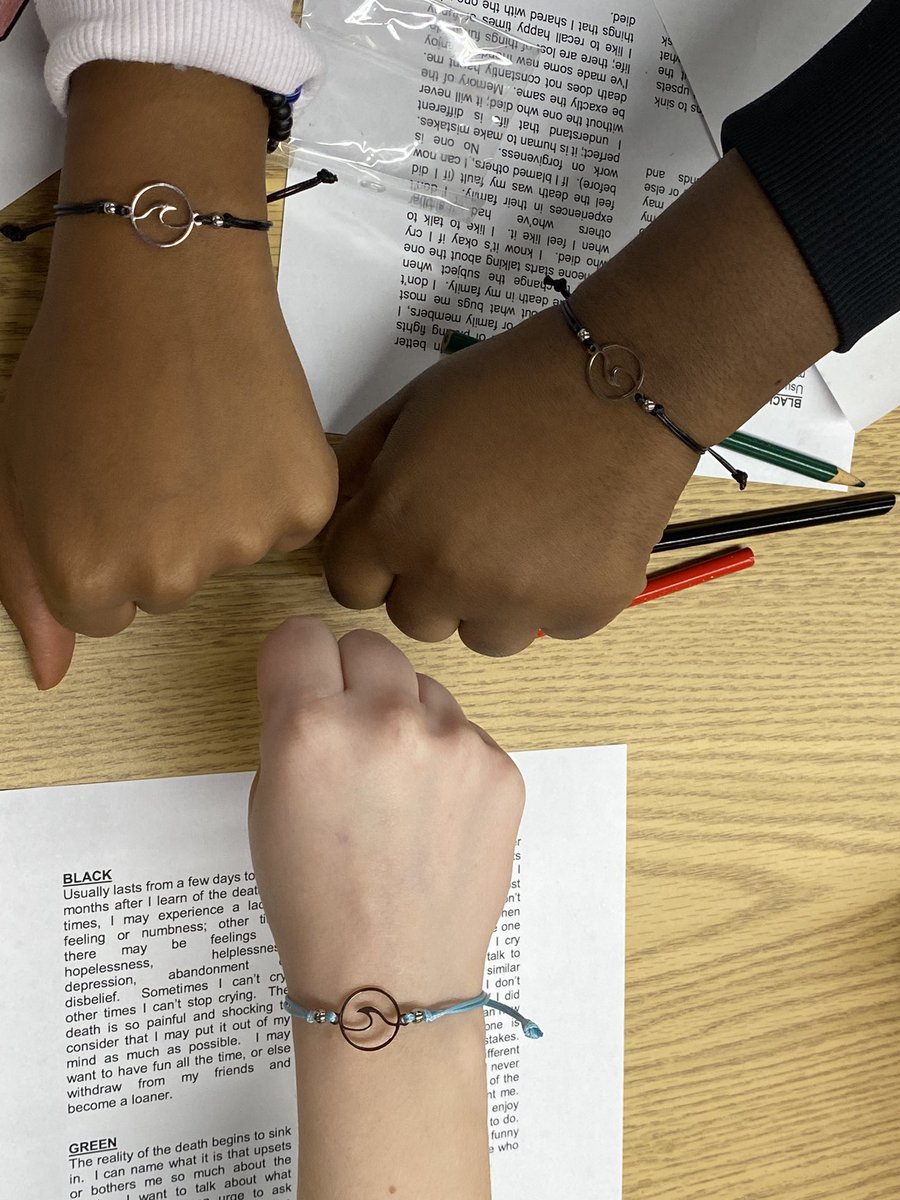
Today we talked about the fluidity of grief. We chose colors to represent stages/places in grief& designed a heart to represent our own personal journey. We gifted a bracelet to remind them that grief can come in waves& talked about strategies to work through those ebbs and flows
Many people offer standard sympathy statements because death is hard to process, and feels uncomfortable. If you can allow the person to express some of what they’re going through, that moment of true sympathy may be of immense comfort. #flipthescript#childhoodgrief
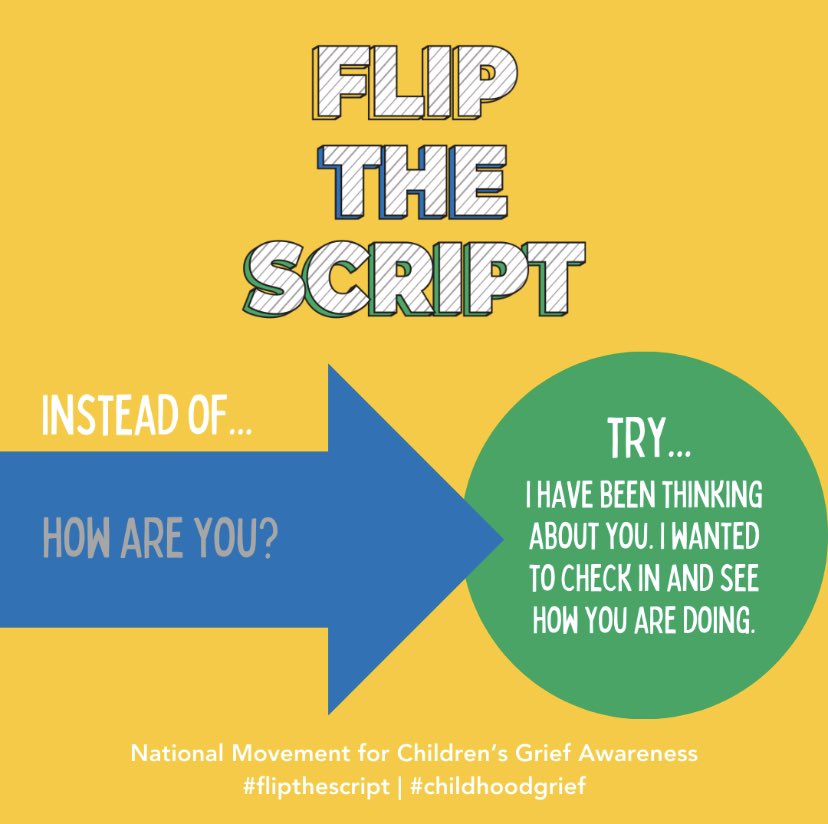
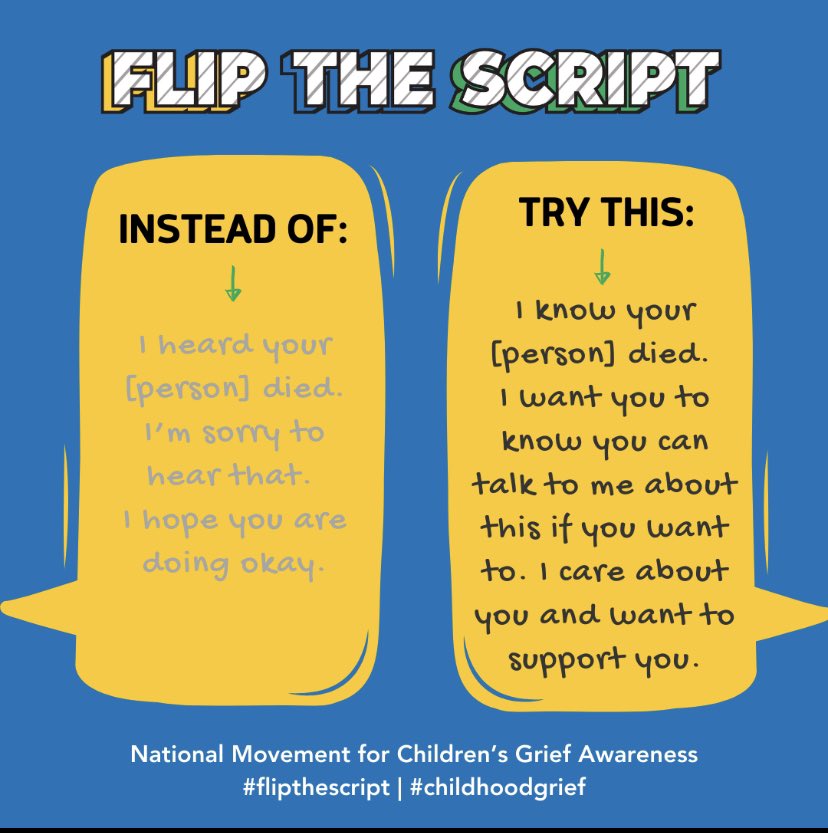
We are committed to finding phrases to support someone who is grieving.
When you offer a space for someone to talk to you openly and honestly about their grief, you are showing up for them in the most meaningful way.
Instead of “You need to be strong,” try ➡️ “You might feel like you need to be strong, but you don’t have to be with me.” Telling someone to “be strong” when they are hurting may leave them feeling weak when they are vulnerable & experiencing normal emotions after their loss.
Grief is messy & doesn’t follow pattern and is different for everyone. Expectations about how someone should think or feel may leave them feeling that they are somehow not grieving correctly.
#flipthescript#childhoodgrief
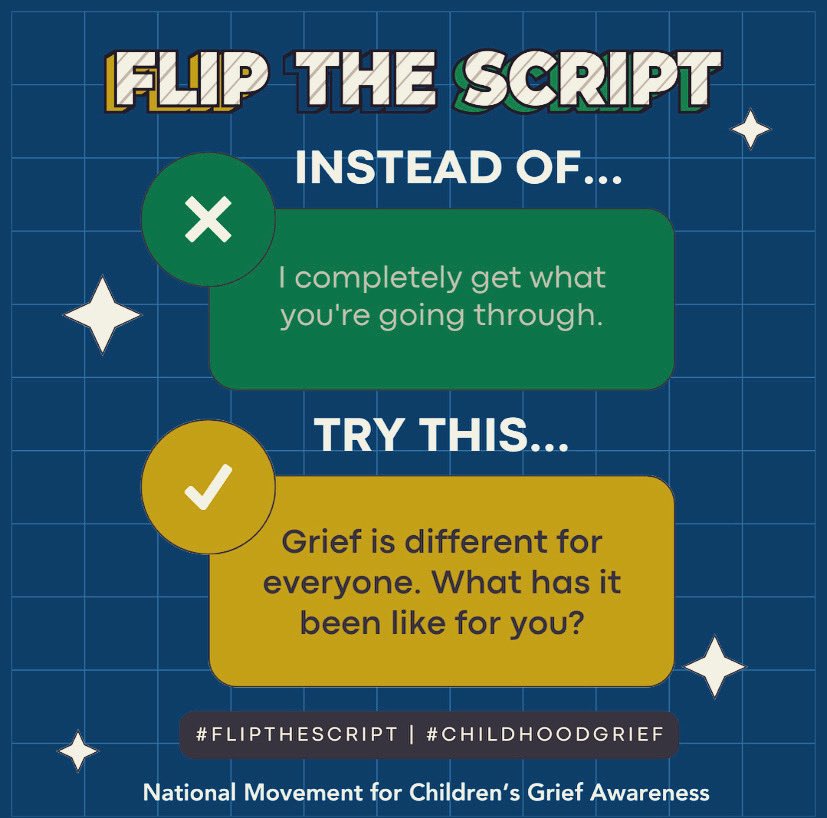
When talking to someone who is grieving, offering your own experience and saying, “I know how you feel,” may seem comforting, but claiming to know before gaining a true understanding of the person’s perspective minimizes their experience.
We are committed to flipping typical grief scripts and finding phrases to use when supporting someone who is grieving.
Instead of “I’m sorry for your loss,” try ➡️ “I know there are no words to make it better. Just know that I’m here and want to support you however I can.”
This Nov, we are committed to #FliptheScript on the things we say when talking to someone who is grieving.
In this season, instead of “The holidays must be so hard for you,” try ➡️ “I’m so happy to see you. I know sometimes the holidays can be hard after someone dies.”