Your fingers contain zero muscles. Every movement they make comes from muscles in your forearm pulling tendons through your wrist. Robotics spent 70 years ignoring that design. The company that finally copied it just showed a hand that lifts a 20-pound kettlebell and picks a grape off its stem without crushing it.
Here's why every robot hand before this was effectively numb. Traditional designs put a motor at each joint with aggressive gearing, often 100-to-1 or 200-to-1. That gearing multiplies force on the way out, but it also swallows force on the way in. You command the hand to a position, it goes there, and no touch information ever makes it back to the motor. Strong, precise, and blind.
1X's hand runs tendons at 5-to-1 to 15-to-1 ratios, with the motors sitting in the forearm, exactly where your flexor muscles live. At ratios that low, the joints are backdrivable: push a finger and it yields, then reports exactly how hard you pushed. Force flows out and information flows back through the same physical path. Every one of the 25 joints doubles as a sensor.
That's also why it survives accidents. Slam it in a drawer or hit it with a hammer and the tendons give instead of the gears shattering. The failure mode of a stiff hand is a broken hand. The failure mode of a compliant one is a measurement.
A 200-to-1 gearbox makes a hand strong and numb. A 5-to-1 tendon makes it strong and sensitive. Evolution solved this first, which is why your hand's muscles aren't in your hand.
The human hand has around 27 degrees of freedom. This one has 25, is waterproof enough to wash itself, and 1X says finger assemblies are validated to millions of cycles with capacity for 10,000 hands this year. For seven decades, robots picked things up the way a crane does. This is the first one built to pick things up the way you do.
Google has a term "toothbrush product" for something you use 1-2 times per day. There was a rule for a while that they'll never make anything that's not a toothbrush product. Hence e.g. gmail, calendar, docs, and even the failed things like social media products.
For SaaS, 𝘢𝘤𝘵𝘪𝘷𝘪𝘵𝘺 𝘧𝘳𝘦𝘲𝘶𝘦𝘯𝘤𝘺 might be a good substitute, i.e. do you use the product every day? Or at least multiple times per week? Because if yes, then presumably you'll continue with the monthly or annual payment, which is sufficient.
But if it's not 𝘶𝘴𝘦𝘥 all the time, you 𝘮𝘪𝘨𝘩𝘵 start getting into trouble, depending on the product. If the product is supposed to help you reconcile monthly invoices, then it might be heavily used for 1 week / month only, and this could be completely fine.
The worst are products that are only needed temporarily (e.g. for weddings or other life events) or obviate themselves (e.g. code optimizers where you don't need it for another 7 months after you fix the immediate issue).
If you charge recurring revenue, you should deliver recurring value, at least as frequently as you charge, and ideally all the time.
PM GatiShakti, a rare initiative gaining political consensus in a divided landscape https://t.co/sKVvBmQb3C
GatiShakti is a custom, proprietary mapping software developed by @bisag_n, built using satellite imaging from @isro, hosted on Meghraj, Govt of India’s cloud platform.
Researchers have found a way to bind engineered skin tissue to the complex forms of humanoid robots. #UTokyoResearch#robotics#bioengineering https://t.co/sRfebItIml
Ajinomoto is one of my favourite diversification stories of all time. The same company that makes & invented monosodium glutamate (MSG) now has a 100% market share now in CPU insulation. 🤯 100+ year old company with a flat stock price for decades, 3x in 3 years.
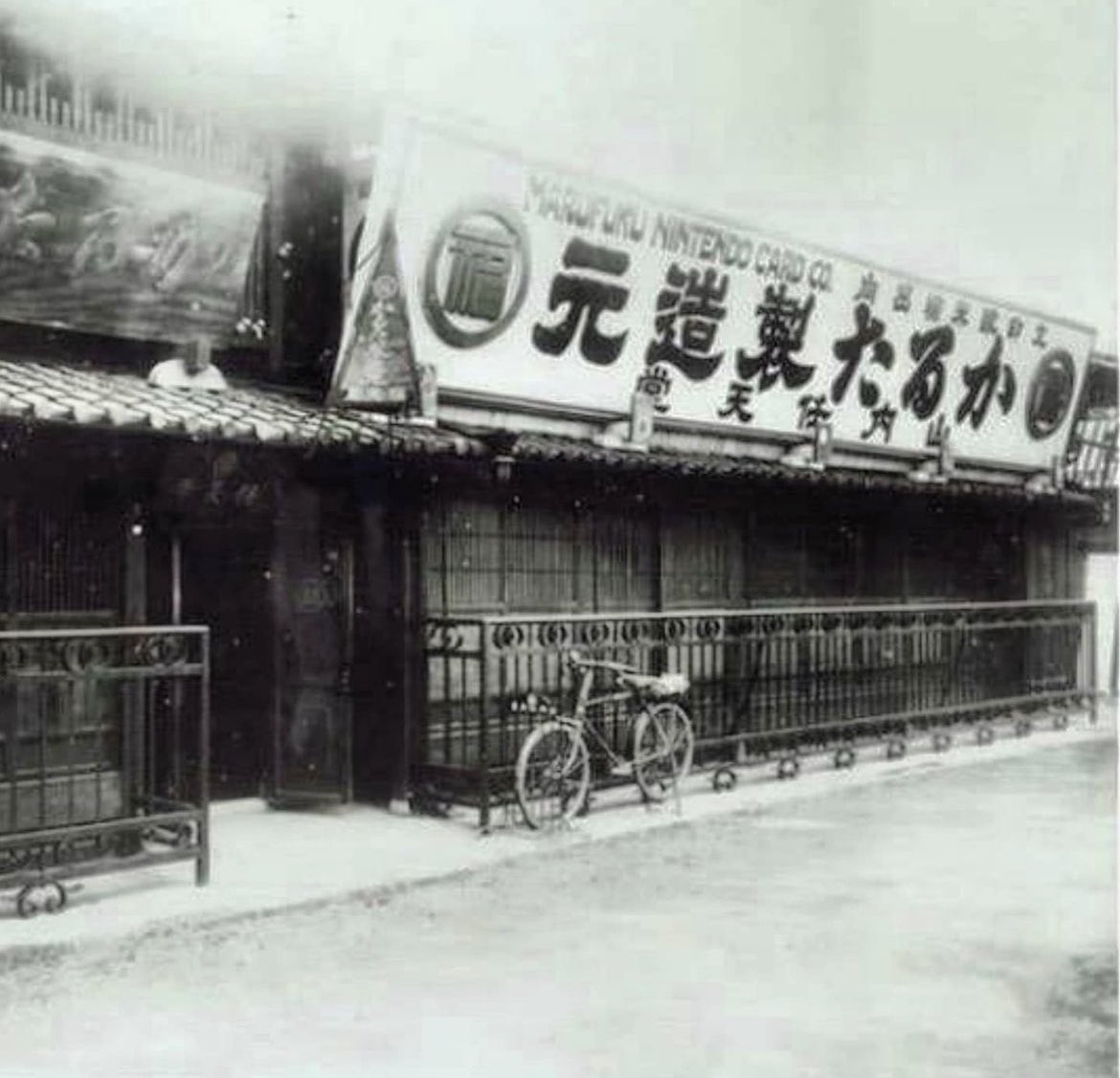
This is Nintendo's first office in Kyoto, 1889. Nintendo initially started out producing and selling Japanese playing cards. They did just that for nearly 75 years.
In 1963, Nintendo began to branch out to other types of businesses, investing money into a taxi service business, love hotels, a TV company, and an instant rice company. All these business ventures failed, and to make matters worse, after the 1964 Tokyo Olympics, playing card sales had dropped drastically.
Starting in the late '60s, Nintendo pivoted to making toys. One of their employees was a maintenance engineer by the name of Gunpei Yokoi, whose job was to repair conveyor belts. During his free time, he had made extendable tongs for his amusement. Nintendo asked him to make a few prototypes and decided to market his toy as the "Ultra Hand," which went on to sell more than 1 million units. The toy literally gave a hand to Nintendo and lifted it out of near financial ruin.
Yokoi was moved to product development and went on to create several other successful toys before jumping into making video games. During the early '80s, Yokoi began working with a young product developer named Shigeru Miyamoto. They were under pressure to develop a best-selling game for Nintendo and were competing against the likes of Namco's Pac-Man.
Miyamoto wanted to develop a video game that used the characters Popeye, Olive Oyl, and Bluto but was unable to obtain a license. So he went on to create his own characters, Donkey Kong and an unnamed character. In the early development stages of Donkey Kong, the unnamed character was unable to jump, and the goal of the game was to escape a maze. Miyamoto decided to give the unnamed character the ability to jump, stating: "If you had a barrel rolling towards you, what would you do?"
In Japan, the unnamed character eventually received the name Jumpman. However, when the video game was introduced to American audiences, the name was changed. According to legend, Nintendo in America was confronted by warehouse owner Mario Segale about unpaid rent. After a heated exchange, Nintendo assured Segale he would get his money. After the incident, Nintendo decided to rename Jumpman to Mario.
It’s been a mystery why Roman concrete often lasted thousands of years, but ours decays in mere decades.
Turns out they incorporated chemicals in a process that induces self-healing; scientists at MIT just figured this all out - in 2022.
Extraordinary.
https://t.co/cOPyln0ifd
Today, Apple released new rules for crypto apps (especially web3 games) in the App Store.
Apple's stance on NFTs, crypto, and payments will have a massive effect on the industry.
A 🧵 featuring critical points, my takeaways, and winners/losers based on initial reading:
If your perspective on VR comes from the mainstream tech media, who rely on the refrain of "Mark Zuckerberg bad" for eyeballs, you are missing the honest news on VR, which may be greatest business opportunity of our lifetime. Thread: 🧵
Tokyo startup Telexistence has recently unveiled a new robot called the Model-T, an advanced teleoperated humanoid that can use tools and grasp a wide range of objects. In this trial, a human “pilot” operates the robot remotely, handling store items https://t.co/BmzNAcI30D