hudson river trading once had a data feed that arrived as a screenshot every day.
kevin lee, the quant firm's r&d lead, says they built ocr to read the table, then worked with the provider on an api.
then they could stop worrying about the provider changing the font.
@AgneyaTharun If you combine the two, you would get the same functional effect that a motion prior typically has I think. Cool idea! Motion priors are limited in what they understand whereas a decision model could handle far more
Andrej Karpathy calls AI Agents slop
"Overall, the models they are not there. And I feel like the industry [...] it's making too big of a jump and it's trying to pretend that this is amazing.
And it's not—it's slop!
And I think they are not coming to terms with it. And maybe they are trying to fundraise or something like that, I'm not sure what's going on."
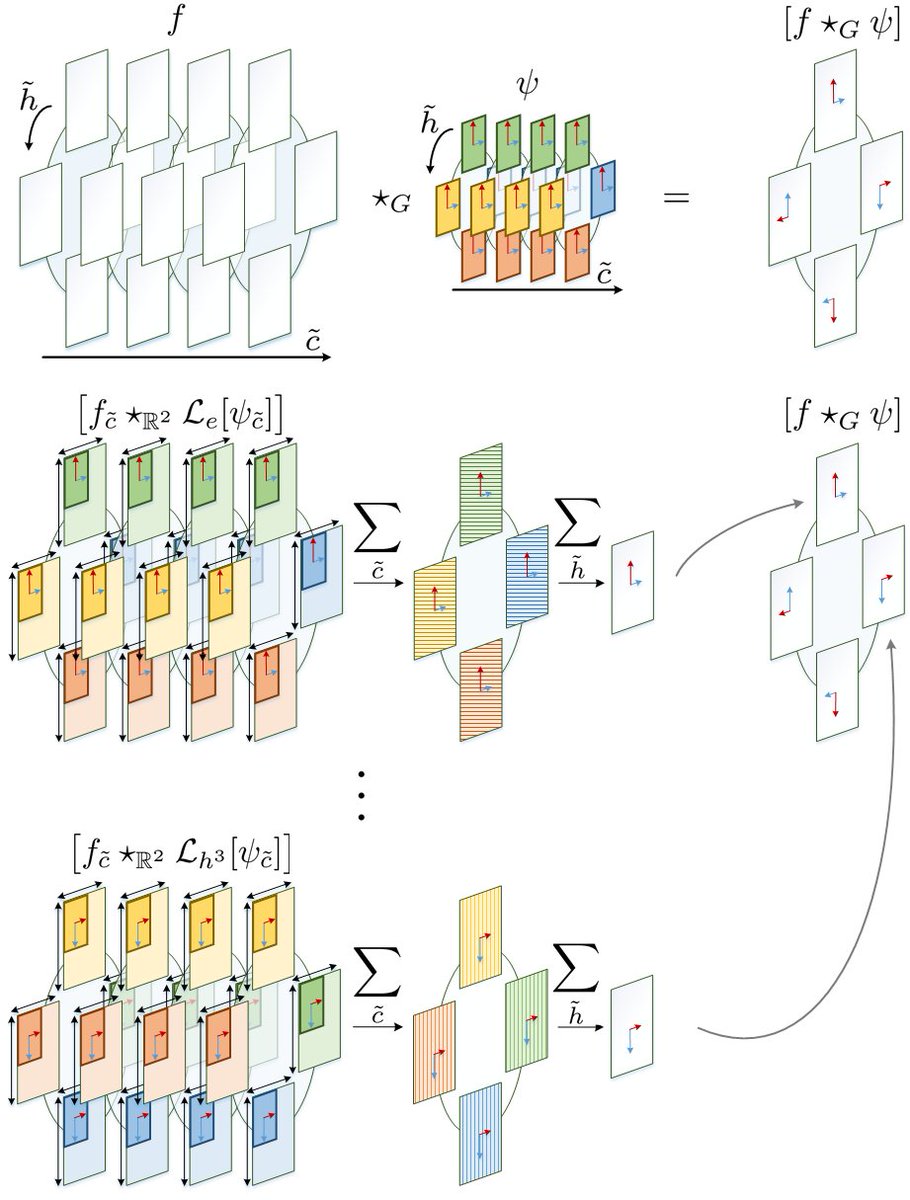
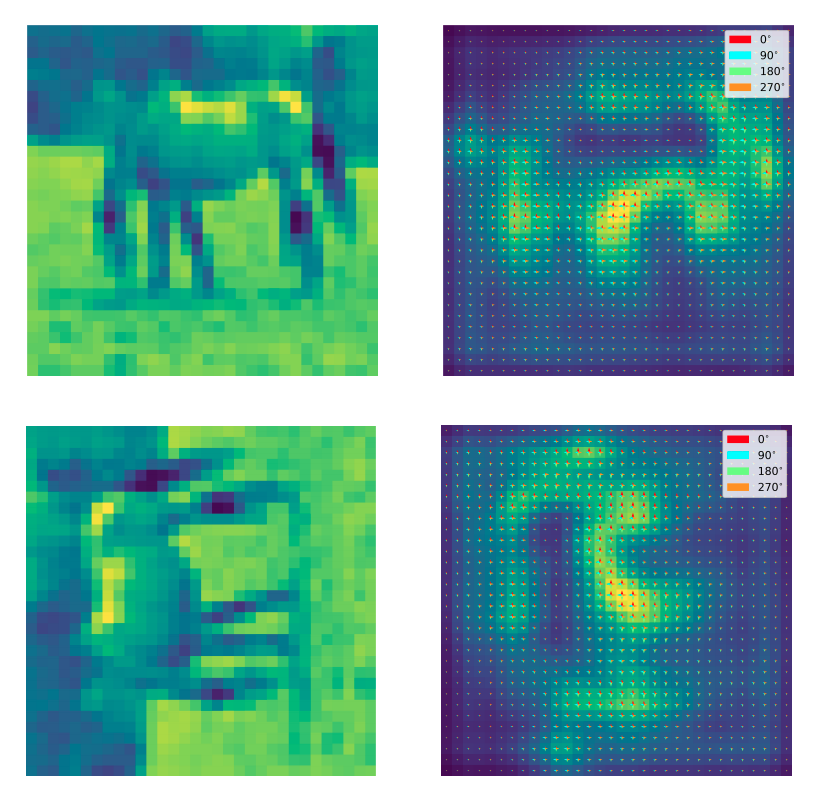
We present the attentive group convolution, a generalization of the group convolution that uses attention during the group convolution to focus on relevant symmetry combinations. It generates equivariant attention maps as well.
https://t.co/gwCYqIRC3h
@erikjbekkers@jmtomczak
What if scaling the context windows of frontier LLMs is much easier than it sounds?
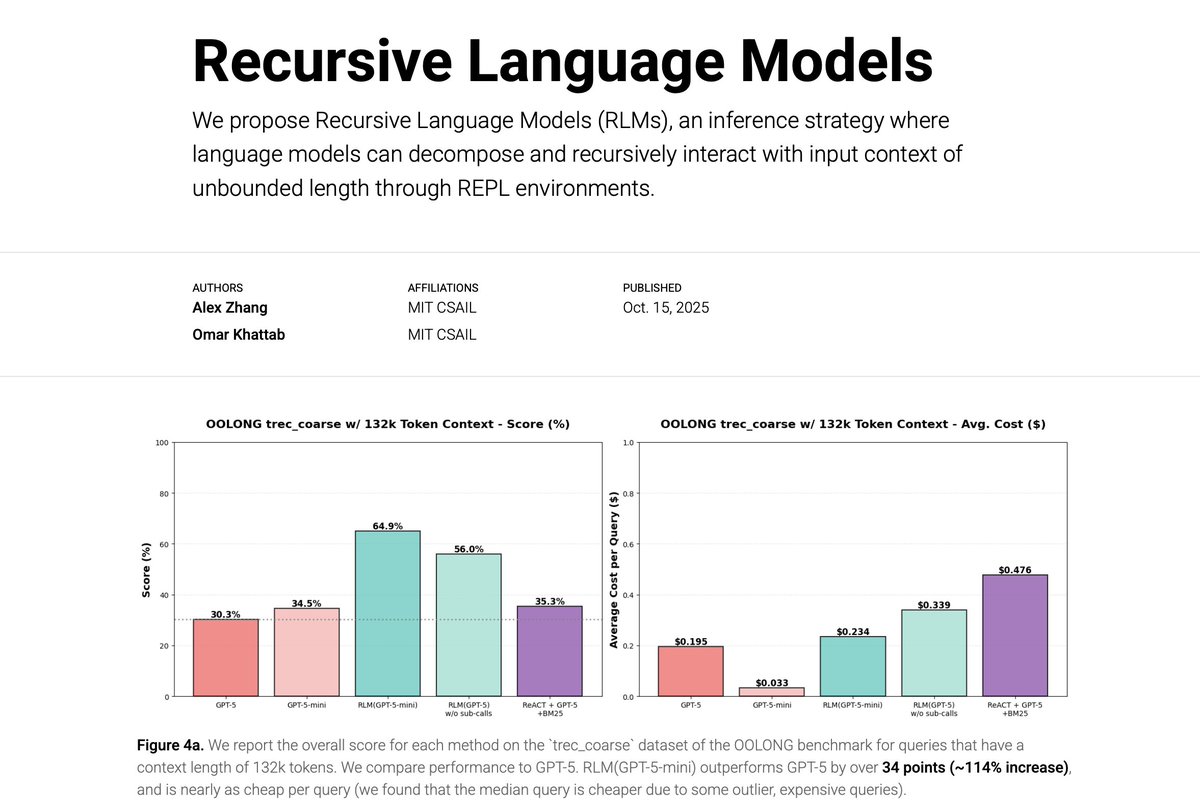
We’re excited to share our work on Recursive Language Models (RLMs). A new inference strategy where LLMs can decompose and recursively interact with input prompts of seemingly unbounded length, as a REPL environment.
On the OOLONG benchmark, RLMs with GPT-5-mini outperforms GPT-5 by over 110% gains (more than double!) on 132k-token sequences and is cheaper to query on average.
On the BrowseComp-Plus benchmark, RLMs with GPT-5 can take in 10M+ tokens as their “prompt” and answer highly compositional queries without degradation and even better than explicit indexing/retrieval.
We link our blogpost, (still very early!) experiments, and discussion below.